Laurel Prize Shortlist 2025 – My Favourite Is….!

The shortlist for the eco-poetry/nature poetry Laurel Prize 2025 has just been announced. The finalists – judged this year by the poets Kathleen Jamie (Chair)Daljit Nagra, and the former leader & co-leader, Green Party of England and Wales Caroline Lucas – are (in alphabetical order):

Judith Beveridge Tintinnabulum (Giramondo Publishing)
JR Carpenter Measures of Weather (Shearsman Books)Carol Watts
Eliza O’Toole A Cranic of Ordinaries (Shearsman Books)
Katrina Porteous Rhizodont (Bloodaxe Books)
Carol Watts Mimic Pond (Shearsman Books)
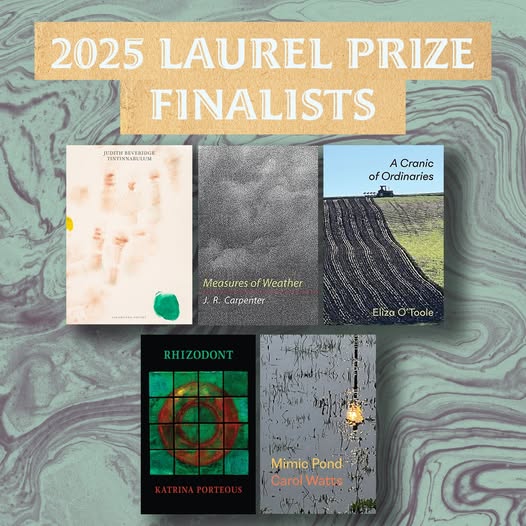
It turns out I have reviewed two of these collections – one of them I have been bending the ears of anyone who will listen about how very very good it is. I reviewed Katrina Porteous’s Rhizodont (Bloodaxe Books) for Poetry Salzberg Review fairly recently and posted an extended version of the review here. I concluded that ‘The people and landscapes of ‘Carboniferous’ are far more successful as poems to be read and enjoyed, while ‘Invisible Everywhere’ is a bold, well-intentioned experiment that fails’.

It is Eliza O’Toole’s A Cranic of Ordinaries (Shearsman Books) that I have been telling everybody about. Interestingly – and demonstrating the great enthusiasm the publisher shares for this poet – Shearsman have just published her NEXT collection: Buying the Farm (a georgics of sorts). The nominated collection was published in 2024.

I reviewed it in brief for The Times Literary Supplement recently, as follows:
The premise of Eliza O’Toole’s superb debut collection, A Cranic of Ordinaries, is unpromising: a year’s cycle of diaristic pieces in which the poet walks her dog through the Stour valley. But the result is a sublime form of ecopoetry which is visionary, yet creaturely and incarnate, and to achieve this O’Toole channels two great nineteenth century writers. Gerard Manley Hopkins’ ‘Hurrahing in Harvest’ joys in the things of Nature which are always ‘here and but the beholder / Wanting’. When self and natural world do communicate, Hopkins named that flash of true relationship ‘instress’.  O’Toole’s ‘Stour Owls’ records just such a moment, listening to the calls of a female tawny owl, the ‘slight pin-thin / hoot’ of the male, followed by a tense silence: ‘then the low slow of the barn owl as the / white slide of her glide brushes the air we / both hold & then breathe’ (12).

O’Toole also adopts Emerson’s idea of the ‘transparent eyeball’, seeing all, yet being itself ‘nothing’. The excision of the self’s perspective is systematically pursued. Seldom is the landscape ‘seen’ but is rather subject to plain statement: ‘It was a machine-gun of a morning’ (11), ‘a vixen-piss of a morning’ (13), ‘a muck spread of a morning’ (34). O’Toole has an extraordinarily observant eye, but this repeated trope counters any taint of the constructed picturesque, the human-centring of vanishing points and perspective. The observer grows ‘part or parcel’ of the world. Such a vision makes demands on language because in truth, ‘It is necessary / to write what cannot be written’ (94), and this yields one of the most exciting aspects of this collection as the poet deploys varieties of plain-speaking, scientific, ancient, and esoteric vocabularies as well as a Hopkinsesque ‘unruly syntax’. She describes ‘young buds. Just starting from / the line of life, phloem sap climbing, / a shoot apical meristem and post / zygotic. It was bud-set’ (26).

O’Toole’s choices about form are also bold, almost all the poems being both right and left justified, creating blocks (windows?) opening on each page. The realm the reader is invited into (not told about, not shown) is one where the manifold particularities of the natural world are also and at once a whole. O’Toole’s dog digs a hole: ‘In / the hole and out of it, the soil was / whole. There was a unity and no lack. / In the hole was soil. It was a / comprehensive various entirety; it / was a universe of relatings’. (38) In such ways O’Toole’s ordinaries are made ‘strange’ (33) and the toxic divide between modern humanity and the natural is momentarily, repeatedly, bridged.

Here’s one of the poems from A Cranic of Ordinaries. Apologies are due for formatting accuracy as – as we all know – WordPress is rubbish at dealing with poetry. But you’ll get the idea…..

Perpetual gravity – Box Tombs at Wiston

(the quality of appearing to recede, essential to the landscape tradition)

Now illegible, the children of John

Whitmore and Susanna his wife,

Sarah aged 11 Months,

Robert aged 2 Years,

Rebeckah aged 11 Months,

Elizabeth aged …. Weeks,

Lucy aged 1 Week,

Susanna aged 20 Years,

Thomas Aged 6 Years.

John Whitmore departed this life Jany

the ….6th 1746 Aged (6)6. He was a

good husband loving father faithful

friend and a Good Christian. Susanna

Whitmore died / Jany. 25 1789 Aged

(?8)6. To dwell until all the world

inscribed when it was still possible to

die. To lie slightly foxed, mortared in

a brick box irregularly repaired, alive

with stone-devouring lichen and

littered with dry lime, leaves and

frass. Fin* pees antimony and sees off

the squirrel, wards off unbelievers we

have no need for having no place

amongst toppling tombs. A litany

indescribable, a conjugation beyond

reach, an accent mark over a vowel,

an entire landscape made grave. It

was October, the same fields were

ditched, furrowed, carved, still dug

over and still the Stour was flowing. In

the picture’s distant plain, the sun

like other yellows, was still fading.

Generally, a history remains unsure.

*O’Toole’s dog

The Laurel Prize awards £5,000 for the winner of the prize and £1,000 for the other four finalists – so congratulations are due to all of them. The winner will be announced at the Laurel Prize Ceremony which is taking place on Friday 19 September at 5.30pm (BST), and will be aired via a free live-stream. This year’s ceremony is a part of BBC Contains Strong Language which takes place in Bradford from 18-21 September.
‘Muzzle’ – a new poem for the New Year

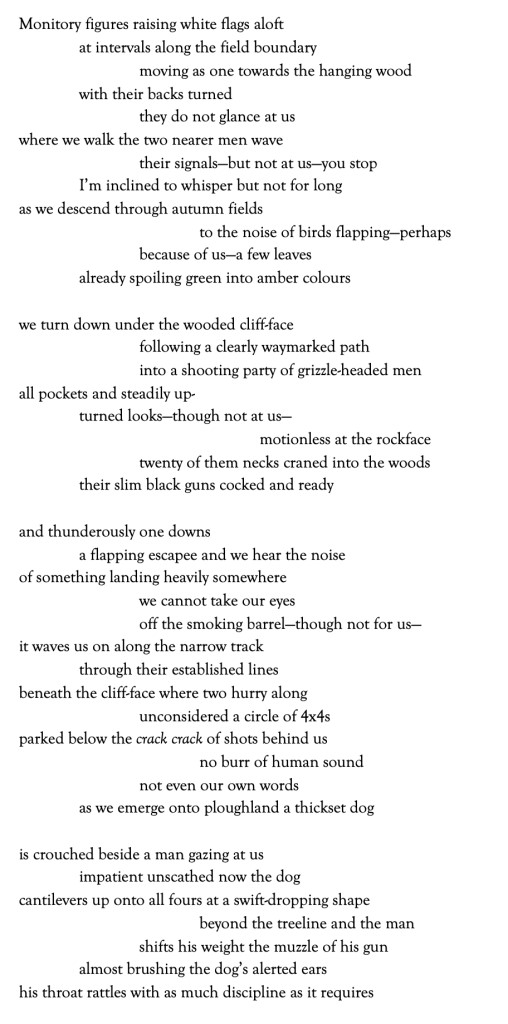
Happy New Year to all of you. We are hoping for the best aren’t we? Come rain, shine or named storm, the poems go on, saying something at least for the individual, the social, for careful consideration of the world out there, the world in here, and the languages we use. I’m posting a poem which has just appeared on New Year’s Day at the excellent Modron Magazine, its strap line is ‘Writing on Nature and the Ecological Crisis’. Glyn F Edwards also interviewed me about the making of the poem and I’ll post the text of that below, along with the link to Modron. Do go and take a good look at what other work they have put up in this new Issue 5. And then subscribe to them. My poem is weirdly formatted – so here is an image of it, lacking its title which is: ‘Muzzle’

On the Writing of ‘Muzzle’

MC: It’s so interesting to be encouraged to look back at the process of writing a poem. I seldom do it (I suspect I’m not alone), forever rushing on to the next ‘best’ thing (we think, we hope). In looking back at ‘Muzzle’ (I find I have the very first draft and several subsequent ones) two things strike me: that it took so long to get to a ‘finish’, and that I’d forgotten how important the context of the poem was to what it might be expressing.

The first draft was scribbled in a notebook in the autumn of 2016. Earlier in the same notebook, I was sketching out thoughts on my, then, just-published version of the classic Chinese poems, the Daodejing (Enitharmon, 2016), preparing for readings I was to give from the book. Elsewhere there are fragments about my parents’ growing difficulties at home and (later) in their care home, plus some quite late drafts of the longish poem about the plight of refugees in the Mediterranean which was published as Cargo of Limbs (Hercules, 2019), and even first drafts of the poems which have eventually come to make up my most recent collection, Between a Drowning Man (Salt, 2023). Remember, the Brexit referendum took place in June 2016 and if there is an idea that links all these differing creative endeavours (including ‘Muzzle’) it is the idea of ‘division’.

Q1 – Only with the word ‘dog’ at the end of the third stanza does the reader gain a semantic connection to the ‘Muzzle’ in the title of the poem. Of course, Chekhov’s gun was ‘cocked’ all along, and the ‘muzzle’ becomes the open end of a weapon where a bullet escapes. Can you explain a little more of the rationale for this subtle title? 

MC: To my surprise, I find, the first draft has no ‘muzzle’ mentioned in it at all. But the shape and a lot of the substance of the finished poem is already there: the flag-waving men during an idyllic autumn walk (on the Sussex Downs, as far as I remember), the shooting party, even the man and his dog at the end of the poem. The muzzle of a ‘smoking gun’ is clearly implied but the final dog’s muzzle does not make an appearance till quite late (I mean 2020 or so!). In fact, in the first draft I clearly don’t know how to end the poem. There, the walking couple emerge from the wood ‘unscathed’, the dog in the field grows tense, and there’s a sense of the man’s day being ‘interrupted’ by the couple. But these final 5 lines are crossed through. In the later draft, the dog now ‘cantilevers up’ onto all fours (the mechanisation of the creature is part of the male group’s malign influence in my mind) – but still no muzzle as such. That only comes via a reference to the man’s gun and, with its proximity to the dog’s head and ears, there is a transference of the word/idea to the dog itself. I’m pretty sure it wasn’t till this point that I thought of calling the poem ‘Muzzle’ and that I also wanted the word to apply to the walking couple who have been (by the experience, by their apprehension, if not their genuine fear) muted or muzzled themselves. The idea was actually there early on; the first draft briefly sketched in, ‘no human voice we do not talk’.

Q2 – The refrain ‘not at us’ is repeated, and echoes again in ‘not for us’ – amongst the ‘white flags’, and the reassurances of safety, there appears a growing threat to the speaker. The reader is left with the feeling that somehow this danger extends beyond the shooting party, and beyond bloodsports. Did you seek for the poem to act as a wider allegorical foreboding, and, if so, would you elaborate on the metaphor? 

MC: Yes, the ‘not at us’ phrase or versions of it are already in the first draft, indeed on four occasions. This is one of the main sources of the idea of ‘division’ in the poem. It’s a simple ‘us’ and ‘them’ situation. The white flags – I think these would simply be the shooting-party’s beaters’ flags being waved to move the birds across the field into the woods, or possibly they are genuinely ‘monitory’ (meaning simply to warn or admonish), but in being white they also have (ironic) resonances of surrender (these guys were not going to surrender anything). The repeating phrase emphasises the gulf between the two elements of the encounter and particularly the sense (clear on the actual occasion) that those holding guns did not seem much concerned that unsuspecting, endangered walkers might be near at hand. We felt ignored; they seemed not to look at us. Being England, there is a strong class element here, which does not map easily onto the question of the voting intentions by class in the Brexit referendum, but factions on all sides seemed not to be paying much attention to any other. The devastating Tory defeat of 2024 should be regarded as reflecting much of this: eventually the country at large felt those in government were simply not paying any attention ‘to us’. I’ve always been pleased with the adjective ‘established’ to describe the shooting-party’s positioning, their being arrayed as the ‘establishment’. The finished poem ends ambivalently. The walking couple escape the shooting-party but are faced with another threatening situation: the gun, the dog. The ‘guard-like’ posture now puts me in mind of prison camp patrols the world over and I’d be happy for readers to get there too: there is a policing of freedoms going on here, a sliding scale from rural pastimes, to political enforcement, to genocidal pograms.

Q3 – ‘Muzzle’ zigzags, indents, retraces its steps. Some stanzas loop longer, and when the final sestet ends abruptly, without full stop, the reader becomes aware of the absence of punctuation throughout. You have a very idiosyncratic approach to presenting and punctuating the poem – could you share your intentions in this poem, and elaborate on whether these ally or counter your conventional style?

MC: The final form of the poem – which you describe so well – came very late. Most often my poems ‘find’ their own form – they don’t begin with any sense of the shape they will eventually take. The 2020 draft was coming out in tercets and I remember liking the ‘walking pace’, step by step, which that shape suggested. But in the end I wanted the poem to be more radical, to suggest a sense of freedom (in contrast to what is felt by the couple during the incident), a freedom to roam as it were, for lines to wander across the page and back again, while also acknowledging that this meandering might well yield some uneasiness in the reader (where’s he going?!). Both freedom and anxiety would be appropriate here. The form and the absence of punctuation (the latter I have been working with for several years now) are intended to generate some ambiguity. For example, I’m hoping for a fluidity in the opening lines, with the putative subject or focus being the flag-waving men, eliding to the walking couple – the ‘you’, then the ‘I’ – the birds, the leaves turning, finally to the ‘grizzle-headed men’. Within this fluency, a bit later, I want several adjectives to be hovering between subjects. The word ‘unconsidered’ floats between the lack of consideration given to the couple and the waiting circle of parked cars. Similarly, ‘impatient unscathed’ buzzes between the couple (again) and the waiting man and dog. This culminates in the rattling throat in the final line which (I want) to be as much about the man as the dog itself and so the ‘discipline’ demanded of the situation ought to be seen as human as much as canine. I guess I’m trying for fertile ambiguities, trying to suggest two things at once. The opening of the Daodejing says: ‘the path I can put a name to / cannot take me the whole way’ (my version).

Q4 – The shooting party negatively influences their surroundings, their presence ‘Hanging’ and ‘spoiling’ the woods, and the walk of the speaker. How much familiarity do you have with these ‘grizzle-headed men’, and do any occasions, such as the one in ‘Muzzle’ stand out as memorable, or significant? 

MC: As you suggest, I have allowed the shooting-party to be, and remain, those wearing the black hats. More often than not I feel the need, the wish, to revisit such emphatic designations: what’s to be said ‘on the other hand’ (ever the wishy-washy liberal). The jaw-dropping presumption of the shooters in the original incident (the poem says pretty much exactly what happened), coupled with the generally felt anger and dividedness of the UK at the time (and since) goes to explain why I have not done so here. Do I know people like this? I guess not. A remote acquaintance likes to share his stories of attending such exciting shooting-parties, but it’s hard even to find the language to create much common ground. Perhaps I am just too urban, metropolitan even. About hunting wild animals, Rilke says, ‘to kill is one form of our restless grief’ (Sonnets to Orpheus, II, 11; my translation). Nothing I witnessed on that day in 2016 served to convince me otherwise; the taking out of another living thing for no useful purpose seems to require an arrogant presumption that I cannot get my head around and I find rather terrifying; the ‘monitory’ urgency in the final poem is as much concerned with how this sort of attitude plays out in the political, even in the military, sphere as it is with ‘blood sports’ more narrowly defined.

December 2024

Here’s the direct link to Modron – https://modronmagazine.com/a-poem-and-interview-with-martin-crucefix/


‘Air-Waves’: poem as audio soundscape

One of the joys of social media (and there are plenty of aspects of them that are less than joyful) is that occasionally a notification pops up from an unexpected source and when you check it out there is something really worthwhile to be found. This happened the other day – via Instagram. Someone called Matt McGettrick had tagged me. I don’t know Matt, but he is a student on the BA course in TV and Radio Production at the University of Salford.

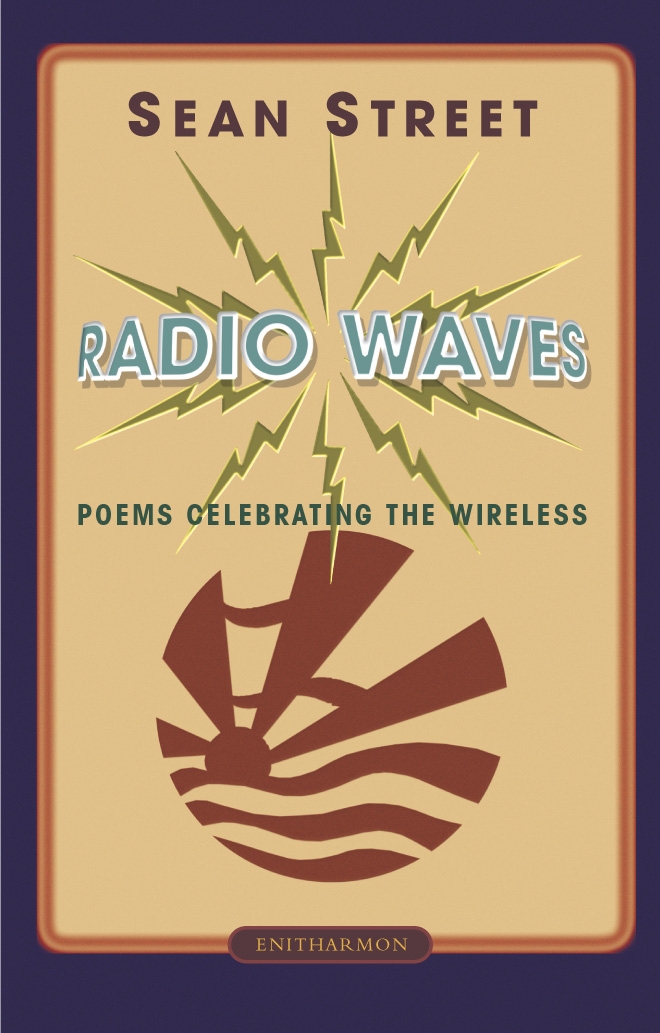
Matt’s instapost said he had recently created a soundscape based on a poem I published in 1990, in my first book from Enitharmon Press, called Beneath Tremendous Rain. It’s unlikely that the poem was found in that book itself, but I remember it was selected more than 10 years later by Sean Street to appear in an anthology called Radio Waves: poems celebrating the wireless (Entharmon, 2004). There, I was happily rubbing shoulders with the likes of Auden, Brecht, MacNeice, Heaney and Carol Ann Duffy. Sean – whose is a poet, broadcaster and recently retired Professor of Radio at Bournemouth University – had divided the anthology up into sections variously titled, Music Radio, Talk Radio, Weather, Listeners and Signals. My piece was in the section called ‘In the Car’.

Here’s that original poem. It’s voiced by a persona – I had no children at this point and had not moved out of the ‘dark’ streets of Manchester to the countryside.

Air-Waves

As I slowed up and shifted downgear,

a dance song thumping from the car radio

was stretched out and smashed to pieces.

x

But we barely noticed that first time –

all eager to see the house, where it stood

beneath the surfing crackle of the pylons.

x

The girls loved the sight of so much sky.

They slipped into new schools with ease

though Sue and I made it home more slowly.

x

And by then, there was Stephen, almost four,

suddenly ill, his rush of growing gone awry,

and the doctor’s face, closed up and dark

x

as the Manchester streets we had left behind.

He could tell me nothing. Inexplicable,

the pattern of disease. A year – maybe two.

x

Driving back across the hills, roadside wires

loop down, are yanked back to the blunted head

of each telegraph pole – and further off,

x

the pylons, hitching up skeins of darkness,

striding up country to a house where this car

and their sheaf of hot wires will converge,

x

where a young man’s voice on the radio

will melt down in a surge of boiling static

as I slow up, shift gear, and stop.

I remember a great deal of concern – this will have been in the late 1980s – about the possible harmful effects of living too close to the electrical fields generated by pylons. There was a particular study in 1979 that did conclude there might be a link between electromagnetic fields and childhood cancer (and this is the kind of scenario I am thinking of in the poem). However, other studies in the 2000s did not find an association or found an association only in homes with very high levels of magnetic forces, which is rare, according to the National Cancer Institute.

There was a personal connection, I remember, as my in-laws lived in a house which nestled in beneath a line of high voltage cables and pylons. But perhaps concerns about cancer-inducing lines of pylons have now gone the way of those early concerns about the dangers of mobile phones. Or has it even been consigned to the slightly cranky end of health concerns along with those people who sabotage 5G masts in the name of suspected links to the on-going pandemic? Even so, though it has dated a little, I’d like to think of the poem as one of my earliest expressions of environmental concern: if the electromagnetic fields do turn out to be perfectly safe, they are here acting as a metaphor for the kind of degradation of the lived-in environment caused by human action for which there is an indisputable and growing body of evidence.

Anyway – all this is simply by way of introducing Matt McGettrick’s excellent piece of work. The reader is Matthew Green. As the author of the original piece, it seems to me that both reading and soundscape engineering do a really fine job of responding sensitively to the text’s meaning, its structure and its rhythms. Have a listen – Matt suggests headphones are a good way to hear his work. It’s just over 5 minutes long.

2016 Forward First Collections Reviewed #2: Nancy Campbell

This is the second in the series of reviews I will post over the next two months of the 5 collections chosen for the 2016 Forward Prizes Felix Dennis award for best First Collection. The £5000 prize will be decided on 20th September. Click here for all 5 of my reviews of the 2015 shortlisted books (eventual winner Mona Arshi).

The 2016 shortlist is:

Nancy CampbellDisko Bay (Enitharmon Press)
Ron CareyDistance (Revival Press) – click here for my review of this book
Harry GilesTonguit (Freight Books)
Ruby RobinsonEvery Little Sound (Liverpool University Press)
Tiphanie YaniqueWife (Peepal Tree Press)

disko_bay[1]

Thanks to Enitharmon Press for providing a copy of Nancy Campbell’s book for review purposes.

The concluding poem of Nancy Campbell’s collection Disko Bay is, I think, a good place to begin. In ‘Giving Up on Capitalism’, an unnamed boy makes kayaks and sells them for one, then two kroner (these poems are mostly set in Greenland). He hands his earnings to his mother who buys basics like coffee, sugar, needles, cotton and, more ominously, whisky. If this is the nirvana of capitalist enterprise it hardly gets beyond subsistence level and then only to poisonous effect. On the third occasion he instead decides to construct a kayak for himself: taking the few remaining skins, he “pegged them down deftly / and paddled away”. The point of rejection is simply made, but the simplicity has a mythic, typological impact. The poem’s form is simple, repetitive, like a piece of folklore, an oral transmission perhaps, and – characteristic of the whole collection – the vocabulary is plain to such a degree that the reader is impressed by a paucity or poverty or essentialism (depending on how successful you think it is). Certainly this is a book unlike any other you’ll read this year, drawing on myths and landscapes of the far north (the opening section of the book has poem titles in Greenlandic first, then English). Its impact is often impersonal but Campbell’s knowledge derives from her several residencies in the region and she deploys it in a skilful and poetically knowing fashion.

greenland5

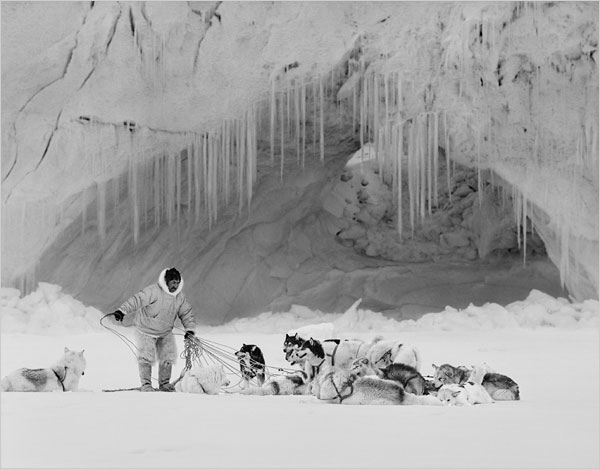
Above all, these poems convey the harshness of scraping a human existence in the Arctic Circle, perhaps most obviously in the section called ‘Ruin Island’. An epigraph quotes the Eskimo, Osarqaq: “Our tales are narratives of human experience, and therefore do not always tell of beautiful things”. Several poems follow the exploits of Qujaavaarssuk, a heroic figure and general strong man, who is reduced to singing a dirge at the troubled fishing grounds and is advised by “a man who is not his father” (a break in traditional forms of transmission here?) that the one thing to be relied upon is that “hunger will come of its own accord”. ‘Hospitality’ in such circumstances may consist of feeding guests “the kidneys of a black seal / as the ice harden[s]”. Qujaavaarssuk’s immediate difficulty is the presence of too much ice (a deliberately ironic comment on the shrinking ice caps of our day): he sees the shadows of seals moving beneath it and sets out “to the ice edge to follow them” but what Campbell is interested in (these are contemporary poems, not slavish myth-reproductions) is the failure of the hunter. In ‘Danger of Snow Blindness’, Qujaavaarssuk returns for the first time “his sled empty, his kamiks [boots] clean”. ‘The Last Seal’ opens:

There was nothing left to feed the dogs.

Qujaavaarssuk shot them, one by one

and fed them to each other.

seal-5

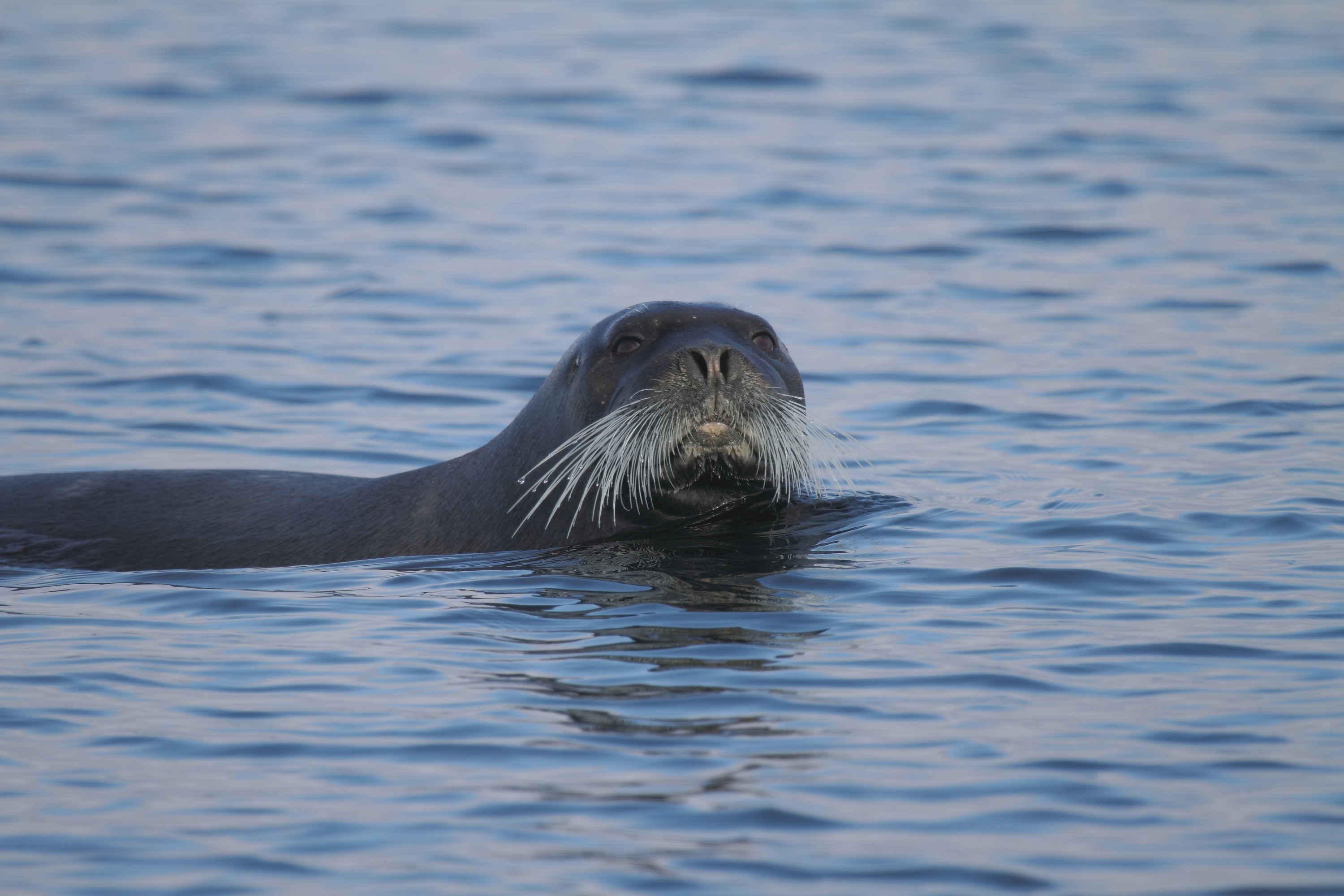
To the contemporary reader, what lies largely unspoken beneath these chilly, often curt, unsentimental chips off a mythic block is, of course, our own awareness the adverse effects of climate change. ‘Ruin Island’ becomes apocalyptic in tone so that the words spoken by a hunter that conclude the sequence, words spoken by Jorsias Ammonsen in a real interview conducted in 2006, are presented as the reply of a hunter “who can no longer hear the question”. In this way, Campbell tragically ironises Ammonsen’s proud, nostalgic, heroic, perhaps hopeless comments:

When we were young

no place seemed too far away for hunting.


We travelled a long way,

too far to come back the same day.

We slept in stone caves

and were cold in winter.


Nothing is too harsh

when you are accustomed to it.

Nancy Campbell 2012

Campbell tries to remain true to the plain directness and dignity of such a voice in most of these poems. The figure of the poet seldom intrudes. When it does she is trying to learn the “soft uvulars” of a new language which seem like “dark flocks of sound I’ll never net, or say”. Difficulties of expression in one language are compounded by problems of communicating across distance to her own homeland: “Since I can’t post a letter this far north, / I’m sending you an Arctic snowstorm”. ‘The Night Hunter’ is typical in its use of a simple lexis – snow, door, harbour, boat, blood, sled, knife – and a repeating form of verse as if the polar climate has sheared away more baroque elaborations of language and form. At first this feels cramping, but as Campbell persists and insists this really is what she intends, the simplicity seems more likely to put us in touch with the elements, the elemental, the bottom line of harsh Arctic existence.

With figures like the hunter Qujaavaarssuk so prominent you might anticipate a macho sort of world but the harsh conditions seem to teach an underlying humility (even to men) and Campbell has a number of female narrators who are clearly no push over. In ‘The Seal People’ a seal hunter’s wife watches the vindictive spirits of killed seals approach by boat and though threatened by them her voice does not falter through three steady quatrains, the verse’s repetitions here expressive of her firm courage. ‘The Hunter’s Wife Becomes the Sun’ is a major poem (its form is a sestina with its obsessive recurrences). Here, a hunter’s wife gives him a tinny Christian memento for protection. The hunter is more concerned with the reality of death and an apocalyptic sense of the world’s end (Campbell’s chosen rhyme words are tin, angel, window, box, candle, darkness). But his wife insists on the need for “light”, transforming herself into a “vast white wake / of stars” which might be considered angels, though the man himself finds it hard to shrug off his pessimism: “At the world’s last window, I light another candle”. The shamanic implications of their exchange are more explicitly played out in three translations of crude Greenlandic Qavak songs, originally collected in the 1950s. They are spoken by a “terrible mother” a “female shaman” and an omniscient “wicked woman”, the latter advising the only way to tackle an enemy is to bite off and employ her clitoris as an arrowhead. Neither the blunt obscenity or implied moral judgement can hide the suggestion that this remote culture clearly understands the importance of the female in ultimate survival.

iceberg-in-disco-bay-greenland_6a7e

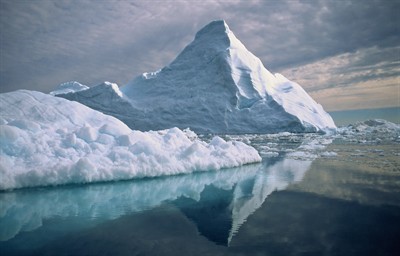
One of the impressive things about Disko Bay is that it is eco-poetry without shed loads of landscape description. Those vindictive seal spirits carry a powerful ecological message in their “round, black eyes” – less for the Greenland hunter and his wife (whose place and role within a traditional, sustainable Arctic ecosystem is be unlikely to unbalance things) but to us with our petrol engines, plastics and carbon complacencies. Another success of the book is its use of myths redolent of Nordic and North American materials without distracting echoes of Ted Hughes’ trickster figure Crow. In ‘Fragment’ a severed raven’s wing in the snow is enough to imply the global problem: “Never to breed, never to scavenge / on scarlet seal hearts by the ice edge”. It is brave of Campbell to delay the more eco-explicit poems to later sections of the book. Part three sets off from the premonition that “the future is full of riddles” and ‘Conversations’ conveys both the mystery and the certainty of climate change: “I don’t think it is one thing / I think it is a combination of things / a combination of everything”. The riddle-subjects appropriately include a tsunami and an iceberg but not the dirty complexities of the ever-hungry, seldom-satisfying capitalism rejected by the boy who constructs a kayak not to be sold but for his own setting out in this fine, unusual book’s concluding poem.

Read more on Nancy Campbell – in discussion with Forward Arts Foundation.