Jeremy Reed’s ‘Collusive Strangers: new selected poems’ (1979-2016) reviewed

An edited (shorter) version of this review first appeared in Poetry Salzberg Review in June 2025. Many thanks to the editor, Wolfgang Görtschacher, for commissioning the writing of it.
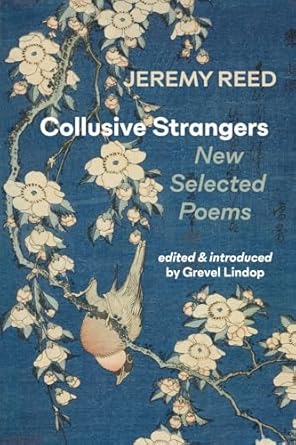
As the editor, Grevel Lindop, says in his Introduction to Collusive Strangers: New Selected Poems (Shearsman Books, 2024), the literary world has not taken enough notice of the remarkable oeuvre of Jeremy Reed. Many of his recent collections have appeared without much, if any, critical notice, so it’s to be hoped that this substantial new selection, from 1979 -2016, will bring this misfit-poet’s work back to more general attention. The problem is that the protean Reed fits no pigeonhole, plus the fact that he’s been astonishingly prolific. Intensity of perception and a phenomenal dynamism of language and creativity are his hallmarks, and he matches the best in nature poetry (Clare and Hughes), the decadent, urban flaneur (Baudelaire), then writes as Symbolist and Surrealist (Gascoyne), pursues sci-fi, focuses on pop and fashion, next becomes a portraitist and moving elegist. Even given these 300 pages, Reed – a sometime Peter Pan now into his 70’s – continues to be elusive. Compared to the prolific poet/novelist John Burnside, the difference is clear: we all knew what the brilliant, much-missed John was up to. With Reed, we are endlessly being caught by surprise.

Even Reed’s earliest work arrived fully formed. In the late 1970s and early 1980s, the urban, neurasthenic wanderer appears in ‘Claustrophobia (Kings Cross)’, the narrator’s need being ‘so strong it might involve the police’. In contrast, ‘Dwight’s Brother’ is an early stanzaic, sci-fi piece, a character from the future obsessed with Manson’s and Nixon’s careers, and ‘the monomania that burns planets’. And the magnificent ‘John Clare’s Journal’ ventriloquises the nature poet’s concerns for the natural world of Helpston, his stumbling literary repute, and fear for the future of his children, ‘laid / out as corpses’. Reed’s ambition is clear from the start, and in a poem like ‘Visit to George Barker’ he evidently empathises with the older poet’s withdrawal and seclusion, his writing contemporaries being harshly judged for a lack of ambition as ‘poets whose very aim is minimal / gesture, earning [Barker’s] dismissal’.
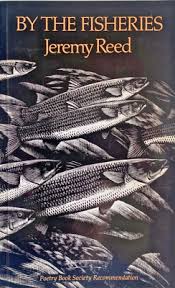
My own first acquaintance with Reed’s writing was in the two volumes from Cape in 1984/5, By the Fisheries and Nero, when James Lasdun edited him. These particularly highlighted the Nature poems, for example ‘Conger’ which outdid Ted Hughes: ‘They’ll shave a finger off with precision, / clean as a horse bite, or close round a hand / and leave it as taut gristle strung on bone.’ In a quieter poem, the narrator is fishing in a harbour, near a ‘desalination plant’, the tautly strung reactions of a shoal of mullet seemingly reflected in the fisherman’s own alertness and nerves (‘By the Fisheries’). ‘Spider Fire’ plays brilliantly with perspectives as every sort of tiny beast and insect flees a wildfire, while the narrator, at a distance, observes ‘a black hoop / ironed into the shire’. Though the first-person pronoun recurs in many poems, Reed is usually not much interested in self-revelation. One wonders, if he was/had been, he might be more widely appreciated, because it’s not that he can’t do it. ‘Visiting Hours’, for example, is enough to make a grown wo/man weep as the narrator visits his father in hospital, economical with the truth that this is ‘terminal’, the child compelled to play the father, the father, ‘like a diver gone on down // to find an exit that was always there, / but never used’. In characteristic ABCB quatrains, ‘Changes’ perhaps records the poet’s re-visiting Jersey and a brother, or boyhood friend, who stayed behind as a farmer, both recognising ‘our youth survives, the present is a gap’. And Lindop includes two remarkable poems from the Nineties collection, in which we seem to get close to Reed’s own autobiographical difficulties, when personal survival seems ‘to be the question’ (‘Samaritans’), and, in ‘Prayer’, Reed addresses a divinity of an uncertain variety, pleading for illumination, for help, a hearing, a pointing of a way out, from guilt, dread, self-injury, poverty, ‘the unappeasable, involuntary / inheritance of lucklessness’.
But Reed deals with topics, rather than ‘issues’, and his work is descriptive in character, never preachy or judgemental, so he seldom offers us his ‘views’. The work is driven by his ‘curiosity’, which both ‘holds us to life and feeds us to the flame’ (‘Moth-Trapper’). His praise of the artist, in ‘Cezanne’, is revealing of his fascination for the ‘ordinary’ and for the shared knowledge that ‘the beautiful / is inherent in all that lives, / and once externalised in its true form, / remains as that’. Over and over again, Reed captures – hence externalises – the true form of things in the colourful, vigorous, unblinking poems selected here. And as the millennium approached, Reed extended his range even further towards ‘all that lives’. There are uncharacteristic political poems (Tony Blair is a particular target), but Reed also writes of the experience of AIDS, and with a Baudelairean dwelling on sexuality, in poems like ‘Transsexual’ and ‘Brothels’, and is drawn closer to popular culture, its fashions, music, and iconic figures. But many of the poems on Madonna, Billie Holiday, Elvis and The Rolling Stones drift to looser forms of summary and the decade from 1993 to the early 2000s contains less brilliant work, though 2006’s Orange Sunshine with its evocations of 1960s London marks a return to form.
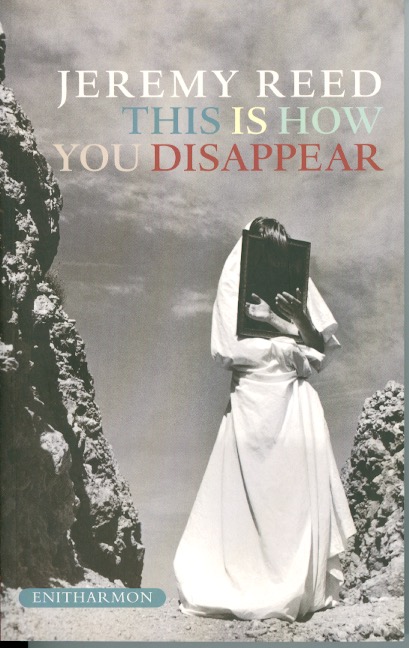
Reed as elegist, as in This Is How You Disappear (Enitharmon Press, 2007), was perhaps unexpected, but poems like ‘Paula Stratton’ and ‘John Berger’ (not the art critic) must rate amongst the finest in that genre produced in the last 100 years. The honesty, attention to detail, the empathy extended to his subjects (Stratton was a drug addict; Berger a difficult Jersey friend and Nazi-collaborator), and the apparent ease and beauty of the writing, mean these poems ought to have been anthologised everywhere. The elegiac note is hardly surprising as Reed moves through his seventh decade and poems about socks, potted plants, tea, honey, and cupcakes seem to mark shifts in focus though Reed remains true to his repeated maxim that ‘everything I see [is] poetry’ (‘London Flowers’). The poems retain the vigour and speed that he admires in Plath’s work: ‘her fast ball imagery / on speed-trajectories [. . .] her plugged-in dare-all energies’ (‘Re-reading Sylvia Plath’). As he puts it in an extract from ‘White Bear       and Francis Bacon’, Reed has remained true to his early ambitions ‘to kick poetry into near sci-fi / [. . .] like dirty-bombing the dictionary into my face’ and there are thrills to be had by any reader on every one of these 300 pages in which Reed makes so many contemporary poets look sluggish, mired in virtue signalling, lumbering in form, and monotone compared to his vivid technicolours.

Here is the whole of ‘Elegy for a Polka Dot Shirt’ from Orange Sunshine (2006):

Unreconstructed 60s
ostentation snowed on blue
labelled Jacques Fath, tailored fit,
fished from Retro on a simmmery
cloud hung-over August day,
bought for pop connotations –
high collar with flouncy points,
cotton married to the skin.
Medium size:
              38 cm:
structured for a defined waist
sexless to the vanity
of ownership.
Affordable at £15,
the item begged me to retrieve
its showy staginess.
             Outside, airless haze,
W11 backpacking crowds
random like footage spilled
into a documentary.

Later I tore a fragile seam
tracking towards left underarm,
the fissure sounding like hot oil
pronouncing itself in a pan.
The tear backtracked through history
to the anonymous wearer,
who bought sensation, sold it on
into a chain, the onion skin
thinning from use;
              the scar re-sewn,
but evident, a little glitch
caught in the fabric like a blues
lament,
the singer head-bowed on a stool,
cooking up trouble, while the club
tug at his vulnerability
and modulate applause from hot to cool.
Translating Georg Heym’s ‘Berlin II’

Michael Hofmann’s Faber Book of Twentieth Century German Poems includes four pieces by Georg Heym – not bad for someone who died at the age of 24 (in 1912 – an accidental drowning in the frozen Havel River, probably while trying to save a friend). Heym is generally regarded as an early Expressionist writer (of poems and short prose/novellas), though his early poems are very much under the influence of Hölderlin, then much of the surviving work suggests the powerful influence of Baudelaire (in both form and content), though in his final months there seems to have been a return to the looser forms of Hölderlin. His best-known poems combine a gothic, morbid imagination, often with extremes of Expressionistic distortion, with a counterbalancing devotion to regular forms. The sonnet ‘Berlin II’, when it appeared in Der Demokrat, in November 1910, led to the publication of Heym’s only collection published during his lifetime: Der ewig Tag (The Eternal Day).

Antony Hasler’s translations, published by Libris in 2004 (Hofmann also includes translations by Babette Deutsch and Avrahm Yarmolinsky, and Christopher Middleton), are the best to be had at the moment and I’d definitely recommend searching them out (Libris has since folded). I’ve been in a bit of a translation lull for a few months so thought I’d try a few of Heym’s poems myself. The challenge is to make something readable in English, while not toning down the dark brutality, yet also staying close to his classical chosen forms.

In ‘Berlin II’, Heym’s Petrarchan rhyme scheme is ABBA CDDC EFE GHG. The opening quatrain is fairly straightforward. A literal transcription might be: ‘Betarred barrels rolled from the thresholds / of dark warehouses onto the high barges/boats). / The tugboats moved in. The smoke’s mane / hung sooty above the oily waters’.

Hasler has:

From the dim warehouse thresholds barrels caulked

with tar went rolling down to the tall lighters.

The tugboats started. On the oily waters

a mane of soot was trailing from the smoke.

The ‘lighters’ / ‘waters’ rhyme is a stroke of genius (a lighter is a river boat) but the opening line and the fourth seemed to me less successful. I kept the opening line simple and turned ‘waters’ into a possessive and I rather saw the (lion’s) mane more visually linked to the billowing of the smoke which is ‘soot-filled’ (I also tried ‘sooty’, even ‘smutty’). This is what I ended up with:

The tarred barrels rolled from open doorways

of dark warehouses onto the tall lighters.

The tugboats closed in. Across the waters’

oily surface hung the smoke’s soot-filled mane.

I went for the tugboats ‘closing in’ – not merely approaching, but something more threatening – as it seemed in keeping with the ominous atmosphere which develops as the poem goes on (the drumming in line 11).

The second quatrain might be given as: ‘Two steamers came with musical bands. / Their funnels cut/clipped the arch of the bridge. / Smoke, soot, stink lay on the dirty waves / of the tanneries with their brown skins’.

Hasler has:

Two pleasure-steamers came with music playing.

They dipped their funnels at the bridge’s curve.

Smoke, soot, stench lay on the dirty waves

by tanneries where the brown hides were drying.

I couldn’t quite see the funnels being dipped under the bridges (though I believe some boats do this) and I feel the bridge’s ‘curve’ (for roof or arch?) not quite right. So I went with the sense of the funnels actually scraping the roof of the bridges (as if these pleasure steamers did not really fit the generally grim, sordid scene). I was very happy to arrive at the bridge/stench half-rhyme for the middle couplet because the sounds there conveyed more of the Heymian ugliness of the scene. Like Hasler, I felt the need to explain a little what the pelts/skins/hides were doing hanging up at the tanneries. Here’s my second quatrain:

With music playing, two steamers passed by:

their funnels clipped the roof of the bridge.

On the filthy waves, smoke, smut, and stench

at the tanneries, where brown pelts hung to dry.

Lines 9-11 probably caused me the greatest difficulty, not so much in getting the word order and form right, but in simply grasping what was being said in relation to the bridges, the barge, and the narrator’s position. Literally they might read: ‘In/at/all the bridges, beneath us the barge / Carried through, the signals sounded / As if in drums, growing in the silence’.

As I see it, the speaker is being carried on a barge, through and under bridges, and there are signals/sirens sounding that bring to his mind an ominous drumming. So Hasler has:

Every time the barge that bore us travelled

beneath a bridge, the signal’s sudden parley

swelled out of stillness like a deep drum’s rattle.

The ‘barge that bore us’ has echoes of TS Eliot (perhaps not irrelevant in context, and I felt I couldn’t better it in the end) but I’m not sure Hasler makes sense (to me) of the signals and the ‘parley’ metaphor he introduces here is not there in the original. The ‘deep drum’ also seems to be picking up on the ‘ominousness’ of the scene but (for me) a bit heavy-handedly. In the end, I went for:

Through all the bridges, the barge that bore us

made its way, signals resounding as if

a drum’s beat grew louder in the stillness.

In the final 3 lines I made the biggest alteration, the biggest interference with the original poem. Literally, the lines might read: ‘We let go and drifted in the canal / Alongside the gardens slowly. In the idyll / We saw the giant chimneys’ night beacons’. Hasler loses the ‘letting go’ idea, but otherwise keeps the order of these lines well:

We entered the canal, and drifting journeyed

slowly alongside gardens. In the idyll

we saw the night-flares of the giant chimneys.

‘In the idyll’ is perhaps puzzling, though it’s pretty clear there is a bitter irony at work – this is no idyllic scene, and Heym’s other Berlin poems confirm this, the city is a monstrous megalopolis. But there has been a slight shift of scene with the boat moving along a canal now, between gardens. Perhaps this (more bourgeois?) setting might be thought of as more idyllic? But even so, the massive smoking and flaring chimneys of industrial Berlin can still be seen. I confess that I shifted the ‘idyll’ to the final lines to get the final rhyme with ‘canal’. But I have left it – translators, like poets, have the power of veto, whether we exercise it or not. And I have persuaded myself that the savagery of the irony comes out better if the final phrase of the poem contains it. So I went with:

We cut loose, went drifting along the canal,

gradually, between gardens, glimpses of

the vast chimneys’ night-flares in the idyll.

So – to sum up (though translations are always really a work in progress) – here is Heym’s original German followed by my own version of the poem:

Berlin II

Beteerte Fässer rollten von den Schwellen

Der dunklen Speicher auf die hohen Kähne.

Die Schlepper zogen an. Des Rauches Mähne

Hing rußig nieder auf die öligen Wellen.

Zwei Dampfer kamen mit Musikkapellen.

Den Schornstein kappten sie am Brückenbogen.

Rauch, Ruẞ, Gestank lag auf den schmutzigen Wogen

Der Gerbereien mit den braunen Fellen.

In allen Brücken, drunter uns die Zille

Hindurchgebracht, ertönten die Signale

Gleichwie in Trommeln wachsend in der Stille.

Wir ließen los und trieben im Kanale

An Gärten langsam hin. In dem Idylle

Sahn wir der Riesenschlote Nachtfanale.

Berlin II (tr. Martyn Crucefix)

of dark warehouses onto the tall lighters.

The tugboats closed in. Across the waters’

oily surface hung the smoke’s soot-filled mane.

With music playing, two steamers passed by:

their funnels clipped the roof of the bridge.

On the filthy waves, smoke, smut, and stench

at the tanneries, where brown pelts hung to dry.

Through all the bridges, the barge that bore us

made its way, signals resounding as if

a drum’s beat grew louder in the stillness.

We cut loose, went drifting along the canal,

gradually, between gardens, glimpses of

the vast chimneys’ night-flares in the idyll.

I Saw Three Swans: Baudelaire, Rilke, Oswald

A friend of mine recently asked what I thought of Alice Oswald’s poem, ‘Swan’ – in fact, what did I think it meant. It appears in her 2016 collection Falling Awake (Cape Poetry). I’m not sure I can give a direct answer to her direct question, but it linked up with two other swan poems I have read recently. Baudelaire’s poem appears in The Flowers of Evil and I have been re-reading a couple of translations of that collection because of the French poet’s influence on Rilke. Rilke’s swan poem (included in New Poems) is one of the poems I have been translating for the projected 2023 Pushkin Press book mentioned in my previous two posts. So – by way of an oblique answer to my friend’s question and because these poems and (two of) the poets relate to my current project and out of sheer curiosity – I thought I’d read these three poems alongside each other here.

Baudelaire’s ‘Swan’ is the longest of the three, divided into two parts. Written in late 1859 and dedicated to Victor Hugo, Baudelaire described the poem as an attempt to “record rapidly all that a casual occurrence, an image, can offer by way of suggestions, and how the sight of a suffering animal can urge the mind towards all those beings that we love”. His definition of those we love is remarkable broad, as we’ll see. The poem is also remarkable for the range of its components: evocations of the modern city (Paris), the creature itself, anthropomorphism, personal memory, literary references and an imaginative and empathetic ‘lift off’ towards the end. I’m looking at Anthony Mortimer’s translation published by Alma Classics in 2016. Here is an older, clunky, but openly available translation.

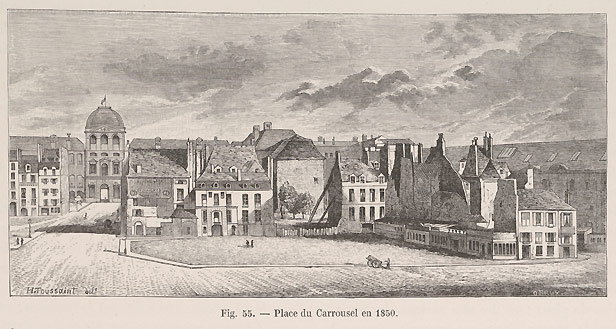
The reader might be taken aback by the opening exclamation: this swan poem opens with ‘Andromache, I think of you!’ In Book 3 of The Aeneid, Andromache, wife of the killed Trojan hero, Hector, is living in exile (‘we, our homeland burned, were carried over / strange seas’ – tr. Mandelbaum) and now weeps for her husband beside a little stream, a paltry reminder (Baudelaire: ‘a poor sad mirror’) of the mighty river, Simoeis, near Troy. She is an image of an abused and displaced exile, a refugee and it is the narrator’s strolling through the Place du Carrousel in Paris that prompts this literary recall. It’s because he himself feels out of place. Between 1853-1870, the Paris Baudelaire had known was in the process of being re-designed and re-built by Georges-Eugene Haussmann. Cityscapes change ‘more swiftly than a mortal heart’ says the narrator and he prefers to recall the old, ramshackle state of the area, where there was once also ‘a menagerie’. One morning, in that previous era, he caught sight of an escaped swan that ‘[d]ragged his white feathers on the dirty road’.

Rapid cutting from literary allusion to gritty realism to anthropomorphism is part of Baudelaire’s boldly making it new. The swan is ‘doomed’ in a literal sense, yet also ‘mythical’, at least for the narrator, who makes the beast speak: ‘Water, when will you rain?’ The intertextual resonances are further extended: the narrator sees the bird ‘sometimes like the man in Ovid’. This is the moment of man’s first creation: ‘given a towering head and commanded to stand / erect, with his face uplifted to gaze on the stars’ (Metamorphoses, tr. David Raeburn). But Baudelaire’s allusion is ironic, confirming the swan’s standing for itself and humankind in 19th century Paris: the swan stretches ‘his writhing neck and hungry head / Towards the cruel sky’s ironic blue’.

Part II of ‘The Swan’ reverts to the changing vista of Paris. As the new is erected, the old buildings ‘turn allegorical’, working as allusions to objects and experiences that no longer exist. The diffuseness and proliferating resonance of the swan image itself suggests that ‘symbolic’ might be a better word than allegorical. Now strolling near the Louvre, thinking still of the swan memory, the narrator reflects on ‘how / All exiles are ridiculous and sublime’. The earlier Andromache reference now makes sense and it resurfaces. It is the ‘incessant longing’ of all exiles that fascinates Baudelaire and from the (passionately felt) literary figure, he turns to a real black woman, ‘thin and consumptive, / Trudging through mud’ (in Paris, I take it) who yearns for her African homeland, obscured by a northern European ‘wall of fog’. The narrator ‘seeks’ exile we are told or, in his alienation from the modern world, he is compelled to seek it in a (mental) forest in which a ‘distant memory winds its full-breathed horn’. Imprecise as the significance of this image is, it evokes a full-throated, rather nostalgic longing for something long past; somewhat ridiculous and yet sublime in its depth of feeling. But the poem’s final lines expand to encompass thoughts of ‘castaway sailors’ and ‘captives, the defeated . . . and of many, many more’. The memory of the swan has focused (and continues to do so) the narrator’s thoughts on the ubiquity of such states of alienation, of actual and psychological exile.

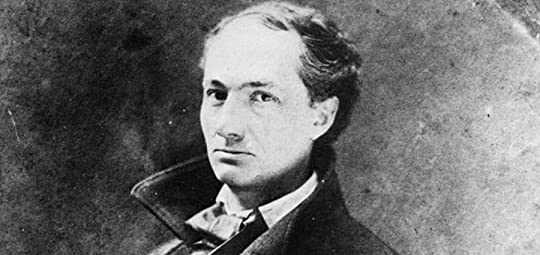
Charles Baudelaire

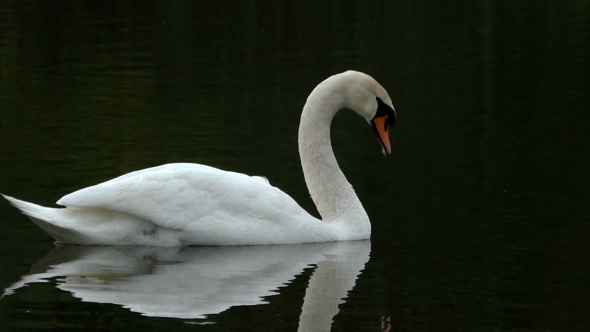
By comparison, the 12 lines of Rilke’s ‘The Swan’ are astonishingly compact. But, on its smaller scale, Rilke’s poem also opens as obliquely as Baudelaire’s. There are two lines before the creature appears and when it does so it seems to be in a figurative role: as an image of human life, which is itself characterised as a ‘struggling with a task not yet complete’. The contingencies and difficulties of a life lived are compared to the awkward movements of a swan’s movements out of water, weighed down, ponderous, ‘constrained’, as if its legs could not move freely. Baudelaire kept the two sides of his comparison (the swan and the experience of exile) clearly demarcated. Rilke balances the two sides of his comparison more evenly and potentially more confusingly. Is this a poem about a swan that conjures thoughts about life and death, or is it about life and death which now remind the narrator of the movements (in and out of water) of a swan?

Certainly, the initial topic seems to be life (its difficulties) and then in the second stanza, death itself: ‘that sense of our slackening grip / on the earth where we stand every day’. What is bold about this poem is how the final seven lines take off from this introduction of death into a second series of images related to the swan entering the water. But it is a series that does not return from the swan to the probable theme of human life/death. Instead, the poem records, in exquisite detail, the process of the swan entering the water and settling and then swimming away. It has the clarity of an Imagist poem (and I am hoping for that in my translation of it):

so, tentatively, he lowers himself down

x

and onto the waters that welcome him

gently, already, contentedly letting slip,

retreating beneath him, a moving tide,

while he, infinitely still and assured

and ever more majestic, more mature,

is content the more placidly to glide.

The growingly anthropomorphic quality of Rilke’s description (like Baudelaire’s before) implies the swan’s representative role in reflecting human life and in this instance, human death. Or at least, the idealised image of death that Rilke wants to convey: not something to be feared, but a gradual transition, a becoming, a maturing, an integral part of a life’s ‘struggling’. The poem’s playing with our perception of the swan/life divide is part of Rilke’s intention: life, as much as death, is not something Other, detached from the world of things, but something co-existing alongside it, within it. The creature’s placid transition from land to water, life into death, represents a true death for Rilke. This is not something available to all. In an earlier poem from the Book of Hours – in a poem which shows the influence of Baudelaire – Rilke portrays the poor of Paris, ‘wan-faced and petal-white’, frightened of being admitted to the hospitals of the city, knowing death awaits them. But this is a ‘petty death’, the demise of the body with no spiritual dimension; it is not ‘their real death’ which remains ‘hanging green, not yet sweet / like a fruit within that will never ripen’. So Rilke’s swan, as it glides placidly from life into death, is an image of such an ideal transition.  

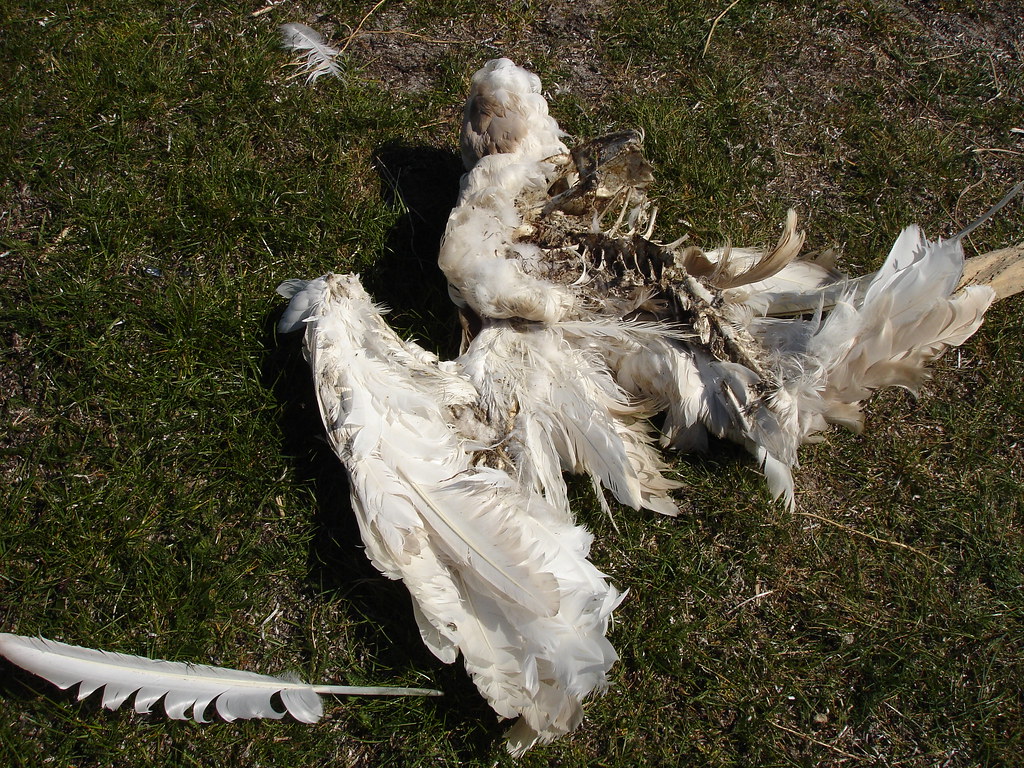
It’s possible Oswald’s poem, ‘Swan’, has Rilke’s in mind as its preoccupation is also with life and death. Compared to the Parisian perambulatory of Baudelaire’s regular ABAB quatrains and the meditative, imagistic, quasi-sonnet form of Rilke, Oswald’s poem wanders freely across the page echoing the disintegration of her already dead and rotting swan. The poem is composed of two elements: narrative description and the imagined voice or thoughts of the dead swan as it rises away (soul-like) from its own corpse. The only real puzzle here is the final speech of the swan.

The opening harks back to the sound world and imagery of Ted Hughes. The harsh assonance of the curt opening phrase (‘A rotted swan’) is an example, as is the following long line with its splashing sibilance and use of a technological image applied to the natural world: the swan is ‘hurrying away from the plane-crash of her wings’. Also like Hughes, Oswald likes to use the space of the page; the phrase ‘one here’, repeated for each of the wings, is placed as if the material of the words indicated the location of the wings set awry. The plane image is picked up again with the metaphor of the swan leaving the ‘cockpit’ of her own flying machine. The dualism of mind/self/spirit/soul versus body is adopted in what seems to be a simple manner.

Alice Oswald

Baudelaire’s swan in exile cried for rain in its natural watery homeland. Oswald’s is puzzled by its sudden divorce and alienation from its own body. In its first speech, it does not recognise its wings: ‘those two white clips that connected my strength / to its floatings’. The tone is similar in the second speech: ‘strange / strange’. The swan seems aware here of its own sense of ‘yearning’, experienced in its life, that the body’s ‘fastenings’ (wings? tendons? muscles?) were never able to ‘contain’. As with all these swan poems, the bird is being co-opted to represent humanity; here, our sense of being more than merely physical. The swan sees her own black feet, now ‘poised’ but unused. The corpse is an intricate, marvellous machine, but without whatever is now departing, it appears ‘a waste of detail’. Before the third and final speech, the body and all its ‘tools’ are now abandoned, with all its ‘rusty juices trickling back to the river’.

I think that last phrase is important. This is one of Oswald’s best poems but I’m uneasy with the conventionality of the spirit/body trope. Perhaps what is leaving the body is returning to the environment (an after-life of that sort)? In the final passage, the swan wants to address its own corpse before it ‘thaws’ or rots away. This suggests a desire for some ritual. The perspective of the poem now zooms in on the head, then the eye, which is visible and into its ‘cone of twilight’, the fading gleam within it, and into the cone, almost as if looking into a snow globe. The swan sees a scene there: a bride setting out to her wedding. Is this an image of the renewal of life after death? The ‘trickling back to the river’? But this return journey seems difficult: ‘it is so cold’. I’m not clear if I should be taking this in a narrow way: this individual creature will be extinguished. Or more broadly, the natural cycle of life-death-decomposition-new-life has been compromised (by human actions?). Oswald’s final image is of tolling bells, ringing in the putative wedding venue, bells like ‘iron angels’, insistently, ‘ringing and ringing’. Oswald’s swan is marvellously physical in its demise but its projected commentary on itself feels at times naively anthropomorphic (the death I’m left thinking of is a human death), at others puzzlingly obtuse.