Acker Bilk’s ‘Stranger on the Shore’ (October 1961)

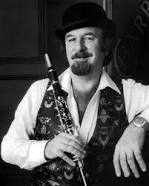
With the death of Acker Bilk yesterday, the following post suggested itself. A West Country boy like myself (‘Acker’ is Somerset slang for mate) he died in Bath Royal United Hospital, these days an unfortunate, frequent haunt of my parents. Bernard Stanley Bilk was born in Pensford, Somerset, in January, 1929, the son of a Methodist lay preacher. His mother played the organ in the local chapel. After a spell working at the Wills tobacco factory in Bristol, he went off to do his National Service in Egypt where he learned to play the clarinet and formed a band known as the Original Egyptian Stompers.

imgres

He always retained his affection for Pensford and never lost his Somerset accent. At one time he employed a road manager, Alan Cutler, known as Adge, who would go on to find success with scrumpy and western outfit, The Wurzels. 

The brief passage that follows is another section from sketchy autobiographical writings hidden away in my files. My earlier post (https://martyncrucefix.com/2014/10/14/telstar-august-1962/)

came from the same source. Perhaps there will be more . . .

Play this as you read:

https://www.youtube.com/watch?v=VsKTG30g3mw

On the radio a breathy clarinet with a lilting gentle melody climbing up and then immediately returning to a low sustained note like a human voice, deep, quivering, the melody so pure and simple there should be words. I try to put words to it.

That reedy, woody voice backed by a simple marking of time on string bass. As it rises a second time, thin violins accompany it as the notes leap up an octave to something like a cry set loose in a vast open space and the whole is bathed in the solitary, brooding mood that the title of the record hits with precision.

An unknown figure exactly as we all are unknown figures, this time walking beside the ocean, the flat, undramatic waters rolling in, chilled and colourless but for the warm tones of the artist himself, humble and quiet, even at the last hesitating before a defiant little spirited flurry and only then sidling away, the music diminishing into a flat horizon, no big finish.

It is nothing like you might have expected when you see the player on the grey television screen, the gimmicky bowler hat, silk waistcoat and jazzer’s goatie beard.

Dad explains the idea of a ‘gimmick’ to me: something you might adopt – an object, a voice, a look – in order to draw attention to yourself. Why would you do that?

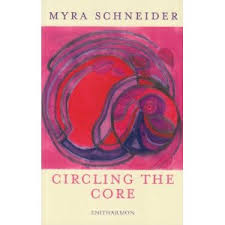
Myra Schneider’s ‘Circling the Core’ (2008)

Myra Schneider is an old friend from the North London circuit, a tireless worker for poetry and a poet of significance who has also proselytised for the therapeutic impact of creativity in relation to both physical and mental illness. She has a new book out and I saw her read from it recently. I have yet to commit my thoughts on her new work to the keyboard and screen but I thought – by way of an appetiser – this might be an opportune moment to post the review I wrote of her previous collection Circling the Core (Enitharmon Press, 2008)

Also, here is a recent interview with Myra conducted by Maitreyabandhu at Poetry East:

https://www.youtube.com/watch?v=5WfI7Bx_7Uo

The interview begins with Maitreyabandhu asking why she selected ‘The Windhover’ by Gerard Manley Hopkins and ‘Morning Song’ by Sylvia Plath, as two poems which had influenced her. He then asks about her life and the different areas of her poetry and writing.

Reading Myra Schneider’s Circling the Core, there are many things that remind me of Edward Thomas’ review of Frost’s North of Boston (1914). Thomas praises his American friend’s poems because they lack “the exaggeration of rhetoric”. He applauds his language as “free from the poetical words and forms” that harmed so much poetry in the early twentieth century. Frost avoids both “old fashioned pomp and sweetness” as well as its opposite – “discord and fuss”. The revolution that Thomas and Frost were pursuing is the recurring one of poetry’s return to common speech and this has long been one of the chief pleasures of Schneider’s work too. Since the mid-1980s, she also has pursued a voice that refuses to flaunt gratuitous formal innovation, nor does she play fast and loose with syntax, lexicon or typography. It might appear that Schneider prioritises a truth to things more than words and her conclusion is an admirable and observant humility before the world, its creatures, domestic objects, weather and places – though her attentiveness to detail is not the whole story.
images

Schneider herself also refers directly to Thomas’ example in taking the epigraph to this collection from his poem ‘The Glory’. Thomas hopes to find this glory in the “beauty of the morning”, the natural world, the acutely observed details of the “pale dust pitted with small dark drops”. Yet what draws him remains elusive and he concludes that he may have to remain “content with discontent” since he “cannot bite the day to the core”. Schneider’s poems echo many of these concerns but – despite the tentativeness of this collection’s title – she tends to be more optimistic about the search for the “core”. The book opens with a marvellous response to a Barbara Hepworth sculpture which, after tracing the curves and lines of the material reality, worms its way to a centre, a still point, “jewel, kernel, womb, unshielded self, / a promise of continuance. / We lay hands on profound silence.”

In Schneider’s work the kernel usually is that “unshielded self”, the authenticity of lived experience rather than the accumulations that can obscure and denature it. In ‘The Mnajdra Temples’, the narrator is interested in and even impressed by information associated with these Maltese Neolithic ruins, but it is “what the humans who worshipped here thought” that is the real goal: “how the human brain began making / complex plans, conceiving deities, temples”. Elsewhere, a viaduct cannot be encompassed by its dictionary definitions; it is always more than its “bare facts” (‘Images’). Similarly, personal identity is more than the sum of its material parts: a bowl created by the poet’s mother-in-law “goes deep but not deep enough to hold everything / she lost” (‘Larder’) and on a return visit to childhood landscapes in search of self, it is ironically “when I leave / the present peels away” (‘Going Back’). A poem like ‘Goulash’ is so good just because it manages to capture this core of subjectivity, the thinking mind in process as it moves from the details of cookery, to love, to landscape, to a contemplation of “darkness” which lies ambivalently at the heart of things, triumphantly ending with a celebration of friendship which is not overwhelmed by placing it beside the longer historical perspectives of the jewellery of the Sutton Hoo burial ship.

Schneider’s interest in psychological truth leads inevitably to the use of dream materials as the starting point for a number of these poems. ‘Naming It’ opens dramatically with collapsing buildings but, even after the dust settles, the “panic is all in the rubble”. The possibility of escape from such chaos is intuited when the narrator discovers a blue pool and realises it is “crucial to capture the exact word for its colour”. As well as suggesting the essential nature of her work as a whole, this also confirms that Schneider’s vision encompasses a good deal of darkness. Though there are occasions when grief, pain, injustice are countered by little more than wishful thinking, as in ‘Journey’ with its repeated “What I want . . .”, a poem like ‘Nothing’ confronts it head on in the “vacant cradle /  of delicate bones that was once a bird’s head”, an object that seems to be demanding to know how to “face nothing”. Something of a reply to this is given at the end of the sequence ‘Larder’, with its finely judged observation, defining life itself as “a series of small makings / to stack up in larders against death”.

It is less of a leap than one might imagine from this to Schneider’s re-working of the myth of Orpheus, an ambitious poem that stands up impressively alongside Carol Ann Duffy’s ‘Eurydice’. In ‘Eurydice’s Version’, Orpheus is a stunningly beautiful but selfish, spoilt man-child, beside whom his wife is initially no more than an “adjunct”. His music is presented as a compulsion she would like to resist. Her association with the shepherd, Aristaeus, is reinterpreted as a relationship in which her “actual” self is recognised in contrast to Orpheus’ chauvinistic, insistent projection of “bedmaker, breadmaker, whore / babymaker, milk-breast, childminder, nurse, / comforter, slave, mystic maiden, high goddess, // muse”. But Aristaeus’ interest in her true “core” frightens Eurydice away, allowing the snake bite that kills her to be regarded as “punishment” for turning her back on such a moment of possible honesty. Orpheus’s turning is likewise re-interpreted as a relief for Eurydice, who prefers the darkness of the underworld where, she says, “I’ve learnt to listen, to think, / for myself and when I speak I am heard” – in other words, where she lives with the virtue of truth to her inner self which this collection explores.

At one point, Eurydice wishes Nature might resist Orpheus’ melodic pushiness too and Schneider is admirably unapologetic about the importance of the natural world in the process of salving some of the harm she encounters. Those who have read her poetry in the past will recognise features of locality such as Pymmes Brook, the Piccadilly line viaduct to Arnos Grove, Arnos Park itself in north London and Schneider’s south-facing garden overlooking it. She has worked this landscape into almost mythic significance, its details able to reflect and evoke the inner experiences with which she is really concerned as in ‘Seeing the Kingfisher’, the ‘Drought’ sequence and ‘Skywards’. A little more exotically, ‘The Oyster Shell’ explores again this poet’s characteristic movement inward, a movement for which “prayer” offers no help but which, pursued with the kind of vigorous honesty that fills this book, can reach an almost Blakean intensity:

I retreat to the cradle of this shell,

creep in, unclothe my self, tread

on milkwhite and mother-of-pearl,

follow faint pools of sandgold

to the sullen indigo sea lying below

the hinge as its core. Here, I let go.

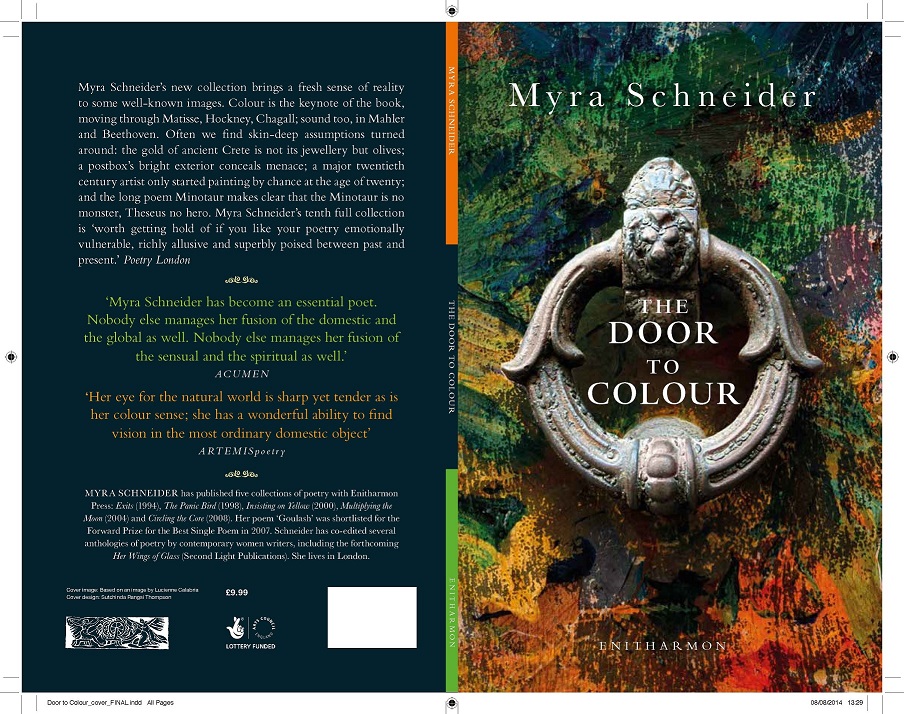
Myra’s new collection is called The Door to Colour:

http://www.enitharmon.co.uk/pages/store/products/ec_view.asp?PID=645
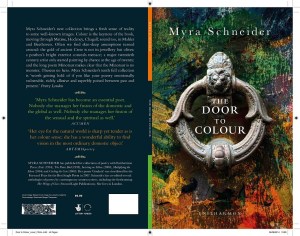
Schneider_Colour_PRF1 (2)

Kei Miller’s ‘Cartographer’ and Friel’s ‘Translations’

Kei Miller’s third collection, The Cartographer Tries to Map a Way to Zion (Carcanet), recently carried off the Forward Prize for poetry and it struck me that it shares concerns about language, colonialism and map-making with Brian Friel’s play, Translations (1980) which has become something of a staple teaching text in recent years for several exam boards.

Miller’s poems explore knowledge of place. To begin with there are two opposing views. The cartographer of the title is schooled in “Babylon science” and seeks objective, timeless, abstracted knowledge of Jamaica, knowledge of worth (to his mind) because rid of all contingent distraction. The rastaman knows his island more subjectively, historically, full of local detail, more politically. For the rastaman the island is “unsettled . . . unsugared . . . unmapped”. It “fidget[s]” and slips from “your grip”, is full of what the objective gaze can “never see”. The cartographer arrives with the colonial mission to “untangle the tangled, / to unworry the concerned”, to set a nation and its people back on the right path from which they “may have wrongly turned”.

images

The 27 sections of the title sequence then proceed to track the dialectic between these two viewpoints. But the book itself is less Ordnance Survey, more a full colour, illustrated map stuffed with half-sketched houses, trail signs, characters, places. This wonderful effect is achieved by Miller’s scattering, along the trail of the dialogue, poems that explore the etymology of place names as well as others that praise various aspects of Jamaica (especially its creatures). So the outcome of the dialogue – proceeding as it does as a pretty civilized skirmish – is loaded in the rastaman’s favour. It’s true that he is said to dismiss “too easily the cartographic view”, though even here the particular poem ends with an acknowledgement that the Eurocentric Mercator projections of the world (1569) misrepresent the size of Africa and have long “gripped like girdles / to make his people smaller than they were”. Rather, it is the position of the cartographer that shifts significantly. Though initially he too “dismisses too easily the rastaman’s view”, he soon begins to “lose himself” among the “I-drens & I-formants . . . smoking a chillum”. Eventually a question rises in his mind, “between his learning / and awakening: how does one map a place / that is not quite a place? How does one draw / towards the heart?”

It’s on this basis, in his more illumined state, that the cartographer begins to try to “map a way to Zion”. Of course, he needs the rastaman to point out that Zion is less a “where” than a “what” and that it cannot be plotted towards but rather must be waited for. Nevertheless, the book’s conclusion is comedic; the whole begins and ends with a “heartbless”. The brutal facts and bloody history of colonialism are conveyed more in the place name poems, many of which record displacement, floggings, shootings, “suspicion . . . centuries deep”. The brevity of most of the poems, the switching between standard voice and forms of Jamaican patois, the details of landscape and people, all combine to make a very enjoyable read, rewarded with a convincing up-lift at the end.

Translations 4

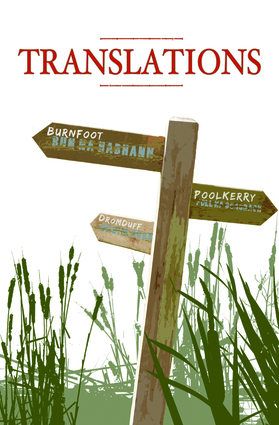
Remarkably similar territory is explored in Brian Friel’s modern classic drama Translations, about the re-mapping of Ireland by British colonial forces around 1833. But Friel writes a tragedy, recording (with historical hindsight) the almost complete stamping out of Gaelic culture and language in the 19th century. The British sappers (like Miller’s cartographer) claim they are there to benefit the Irish people, to rationalize and clarify what they perceive/assume is a backward country in need of modernization. But Friel (like Miller) portrays the native culture as sophisticated, if different, so that with the British process of improvement comes inevitable loss. The hedge-school teacher, Hugh, closes the play, failing to recall lines from Virgil and Friel is implying, with dramatic economy, with the stage lights fading, the loss of knowledge, of language, of personal and national identity. In contrast, Miller’s book ends in peaceable benediction:

In leaving

The rastaman bids you

Mannaz and respeck

Izes and protecshun

Upfullness

He bids you

Guidance and healt

Inity and Strenth

Bids you, Trod Holy

To I-ly I-ly I-ly

Mount Zion-I

Trod Holy.

W. H. Auden, West and Wannabes

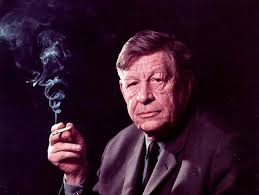
In The Dyer’s Hand (1962), W H Auden throws off one of his critical Interludes on the subject of Nathanael West’s fiction from the 1930s. With the passage of time and the continuing prominence of Simon Cowell, his observations only become more relevant. I currently have classes in process of preparing OCR A2 Coursework on West’s The Day of the Locust (1939), Fitzgerald’s The Great Gatsby (1925) and T S Eliot’s Prufrock and Other Observations (1917) and I’m finding that Auden’s piece, while difficult, provides a framework of terms and ideas which relate all three texts.

images

Auden denies West’s status as a novelist first, then as a satirist. The first point is because of West’s lack of interest in the accurate representation of either the “social scene” or “subjective life”. Auden’s definition, I guess, demands forms of realism, while West delivers forms of caricature. As for satire, Auden also holds a conventional position on it, demanding not merely a critique of American society and its behaviours but also positive elements, a way out, a solution however faintly sketched. West does not provide the latter (though I disagree that this disbars him as a satirical writer) and I wonder if later work might have developed a more positive message. West’s death, at the age of 37 in a car accident in Southern California in 1940, was one of the greatest losses suffered by US literature in the 20th century.

Auden argues West fictions are “Cautionary Tales” from an infernal land ruled by the “King of Wishes”. All his main characters suffer from what Auden christens “West’s Disease” in which the sufferer is incapable of converting wishes into desires. A wish here is a fantasy, a refusal of reality, particularly self-directed so that it proclaims “I refuse to be what I am”. Momentary, innocent, frivolous wishing is a form of play; if allowed to predominate in one’s psychic life, a wish becomes a form of self-hatred, leading to guilt and despair. In contrast, a desire (Auden is less clear on this) is an ambition, an intention which acknowledges the conditional nature of reality and the self, accepts the present state of both but seeks a pragmatic course to pursue the desire. Wishes begin as whimsy and grow poisonous; desire is the fuel that drives us out into the world.

imgres

West’s characters know only wishes. They are doomed because they cannot truly desire anything since wishers deny themselves; they can believe nothing because wishers are always drawn to the next novelty. Faye Greener (from Locust) amuses herself by running through fantasies, stories she plays in her head, like “a pack of cards”. She loves to slip into a dream, she says, because “any dream was better than none”. But Faye is young and her wishes have some vitality. She may be convincing herself that they may sometime become desires. The strange case of Homer Simpson (yes, West got there long before Matt Groening) is of an older man who has ceased to entertain wishes at all. His is a passive sort of despair: “It took him a long time to get all his clothing on. He stopped to rest after each garment with a desperation far out of proportion to the effort involved”.

Both characters demonstrate the utter self-centred nature of wishers. Auden argues that, for such people, others exist only as images of what s/he is or is not, all feelings are mere projections of what is felt about the self. As perceived from the outside, all behavior therefore appears fraudulent, erratic, incoherent. Born of frustration and anger, the final stages of West’s Disease is a craving for violence, symbolically reflected in Locust in the stomach-churningly sanguinary cock fight of Chapter 21 and then literally in the film premiere riot of the final pages.

imgres

In 1962, Auden speculated that the promises of democracy and modern living only served to exacerbate this Disease, encouraging hopes of personal achievement beyond the bounds of reality and supplying apparent means of satisfying wishes through technological advances: “In societies with fewer opportunities for amusement, it was easier to tell a mere wish from a real desire”. We have probably only progressed in precisely the wrong direction on these issues. The instantaneous satisfaction of our wants blurs the wish/desire distinction Auden wants to make and we now have a slangy, slurred word for Faye Greener. Wannabe is a noun formed from a complex verb combination and is defined as someone who wishes for something but fails to have the drive, ambition or talent to make the journey in reality; a poser, a follower, a charlatan of sorts whose grip on reality is tenuous even when Simon Cowell tells them they are talentless.

More troublingly, it strikes me West’s Disease is an essential component of extremist, fundamentalist views – both political and religious – which achieve their existence and persistence only through the wisher’s denial of the indubitably various nature of reality. Faye Greener’s innocent deck of Hollywood dreams disturbingly travels, via West’s scenes of riot and sexual abuse, into the mouths of fanatics, to the deserts of Syria where real crimes are being committed because other human beings have become no more than mere projections of what is felt about the self.

Telstar (August 1962)

Play this while you read ….

Listening to the radio on an August Sunday evening, while Mum irons in the sitting room. She is waiting for Sing Something Simple, its opening verse in sickly sweet harmony: ‘Sing something simple/ As cares go by / Sing something simple / Just you and I’.

We seem to be grouped round, very close, all five of us. I am sitting high up to the wooden bureau which then stood on the back wall. Perhaps I am drawing or writing and the blue and white radio with its plastic round dial and padded plastic blue back is standing on top. Before Mum’s programme comes on, we catch the end of another, hear a record being played. This music begins like some mistake, crackling and buzzing as if the clumsy tuning dial on the radio has been nudged but eventually and incongruously a tambourine or hi-hat is tapping somewhere, electric guitars are labouring up a scale to a climax and the main tune begins to a galloping drum beat, instantly hummable on guitar and electric organ: da-da dah, da-di-da-di-da-dah.

Dad is trying to explain that the opening buzzing and hissing really is a satellite relay tuning in and I believe it – maybe he does too – and my thoughts are off into the air as the melody repeats itself, urging upwards in later sections which twangle in a more unearthly fashion and – despite a horrible earthen, earth-bound lurch to a higher key later – the climactic growling male voice – ah-ah-ahh, ah-ah-ah-ah-ah-ahh – sends me away into a faux modern state of mind.

I’m not sure I am envisaging anything you’d call space – its blackness, cold and starry – but something far looser, more ill-defined, one place sending messages across distance to another; long empty spaces, but spaces more my familiars.

The clouds moving in a procession across the big sky to the northwest of our red-roofed house. The width of the darkened fields opposite the house. The canal’s black water. In places, the ripple of stars.

Michael Donaghy – 10 Years On

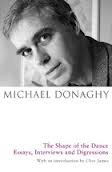
With the South Bank in London about to stage a celebration of Michael Donaghy’s work (http://www.southbankcentre.co.uk/whatson/michael-donaghy-a-celebratio-85980) and several new publications forthcoming, I remember reading with him around 1990 at that same venue. I’m sure the event was recorded but I’ve never heard it since. He was reading from Shibboleth (1988) and I must have been reading from Beneath Tremendous Rain (1990). I reviewed his posthumous book Safest (2005) for Poetry London (I think) and thought it might be appropriate to post it here unchanged. My intention was to review his work as a whole as well as commenting on the short collection that Picador had then produced.

imgres

Michael Donaghy’s death in 2004 is rightly regarded as a great loss to English poetry. With the publication of Safest – poems he had been preparing for a fourth collection – we can see his work over 30 years forming a tragically curtailed, but significant whole. I wonder if he tired of the early ‘metaphysical’ label, so easily applied to a poem like ‘Machines’ which opened his first book and remarkable in 1988 for its elegance of form and delicate wit. What is really distinctive in the first two books is his pursuit of the dramatic lyric. Donaghy is a terrific storyteller and a key part of his success is the irresistable address of his narrators. This is usually combined with astonishingly fluid transitions from colloquialism to the complexly erudite (the metaphysical bit). Drama lies in Donaghy’s precision of voice, the accessibility of character and narrative and his superb, often comic, sense of timing. His deployment of these various devices results in the other distinctive property of a Donaghy poem – the sheer distance it can travel from start to finish and the surprises on the way. Particularly for those who saw him perform, these are the elements he triumphantly combined in feast-like poems such as ‘Smith’, ‘Letter’, ‘Cadenza’, ‘Liverpool’, ‘The Hunter’s Purse’ and ‘Erratum’.

In retrospect, the traditional nature of his subjects is clear: love, art, death, time. Perhaps the absence of politics will come to be seen as a bar to real greatness, though the opening 20 pages of Shibboleth and the first two sections of Errata are very powerful evidence in his favour. Perhaps all his concerns are subsumed in his continual meditation on the temporal – how identity is composed of past events, how the past can seem more real than the present, how “the past falls open anywhere” (‘Black Ice and Rain’ from Conjure). Always restless, Donaghy’s third book seemed significantly darker in tone and contained fewer stories. What the blurb referred to as his most “vulnerable” work is a series of heart-broken love lyrics and a number of poems on his relationship with his dead father. Of the latter, ‘Caliban’s Books’ is outstanding and need give no quarter to Plath’s ‘Full Fathom Five’ in the evocation of parent/child relationships and Donaghy’s poem is full of tenderness and astringent nostalgia for the lost man and his Irish childhood.

Now Safest gives us 24 new poems – barely half a full collection – and one can only wonder at what might have been. Maddy Paxman’s note on the contents suggests these were the pieces Donaghy had approved for publication, but even so the repetition of a brief passage in two quite different poems (page 21 and 27) suggests an inevitable lack of finish. The book seems to have been shaping up more to resemble Conjure than the early work. Vintage Donaghy can be found in poems like ‘A Darkoom’, an imagined/remembered portrait of Klein, a holocaust survivor and photographer, visited in the garrulous narrator’s youth but whose memories of the man are at risk of being forgotten. The opening poem’s image of a Claude Glass (an 18th century device for creating picturesque images of landscapes that lie at the viewer’s back) is a perfect vehicle to articulate Donaghy’s retrospective habit of  “squinting to recall some fading pleasure, / or [being] blinded by some private scrim of tears” (‘Upon a Claude Glass’).

imgres

‘From the Safe House’ is another narrative tour de force, blurring the boundaries of memory and imagination, compacting time to an eternal instant in writing a letter from Reagan-era Chicago to send in the present day to a friend who has just died prematurely but imagining him a happily married father in Vera Cruz! Against all the odds this works – and is deeply moving. This is an almost baroque extension of earlier modes, but Donaghy’s bold re-writing of the original in ‘Akhmatova Variations’ looks like a new direction. As does ‘The Moko’, which reads as a hypnotic paean to some whale-like creature: “Muscles of silence are rolling miles offshore at night”. Such environmental concerns are new in Donaghy’s work and his lyricism invests these creatures with grace and nobility:

They knew the stars and steered by singing them

and when the stars were dark, by wind,

and when the winds died, by wave swell,

bird flight, swirled shoals of luminous algae,

by phosphorescence a fathom under the outrigger.

The fact that the moko turns out to be a Polynesian mythical beast of the sea only adds to the poem’s intrigue.

Donaghy’s art – as far as it was allowed to develop – owes its success to contradictory impulses. It thrives on tensions between fluid and formal, colloquial and erudite, humour and seriousness, personal and impersonal. It strikes me there was a movement over the years from the first of each of these contrasts towards the second – whether a permanent sea change or mere local turbulence we will never know. Of course, hindsight tempts us to see the darkening as prophetic but, as I have said, this was under way in his third book. Safest has its preponderance of troubled and troubling lyrics, less love-torn this time, more concerned with the dissolution of self. ‘Midriver’ is a bold language experiment in which the lyric voice is almost wholly stripped of its personal pronoun and identity seems lost in a swirl of the temporal and spatial: “so stops halfway and, neither there nor there, / but cold and rained on and intransitive”. Even more explicitly in ‘Exile’s End’ and ‘Disquietude’, it is death that lowers and Donaghy writes not with Larkin’s horror, nor Thomas’ raging, but from an intrigued distance: “No recording devices are allowed in this hall. / The lights dim . . . / for the next movement / which features no one and is silent”. (‘Disquietude’).

Louise Gluck’s ‘Education of the Poet’

As Keats once said, several things dove-tailed together. One of these was being asked by Poetry London to review Louise Gluck’s new collection, the PBS Recommendation, Faithful and Virtuous Night (Carcanet, 2014). The other – yesterday – was discussing with students the opening quatrain of Edward Thomas’ ‘The Sun Used to Shine’ with its marvelous evocation of the happy days he spent with Robert Frost in the Gloucestershire countryside in 1914. The opening lines employ an ABAB rhyme scheme, enjambement, judiciously placed caesuras and simple colloquial choices of verb and adverb to create its effects. As often, students asked whether what we were discussing was ‘thought about’ by the poet. My usual answer is that a writer is far more conscious of his craft that they might expect, but also that he considers options and exercises a veto. Like evolution, what fails goes to the wall; what remains becomes more and more coherent and effective. This is an idea I first saw expressed in Gluck’s essay, ‘Education of the Poet’ (originally a lecture delivered in 1989, reprinted in Proofs and Theories: Essays on Poetry (Carcanet, 1999).

imgres

Gluck’s over-riding point is that her characteristic mode of thought defines itself “in opposition”. This gives rise to her image of the poet as fundamentally in a state of helplessness much of the time, absorbing whatever is regarded as ‘oppositional’ and looking for opportunities to speak back. She makes it clear that such an idea “does not mean to distinguish writing from being alive”. What it means in practice is that the life of the poet is a life of “yearning, not [one] made serene by sensations of achievement”. The image of the writer effectively, confidently, repeatedly decanting her self, her being onto a sheet of paper is a false one. There are periods of silence, preoccupied with the desire to make art, a restlessness that may be agony. When at last “some sound, some tone” precipitates, what follows is a period of concentrated work: “so called because as long as one is working the thing itself is wrong or unfinished: a failure”. Yet when the poem, the utterance, is finished – Gluck argues – the poet is no more, reverting “simply [to] someone who wishes to be one”.

This pattern of a powerful force, a cacophony being replied to by the artistic voice  can also manifest in the way a poet engages with language. Gluck rejects the idea that poets are people who can’t get enough of individual words like ‘incarnadine’, in favour of language deployed in larger swathes to create contexts in which the “simplest vocabulary” is liberated from custom. It is custom that is thus replied to through using the gestural aspects of language – setting, timing, pacing – releasing words into novel relationships with truth. The poet generates material, improvises, plays with language and replies to what is produced through the process of veto. Like evolution, what fails goes to the wall; what remains becomes more and more coherent and effective.

imgres

So it’s no surprise that Gluck’s taste in poets favours those whose mode of poetic speech is more like a spoken confidence, a reply, a conversation: “I read to feel addressed”. Accordingly, her personal preference is not for poets – like Wallace Stevens – whose work is a more solitary musing, like “intercepted meditation”, not concerned to be listened to. I find myself in agreement with much of what Gluck says and – re-reading the essay now – I remember that she also uncovers this pattern in the teaching process. She warmly recalls being taught by Stanley Kunitz, his application to the novice writer of a steady “scrutiny”, the oppositional force “from outside, from the world, from another human being”. It’s a scrutiny and compulsion she herself continues to provide for her own students; the teacher’s presence is to stir, to provoke the reply, to kick start the process of definition.

It seems even one’s own work can be seen in this light. Considering her early collections, Gluck regards each new book as a fresh reply to what went before. This is a good answer to my students’ inquiries about how conscious an artist can be. Gluck tells us – and we should more than half believe it – that here she sought latinate suspended sentences, there how to end a poem without sealing it shut; elsewhere she looked to learn a longer breath, to make better use of the present tense; later still to write something less heroic, devoid of mythic reference. The artist is conscious, manipulative, alert. The artist waits, responds, manoeuvres. The both.

Sir John Franklin and Mary Shelley’s ‘Frankenstein’

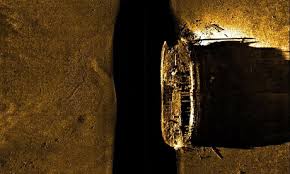
The Guardian tells us today: The grisly and mysterious tale of two British ships that disappeared in the Arctic in 1845 has baffled generations and sparked one of history’s longest rescue searches. But now, more than 160 years later, Canadian divers have finally found the remains of one of the doomed Navy vessels.

imgres

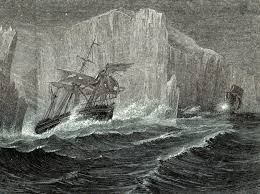
Legend has it that sailors on board the HMS Erebus and HMS Terror, who were chosen by the explorer Sir John Franklin, resorted to cannibalism after the ships became ice-bound in the Victoria Strait in the Arctic territory of Nunavut. Search parties hunted for the crew until 1859, but no sign of either ship was discovered until now. However, tantalising clues have emerged over the years, including the bodies of three crewmen, discovered in the 1980s.

The Franklin expedition’s mission to the fabled Northwest Passage had frustrated explorers for centuries and the sea crossing was only successfully made 58 years later, far further north. The original search expeditions in the 19th century helped open up parts of the Canadian Arctic for discovery. (http://www.theguardian.com/world/2014/sep/09/british-ship-1845-franklin-expedition-found-canada)

And by coincidence an AS class is today beginning to study Mary Shelley’s Frankenstein in which Robert Walton writes home to his sister, Margaret Saville, from St Petersburgh, on December 11th, 17—. One of the three aspirers in Shelley’s book, Walton also hopes to discover the Northwest Passage. He too becomes trapped in the ice but then picks up the bedraggled and wasted figure of Victor Frankenstein. Victor’s tale begins as a moral warning about the dangers of over-ambition, how the pursuit of knowledge risks destroying the “tranquillity”of life and our “domestic affections”.

This may have been Mary’s primary message, living as she did through the loss of a daughter the year before and Percy Bysshe’s roving eye and Byron’s restless wanderings. Despite her mother’s political radicalism and feminism and her father’s philosophical anarchism, I find it hard not to read the novel on one level as a rather conservative plea for a quieter life. Unlike Franklin and his crew, the ice eventually breaks up around Walton. This gives him the possibility of choice – and he chooses not to follow in Victor’s self-destructive footsteps but to turn for home, to Margaret, delivering his journal as the novel we now read.

imgres

On the other hand, deriving from a dream she had in the year with no summer, 1816, there’s plenty in the novel that may have been brimming beyond the author’s conscious control. Victor is a tragic hero of sorts. Even when he is dragged on board, close to death, Walton senses “He must have been a noble creature in his better days, being even now in wreck so attractive and amiable”. Franklin, 50 years later, was another Victor, risking all; it cost him (and his crew) all they had. A failure, but a tragic sort of failure and one long remembered. But Walton’s journal is a story of two sorts of heroism: the one that never gave up as well as the one that chose life, the life of relationships. We remember Walton because of Victor. But I think Walton knew what he was choosing and maybe thought of it with equanimity in the anonymity of his twilight years.

Mary Shelley saw her husband drowned in 1821. She died of cancer in Bournemouth in February 1851. I wonder what she thought, 6 years earlier, reading of Franklin’s abortive voyage. I imagine her re-reading the end of her great novel, the created Creature’s life ended because his creator, his only human tie to life itself, has perished: “He sprang from the cabin window [. . . ] upon the ice raft which lay close to the vessel. He was soon borne away by the waves and lost in darkness and distance”

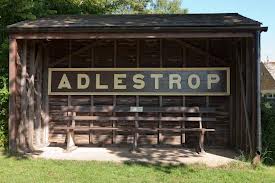
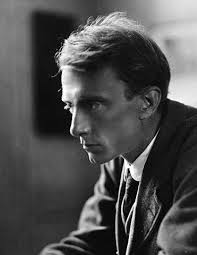
Teaching Edward Thomas’ ‘Adlestrop’

We teach the OCR exam board’s AS module F661, opting for Edward Thomas as the poet for close analysis. Oddly, the board do not include ‘Adlestrop’ in their selection of poems. So in the opening sessions, here’s a way of gentling students in to the processes of closely analysing a poem while also showing them Thomas’ most well-know piece.

imgres

Discuss with the class the idea of syllable counting in a verse line. Get them to try it by asking students to write an 8 or 10 syllable line beginning “Yes. I remember . . .”. Perhaps one of each.

For the exercise that follows (for those who want more restrictions) suggest keeping to an 8 or 10 syllable per line. Others (possibly the less able) may prefer more freedom . . .

Now . . . tell them to imagine they are travelling – some form of transport, walking, bike, train, bus. Ask around to reveal what they are imagining. Try pushing it a bit further, for more details, the car, the time of day, the scenery . . .

Now write 4 lines – a quatrain – in which you describe travelling and arrival at a particular location, at a particular time of year. They stop there. Maybe suggest they might open with “Yes. I remember . . .”. again – but not compulsory  . . .

Yes. I remember Adlestrop —
The name, because one afternoon
Of heat the express-train drew up there
Unwontedly. It was late June.

Next, write 4 lines in which you have stopped at this place – you hear a variety of noises – describe them . . .

The steam hissed. Someone cleared his throat.
No one left and no one came
On the bare platform. What I saw
Was Adlestrop — only the name

imgres

Next write 4 lines in which you give a description of what you see – first 2 lines things close by – second 2 lines things further off . . .

And willows, willow-herb, and grass,
And meadowsweet, and haycocks dry,
No whit less still and lonely fair
Than the high cloudlets in the sky.

Finally write 4 lines in which your attention continues to drift away into the distance, ever more remote from where you stopped; suggest it is wholly up to them where they stop with this one – attention may be drifting for miles, even for years . . .

And for that minute a blackbird sang
Close by, and round him, mistier,
Farther and farther, all the birds
Of Oxfordshire and Gloucestershire.

Very optional 4 lines depending on how well they are going – in which they may conclude the piece in any way they wish. Interestingly, Thomas does not make use of this option, does not conclude in any neat fashion; a point for discussion later perhaps. . .

Finally, show Thomas’ own poem. Give out copies. By this stage, students will be likely to have opinions and/or questions about the way the original piece deals with the same material they have just written about.

Homework: to type out the lines created during the lesson – taking any opportunity to alter or just tidy them up to be presented next lesson.

Next lesson – Take the poems they have typed up. Copy them and re-distribute them, one to each student (not their own poem though). Ask them to identify and annotate SIX items from the poem in front of them where they perceive the writer has made use of technical devices.

Ask each student to present and illustrate orally TWO of these devices to the rest of the class. These will range from the simple (a moment of alliteration perhaps) to the more complex (the way the writer develops over quatrain 2 and 3 a lexical field associated with illness)

The teacher might ‘mark’ the original creative piece; certainly a ‘mark’ might be derived from a student’s annotation of another student’s poem.

Re-packaging ‘percussive’ Ted Hughes

Anthologies are the reluctant poetry readers’ hedging bet. There’s a good chance that something good will turn up and prove a winner. They sell well – they are the infrequent poetry buyer’s punt for a gift that will please at least in parts. So Alice Oswald’s compilation of Ted Hughes’ animal poems into a Bestiary will certainly put more cash into the Faber vault. But few complaints – anything to get more people reading any poetry cannot be bad.

Ted-Hughes-001

Oswald discusses her approach to the selection in The Guardian: 

http://www.theguardian.com/books/2014/aug/29/ted-hughes-alice-oswald-animal-poetry-bestiary

She picks up Hughes’ own early image of his poems as creatures with a “vivid life” of their own. He condemns poems which fail to possess this coherent vitality as likely to walk with a pronounced limp – a wonderful way, I’ve found, of imaging that elusive ‘rightness’ of a poem for students and workshoppers. Interestingly though, there is a shimmering, vacillatory quality to others things Oswald writes and this comes directly from Hughes himself. His animals are very much themselves yet they are expressive of human qualities too. Oswald quotes from Moortown Diary; Hughes on the poet “getting close to what is going on, and staying close, and of excluding everything else that might be pressing to interfere with the watching eye”. Held in tension with this are other Hughes’ statements such as this, in a letter, warning of the dangers of mere observation: “When a man becomes a mirror, he just ceases to be interesting to men.”

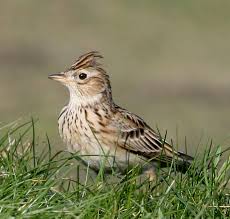
Oswald goes on to suggest that it is the “percussion” of Hughes’ language that instills such vivid life into his poems, quoting from ‘Skylarks’:

The lark begins to go up
Like a warning
As if the globe were uneasy –

Barrel-chested for heights,
Like an Indian of the high Andes,

A whippet head, barbed like

a hunting arrow,

But leaden
With muscle
For the struggle
Against
Earth’s centre.

And leaden
For ballast
In the rocketing storms of the breath.

Leaden
Like a bullet
To supplant
Life from its centre.

imgres

If it is a percussive effect that is critical here it is more Mozart than Stomp. Oswald has precious little space to develop her argument, but what I find in such a passage is Hughes’ distinctive manipulation of scale and perspective, not unrelated to his paradoxical comments above. Microcosm and macrocosm are continually leant against each other here, or – it being a more metamorphic, high-pressured process – they are spun about each other till it’s hard to pick one from the other. The tiny body of the lark is a warning to the globe; its braced, needle-thin ribs conjure images of Andean mountains; its crested, whippet head seems to speed lethally through remote forests. The three stanzas focusing on the “leaden” nature of the bird – less weight it seems to me, more loaded with quiddity, self-ness – provoke the reader to focus closely on its body, only again for our attention to be spun outwards to “Earth’s centre . . . rocketing storms”, vulnerable life beating at its “centre”.

In part, what Hughes achieves is a sense of interconnectedness – which he would have intended in both spiritual and environmental terms. What the reader experiences is a sudden inflation or deflation of scale and perspective, a magical effect, an effect created through language, an effect achieved so skillfully and instantaneously that one might well have some sense of a percussive, explosive or implosive quality. I don’t hear or feel a noise as such – my sense of the world pulses, is stretched or compressed in the most exciting fashion. An effect with a moral dimension to it as well – a serious, ludic experience, in which we see and re-see our own place in the world.