This is the first in the series of reviews I will post over the next two months of the 5 collections chosen for the 2018 Forward Prizes Felix Dennis award for best First Collection. The £5000 prize will be decided on 18th September 2018. Click on this link to access all 5 of my reviews of the 2017 shortlisted books (eventual winner Ocean Vuong) and here for my reviews of the 2016 shortlisted books (eventual winner Tiphanie Yanique) and here for my reviews of the 2015 shortlisted books (eventual winner Mona Arshi).
The full 2018 shortlist is:
Kaveh Akbar – Calling a Wolf a Wolf (Penguin UK)
Abigail Parry – Jinx (Bloodaxe Books)
Phoebe Power – Shrines of Upper Austria (Carcanet)
Shivanee Ramlochan – Everyone Knows I Am a Haunting (Peepal Tree Press)
Richard Scott – Soho (Faber & Faber)
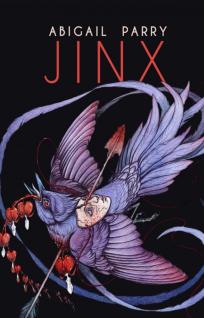
Jinx stands out for its level of vigorous inventiveness which emerges as rapid-fire, Raine-like, Martianesque figurative language on the micro level and a fecund spawning of memorable characters such as Mr Chop, Spook, the Jewel Thief, Geraldine, the Goatman and the Courtesan Jigoku Dayu. Parry also likes to experiment with form, though thankfully she steers clear of the current modish favourite, the prose-poem. In fact, she’s a poet’s poet evidently passionately in love with words (their sounds as much as meaning) and her use of rhythm and line is always – again this word is best fit – vigorous. The poem I repeatedly hear behind Jinx is Sylvia Plath’s ‘Daddy’ as much for its repetitions, its inventiveness of image (remember “Marble-heavy, a bag full of God, / Ghastly statue with one gray toe / Big as a Frisco seal”) and its tonal muscularity as its sexual politics. Surprisingly, Parry’s book’s focus is fairly narrow: male/female relationships, the fragility of the self and self-knowledge, the equivocal power of words (for truth or falsehood).
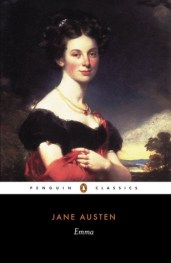
All these elements feature in the book’s opener and Jane Austen tribute poem, ‘Emma, you’re a gamer’. Austen’s heroine’s often skilled gaming/manipulation of situations is celebrated in listy short phrases: “Emma, you’re a dreamer. You’re a strategist, a schemer – / the metagame of manners, / all those formal misdemeanours, / the compliments, charades. / Emma, you’re a charmer.” Both rhythm and rhyme carry an energetic admiration for the skilled player though the poem records her eventual defeat (in the games of “amore [. . .] same old story”). Her climb-down, self-recognition and accusation in the face of Mr Knightley concludes the poem: “Give it up now, little ego, / there’s a prize for second place, / and Emma, you’re an amateur, you’re up against a pro”. Parry’s poem adds little to our response to Austen’s book, though the up-dated lexis yields some increase in accessibility. The poem’s life is in its verbal vigour especially because Emma is seen from such a distance by an amused, disengaged narrator who can use a phrase like “same old story” and leave it at that. It’s a good poem, even a likely anthology choice, but Parry is much better when she pours more emotional petrol onto her linguistic flames.
 Mr Knightley is an absent figure in that poem, but Jinx is repeatedly visited by powerful, seductive, dangerous males who – in ways now very familiar since Angela Carter started the ball rolling – are morphed into animal figures. ‘Hare’ is an early example, leaning invasively over the female narrator at a wedding party, “those fine ears folded smooth down his back, / complacent. Smug. Buck-sure”. As in ‘Daddy’, the woman is drawn to the man despite (or because of) his obvious threat but unlike Plath’s powerful final repulse (“Daddy, daddy, you bastard, I’m through”), Parry’s narrator is fatalistic: “Your part is fixed: // a virgin going down, / a widow coming back”. Elsewhere, ‘Goat’ and ‘Magpie as gambler’ work similarly and ‘Ravens’ is a particularly Plathian version: “In fact, every man I thought was you / had a bird at his back / and a black one too”.
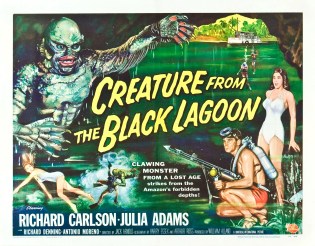 For all the frenetic playfulness of the book, Parry’s mostly female narrators and subjects are beset by threats. ‘The Lemures’ re-Romanises the creatures into psychological pests, aspects of self-doubt perhaps, appearing on the furniture, at the roadside, in a reflection in a lift door: “They will steal from you. Pickpockets, / rifling the snug pouches at the back of your mind”. Parry is evidently a fan of mid-twentieth century film and she explores Creature from the Black Lagoon and The Wolf Man from the perspective of dark powers surfacing. The question being asked is whether such forces represent the overturning of the real self or the manifestation of it in contrast to what a later poem calls “the dreary boxstep of propriety”. Locks and keys recur in the poems – are we confined, or about to set something loose, or to leap to real freedom?
In the same vein, Parry loves the idea of masks. ‘The Man Who’ is a David Bowie tribute (with Plathian allusions), asking what happens when the mask becomes the man: “then you’ve got to burn out – / down to the fingers, down to the quick, / to the quick quick heart of a white-hot / boy like you”. ‘You Know Who’ also plays on the idea of masks/roles becoming a reality, in this case actors fearing that playing the role of Sherlock Holmes risks a displacement of their real selves. Like a psychic supermarket shelf, ‘Milagros’ lists 20-odd types of hearts that might be possessed though, interestingly, the effect on this reader is less of individual fragmentation (which one am I?), more a sense of a multiplicity of human natures – each with their own particularities – simultaneously existent, in fact, a vision of a society at large. I’m not sure if this was intended but it is an aspect of Parry’s work that might be developed.

Three of the very best poems (two of them prize-winners elsewhere) are unprominently placed on pages 48, 62 and 78. All three are what might be called Bildungs-poems – narratives of growth and education. ‘The Quilt’ is the more conventional poem deploying Parry’s fizzily-listed details and internal rhymes to describe a quilt embroidered with various incidents from a life, including discarded men: “the dapper one, the rugby fan, the one who liked his gabardine, the one who didn’t want to be another patch in your fucking quilt / but got there all the same”. ‘Arterial’ also has an autobiographical glow to it, the narrator discovering her own heart stranded on the M4 motorway (“This is not, / as you might think, a metaphor”). The heart is transmuted into drum, room, tyrant and the Plathian “rope-bag full of blood”. It’s a desperate account in many ways, perhaps only grounded by the fact that the poem turns out to be written to “you”, an addressee presumably ready to listen. Perhaps this is the couple who feature in ‘Pasodoble with Lizards’ though they turn out to be (as many of Parry’s individuals have been) haunted by bestial mirror selves, as in lines ironically re-writing Robert Frost’s ‘Two Look at Two’: “The two of us, / the two of them, and two eyes looking, looking back / at two eyes looking”. Using long lines and triplets, Parry let’s rip in this poem, sailing a narrow line between the nightmarish and the merely histrionic, both speed and volume to the max: “Here they come, ATOMIC MONSTERS!” But the distress and seeming hopelessness is real enough: “these hooligans, our lizard others. / They think they’re us. We don’t know any better”.
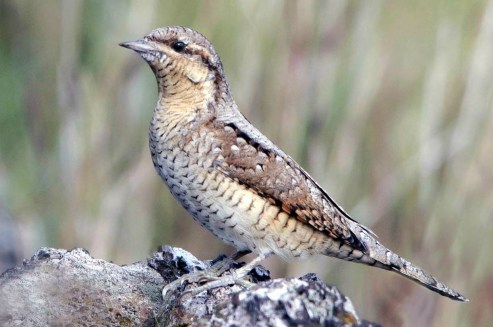
As to the title, the word ‘jynx’ can be traced to the 17th-century word jyng, meaning “a spell” and ultimately to the Latin word iynx (or jynx) referring to the Greek name of the wryneck bird, iunx, itself associated with sorcery. There are certain word spells which, through naming a thing in a variety of ways, power is hoped to be gained over it. It is an aspect of many poems and Abigail Parry seems to me to be majoring in this. Interestingly, the wryneck became a symbol of passionate and restless love and was given to Jason by Aphrodite and, ominously, by pronouncing magic words, he roused the love of Medea. So Parry’s Jinx carries deep resonances concerning magic, love and lust, male and female power, the emitting of persuasive, deceptive and potentially ruinous sounds: it’s powerful poetry, then.

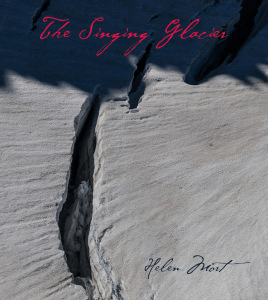
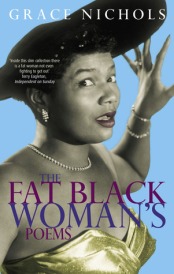 Then I have been reading poems for Grenfell Tower (The Onslaught Press) and picking away at some link between the (in)adequacy of a certain English poetic voice to confront the scale of ecological issues, or as a vehicle for expressing certain cultural differences, or as a way of exploring the kind of tragic and grievous event represented by the Grenfell fire and its aftermath. This struck me particularly as, in the Grenfell anthology, there are well-know poets alongside others less well-known, plus some who felt impelled to write as a direct result of the catastrophe. I felt many of the more well-known names struggled to find a sufficient voice for this appalling event, often sounding too careful, overly subtle, perhaps too concerned with Mort’s “linguistic originality”. Does such a devastating, large scale, well publicised event require a different kind of voice from poets?
 The difficulties of addressing such a subject are expressed by Joan Michelson’s contribution which announces and extinguishes itself in the same moment: “This is the letter to the Tower / that I cannot write”. One of the best poems which does display evident ‘literary’ qualities is Steven Waling’s ‘Fred Engels in the Gallery Café’. It cleverly splices several voices or narratives together, one of these being quotes from Engels’ 1844 The Condition of the Working Class in England. Other fragments used allude to gentrification and the wealth gap in the Borough of Kensington and Chelsea. Other poems, like Pat Winslow’s ‘Souad’s Moon’, focus on the presence of refugees in the Tower, or the role of the profit-motive in the disaster (‘High-Rise’ by Al McClimens), or the presence of an establishment cover-up after the event (Tom McColl’s ‘The Bunker’).
 But more often than not, these poets opt for more tangential routes to expression. Other disasters – such as Nero watching Rome burn, the 1666 Fire of London, the bomb falling on Hiroshima and the Aberfan disaster – prove ways in for Abigail Elizabeth Rowland, Neil Reeder, Margaret Beston and Mike Jenkins. The naivety and innocence of a child’s eye is another common device. Andrew Dixon’s ‘Storytime’ takes this approach, the child’s language and vision allowing simple but nevertheless powerful statements: “Mama don’t be afraid. Do you / want us to pray? I know what / to say. We’re both in a rocket / and we’re going away.” Finola Scott does the same with a Glasgow accent, a child staring from her own tower block home: “she peers doon at hir building, wunners / Whit’s cladding?’ A young life cut off before its full development by the fire is also the theme of two poems that refer to the death of Khadija Saye. She was a photographer who died in the blaze, whose work had been exhibited in Britain’s Diaspora Pavilion at the 2017 Venice Biennale. Michael Rosen’s contribution again uses childlike simplicity and obsessive repetition – as much representing a struggle to comprehend as the gnawing of realised grief:


![moulin-glacier-11[2]](https://martyncrucefix.com/wp-content/uploads/2018/05/moulin-glacier-112.jpg?w=352&h=264)



 Another young female narrator deliberately stays at home while her parents (conventionally) go to church on Sundays. She’s a teenage rebel without a cause as “The truth is I’m not sure what I did / those mornings”. The poem is built from a list (one of Littlefair’s favourite forms) of what she did and did not do. Littlefair is almost always good with her figurative language and here the girl is variously an undone shoelace, an open rucksack, a blunt knife. The urge to non-conformity outruns her imagination as to how she might spend her growing independence and there is an interesting tension at the last as her parents return, “whole” having “sung their hallelujahs” while the young girl is till restlessly revising her choice of nail polish, as yet unable to find what she’s after.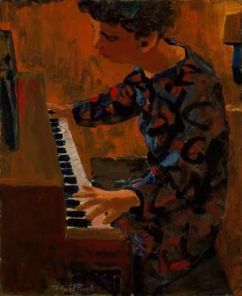
 I think I find this with some other poems too, though it’s partly because Littlefair is admirably intent on presenting the working world, the world of labour, as routine in contrast to the allure of a more adventurous life. ‘Assignment brief’ presents itself as an old familiar’s introduction to a new girl’s routine office job; the lists and proffered options are funny but they slowly run out of steam. Likewise, the promisingly titled ‘Usually, I’m a different person at this party’ flags latterly. I’m imagining this as narrated by an older version of the girl who half fell in love with Tara Miller. Here, she shadow-boxes the risks of conventionality by over-insisting on her own sweeping and glamorous life, in the process claiming all sorts of ‘interesting’ aspects of herself: “I only ever have large and sweeping illnesses. / My lymph nodes swell glamorously. I never snuffle”. But the contrasts here are again rather roughly hewn and, in the end, close to cartoonish.
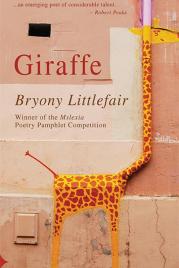
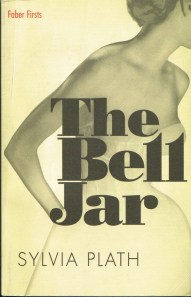 The latter view is more than a possibility given that Littlefair’s poems also boldly explore the self’s relation with itself. The encounter between self and future self is plainly and humorously told in ‘Visitations from future self’ and it finds the present self in trouble, pleading “I can’t go on / like this, my life a tap that won’t / switch on”. Here, the present self’s cliched and optimistic hopes for a “rain-before-the-rainbow thing” are denigrated and stared down by the future self. ‘Sertraline’ echoes Plath’s The Bell Jar in its evocation of a summer spent on an anti-depressive drug. And ‘Giraffe’ itself is a prose poem (there are 3 prose pieces in the whole book) in which a voice is offering reassurances to someone hoping to “feel better”. In a final list, images of a return to ‘health’ are offered. Particularly good is the idea that suffering will remain a fact but “your sadness will be graspable, roadworthy, have handlebars”. And lastly, “When you feel better, you will not always be happy, but when happiness does come, it will be long-legged, sun-dappled: a giraffe.”
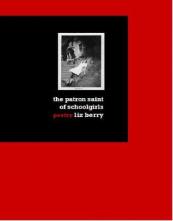 The designation ‘a young poet to watch’ is over-used but on this occasion it needs to be said loudly. Giraffe contains a number of fresh, intriguing and fully-achieved poems. It’s well worth seeking out. I well remember reading and being very impressed by Liz Berry’s 2010 Tall Lighthouse debut chapbook, the patron saint of schoolgirls, and this selection from Bryony Littlefair’s early work runs it close. My review of Liz Berry’s subsequent, prize-winning full collection,
  Martyn Crucefix