Marxian glory days

The number of Marxian ideas and expressions I have forgotten since reading him at university is perhaps something not decently, publicly admissible. But one idea has stayed with me, become something of a talisman of a personal rather than political kind. In The German Ideology (1845) he declares that in the well-governed society, in a communist society, where nobody has one exclusive sphere of activity but each can become accomplished in any branch he wishes, society regulates the general production and thus makes it possible for me to do one thing today and another tomorrow, to hunt in the morning, fish in the afternoon, rear cattle in the evening, criticise after dinner, just as I have a mind, without ever becoming hunter, fisherman, herdsman or critic. 

Karl Marx - portrait

The well-governed life continues to prove as elusive as the well-governed society, of course, but a day of real/metaphorical hunting, fishing, rearing and criticising has remained an ideal of contentment. It was Henry de Montherlant (http://en.wikipedia.org/wiki/Henry_de_Montherlant) whose aphorism suggested that ‘happiness writes white (“Le bonheur écrit à l’encre blanche sur des pages blanches.” (Don Juan II, IV, 1048)) but in recording something like the perfect day I am running the greater risk of the plush, crushed raspberry colourings of complacency and self-satisfaction. But perhaps describing one’s own pleasure can be a political act.

My daughter has to be dropped off at 7am at school. Elevated to the dizzying heights of Year 7 prefect she is off to Wiltshire to accompany the ‘new kids’ on some bonding, outward-bound sessions. This leaves me near Hampstead Heath and time to jog/walk my way round it in the early morning with just dog-walkers and others getting the sluggish blood moving. Back at home with that serotonin high, paradoxically both both pumped-up and emptied-ready-to-be-filled, I work through some drafts of my current project, a version of  Daodejing. As a writer, I came to the Daodejing after translating the German poetry of Rainer Maria Rilke. Perhaps more importantly, it was as a long-standing teacher that I read Laozi’s 81 ‘chapters’. There are colourful myths about their origins, but they were probably a series of orally transmitted seed verses compiled as far back as the 7th century BCE by many Chinese hands, an aide memoire, certainly an aid to teaching.

imgres

The Dao or Way is not an individual entity, still less anything divine. It is a mode of being, all encompassing, a phenomenal, existential primacy, perhaps akin to the Western idea of original chaos. The text emphasises its feminine characteristics. It can be viewed from spiritual, epistemological, educational, political or environmental perspectives, though none of these exhausts its true nature. The poems enthusiastically accept that their profound and urgent messages are inevitably compromised by the need to express them in language, hence demanding a variety of technical manoeuvres – they stay light on their feet.

Into college for the afternoon, interviewing students, mostly about mistakes, choices, salvage operations possible for them after GCSE, AS or A2 exams. But also some preparation for the new course we have devised for A2 Coursework combining Fitzgerald’s The Great Gatsby, T S Eliot’s Prufrock and Other Observations, and Nathanael West’s The Day of the Locust. W H Auden’s brief discussion of West in The Dyer’s Hand is interesting, suggesting he portrays a Kingdom of Hell, ruled by the Father of Wishes. I read it, knowing I’m having a good day, some wishes coming true in contrast to West’s visions of West Coast apocalypse. Right here, right now, a brief, various-faceted jewel in the setting of others of more usual monotony. (More of West in another blog perhaps).

Driving home – the rolling dice of Henley’s Corner – I listen to the opening bars of tonight’s Prom: Brahm’s Third Symphony. By 9.30pm I’m walking into the Albert Hall myself for the late-night show: Beethoven’s Missa Solemnis. Didn’t I promise a good day? It’s John Eliot Gardiner and the Monteverdi Choir and Orchestre Révolutionnaire et Romantique  (http://www.bbc.co.uk/programmes/b04f8vlq). Gardiner says in a brief introductory interview that Beethoven’s unconventional Mass often skims more traditional moments of the text but is ‘marvellous’ on the ineffability of the Godhead, the humbleness of mankind and I’m in the mood to hear it…

Driving back up the Edgware Road, the sky is big as it seldom seems in London. The lights are bright in the Lebanese restaurants, my eyesight – usually close to blurry – seeming sharp tonight, hyperreal, resonant, woven still with the threads of earlier hours. Tomorrow, will be a thinner diet, more monotone, less good.


Liz Berry’s ‘Black Country’ reviewed

Liz Berry, Black Country (Chatto Poetry, 2014)

If a reputation can be earned through the writing of half a dozen poems of real worth then Liz Berry has probably already written them, earning her place in the landscape of early 21st century British poetry. Her debut collection (containing 14 poems from the earlier chapbook The Patron Saint of Schoolgirls (tall-lighthouse, 2010) has charm, accessibility and a humour that belies the serious ways in which she exerts pressure to counter the hegemonies of language, gender, locality, even of perception. Berry is a teacher by profession and will, no doubt, have equivocal feelings about her work appearing in classrooms – but it will rapidly and rightfully find a place there.
Liz-Berry

We resist what tries to define and suffocate us in part by declaring who we are. Berry’s confident, natural, even uninhibited use of her own Black Country dialect is one of the most superficially striking things about this book. Against “hours of elocution”, she opts for “vowels ferrous as nails, consonants // you could lick the coal from” (‘Homing’). Variously her grandmother and mother influence her in this and, in ‘The Sea of Talk’, her father also urges her never to forget the place of her birth with “its babble never caught by ink or book”. The definition of a community against the pull of a conventional linguistic centre is explicit here. Her grandmother is a frequent role model and the growing girl studies “her careful craft”. “Right bostin fittle”, the older woman declares (ie. great food – brains, trotters, groaty pudding) and the budding poet willingly touches her “lips to the hide of the past” to inherit the authentic gift.

Other poems, making it clear that locality is as much a component of who we are, record and celebrate the Black Country as “a wingless Pegasus” composed of scrub, derelict factories, disused coal shafts, yet still a “gift from the underworld” whose nature and fate is enough literally to make grown men weep (‘Black Country’). Berry takes huge pleasure in enumerating the details of her locale. “Come wi’ me, bab, wum Tipton-on-Cut” invites one poem which then takes a tour of waterways, allotments, parks, mosques, steelworks and canals (‘Tipton-On-Cut’). Similarly, ‘Christmas Eve’ seems to improvise from the great concluding paragraphs of Joyce’s story ‘The Dead’, using the ubiquitous fall of snow to lead the reader across the landscape of Beacon Hill, Bilston and Molineux.

We elude being imposed on and defined by others by changing. This, for me, is the more profound aspect of Berry’s work; so many poems unfold as processes of self-transformation. A mark of the book’s self-confidence can be found in ‘Bird’ which announces this motif of liberation: “When I became a bird, Lord, nothing could stop me”. Here, it is the mother’s voice urging, “Tek flight, chick, goo far fer the winter”. In keeping with this, the poems display a formal variety – free verse, short-lined quatrains, couplets, tercets, ballad forms, punctuation comes and goes. This is further reinforced by Berry’s bold, category-dissolving imagination which instinctively reaches for metamorphic possibilities. In ‘Birmingham Roller’ the escapee is a bird again, “jimmucking the breeze, somersaulting”; people become dogs, trees, pigs, fade to mere echoes, girls become boys. The donning of a pair of red shoes invigorates, eroticises: “rubies that glistened up a dress, / flushed thighs with fever” (‘The Red Shoes’).

Sexuality features so prominently in Black Country in part because of its potential for transgressive energy. I’m sure ‘Sow’ is anthology-bound with its “farmyardy sweet” female narrator, rejecting external definitions (“I’ve stopped denying meself”), accepting her true nature as a “guzzler, gilt. / Trollopy an’ canting”. This is a real tour de force of dialect, imaginative transformation and downright feminist self-realisation that “the sow I am / was squailin an’ biting to gerrout”, even daring the reader to “Root yer tongue beneath / me frock an’ gulp the brute stench of the sty”. Berry’s power of imaginative transformation is so powerful that the book creates mythic figures at will: the sow girl, the Black Country pegasus, the patron saint of school girls, Carmella the hairdresser, the Black Delph bride, the last lady ratcatcher. ‘Fishwife’ presents another of these figures like something from a quasi-pornographic Grimm’s tales. Attending a 17 year old girl’s wedding, she brings the gift of oysters, erotic energy, transgressive flirtation, power and ultimately pleasure:

                                            I slipped
from my bare skin
alive oh alive         all tail           all fin
how the tide tossed
until alive ohhh alive
the waves flung my shining body        upon the rock

She kisses the bride with “her tongue a plump trout” and other poems also resist categories to the extent of a sensation of gender-bending, or more accurately gender neutrality. I’ve already mentioned the girl who becomes a boy. ‘Trucker’s Mate’ reads like a homosexual “romance” and ‘In the Steam Room’ positively drips with sexuality – but of an explicitly “sexless” kind in which “any body / might give you pleasure”. ‘The Silver Birch’ achieves the extraordinary feat of evoking “sex [. . .] before sex” (eroticism before gender), “when I was neither girl or boy [. . .] a sheaf / of unwritten-upon paper”.

With so much dissolution of the normative, Berry dallies with the surreal and there can be dangers if the work does not also bear a weight of darkness. A poet like Tomaz Salamun writes in the tradition of Rimbaud’s systematic disorganisation of the senses, but combines, as Ed Hirsch suggests, “exuberant whimsy and fierce rebellion” to resist too easy a relationship with the pressures of the real. Happily, Black Country encompasses some richly productive tensions between the real and imagined, home and away, past and future, conformity and rebellion, sex and death. The latter rises to the surface through the middle of the book in poems like ‘The Bone Orchard Wench’, ‘Echo’ and the murder ballad ‘The Black Delph Bride’, acknowledging that the traffic between real and imagined contains plenty of irresolvable grit, impossible to wish away in any facile manner.

The collection concludes in more plainly autobiographical terms with the approach of the birth of a child and perhaps there is less imaginative pressure here, a risk of sentiment, “waiting [. . .] for the little creature that grew inside me”. Nevertheless, in reviewing first collections it’s traditional to look forward to achievements to come but this is inappropriate with Black Country simply because there is so much confidence, focus, shapeliness, already achieved uniqueness. Rather, this is a poet whose work presently demands our admiration. Oh yes . . . and what about those half dozen or so poems of real worth? I’d suggest ‘Bird’, ‘Bostin Fittle’, ‘Black Country’, ‘Tipton-On-Cut’, ‘The Silver Birch’, ‘Sow’, ‘Fishwife’. You’ll hear more of these in years to come.

My brief career in medicine

At this time of year, students are leaping into the air with their exam results. Forty years ago to the day, a spotty, be-feathered upper sixth form student in Wiltshire was about to embark on a life-changing 9 months. The following account appeared in the magazine Agenda recently – here it’s dedicated to all those students making wrong decisions, wishing them the possibility of recovering from them.

August and as I walked from the red-roofed, Wiltshire house where I’d lived most of my 18 years, I had a vision of a child, a baby staring up at me, waiting to be lifted. It lasted only a few seconds but I returned to the house happier and resolved that I could not turn my back on such an opportunity.

I’d applied to study Medicine for reasons I cannot now recover and may not have been clear at the time. I’d had a series of interviews during the Upper Sixth year but only rejections had come back though I was held on a short list at Guys in London. But I’d already been struggling to focus on Biology, Chemistry and Physics, preferring to pick up the blonde, resonant body of my guitar and play Neil Young, Bowie, Lindisfarne, Don Maclean’s American Pie. I had written a few poems but from an almost complete ignorance of poetry. Shakespeare and Chaucer at O-level really was about it. My models were exclusively song lyrics which I listened to intensely, following them on the lyric sheets inside the unfolding gates of album covers. My head was unhelpfully full of phrases from Van der Graaf Generator’s Peter Hammill and Jon Anderson of Yes – one a merchant of genuine, existential, gothic angst, the other a lyrical fantasist. Then Guys rang to offer me a reserve place to start in ten days time. Then came the vision of the child.

imgres*
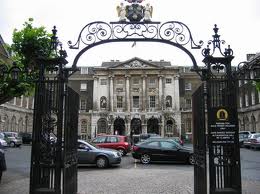
Because of the lateness of the arrangements in getting to London, I lodged in a room in Eltham Park and commuted into London Bridge. The city I’d been parachuted into was in the midst of the Provisional IRA bombing campaign. The medical school worked us hard though I never found it easy, or easy to devote myself to it. Within a week or so, we filed into the long upper room overlooking the inner quad. The windows down one side were filled with pallid light, a cloud-light flooding in from the London morning. We had watched a film which included queasy moments of blades easing through human skin though even as I watched, it struck me as less informative, more likely to be readying us for the shock of encountering our first lifeless body.

His head was to the pale light of the morning. His feet were dry and yellowy and up-turned from the horizontal table where he lay. Though he’d once been human, he hardly seemed to be any longer. His skin was tough and thick-seeming, exactly like leather. The mound of a belly rose and fell to his groin dusted with greying pubic hair, a shrivelled prick and half-hidden balls. His legs ran on, thin and bony at the knee down to the up-turned toes. We all avoided looking at his face.

I wish I could remember who made the first cut. One of us must have done: into the leathery skin above the sternum. The blade needed pressing firmly and the upper layers peeled open a bit like a zip fastener, down towards the abdomen. We did not give him a name though we turned up to visit him every week for the rest of term. But then, he wasn’t ours alone. As we gradually opened up thorax and abdomen, arms and legs, students in the year above us were coming at other times and we’d arrive to find his skull opened, his cheeks slipping down his face, his eyes suddenly gaping and exposed to the light that greyed and wizened as the winter term progressed.
*
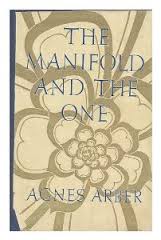
By November, I’d already bolted back to Wiltshire a couple of times and instead of medical text books, I’d started reading Hardy, Lawrence and H.E. Bates. In a poignant reminder of happier times, the school asked me to choose my books for a prize-giving at Christmas. On a trip to Bath, I bought Graham Greene’s The End of the Affair, Leonard Cohen’s Beautiful Losers and Lawrence’s England, My England. In Trowbridge, I scoured the second-hand bookshelves of Newbury’s, a bric-a-brac shop long since demolished and one morning I found a copy of George Eliot’s Silas Marner and a book called The Manifold and the One by Agnes Arber. I knew nothing of the latter but must have been attracted to the philosophical sounding title. In my growing tribulations at Guys, I was becoming deep. The questions I seemed to ask myself more and more had no easy answers and I had a notion this was called philosophy.

.imgres

The Arber book was a wide-ranging and syncretic survey, drawing on literary, scientific, religious, mystical and philosophical traditions, in pursuit of the experience which Arber defines as “that direct and unmediated contemplation which is characterised by a peculiarly intense awareness of a Whole as the Unity of all things”. Amidst the dissections, test tubes, bunsens, the red- and blue-dyed lung trees and chemical equations with which I uneasily engaged back in Southwark, I found consolation in Arber’s idea that life is an imperfect struggle. In those winter months, failing to work hard enough or get a firm footing in the bewildering city, I did not read passages about the “inevitable appearance of the awry and the fragmentary which we isolate in our minds” in a very philosophical fashion. Rather this was my daily diet, strap-hanging on a delayed train into London Bridge, sneaking into emergency exits to catch the second half of Diana Rigg in Pygmalion on St Martin’s Lane, trudging up a drizzly Charing Cross Road to buy sheet music I could not afford, drinking with others in The Bunch of Grapes on St Thomas Street, complaining how much work I had yet to do.

Already letters to old school friends were raising the prospect of leaving medical school. When Arber wrote of the limited and artificial confinement of conventional thought (“a hard and fast orthodox system of logical regulations – many of which resemble the rules of a complicated game and have little concern with the attainment of truth”) I felt she was talking of my current studies. I had developed an attraction to the esoteric – it made me feel more justifiably the outsider that I felt myself to be – and I got untold pleasure from hearing that masters of Zen Buddhism might declare to my lecturers, “Supreme Enlightenment goes beyond the narrow range of intellection – Cease from measuring heaven with a tiny piece of reed”.
*
But work piled up rapidly in the new term and after renewed attempts to devote myself to it, still the old patterns of neglect and procrastination returned. Even though there were months left before I managed to act on my desire to leave Guys, to beat a retreat from the big city, to set a new and more deliberate course, still the length of remembered time now seems short. After Lawrence’s Apocalypse and Sartre’s The Age of Reason, I raced through Cohen’s Beautiful Losers, bewildered by its episodic narrative, its explicit sexuality. It was Arber’s utterly different book that haunted me. One evening, staring out at Eltham, I wrote: “Down in the street / the puddles turn to raging light / night-time folds away the day / packing up the sun. Turning / through the broken stars, over, under / the chosen Far, making for homeward”. I listened to Radio Caroline in the evenings when I’d managed – not always and increasingly less often – a couple of hours of legitimate work.

Then travelling blearily east from London Bridge, I forgot to grab my briefcase before stepping down onto the platform. It was a self-inflicted injury but had little real influence on the string of failures I achieved in the final exams. On another day – this was my nineteenth birthday – Margaret Thatcher defeated Ted Heath for the Conservative leadership. One day – it was a Friday – a train from Drayton Park failed to stop at Moorgate, overshooting the platform into a dead-end tunnel at 8.46 in the morning. As I walked gloomily from London Bridge through the black, wrought-iron gates of Guys, forty-three people were killed.

imgres

One morning three months later, I found myself sitting in the room in Crookston Road, the noise of the busy A2 a distant growling. I stared at my packed bags and felt calm if utterly becalmed. One day, months later again – this was now the end of a second strangely untethered summer – the thought had begun to form that I might see myself as a student of philosophy, maybe work harder at the writing.

The art of the line break

I do like Glyn Maxwell’s thoughts on this in his 2013 book, On Poetry (Oberon Books, 2012). I’m roughly quoting:

Poets work with two materials, one’s black and one’s white. Call them sound and silence, life and death, hot and cold, love and loss . .  don’t make the mistake of thinking the white sheet is nothing. It’s nothing for your novelist etc . . . for those folks it’s a tabula rasa, a giving surface. For a poet it’s half of everything. If you don’t know how to use it you are writing prose. If you write poems that you might call free and [Maxwell] might call unpatterned then skillful, intelligent use of the whiteness is all you’ve got. Put more practically, line-break is all you’ve got, and if you don’t master line break – the border between poetry and prose – then you don’t know there is a border. . .  a prose poem is prose done by a poet. . .

I like the physical sensation he creates here of the two spaces a poet works with – that almost dizzying cliff-edge of the line breaking, the powerful effect that must have, that it does have. And I’ve, personally, long puzzled over the prose poem, wondering ‘why?’. Some of my best friends write prose poems – look out Linda Black’s published by Shearsman – but they remain a closed book to me – ha ha. Why would you not exploit the white space Maxwell talks of? Surely not just because the art of the line break is a hard one to master? Oh – the discussions in workshops I’ve had! Briefly – something to do with breath, to do with reading the lines aloud, to do with the line having some weight before you snap it off. The rest – intuition.

A Hatfield Mass – proof

Have just sent off the final proofs for the second of my chapbooks/pamphlets to appear this summer. This one is from Worple press and has its roots works by Henry Moore, originally displayed in the grounds of Hatfield House in 2011 has this lovely cover . . .

Hatfield_Mass_cover (3)

Worple were keen for me to include a brief Note about the poems that begins like this . .

Rimbaud suggests our openness to life, the unearned pleasures of the child, begin to close off around the age of seven. The rigidity of the maturing self, the closing in of solipsism is something from which these poems look to be rescued or relieved.

 Salvation lies in the movement towards flexure with or accommodation of the world about us, the subjective becoming interconnected, melded with the objective world . . . 

New pamphlet

New Pamphlet from Shearsman Books

O Farso

To begin with not clear what the lighthouse does
with its absence of glass lens and bulb
at least to the naked eye—
just a spindly array of instruments up top

above the disappointingly stubby column
on a cliff-top with its padlocked metal doorway
but no sooner has the walking begun
than its subtle powers become obvious

your every step determined by its position
the heather the stony paths the steep incline
each locked in communication with it

and where all might have flowed before you
in a salted windswept wide plenitude
the lighthouse utters its singular word