Greedy alpha-creatures: the poetry of Ulrike Almut Sandig

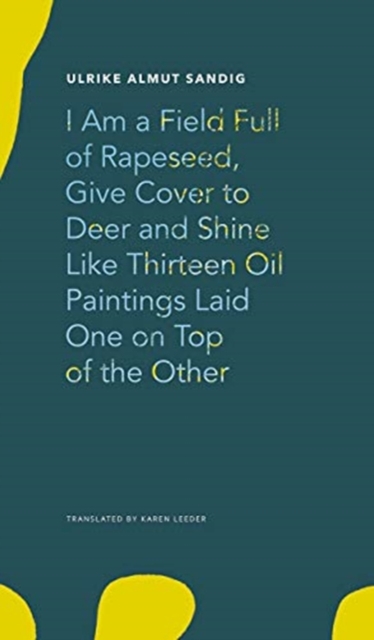
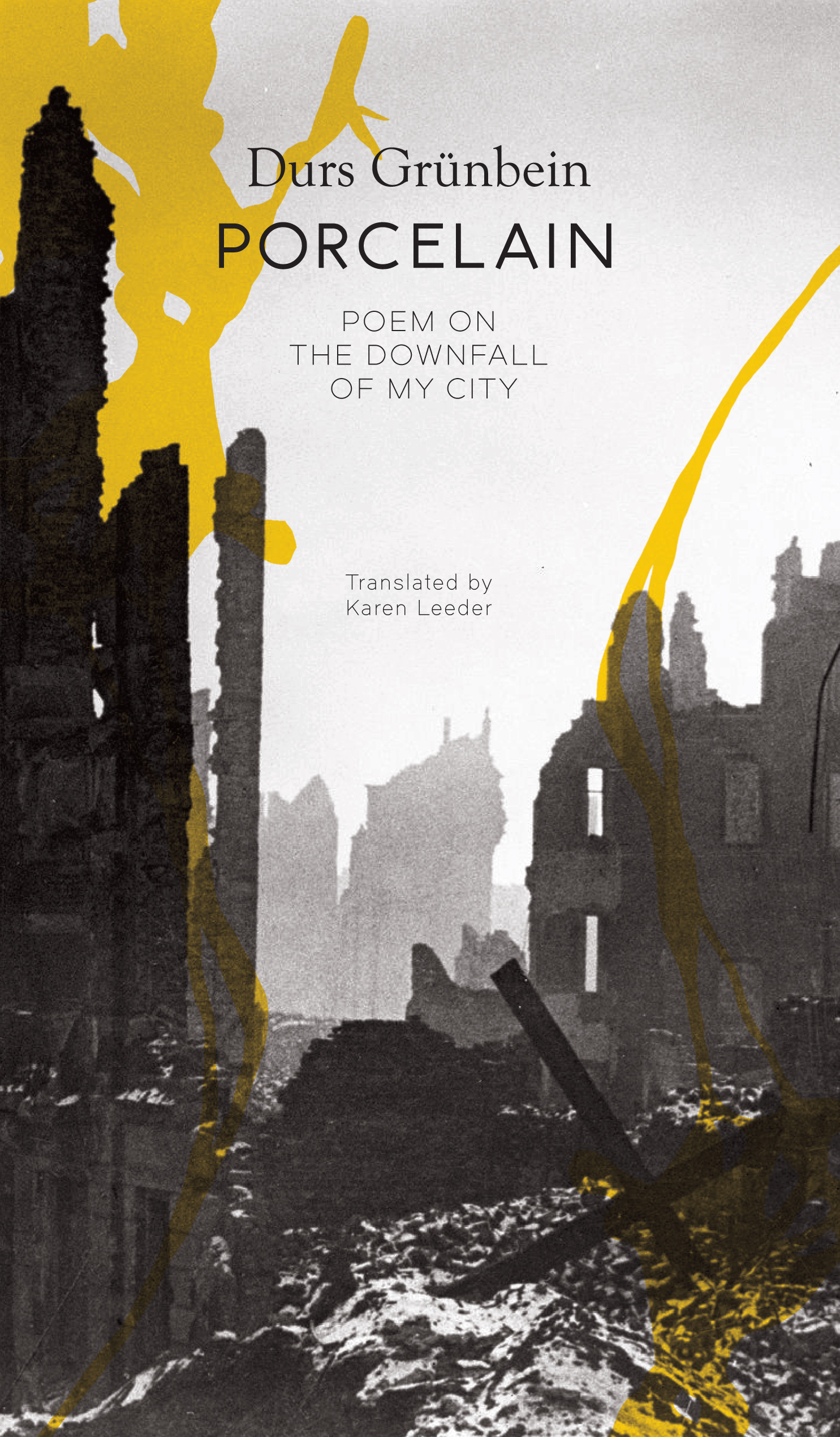
I’m shocked to realise that it is a full year since I posted my review of the stunning long poem, Porcelain, by the contemporary German poet, Durs Grünbein, in Karen Leeder’s equally impressive translation (Seagull Books, 2020). That review was originally commissioned for, and published in, Patricia McCarthy’s penultimate issue of Agenda (those who follow such things will know that Patricia has handed over the reins of the magazine to John Burnside who takes over with the resources of St Andrews behind him). In its original incarnation, the review was paired with my comments on another contemporary German poet’s work (again in Karen Leeder’s translation): this was Ulrike Almut Sandig’s 2016 collection, I Am a Field Full of Rapeseed, Give Cover to Deer and Shine Like Thirteen Oil Paintings Laid One on Top of the Other (Seagull, 2020). I am now posting my Sandig review as well, in part because I will be appearing with both Karen and Ulrike at the Ledbury Poetry Festival in a few days time. We will be talking about Rainer Maria Rilke’s great sequence, Duino Elegies (1923) as part of Peter Florence’s Dead Poets Society series. If you are in or around Ledbury on the morning of Saturday July 7th, do come along. Here’s the review . . .

The eponymous figure from Grünbein’s sequence’s 11th poem,‘Hans im Glück’, draws on one of the stories in The Children’s and Household Tales of the Brothers Grimm (1812). In the original, Hans has anything of value taken from him, bit by bit, yet he remains optimistic, refusing to acknowledge reality. Within the context of Porcelain, Grunbein treats this is as an additional image of the myth of the city of Dresden as undeserving victim. Interestingly, the same figure appears in Ulrike Almut Sandig’s collection, but her presentation of Hans is more poignant, less ironic, as even the boy’s language is stripped from him and he tries to write a letter to a loved one: “what are you up to? // + esp: where r u? / ru ru // ru”. In the context of I Am a Field Full of Rapeseed… , the boy might be thought of as a refugee, forcibly having his culture and language stripped from him, though one of the strengths of the poem is that it also works as an updated fairy tale, a little myth of loss and diminished presence with more universal application. Such re-purposing of several of Grimm’s tales is one of the most striking things about this collection. Sandig announces in another poem, “we find ourselves deep in the future of fairy tale” (‘the sweet porridge’) and she, like Angela Carter before her, redeploys the fairy tale’s surreal narratives, bold characterisation, its humour and violence, its symbolism and moral intensity for her own purposes.

The other striking aspect of Sandig’s writing here is her bold linguistic and formal choices. There is an absence of punctuation, capitalisation, of poem titles (bolded phrases mid-poem often serve as titles), of conventional forms, of a clear lyric ‘I’, of plainly pursued narratives. This results in radically shifting ground for the reader which can be both bewildering and exciting. Several poems indicate these choices are firmly rooted in issues of epistemology and ideas concerning personal identity. So, the opening poem, ‘from the wings’, ambitiously sets out a complete life from ‘screaming’ beginning to its ‘silent’ conclusion. The interim is portrayed as all fluidity, ‘a stream that flows into others / while others again flow into it’. As much as there is any discrete self to be identified, ‘I am made wholly of language’, and the individual is a creature ‘that must speak / to understand itself’. The self is also one of many ‘fragile / greedy alpha-creatures’ and understands itself to be, ultimately, ‘a fluid tuning fork I am my own / song’. In the same vein, the book closes with ‘where I am now’, which sets the self metaphorically in some remote Arctic research station, a self that is at the same time a woman swimming in a municipal pool, moving freestyle through the water, ‘parting the water before me’, in an image of self-creation and open-ended exploration that, to some, will recall Eliot’s ‘Little Gidding’: “We shall not cease from exploration”.
This is, as it were, the metaphysical background to Sandig’s vision and it gives rise to poems like ‘I am the shadow for you to hide beneath’ in which the narrative voice celebrates just such fluidity of identity in an address to “friends”/readers that has the quality of Whitman’s “I contain multitudes” (Song of Myself, #51), though with a good deal more anxiety: “every morning I get up and don’t have a clue: / is it me, Almut? Ulrike?” This is also the poem containing the book’s full title, “I am a field full of rapeseed, give cover to deer / and shine like thirteen oil paintings laid one on top / of the other” and the poem goes on, in the name of radical fluidity, the I as landscape, huntress, a text that begins to unravel just as it reaches an end, a soldier, a girl, a woman. Elsewhere, ‘to be wood in a table’, as the title suggests, continues the theme: “not to be old and not to be young, but old / enough to be several things at once”. This includes the Rilkean desire for “simple things like ‘tree’” as well as the freedom of having no name, “no longer to say: ‘I am’”.

Ulrike Almut Sandig

Such poems are both celebratory in tone, but also alertly defensive. The reason is that there are forces abroad, ways of seeing and their associated politics that offer counter narratives. So, the expected calm of ‘lullaby for all those’ is really a call to arms, or at least a call to resist. It is “for all / those who put up a fight, when somebody / says: lights out, no more talking”. In a superb passage, once again Leeder’s translation of the German is brilliant, the forces of “DARKNESS” begin to emerge by implication:

we’re waiting for two

or three of those good, humming dreams

four peace treaties, five apples in deep sleep

we are waiting for six cathedrals and for

those seven fat cows, eight quiet hours

full of sleep, we’re waiting for nine friends

gone missing. we’re counting our fingers.

x

we’re still resisting. we won’t go to sleep.

What is being resisted are the forces of repression, of fixity not fluidity, narrowness not breadth, fundamentalist conviction not open-endedness. Sandig places a poem in the centre of the book which draws heavily on statements made by Pegida, Germany’s populist, right wing, anti-immigration party. The text is full of rallying calls expressing a faith in clarity, mastery, resolution and purification: ‘from now on / nothing will stand in our way, no language / we cannot master, we will strike out mistakes / and shake each other’s freshly washed hands”. One of the Grimm’s sourced poems, a sister speaking to her brother, presents a narrative of the boy’s development into a threatening “hunter”. Such a poem looks both ways towards the violence of neo-Nazis, but also towards the violent radicalisation of young jihadists.

Sandig’s poems dealing more obviously with issues of state power, war, migration and displacement (especially hot topics in Germany, a country in the Schengen area of Europe and seen by some as an ideal destination – see the poem ‘tale of the land of milk and honey’) are particularly impressive. The ‘ballad of the abolition of night’ draws on details of systematic torture prosecuted by the USA, “a state lagging somewhat behind / on the historical timeline of our kind”. ‘instructions for flying’ revises statements made in leaflets distributed at the Idomeni refugee camp in 2016. The same camp, close to the borders of Greece, is the focus of another poem which expresses the poet’s “moral dismay”. The disquiet is partly at her own nation’s equivocations about the refugee crisis (what if there’s not a single / jot of good Deutsch to be found in this / Land of mine”) but also personally, at finding rhymes but ultimately doing “sweet FA”.

With Grunbein, Sandig is expressing the moral complexity in the face of man’s inhumanity to man as much as any simplistic moral dismay. This is, in part, the subject of some of the Grimm poems (interestingly, in German, the word ‘grimm’ means ‘anger, ire’). ‘Grimm’ itself opens optimistically, messages being scribbled onto raw eggs, but increasing urgency leads to extra pressure and the eggs break. Still, like Hans in luck, the narrator seems “unfazed in / the crumbling ruins” though the final image is only of eggs smashed, “a well-nigh limitless / supply of fragments and rage most grim”. But Sandig is an optimist, I think. Though couched in conditionals, ‘news from the German language, 2026AD’ works hard to portray a future of more settled diversity (Iraqi dates, Turkish honey, Syrian poetry). The opposing prospect is relegated to a parenthesis – if quite a long one. But hope has the final word: “if it works, we, that’s all of you and me, / will sing a lullaby, rhyme in unison [. . .] but more than that, we will be”.
Edward Thomas, Tellisford, and a poem of my own

I have recently been writing a piece for the excellent site, The Friday Poem, or the FRIP as it styles itself, edited by Hilary Menos. I’d had a poem accepted by the FRIP earlier this year and Hilary had asked if I’d like to contribute something in prose, perhaps choosing 3 ‘desert island’ poems. An impossible challenge, of course – only three!!?? – but an interesting exercise to be sure. I’ll say no more about what I submitted to the FRIP before it appears there in the near future, only to say that one of the poems I chose was by Edward Thomas.

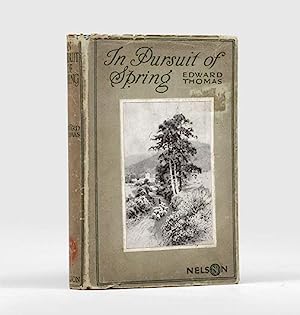
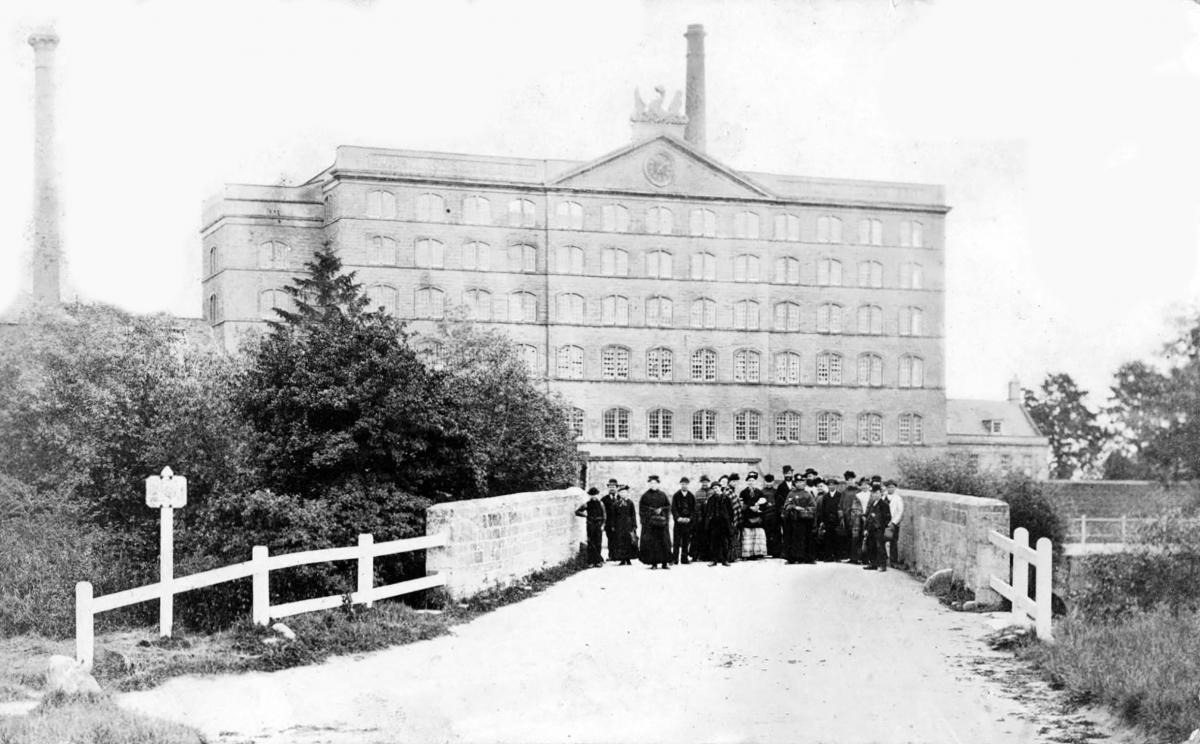
In introducing ET’s poem, I found myself talking about his prose travelogue, In Pursuit of Spring (1914). This book – apart from being wonderfully evocative of a lost, pre-WWI England, as he cycles from London, through the South Country, to end up in the Quantock Hills – has always been special for me because he makes a stopover just outside my hometown of Trowbridge, in Wiltshire. The following day he cycles out of Trowbridge, through Hilperton (the village where I grew up), out to Semington, towards Melksham, then along the meadows at Challimead, to Holt, before passing the Nestle factory at Staverton. The latter, with its River Avon (the Bristol Avon) flowing nearby, was where I used to go fishing with our next-door neighbours. The factory is also where several generations of my own family worked, including my maternal grandparents and my mother. Thomas’s descriptions of the roads and countryside are vivid:

. . . the Phoenix ‘Swiss’ Milk Factory where I crossed the Avon at Staverton . . . is an enormous stone cube, with multitudinous windows all alike, and at the back of it two tall chimneys. The Avon winding at its foot is a beautiful, willowy river. On the opposite side of the road and bridge the river bank rises up steeply, clothed evenly in elms, and crowned by Staverton’s little church which the trees half conceal.

The ‘Milk Factory’ at Staverton and the bridge over the Avon

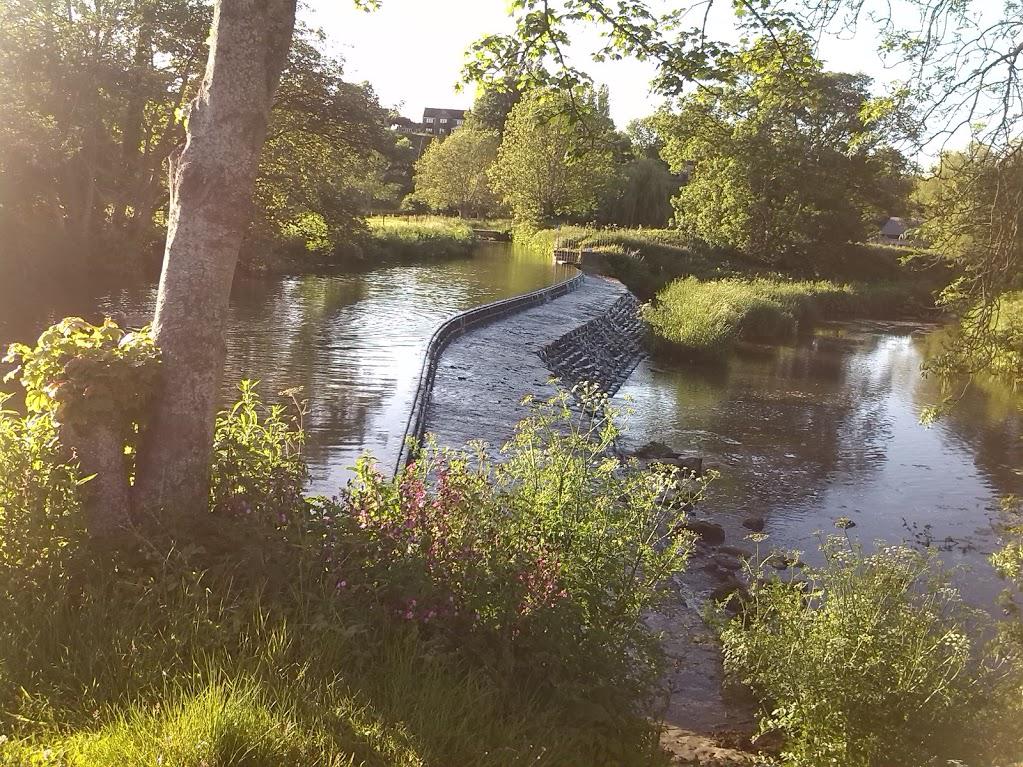
That church is where my grandparents were married. The following day, Thomas sets off again but stops this time at Tellisford. This is a small village to the west of Trowbridge, where a bridge crosses the River Frome. I’d occasionally come fishing here too, and later for the occasional romantic tryst, though more often the trip was for a picnic on the idyllic riverside meadows, listening to the water flowing over the ancient weir. Thomas’s mysterious companion, simply called the ‘Other Man’, describes the scene in 1914:

. . .  a beautiful meadow slopes between the river and the woods above. This grass, which becomes level for a few yards nearest the bank, was the best possible place, said the Other Man, for running in the sun after bathing at the weir – we could see its white wall of foam half a mile higher up the river, which was concealed by alders beyond.

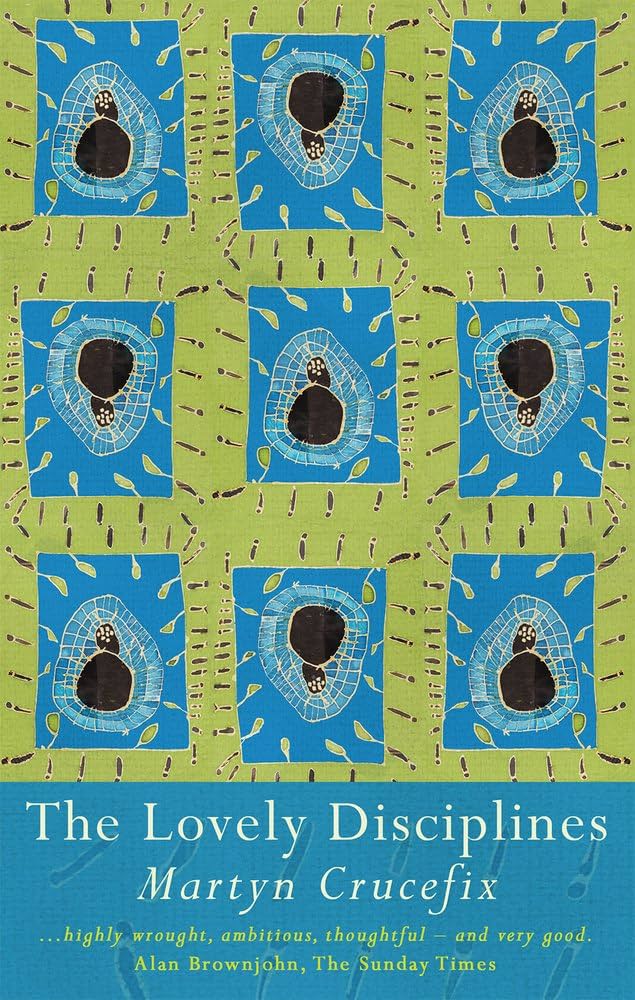
Almost nothing had changed when, years later, my whole family came here for a picnic, perhaps to celebrate my parents wedding anniversary . . .  I remember speaking to a man who lived nearby. He was rebuilding the weir which had fallen into disrepair. Years later again, I wrote a poem about the occasion (later published in my book The Lovely Disciplines (Seren Books, 2017). Called ‘Rebuilding Tellisford weir’, I gave the poem an epigraph from In Pursuit of Spring: ‘turn aside to see Tellisford’. The poem’s opening lines focus on the man’s self-given task, one of both conservation and innovation:

He refuses shade in midday heat

the old man walking

in his honey-brimmed hat

along the drained weir-shelf

x

that looks today like stacked loaves

its pallid smooth ranks

of Victorian stones

mapping precisely the Domesday line

x

where he patrols to and fro

proudly surveying the place he owns

this stretch of England

his plan to restore the workings

x

of the old watermill

to feed the Grid—and it is for this

he has ordered tons of sludge

to be dredged above the drop

x

and dozens of loosened stones

to be replaced to give

the mill-race its full head

and today he walks the slippery length

x

of the dammed weir-shelf

View of Tellisford Weir

For some reason, in my writing of the poem, I wanted to distance my own family’s part in the scene, perhaps because the incident I was recalling was a long while ago. The man hails the picnickers (rather than the other way round, which is I think what happened):

he cries what marvellous weather

x

then falls to conversation with a couple

who are celebrating sixty years

in their self-built house

with their three good boys

x

raised and schooled to distant homes

though today they recline

on trashy garden chairs

on this riverbank as if to watch

x

the old man in an antique yellow hat

who walks noting progress

on the weir

Riverside littering

My own family appear more as careless tourists than anything else. It is the man’s project which gets more attention. And – as the thought develops – it is his own state of mind that seems to interest the poem.

and how could they know

he’s something on his mind

x

for the next hundred years

how could they know more and more

these days he struggles to endure

the roaring of the fish-shoot

x

with its silted water

and these stilted conversations

with such ordinary people

their Diet Coke and egg mayonnaise

x

their crisps for the grandchildren

their Sunday newspapers

let blow and tumble across the meadow

reminding him of himself

x

how his mind often strays

up the ditch-line to the old drovers’ road

where for fifty years

their cars have pinked and purred

x

especially at night as they mount

slowly the gravel verge—

O so many love-cars for so many years

drawn to his father’s land

x

each in pursuit of what the river gives

of moonlight and chance

of the ticking of an engine

as it cools of blonde hair spilling

x

across dark seats in disarray

he knows the windows rolled to the dusk

the sickly smell of water

the murmur within

I rather like the way the poem, by this stage, seems to be moving in and out of various consciousnesses; here the narrative seems to be visiting the minds of the lovers who come to this quiet place for privacy, though the man’s noting of the fact has something of the voyeur about it too. He goes on to imagine – or perhaps he is remembering his own romantic experiences – the ‘talk / when it’s over’:

though he knows well

it is never really over—

and it’s because of this

he will not turn them away

x

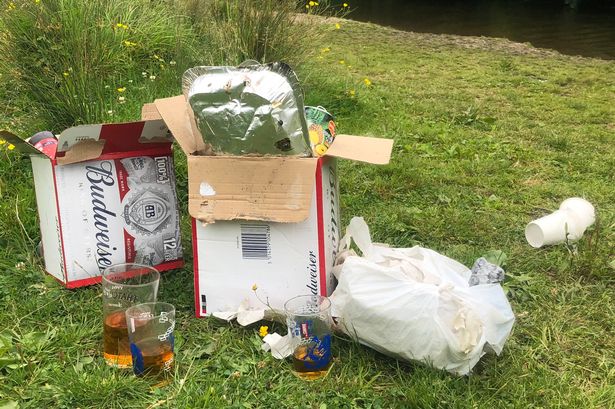
although they holler and soil and litter

still he’d grant them every wish

for this his feet edge now across

the weir-shelf this afternoon

x

for this he takes his uneasy stand

hands thrust in his pockets

their cars pulling in to the dark hiss

of white gravel everywhere loosening

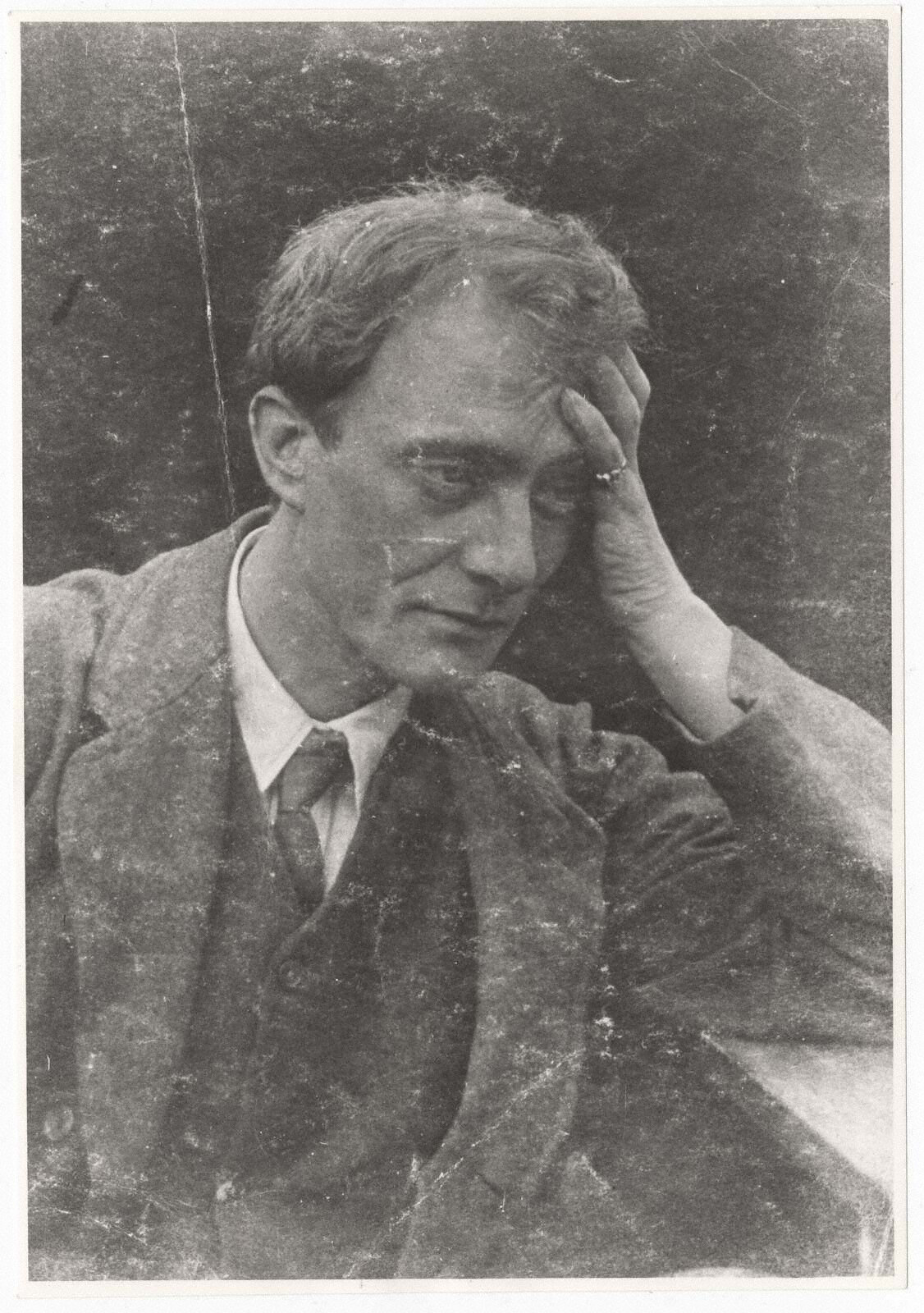
ET looking particularly dejected . . .

The final image – syntactically, the last given reason as to why he allows the lovers, as well as the ill-behaved picnickers, to use the riverside that (in the poem at least) he owns – is intended as an image of transience, of impermanence. It’s this knowledge that really drives him in his conservation project, the rebuilding of the weir, the installation of generators to connect to the Grid. His obsession (which is of course really the author’s, my own) is with the passage of time which brings in change and destruction and against which he builds (as the author builds the poem) something to stand against it, a kind of memorialisation which is also an innovation: ‘the talk / when it’s over though he knows well / it is never really over’. Throughout, I wanted to evoke something of Edward Thomas’s own work, partly through my formal choices. In ‘Gone, gone again’, for example, he views an old house:

Outmoded, dignified,

Dark and untenanted,

With grass growing instead

X

Of the footsteps of life,

The friendliness, the strife;

In its beds have lain

Youth, love, age and pain:

X

I am something like that;

Only I am not dead,

Still breathing and interested’

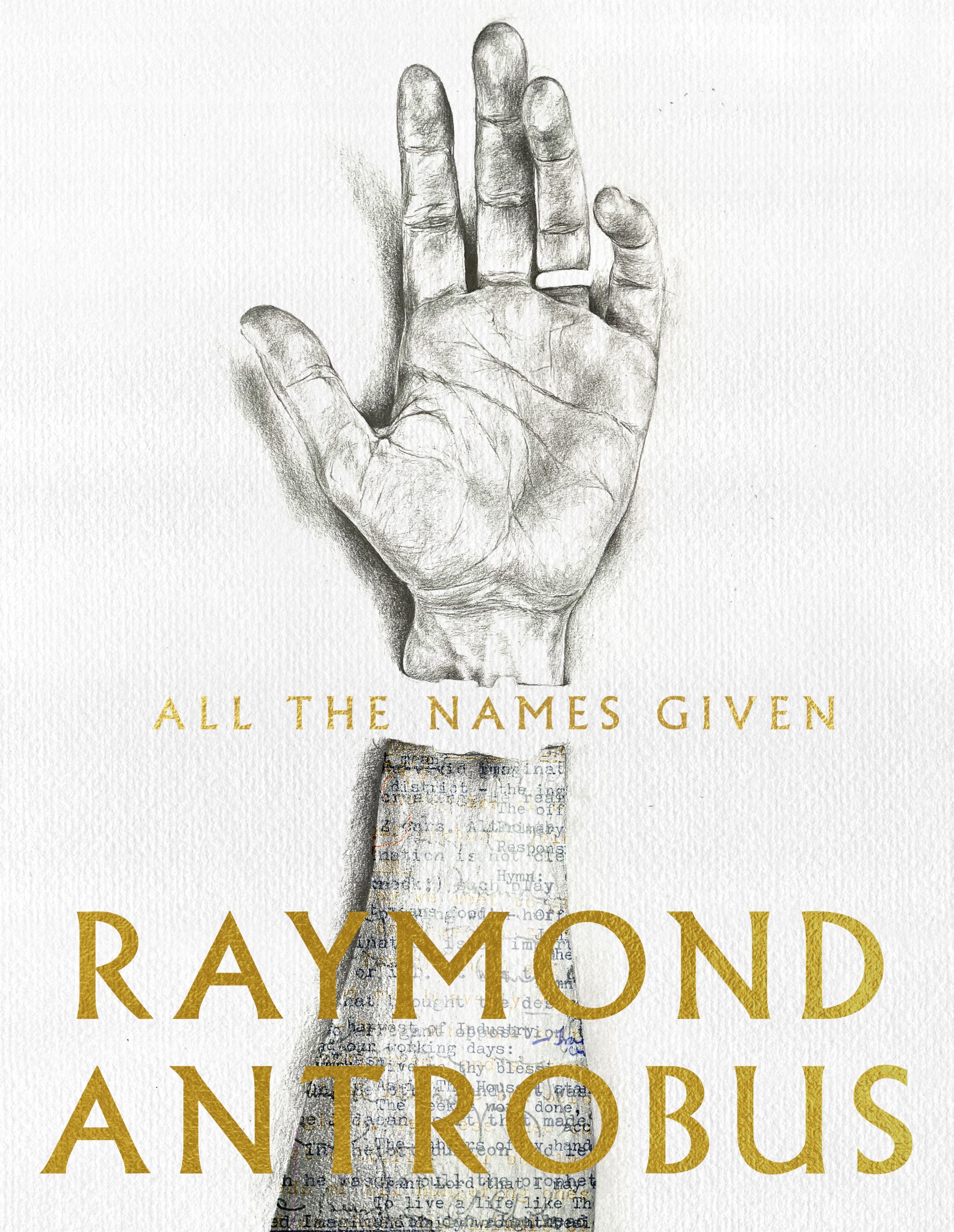
‘The Man Overstanding’ – on Raymond Antrobus’ ‘All The Names Given’

Genuinely acclaimed first books can be hard to follow up. Raymond Antrobus’ The Perseverance (Penned in the Margins, 2018) was a Poetry Book Society Choice and won the Ted Hughes Award and the Rathbone’s Folio Prize in 2019. I reviewed the book that year as one of the five collections shortlisted for the Forward Felix Dennis First Collection Prize. In many ways it was a conventional book of poems – its voice was colloquial, it successfully employed a range of (now) traditional forms (dramatic monologues, prose poem, sestina, ghazal, pantoum), its syntax and punctuation were nothing out of the ordinary. Its subject matter was to a large extent dominated by a son’s difficult relationship with his father, by questions of racial identity and (this is what made it especially distinctive) the experience of a young Deaf man. Besides the latter, what really marked the book out (I argued) was ‘that impossible-to-teach, impossible-to-fake, not especially ultra-modern quality of compassion’. Listen to Raymond Antrobus talking about his first collection here.

Now several years on and literary acclaim, a new publisher (this book is published by Picador Poetry – Penned in the Margins has since sadly ceased operations), a recent marriage and a broadening of perspective (particularly towards the USA) all place Antrobus in a very different environment. He has set aside a lot of the experimentation with recognised forms (which is not to say the new poems do not experiment with poetic form) and the book opens very positively:

Give thanks to the wheels touching tarmac at JFK,

give thanks to the latches, handles, what we squeeze

x

into cabins, the wobbling wings, the arrivals,

departures, the long line at the gates, the nerves held,

x

give thanks to the hand returning the passport [. . .]

In a similar tone, ‘The Acceptance’ concludes with the word ‘Welcome’ being signed. But the 30 lines preceding this hark back to that ‘complicated man’ (a phrase from ‘Dementia’, from The Perseverance), the poet’s father. Though dead for several years now, he continues to haunt his son’s dreams and a number of these new poems. In ‘Every Black Man’, the ‘dark dreadlocked Jamaican father’ meets his prospective, English mother-in-law for the first time. He’s already drunk, there is shouting, he lashes out, she racially insults him: they never meet in the same room again. The father’s ‘heartless sense of humour’ is turned into a slow blues: ‘I think that’s how he handled pain, drink his only tutor’ (‘Heartless Humour Blues’). And the man’s ‘complication’ is reaffirmed in the poem, ‘Arose’, in which, talking to his embarrassed son, the father boasts of the great sex had with the boy’s mother, but then is touchingly remembered, calling out her name: ‘Rose? And he said it like something in him / grew towards the light.’

But All The Names Given also pays more fulsome tribute to Antrobus’ mother. In ‘Her Taste’, despite her conventional, English, religious background, she drops out, joins a circus (literally, I think!), has various relationships, and eventually gets pregnant by Seymour, the ‘complicated man’ from Jamaica, who left her to raise the children. Thirty years on, she’s defiant, independent, ‘holding her head higher at seventy’. We see her leafing through a scrapbook of her past, ‘rolling a spliff on somebody’s balcony’ or again, ‘in church reading Bertrand Russell’s ‘Why I’m Not a Christian’.’ Despite such moments, the maternal portrait does not quite possess the vivid distinctiveness of the paternal one. But, with the benefit of the passing years, Antrobus can now write, ‘On Being A Son’, in which he unreservedly praises Rose in her neediness, her self-sufficiency, her helplessness with IT, her helpfulness in so much else. He concludes, channelling her voice: ‘mother / dyes her hair, / don’t say greying / say sea salt / and cream’.

This greater focus on the mother is partly a redressing of the previous book’s gender imbalance, but it is also at one with Antrobus’ interest in family and heritage as offering clues to his own identity. It turns out the Antrobus name – from his mother’s English side – is anciently English (or far distantly Norse) and associated with Antrobus in Cheshire. ‘Antrobus or Land of Angels’ records a visit (by mother and son) to the place, to face the suspicious looks in The Antrobus Arms, the guard dogs at the Hall:

A farmer appears, asks if we’re descended

from Edmund Antrobus.

x

Sir Edmund Antrobus, (3rd baronet)

slaver, beloved father,

over-seer, owner of plantations

x

in Jamaica, British Guiana and St Kitts.

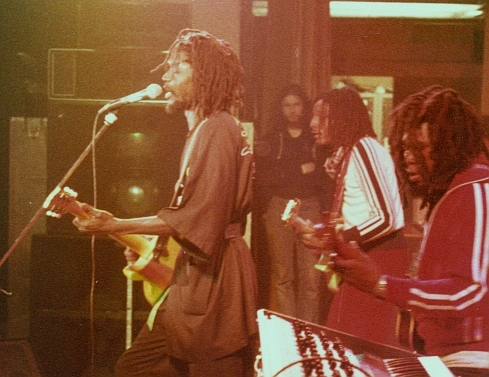
Peter Tosh with Robbie Shakespeare, 1978

The son’s quick denial of the line of descent is a complex moment. Despite carrying the same name, his mother is not truly a descendant. But given His Lordship’s slave-owning history, who is to say whether there is any genetic relation, ironically, through his Jamaican-born father, Seymour. The thought surfaces in ‘Horror Scene as Black English Royal (Captioned)’. Antrobus’ note tells us this poem was sparked by tabloid/CNN speculations in 2019 about the likely ‘blackness’ of the Sussexes’ royal baby. The poem’s narrator looks down at his own hands and sees ‘your great-great-great Grandfather’s owner’s hands’.

Tyrone Givans

So All The Names Given quickly reveals itself to be a book deeply troubled by the kinds of questions raised in the poem ‘Plantation Paint’: ‘Why am I like this? // What am I like? / Who does / it matter to?’ In this second book, Antrobus is still working towards an ‘overstanding’. The idea was alluded to in The Perseverance via a Peter Tosh lyric: ‘love is the man overstanding’. It is a form of understanding that emerges after all untruths have been overcome. The truths, untruths and complications of identity preoccupy the majority of these new poems. Only occasionally does Antrobus set aside such profound (perhaps irresolvable) anxieties. The African/Vietnamese waitress in ‘A Short Speech Written on Receipts’ is a figure who seems to outweigh the poet’s wrangling over his own selfhood, leading him to wonder: ‘Maybe kindness is how / you take down the stalls’. The gates of compassion also open frankly and to great effect in ‘At Every Edge’ and ‘A Paper Shrine’, two brief poems remembering very different students in creative writing classes. Likewise, ‘For Tyrone Givans’, commemorates a young Deaf man (a friend and contemporary of Antrobus) who committed suicide in Pentonville Prison in 2018. Here too, the vector of attention is outwards, towards Tyrone’s mistreatment by the authorities, his suffering and despair, rather than inwards towards the poet’s own ‘complications’:

Tyrone, the last time I saw you alive

I’d dropped my pen

on the staircase

x

didn’t hear it fall but you saw and ran

down to get it, handed it to me

before disappearing, said,

x

you might need this.

This review was originally commisioned and published by The High Window