Can AI Write an Original ‘Poem’ By ‘Me’?

The Atlantic recently posted a link to a site which can be used by authors of any stripe to check to see what, if any, of their works have (already) been used by Meta to train AI. For the last few weeks, social media have been full of understandably irate authors who discover this is exactly what has (already) happened. It looks to me as if prose works (fiction and non-fiction) as well as critical writing of all kinds – perhaps more than that ‘difficult’ genre poetry – have particularly fallen victim to the process. Indeed, Meta does seem to have taken some of my own writing – more critical than poetic – for its dubious purposes and it has done so without any kind of indication that this was happening, nor any request for permissions after the event, and – the harvesting of material being so vast – it’s hard to anticipate any after-the-event compensation or successful legal action. Even though, as The Atlantic‘s link has shown us, there ARE records of what has been done, a footprint, a guilty fingerprint, an undeniably smoking gun.

It’s hard not to feel that the horse has bolted on this one and – with the peevish idea of being able to mock at the anticipated results – since some of my own creativity has been stolen, I thought I’d ask ChatGPT to write a poem in the style of me. It was horribly polite in response and within a few seconds had produced a piece of writing it said was in the style of my own work and which it briskly summed up as ‘contemplative and precise [in] style, often rooted in quiet observations of the everyday, nature, and memory’. I posted this on Facebook – indicating the way this had come about – and wondering what people thought. The results surprised me as there was a mild round of applause for ChatGPT: it’s true, it did sound like a poem, it wasn’t utter nonsense (as I think I’d hoped). I don’t think anyone felt it sounded like me, but observations were made along the lines that ‘plenty of worse pieces of writing are submitted to magazines on a daily basis’.

But there was also a strong kick back against the whole process (even at my engaging with AI at all – though I really do think that horse and rider has bolted, in talking to friends (by no means all writers) and my own kids, AI has already made its way into the mainstream of work and study). There was also a strong reaction insisting that AI cannot write creatively because it does not have the human qualities out of which true (true?) creative writing emerges: the flaws, the emotions, the relationships, the memory, the history. I’m inclined to this side of the argument – though I’d also suggest it’s a kind of Doctor Who argument.

I thought it’d be worth spending a few moments looking at what ChatGPT actually produced for me. The title it chose, ‘The Last Light’, is inoffensive enough, if more Edward Thomas than Martyn Crucefix (in my view) and the form of the poem – free verse – is rather well done, though the line lengths are shorter than I think I’d have used myself. The opening stanza runs:

The hill is a shoulder—

pressed up against the sky’s slow retreat.

Beyond it, something waits:

not death,

but the unspoken

name of a tree I once knew

before its bark peeled

like old paper

from the spine of a life

I’ve half-forgotten.

That opening image is quite intriguing with its personification of both the ‘hill’ and the ‘evening’. The use of the long em dash after line 1 is something I think of as one of my techniques (though I’d not have used it there). In context of the ‘last light’ the ‘sky’s slow retreat’ is an effective phrase I’d be happy to own. I’m less happy with the next few lines, with the rather grandiose (overdramatic) ‘something waits’ (though I again hear some Ed Thomas in there) and ‘not death’. Is the latter a response to the possible (though here denied) metaphorical reading of ‘last light’? I think to suggest ‘the unspoken / name of a tree’ is what waits there is silly because it wouldn’t matter if it was spoken or not, because the ‘name’ is a thing known (it seems) and the tree bark peeling like ‘old paper’ is a poor image (what do you see there visually? compare bark to old paper?). This is compounded by suggesting the bark/paper is being peeled from ‘the spine of a life’. For a moment I see (distractingly) a human spine, then it’s replaced by the spine of a book (surely what is intended?) but this book spine seems to be from a book of ‘a life’ – or the life. Ugh no no no – the imagery there is all of a muddle which is not countered by the slightly emotive indications of ageing, loss, the past etc. To then say – as the poem does – that whatever has been said in the preceding few lines is actually ‘half-forgotten’ makes a mockery of the whole thing so far – this is like a bad poet attempting some elusive suggestiveness without really understanding (or being clear – poetry has to be clear in itself) what is being said. There is – AI critics would surely say, and I’d agree – an inhuman muddle going on in the opening 10 lines. But that is not to say that a not-very-talented human poet might have done something similar.

The poem proceeds…

A bird—

small enough to miss in motion—

cuts across the field.

Not for me, not even for itself,

but for the thread

it must continue.

The parenthetical ‘small enough to miss in motion’ doesn’t work for me. Again it seems to be yearning as it were for a sort of liminal effect – just on the edge of sense – but either it has been missed in which case it’s not been seen at all or it has been caught sight of in which case it has not been missed. The latter sentence is what I’d be arguing with myself were this actually my poem. I’d cross it out or re-write. The negatives of line 13 (‘Not for me, not even…’) again seem to be reaching for an edge of perception sort of impression, something is not known. I’d accept this as one of Crucefix’s recurrent ideas but (I hope) I don’t do it like this which is not so much a struggle to perceive, more a double blocking negative: if it’s not this and not that… then what is it? To go on to suggest there is a ‘thread’ being followed (by the seen/unseen bird? really?) And that the continuation of this ‘thread’ is something the bird is compelled to do (‘must’) is verging on the ridiculous. There are suggestions of motives, compulsions, but looked at more closely they make no sense whatsoever.

The poem’s final two stanzas are as follows:

I place my hands in the grass.

It is cold with what the earth

has kept secret all day.

I wonder

if this is what love is:

a silence left

after something essential

has flown.

The placing of hands ‘in the grass’ is rather good and the finding of ‘cold’ there is ominous (again ‘last light’?) and indicative of a death of sorts and to suggest the earth has kept this ‘secret all day’ is also a phrase – even an idea – I’d be happy to acknowledge my own (it’s not). But I can’t recall ever using the phrase ‘I wonder’ in a poem (no doubt I have) and I don’t like it. It seems to be AI’s attempt at a sort of ‘poetical’ tone and mood. In this context it feels rather cheap. And that is cheapened even further by what is wondered: ‘if this is what love is’. Where the hell did that come from? AI is using tropes which it thinks evoke the poetique…. love is a surefire winner of course…. But I can’t see how it forms any kind of ‘whole’ with what has come before. I find myself insisting this is what AI cannot really do – which a live human can potentially – create language in forms which achieve some sort of integrity, a wholeness, even out of contradictory materials, and the glue that binds them together has to be feeling, an emotional experience which lies at the root, powerful but usually not articulated in any other form than in the form of the poem itself.

The AI poem’s last fling is the colon which may or may not suggest that what follows is ‘what love is’. I think the AI mind will mean this. Once again I hear Edward Thomas more than me in this conclusion (see what ET remembers at the end of ‘Old Man’: ‘Only an avenue, dark, nameless, without end’) but the muddling of metaphors occurs again. There is a ‘silence’ left after something ‘essential’ has flown away but my reader response is straining here at the flighted thing (a motion) which is somehow abandoning an aural experience (the silence) and in leaving it something ‘essential’ has been lost (with wings?). Again AI is picking up the way poetry wants to get to the ‘essence’ of things but the words written here are merely an indication of that wish, not at all a real live accessing of it, or even a genuine gesturing towards it.

Having written this I have convinced myself – even more than I had been before – that what AI has written is a ‘hide’, a cover for a poem, making use of words and ideas that it has found associated with poems (perhaps even my own poems) but which it doesn’t itself ‘get’ (how could it?). On the other side of the desk sits the reader. The question for the reader is: how well do we read any poem that comes before us? Do we accept its (often) feeble gestures towards significance as the real thing? Out of a hundred poems we read in magazines and on-line, how many of them ARE the real thing? I’d bet my AI generated poem would find its way into a UK magazine (eventually). It has the aura of a poem, it has many of the familiar gestures of a poem, it doesn’t really make proper sense (which some think is the mark of a real poem), it doesn’t have the heart of a true poem (but lots of poems I read don’t either because they too are copying, mimicking tropes and phrases from other poems).

My astute friend, fiery critic, and fine translator, Will Stone, was kind enough to comment at length on my original Facebook post. I’m with him. I’ll leave you with his thoughts:

Martyn…. your own poetry is born of time, experience, tragedy and celebration, as well as from the inner harvest of your accomplished literary translations. This collection of admittedly impressive sounding images has been reaped from a database in nano seconds and cobbled together in some deceiving facsimile which claims to be your style. And like the macabre chitty bang bang child catcher with his tempting lollipops, it’s ‘all free today’. Like a painting let us say by Edvard Munch reconstituted by a skilful fraudster based in High Wycombe, it may appear in every way to be Munch, but it isn’t Munch. For it was the process of creation (which is unique to every individual and cannot be rationalised by densities of data capture or meticulous replication) that was invested in the original painting and by implication your poem, which counts. AI is not a creator out of inwardness, it is a skilful and persuasive designer, an artisan. It only wants to succeed and aims almost grotesquely at perfection. Genuine poets aim at expressing authentically from a deep point, and are explorers who cling to the cliff face of their poem’s construction… failure is quite possible which is why only a human can be an artist because humans alone with their insufficient organs (see Maupassant le Horla) are shaped by fear, doubt, failure, wild joy and excess. What I am trying to say is that it is as much about what we miss in a work of art to make it complete or perfect that makes it unique with its beautiful imperfection!

Related Links: Nesrine Malik’s recent Guardian article on AI: ‘With ‘AI slop’ distorting our reality, the world is sleepwalking into disaster’ plus several interesting discussions of AI and translation on the Goethe-Institute website.
That Infinite Showplace: Rilke in Paris 1902-1914

NB This review first appeared in a shortened form on the Agenda Magazine website.

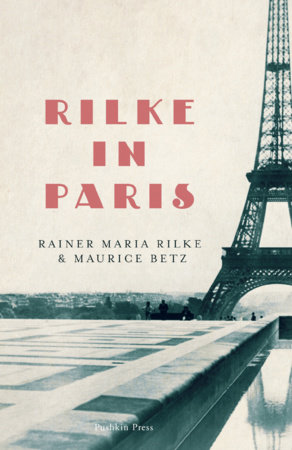
Rilke in Paris, Rainer Maria Rilke & Maurice Betz, tr. Will Stone (French original 1941; Pushkin Press, 2019).

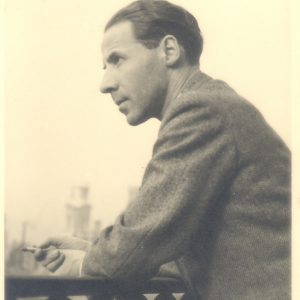
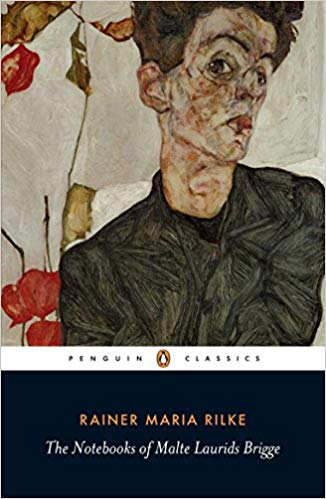
The argument of Maurice Betz’s memoir on Rilke’s various residencies in Paris between 1902 and 1914 is that the young poet’s experience of the French capital is what turned him into a great poet. Betz worked closely with Rilke on French translations of his work (particularly his novel The Notebooks of Malte Laurids Brigge (1910)). Will Stone’s excellent translation of Betz’s 1941 book, Rilke a Paris, elegantly encompasses its wide range of tones from biographical precision, to gossipy excitement and critical analysis. The book particularly focuses on Rilke’s struggle over a period of eight years to complete the novel which is autobiographical in so many ways, as Betz puts it “in effect a transcription of his own private journal or of certain letters”.

Rilke first arrived in Paris from Worpswede in northern Germany, a community of artists where he had met and married Clara Westhoff. But never one to truly reconcile himself either to community or intimacy, he had already left his wife to travel to Paris. Yet the anonymity, bustling energy and inequalities of the French capital appalled him. In letters to his wife and many others, it became clear that, as Stone’s Introduction argues, Paris had “unceremoniously torn Rilke out of his safe, somewhat fey nineteenth-century draped musings”. In ways reminiscent of Keats’ observations about feeling himself extinguished on entering a room full of people, Rilke would later recall how the city’s “grandeur, its near infinity” would annihilate his own sense of himself. Living at No.11, Rue Touillier, these initial impressions form the opening pages of The Notebooks.

But there were also more positive Parisian experiences, particularly in his meetings with Rodin who he was soon addressing as his “most revered master”. Famously, Rodin advised the young poet, “You must work. You must have patience. Look neither right nor left. Lead your whole life in this cycle and look for nothing beyond this life”. In terms of his patience and willingness to play such a long game, not only with his novel but also with the slow completion of Duino Elegies (1922), Rilke clearly took on this advice. Interestingly, Betz characterises Rilke’s methods of working on the novel, creating letters, notes, journal pages over a number of years, as “like sketches, studies of hands or torsos which the sculptor uses to prefigure a group work”.

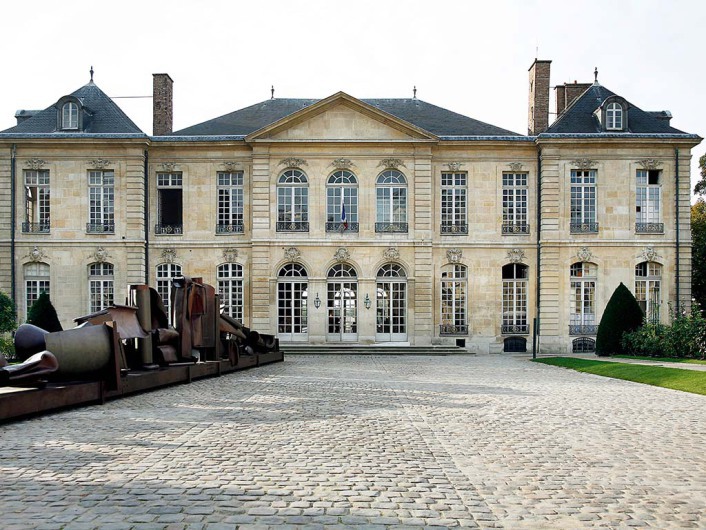
Rilke was even employed briefly by Rodin as “a sort of private secretary”. Betz suggests Rilke simply offered to help out for a couple of hours a day with the famous sculptor’s correspondence. But this quickly expanded to fill the whole day and Rilke was soon confessing to Karl von der Heydt that “I must get back to a time for myself where I can be alone with my experience”. A break was inevitable though in later visits to Paris the two artists patched up any quarrel. In terms of his location during this period, Rilke had moved on to the Hotel Biron at 77 Rue de Varenne on the recommendation of Clara. Rilke in turn suggested it as a suitable studio base for Rodin who also settled there and over a number of years gradually took over more and more of the rooms. It is this building that, in 1919, was converted to the now much-visited Musee Rodin.

Maurice Betz

Betz suggests that the traumatic impact of Paris was the making of Rilke as an artist. Between 1899 and 1903, Rilke had been working on The Book of Hours, representing a “religious and mystical phase”. In contrast, Paris presented the poet with an often brutal but also more “human landscape”. He also discovered this was reflected in the French capital’s painters and poets. Baudelaire in particular was important. In personal letters (as well as in his finished novel) Rilke identifies the poem ‘Une Charogne’ (‘A Carcass’) as critical in “the whole development of ‘objective’ language, such as we now think to see in the works of Cezanne”. Baudelaire’s portrayal of a rotting body seems to have taught Rilke that “the creator has no more right to turn away from any existence [. . .] if he refuses life in a certain object, he loses in one blow a state of grace”.

But it took Rilke a while to arrive at this sort of inclusivity of vision. One of his earliest impressions of the city was that there were invalids, broken human bodies everywhere. “You see them appear at the windows of the Hotel-Dieu in their strange attire, the pale and mournful uniform of the invalid. You suddenly sense that in this vast city there are legions of the sick, armies of the dying, whole populations of the dead”. As Betz points out, this is one of the important observations made by the hero of The Notebooks. It is the “multiform face of death” that Brigge (and Rilke) confronts in Paris. And the irony is not lost on either of them because Paris, of course, at this time was renowned for its social and cultural vitality. Here, Rilke is being forced to make critical distinctions which he then worked on for the rest of his life: “Vital impulse, is that life then? No. Life is calm, immense, elemental. The craving to live is haste, pursuit. There is an impatience to possess life in its entirety, straight away. Paris is bloated with this desire and that’s why it is so close to death”. Years later, near the end of the fifth of the Duino Elegies, Rilke expresses something very similar (tr. Crucefix):


Squares, oh, the squares of that infinite showplace –

Paris – where Madame Lamort, the milliner,

twists and winds the unquiet ways of the world,

those endless ribbons from which she makes

these loops and ruches, rosettes and flowers and artificial fruits

all dyed with no eye for truth,

but to daub the cheap winter hats of fate.

Hotel Biron Musée Rodin

But unlike Brigge, Rilke escapes Paris. Reflecting later, he feared that people might read his novel as seeming “to suggest that life was impossible”. Betz – who had many discussions with Rilke during the process of translating the novel – reports that the poet, accepted that the book contained “bitter reproaches [yet] it is not to life which they are addressed, on the contrary, it is the continual recognition of the following: through lack of strength, through distraction and hereditary blunders we lose practically all the innumerable riches which were destined for us on earth”. Though the Duino Elegies opens with the despairing existential cry (“Who, if I cried out, would hear me among the ranks / of the angels?”), by the seventh poem of the sequence Rilke expresses his affirmative view: “Just being here is glorious!”. In Rilke in Paris, Betz records some of Rilke’s conversations: “Instead of perpetually hesitating between action and renunciation, we fundamentally only ‘have to be there, to exist, that’s all”.

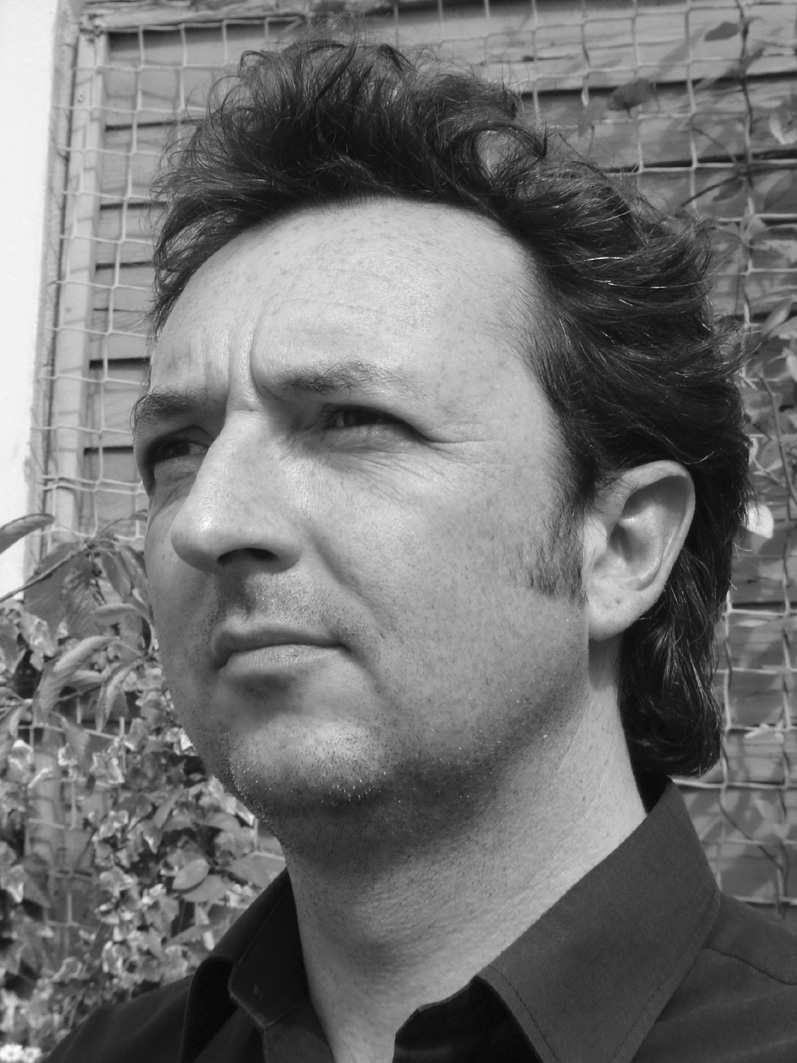
Will Stone

Betz’s admiration for Rilke is palpable throughout this fascinating little book. In its concluding pages, he sums up: “In seeking to express in his own way the world we thought we knew, Rilke helps us to hear more clearly what already belongs to us and permits us access to the most sinuous and iridescent forms, to profound emotive states and to that strange melody of the interior life”. This is marvellously put (and translated). Will Stone also includes a translation of a little know early sequence of prose poems by Rilke, ‘Notes on the Melody of Things’. In it, the poet reflects – through thoughts on theatrical experience and on fine art – on the relationship between background and figures in the foreground. Something of the personal angst and despair of The Notebooks can be heard in section XXXVII where we are told that “All discord and error comes when people seek to find their element in themselves, instead of seeking it behind them, in the light, in landscape at the beginning and in death”. The vastness and reality of what lies behind the solitary figure – and the negotiated relationships between the two – suggests to me that Yves Bonnefoy may well have been thinking of these pieces when he was writing L’Arriere-Pays (1972). Betz is right to conclude Rilke in Paris by praising Rilke as a poet who matured through “solitude and lucid contemplation of the loftiest problems of life”, but also one who never failed in patience or effort to express “in poetic terms the fruit of that inner quest”.

Tearing Up Grass: on Holderlin’s Life and Madness

Hesperus Press are just about to publish Will Stone’s eminently readable and wonderfully grounded translation of a contemporary account of Friedrich Holderlin’s madness. This is a long essay by Wilhelm Waiblinger, written in Rome during the winter of 1827/8. It’s an astonishing and very moving document for those interested in German Romantic and Modern poetry or in early accounts of mental illness or – as I am aware is my own case – for those who will instantly recognise, in these brilliant and detailed observations, some of the behavioural elements of what we now loosely refer to as dementia.

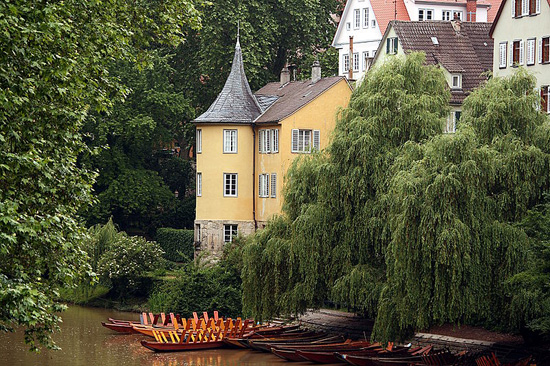
Holderlinturm
Holderlinturm

The essay first appeared in 1831, ironically only a year after its author’s death, though still a dozen years before its subject’s demise. Stone’s excellent introduction tells us that Waiblinger was an up-and-coming poet of the 1820s, “a rebel, a wayward fellow and a liberal maverick”. He studied at the same Protestant seminary (the ‘Tubinger Stift’) where Holderlin had studied from 1788 with Schelling and Hegel (imagine that team on University Challenge). But by 1806, the older poet had been confined to his tower in Tubingen (the ‘Holderlinturm’) because considered incurably mad. Waiblinger began visiting him in the summer of 1822. For four years, he saw Holderlin close-up, walking with him, trying to talk with him and enduring some pretty wild-sounding piano playing too.

41+WrUaV5pL._SX320_BO1,204,203,200_Waiblinger was a real Holderlin fan. The older poet’s novel, Hyperion, had appeared in 1822 (I review a recent translation of it here) and the younger man found it “saturated with spirit: a fervent fully glowing soul swells there” He was swept away: “Holderlin shakes me to the core. I find in him an eternally rich form of sustenance”. The mad poet in his tower was not often amenable to being visited, but Waiblinger, for some reason, proved an exception: “This lunatic, sitting at the window [. . .] is far closer to me”, the young man wrote, “than the thousands out there who are said to be sane”. Stone makes it clear that Waiblinger not only admired Hyperion but voiced the need for Holderlin’s other poetry to be re-published. Gradually, having fallen into obscurity, “his special hymnic style, fusing Greek myth and Romantic mysticism” eventually started to attract new admirers including Nietzsche, Schumann, Brahms, Rilke, Hesse, Trakl, Benjamin and Celan.
Initially, Waiblinger seems to have intended to document: “It is not my place to offer some profound psychological insight, but rather to limit the quest to simple observation, a modest character sketch”. Filling in Holderlin’s earlier years he notes the uniqueness of his work in his “enthusiasm for Greek antiquity” which “left [its] mark on the tonality of his own creations” and led to a sense “of discontentment with the land of his birth”. This kind of sentiment dominates Hyperion and Waiblinger (sounding a bit prissily patriotic here) finds it elicits in him “a certain repugnance”. Waiblinger also reminds us of Holderlin’s doomed affair with the already-married Susette Gontard (the model for the Diotima figure in the poems and Hyperion). He sees the termination of the affair as the main contributory factor in Holderlin’s decline: “The coddled youth, lulled by the sweet intoxication of this love entanglement, was suddenly pitched back into bitter reality”. From here on, Holderlin was to carry “a fracture in his heart”, a wound barely transformed in Hyperion which Waiblinger reads as documenting “an unnatural struggle against destiny, a wounded mawkishness, a black melancholy and an ill-fated perverseness [that] cleaves a path into madness”.

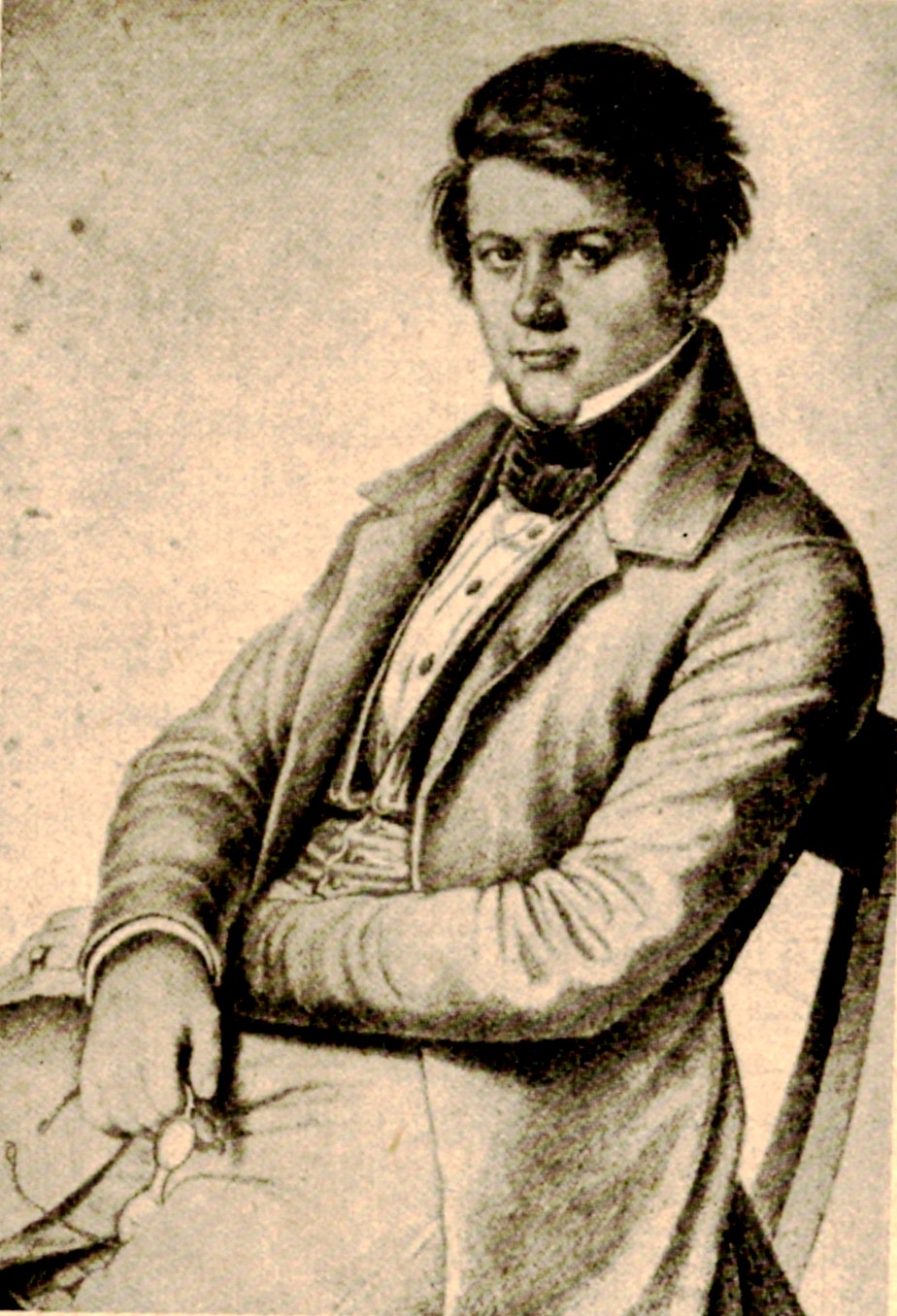
Wilhelm_Waiblinger
Wilhelm Waiblinger

No doubt the end of the affair did deeply affect Holderlin, but Waiblinger’s drawing a direct line from it to the ‘Holderlinturm’ is probably a bit simplistic. Sheltered from the “bitter reality” outside the tower, Holderlin continued to write letters in prose and verse. Given the period, it’s not surprising to hear Waiblinger describe the mockery of locals who caught Holderlin out walking – and good to hear that the old poet responded with mud and stones thrown at his attackers. Yet his behaviour was often like that of a small child: “When he leaves the house, they have to remind him in advance to wash and groom himself, for his hands are habitually soiled from spending half the day tearing up grass”. This tearing up grass seems to have been a common occupation as does, while out walking, flapping his handkerchief against fence posts. All the while, “he talks incessantly to himself, questioning and responding, sometimes yes sometimes no, and often both at the same time”.

One of Holderlin’s other occupations in his madness was re-reading his own Hyperion. He would read aloud, exclaiming “Wonderful, wonderful!” then go on, pausing only to remark, “You see gracious sir, a comma!” In true Romantic style, Waiblinger notices that the mad poet is more calm and more lucid in the open air: “he spoke to himself less [. . .] I was convinced this unceasing monologue with himself was nothing more than the disequilibrium of thought and his inability to gain significant purchase on any object”. For those who have witnessed a relative or friend suffering from dementia, this is a familiar thought and familiar also, perhaps, is the recourse to the phrase “It’s of no consequence to me” which Waiblinger heard repeatedly from the chattering Holderlin.

Playing a piano still gave him some pleasure it seems, beginning in childish simplicity, playing the same theme over and over hundreds of times. On other occasions, almost in spasmodic fits, he’d race across the keyboard, his long, uncut fingernails making an “unpleasant clattering sound”! He would also sing with great pathos – though not in any identifiable language. Holderlin’s family had completely abandoned him in his madness, but Waiblinger records him writing to his mother in the style of a child, “who cannot write in a fully developed way or sustain a thought”.

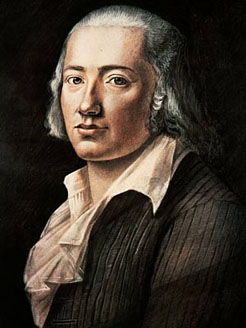
friedrich-hoelderlin-1-sized
Friedrich Holderlin

In fact, Waiblinger suggests that Holderlin’s difficulties lay in mental weakness rather than full-blown insanity. He is “incapable of holding a thought, of giving it clarity, of following it and linking it to another by way of analogy and thus to articulate a distant idea in a regular consistent sequence”. He has another go at describing what he imagines must be going on: “He wishes to affirm something, but since reality [. . .] does not concern him, he refuses it at the same moment, for his spirit is a realm which sustains only fog and what is feigned”. This is partly evident because of Holderlin’s habit (in his madness) of thinking out loud, so Waiblinger believes he can hear a thought being consumed even in the moment of its conception. In the grip of such fluidity and terrifying fog, Holderlin then would shake his head and cry out ‘No, no!’ and begin “firing out words without meaning or any signification, as if his spirit, in a sense overstretched by such a drawn-out thought, could restore itself only by having his mouth issue words which bore no relation to any of it”. Holderlin retreats from his own incoherence into the comfort of sheer random association.

untitled
Will Stone

The results are inevitable for the patient and (again recognisably) yield up a fierce, walled-in, self-involvement. Waiblinger describes a “complete lack of participation in and interest for any events outside himself”, and this, alongside an “incapacity to wish to grasp, recognise, understand, to allow in another individuality other than his own”, means there is no possibility of rational communication with the patient. And such solitude – experienced from the inside – results in such boredom that “he needs to speak to himself”, though lacking the ability to follow one thing with anything coherent, the result is “diabolical confusion” and mere “gibberish”. So it’s with some surprise that we find Waiblinger ending his essay with any thought at all of Holderlin’s recovery. He admits it’s unlikely – but does allow himself (surely consoling himself) with imagining an occasional “momentary restoration”, though even this might only be brief, perhaps no more than a fleeting prelude to the moment of death.

But perhaps such imagined lucid moments are less than consoling to those who spend time observing such distress. Leafing through his papers, Waiblinger says he discovered a quite terrifying phrase. Holderlin at one moment had scrawled down, “Now for the first time I understand humankind, because I dwell far from it and in solitude”. It is almost unbearably moving to imagine such flashes of conscious insight coming to the old poet in the midst of so much mental confusion and perceptual fragmentation. What Waiblinger here describes feels bang up to date and yet must be as old as the hills. Will Stone has done an important job in bringing this essay into English.