Review of ‘Autumn Fire’ by Ricarda Huch, tr. Timothy Adès

This review is an extended version of the one which first appeared in Acumen Poetry Magazine in the autumn of 2025. Many thanks to the reviews editor, Andrew Geary, for commissioning it.

Considered by Thomas Mann as ‘the first lady of German letters’ and as the first woman to receive the prestigious Goethe Award (1931), Ricarda Huch (1864-1947) was a literary superstar of her time, yet remains little known in English. She was an historian who published novels, philosophy, drama and poetry. With the rise of Hitler, she made her rejection of Nazi doctrine clear, remaining in Germany as an ‘inner émigré’, but surviving the war years. Autumn Fire (Poetry Salzberg, 2024) is her last collection, published in 1944, and powerfully reflects her lifelong fascination with the Romantic movement. As Karen Leeder’s scene-setting Introduction explains, this is evidenced in the poems’ formal choices as well as imagery, ‘a repertoire of sprites, flowers, scents, birdsong, gardens, moons, fairy tales, and love’. An English poetry reader would initially place this work in parallel to the least challenging of the Georgian poets of 1914.

There is frequently a faux medievalism at work, as in ‘The trees of autumn murmur’ which tells the story of a Prince who wanders into the woods and is bewitched by ‘fairies wild’ to live a sad, unloving, unhappy life. Other poems remind us of Hardy’s folkloric, time-obsessed lyrics in similarly challenging stanza forms:

On far-off floors the dancers face the middle,

The hems swing stiffly to the threshers’ drum.

Accordion and bass and fiddle

Ethereal hum.

                                                (‘Autumn’)

Also from the stock Romantic image bank comes the isolated, tortured figure of the poet who, as spring days arrive, remains unmoved by them because mysteriously ‘troubled’ and when called upon to sing his songs (this is Huch’s own masculine gendering), finds that his creative efforts are ‘unwelcome’ to society at large (‘Morning of twittering birds’).

However, a closer reading of Huch’s poems clarifies their curiously hybrid effects, as in ‘The Old Minstrel’ in which the violent early years of the twentieth century come forward dressed in medieval garb. The narrative voice encourages the minstrel to sing and play his harp: ‘songs of golden treasure, / Times of playfulness and pleasure’. But the final lines of the poem are spoken (we must assume) by the minstrel who warns that what may come from him demands powerful trigger warnings:

Woe betide ye when I call

Forth my lions, every string,

Dumb in dusty ambuscade,

Torpid now, glistening

Thick with matted blood!

Huch boldly leaves the poem there, without any return to a possibly moderating, narrative voice. ‘The Heroes’ Tomb’ also makes use of familiar images (a tomb, a blustery November day, an old man, a passing shepherd, a youngster asking questions) to address a distanced ‘wicked war’. This poem similarly ends bloodily (though note, we are still in the era of swords rather than machine guns), as those who are inclined to stoop and listen at the tomb, can ‘make out far below the clash of swords, / And tell the drip, drip, drip, and hear the sound. / Can it be blood?’

Such lines contrast the lark’s song, the perfumed jasmine, the poplars and lime trees inhabiting so many of these pages and Huch herself seems to shuttle between a religious-based optimism and a much more modern sounding despair. In ‘Moonlit Night’, an owl flies through a wood and takes a mouse as prey. The moon seems to be portrayed as looking on, wholly indifferent, as it picks its way through the branches, ‘twinkle-toed and light’. Only the form and language here makes the poem feel less than genuinely Modern. As for the owl, it becomes proleptic of technological advances in air warfare as she sweeps off through the wood, ‘the murderess, / whose claws the victim hold, / airborne above black treetops’ emptiness’. Another predator image later provides the reader with a further shock. In ‘My heart, my lion, grasps its prey’, the latter is identified as ‘the hated’. And the passionate nature of Huch’s antagonism – though the object of her hate is never named – is startling, and she uses repetition, shortened lines and rhyme to make her point:

My heart hates yet the hated,

My heart holds fast its prey,

That none may palter or gainsay,

No liar gild the worst,

Nor lift the curse from the accursed.

Almost inevitably you feel, the elements of modern warfare seep into Huch’s poems. In the midst of another Hardyesque stanzaic poem, between the ‘honey-brown’ buds on the trees and the lark’s ‘music-making’, more familiar ‘war poem’ sounds provide the base notes: ‘The earth shakes with battle, the air with shellfire heaves’ (‘War Winter’). The ABAB quatrains of ‘The Young Fallen’ mourn those taken by war by first evoking the innocence of their childhoods, schooldays, their unfulfilled worldly ambitions. Then ‘War came’. And though much of the detail and imagery could be applied to wars fought anytime in the last few centuries, there are moments when the realities of the mid-twentieth century cannot be denied. The young men’s hands are a focus, as they ‘Not long ago reached out for toys and fun. / Those hands, conversant with the tools of murder, / Control the howitzer and grip the gun’.

In fact, Huch was living in Jena when the city was bombed by the Allies and ‘The Flying Death’ comes closer than any other poem in conveying her experiences of modern warfare. Though the Flying Death is an old-fashioned personification, its modus operandi is up to date: ‘The chimney reels, the roof-beams groan, / By distant thunder he is known’. Even as the air bombardment is imaged as approaching on ‘iron steeds’, its impact is plainly conveyed as ‘A whistling, hissing din, and more, / A jarring shriek is heard, a roar, / As if the earth would burst.’ This Poetry Salzberg publication unfortunately does not give the reader the original German, but Timothy Adès’ translations are quite brilliant in their preservation of form and rhyme, while at the same time conveying both the sweetness and the violence in Huch’s curious, powerful, under-appreciated poetry.

Excerpts from Autumn Fire, tr. Timothy Adès

Stralsund

The old grey town that blue sea girds:
The swell of rust-red sails,
The squawking, tumbling salt-sea birds,
The flash of clean fish-scales.

On this church wall the pounding wave
And tempest waste their fire:
Though organ-thunder shakes the nave,
No foe hurls down the spire.

The clouds with tender beating wing
Caress its head, that dreams
Of fierce-fought battles reddening
Its foot with gory streams.

The dead are sleeping, stone by stone,
The sounding bells request:
Eternal memory, my son,
Be thine, eternal rest!
 

Music

Melodies heal up our every smart;
Happiness,
Lost to us, they redress;
They are balsam to our ailing heart.

From the earth where we without respite
Toil enslaved,
As on wings of blessed angels saved
They transport us to a land of light.

Sound, sound forth, ye songs of mystery!
Worlds fly far;
Earth sinks down, our red and bloodstained star;
Love distils its essence from on high.
Charlie Louth’s Rilke + new Rilke translations

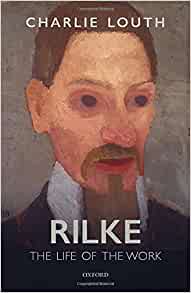
As I mentioned in my last blog post, much of my time through lockdown and in the last few months has been taken up with translation. One of these projects is as daunting as it is exciting. Pushkin Press have commissioned me to complete a new selection and translation of the work of Rainer Maria Rilke to appear in 2023. Some of you will be aware of my earlier published versions of the Duino Elegies and the Sonnets to Orpheus (both available from Enitharmon Press). The new project will contain selections from those sequences and a good selection of earlier poems, including from the New Poems. As well as trying out a few of my new translations in this post (and the following one), the body of it is an uncut version of my recent review of Charlie Louth’s excellent book on Rilke, Rilke: the Life of the Work (OUP, 2020). A shorter version of this review appeared in the latest Agenda magazine, ‘Altered Distances’ (Vol 54, Nos. 1/2). Many thanks to the editor, Patricia McCarthy for asking me to write it.

Part I

Rilke has long suffered from two types of criticism. Among his enthusiasts, some declare his work close to sacred and therefore hardly open to ‘normal’ practices of critical analysis, at risk of spoiling the ‘bloom’ of mystery they find there. Others, of a more negative inclination, accuse him of an aloof aestheticism, a likely fatal distance from ‘real’ life. One such was Thomas Mann who can be found, Charlie Louth notes, “(rather richly) calling him an ‘arch aesthete’”. Both viewpoints risk downplaying the skilled crafting of Rilke’s work (he thought long and hard about poems as artefacts, things consciously and intricately made) but also risk mistaking the particular power of his poetry. Rilke: the Life of the Work is comprehensive, erudite, always clear and – most importantly – keeps returning us to the poetry to which Louth enthusiastically responds: “When we read Rilke, the poems do not feel aloof, and they do not feel merely aesthetic in their claims. They press upon us and make us examine ourselves, and they help us experience our life in the world with greater clarity and depth”. Most readers will recognise this as an allusion to the ‘Archaic Torso of Apollo’ (from New Poems) which concludes “You must change your life”. Louth again: “It is unusual for Rilke to be so direct, but as I see it a similar spirit animates most if not all of his poems”.

This book aims to bridge the gulf between enthusiastic, non-specialist readers of poetry (Louth translates his foreign language quotations himself) and the German lang/lit academic and student. The balance between engaged readability and academic thoroughness is very well judged. I particularly value Louth’s close readings of ‘the work’, viewed as objectively as possible (Louth declares early on that he has no “overarching thesis”). There are other readily available biographical and critical works, but the strength of Rilke: the Life of the Work is that, with its discussion of the formal choices, wording and syntax of so many poems, it is a comprehensive attempt at ‘Reading Rilke’. The structure of the book’s 600 pages is primarily chronological, from the poet’s earliest publication, Lives and Songs (1894) through to Vergers (1926). Louth only departs from this chronological survey twice. Early on, he looks at several poems that open Rilke’s published books, then, in Chapter 6, he discusses the four poems Rilke wrote as requiems.

Lou Andreas Salome

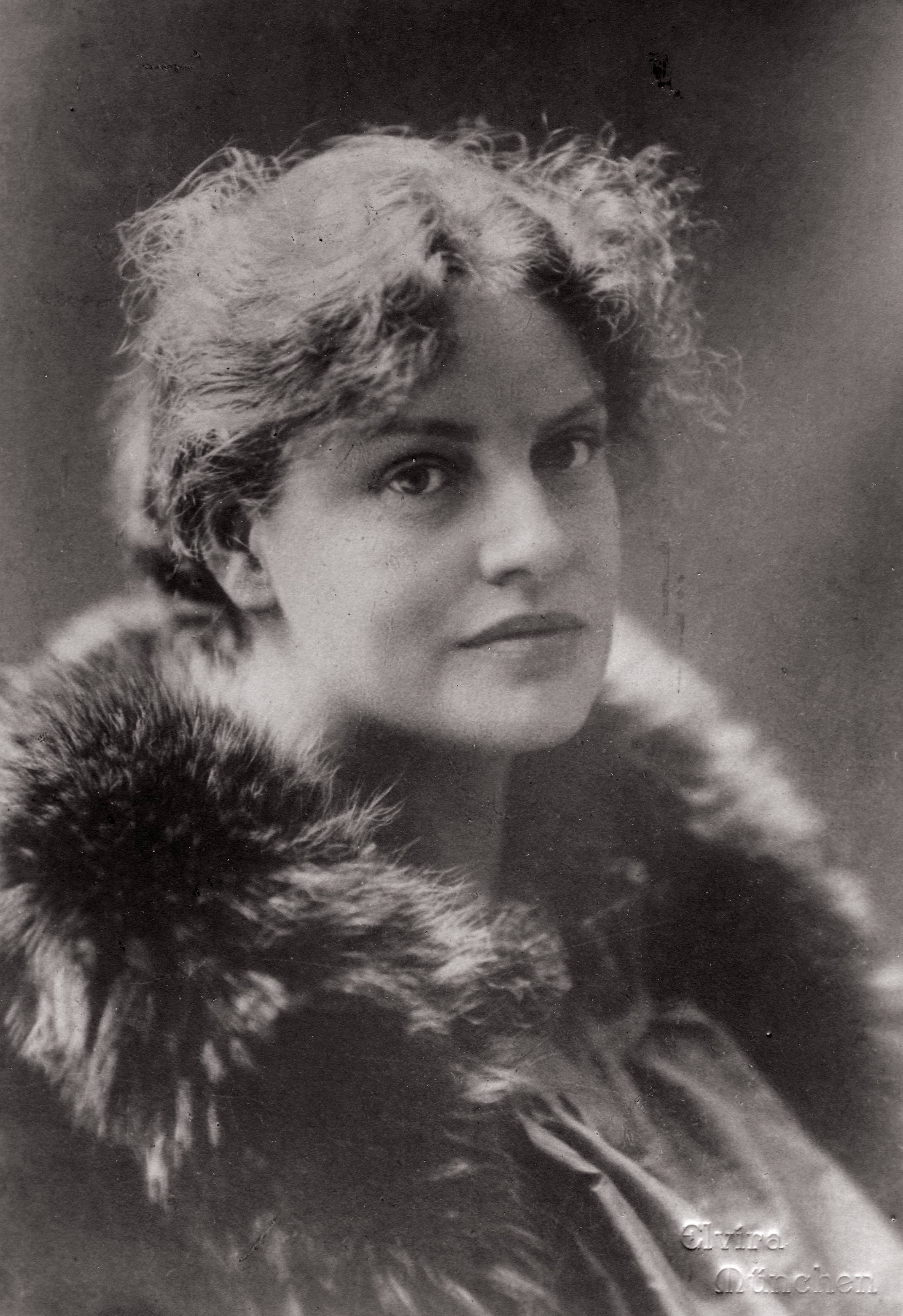
So Louth’s Rilke is a craftsman and moralist who urges us to live better. The kind of closed system of a purely aesthetic art was the poet’s abhorrence. In a lecture he gave early in his career, Rilke is already sure that “‘art is only a path, not a destination’. In a letter to Lou Andreas-Salomé in 1903 he confirms: ‘I do not want to tear art and life apart; I know that in the end they are one and the same’. As so often, Louth articulates his subject’s attitude with great clarity: “for Rilke, there can be no question of shutting oneself away from life, of retreating into the work, and the desk, if it is to be the place of necessary writing, must be a ‘vitale Mitte’, a site right in the middle of life and exposed to all its risks and promises. To write is not to withdraw but precisely to engage”.

Rilke’s poetry pays particular attention to the processes of change associated with being human. Poems record such moments of change but also act, in the process of being read and openly experienced, as opportunities where change in an individual might take place. For those with faith in literature, Louth articulates the exciting prospect: “to read at all is to pause, is to take your time in times when an anxious haste pervades much of what we do. In some sense it is to live better whether poetry makes anything happen or not”. Writing to Thankmar von Münchhausen in 1915, Rilke asks, “What is our job if not, purely and freely, to provide occasions for change?” Louth finds these ideas in ‘Eingang’ / ‘Entrance’, one of the poems Rilke placed at the start of The Book of Images (1902/06). The furniture of this poem – the self, a house, a tree – is a grouping that recurs throughout Rilke’s work and what interests him is the suggestion that, as we leave the familiarity of our house, “the house of our habits, we enter the imaginary space of another building [. . .] coming from life into the poem, and passing through the poem into life”. Here is my new translation of this poem:

Whoever you are: in the evening, step out

of your living room, from all that’s familiar;

in the distance, the last thing, your house:

no matter who you are.

And although your eyes have grown so weary

you can barely lift them from the worn threshold,

slowly, with them, you still raise a black tree

and set it before the sky: lean and alone.

And you have made a world. And it is immense,

like a word, in silence, it continues to grow.

And as your will grasps its significance,

so your eyes, tenderly, let it go . . .

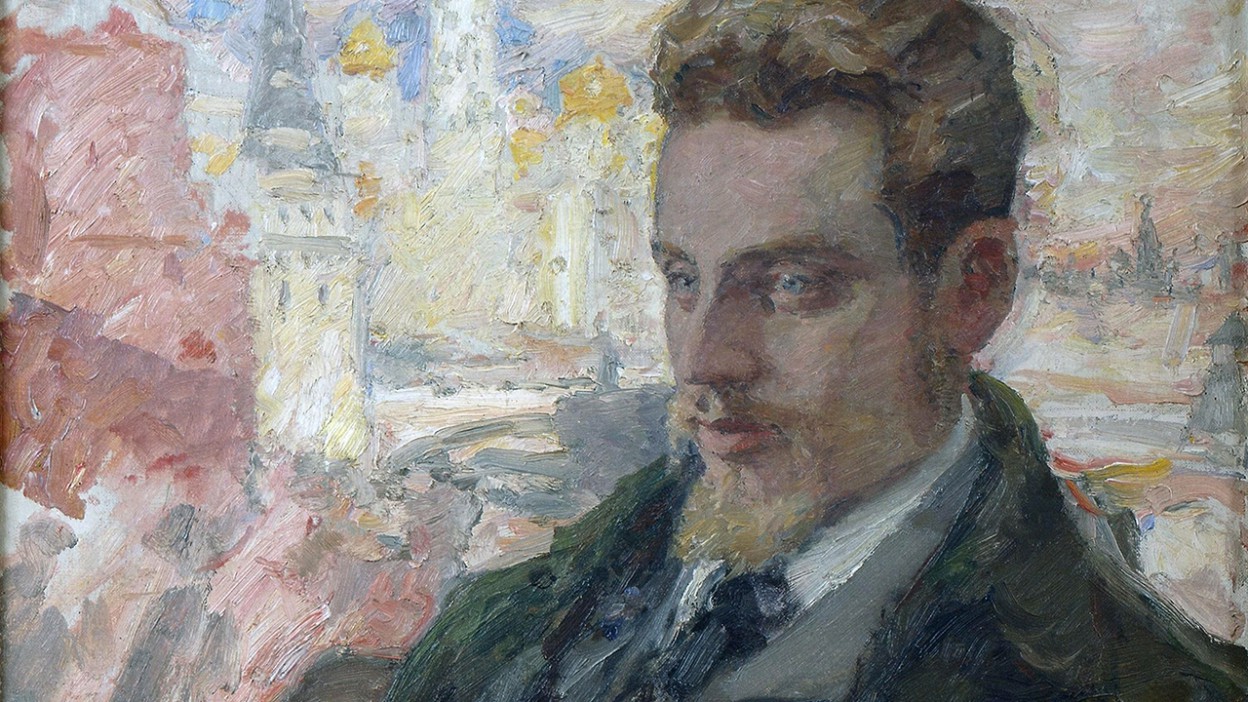
Portrait of Rainer Maria Rilke, 1928, by Leonid Pasternak

For Rilke’s own life and work, the key meeting was with Lou Andreas-Salomé in May 1897. Lou changed his handwriting and his name (from René to Rainer), but it was the confidence and groundedness in the world that she brought to his life that pushed his art “closer to the details of lived experience”. Rilke himself wrote: “The world lost its cloudiness [. . .] I learnt a simplicity, learnt slowly and laboriously how simple everything is, and I gained the maturity to talk of simple things”. Lou’s influence can be seen in the lecture he gave in Prague in 1898, where he distances himself from Symbolism and aestheticism (the dominant strands of ‘modern poetry’ at the turn of the century) to argue that the artist must not be “shut out of the great channel of life”, but must evoke the constant dialogue between the individual and things, “the strange coincidences between inner and outer out of which experience is made”. As Louth says, this is an early statement of the theme which will occupy his whole life.

Here is a brief poem – actually naming Lou and indicating her influence in persuading Rilke of the sacredness of the ordinary. It went unpublished for years, but was part of Rilke’s sequence called To Celebrate You (Dir zur Feier):

The rain runs its chilly fingers

down our windows, unseeing;                             

we lean back in deep armchairs

and listen, as if the quiet hours

dripped from a weary mill all evening.

x

And then Lou speaks. Our souls incline

one to another. Even cut flowers

at the window nod their topmost bloom

and we are completely at home,

here in this tranquil, white house.

For Rilke, the successful poem is a space in which the mysteries of things and personal confession are both explored, or revealed, simultaneously. Louth argues that, from the outset, Rilke’s view of this was always positive: “there is no unnerving consciousness of the self ’s arbitrary dependence on chance encounters with the outside world”, but equally, there is “no doubt about the existence of an underlying unity to which the poet has access”. What he feared was ‘the interpreted world’ (‘der gedeuteten Welt’), a world view shorn of all mystery, a perspective that perhaps most of us inhabit, a view in which language has become dominantly instrumental, “narrowing our vision so that life appears cut and dried without any possibility of the unknown and the unknowable”. Louth explains what readers of Rilke value in his work: “poetic language, as he understands it, is precisely a way of talking that avoids directness and allows the mutability of experience and the mystery of the world to be expressed. It releases rather than limits possibility”. Beyond this stands what Rilke might have meant by the term ‘God’. ‘He’ is “an experience of totality, life felt as a whole, in which self and other are not distinct or momentarily lose their distinctness”.

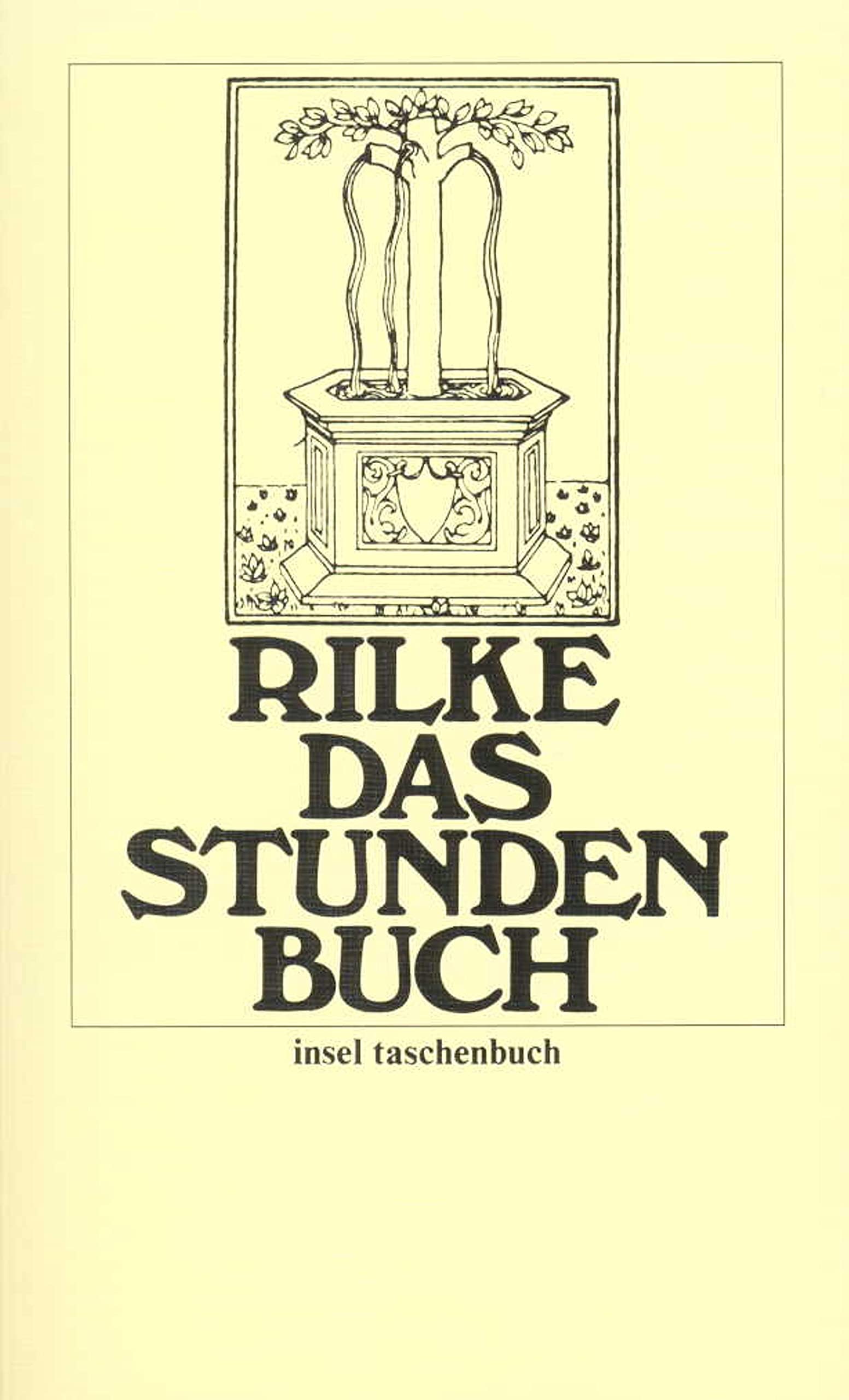
Here is my new translation of an early poem from The Book of Hours (Das Stundenbuch) in which Rilke is developing these ideas:

You, the darkness from which I came,

I love you more than the flame

scoring the world’s edge

with a glimmer

upon some sphere,

beyond which no-one has more knowledge.

x

Yet the darkness binds everything into itself:

all forms, flames, creatures, myself,

it seizes on them,

all powers, everything human . . .

x

And it may be: there is an immense might

stirring nearby –

x

I believe in the night.

It is in part because the enemy of mystery is language (too casually used) that poetry (constructed from language more carefully used) has an advantage over other art forms like painting. There’s an irony here, of course, because Rilke learned so much from other workers in the fine arts. Most know about the debt he owed to Rodin and Cezanne, but Louth argues Rilke’s journey towards the poetics of the New Poems began in the period he resided in the artists’ community in Germany at Worpswede. A lot of his thinking there concerned images of man and landscape. For the majority of the time, humans and nature live “side-by-side with hardly any knowledge of one another” and it is in the ‘as if’ of the work of art that they can be brought closer, into a more conscious relation. But because a poem works through time, such a correspondence is acknowledged as “something one traverses and gains knowledge of but cannot hold onto”.

Part 2 of this review coming next week…..

Louise Gluck’s Poetry: Whole But Not Final

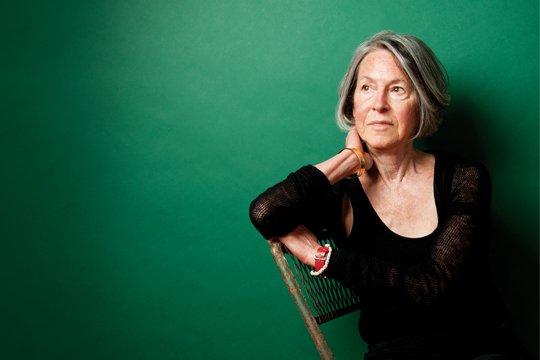
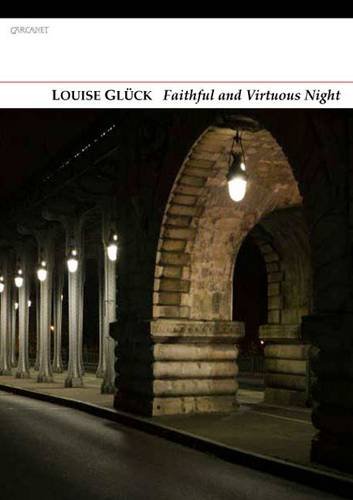
Lots of hits in the last 24 hours on my earlier blog post about Louise Gluck. Being awarded the Nobel Prize in Literature tends to have that effect… She’s a fascinating writer, always experimenting, but Anne Carson or Claudia Rankine would have come before her on my list. But given the obvious interest in her work, I’m posting here the text of the review I wrote for Poetry London in 2014 of Gluck’s last (ie. latest, though 6 years old now) book, Faithful and Virtuous Night (Carcanet). The review was paired with Michael Longley’s The Stairwell (Cape, 2014).

Louise Gluck’s comments on George Oppen remain one of the best ways into her own poetry. In praising Oppen, she declares her own hand: “I love white space, love the telling omission [. . .] find oddly depressing that which seems to have left out nothing. Such poetry seems to love completion too much, and like a thoroughly cleaned room, it paralyses activity” (Proofs and Theories, Carcanet, 1994). The homely metaphor here is also characteristic. She shares with Oppen (and surprisingly with Longley) a preference for what is singular, common, small, for “solid nouns”, a language restored “to natural health [. . .] for common use”, rather than a Stevensian “hermetic patois” (‘On George Oppen’ ). So her style has been variously called spare, stripped down, deflated, thinned (especially so since Ararat (1990)). Yet the miraculous paradox her poems evoke is suggested by a further observation from 1994, that “precision is not the opposite of mystery”. Gluck’s dreamlike, enigmatic narratives are all the more powerful – convincing one might say – precisely because of the directness, plainness of her language.

It’s appropriate then that in her new book one of the protagonists paints canvases which are “immense and entirely white” (‘The White Series’). There is mystery enough in this new collection which (as often with Gluck) gestures towards a narrative but whose narrators switch gender, are much concerned with parents (who have perhaps died in a car crash), a caring aunt, a brother (perhaps a sister). These are scenes from (at least one) life. The dominant voice is that of a male artist who, after a career interruption, begins to paint white on a visit to America. He takes on a nephew as a companion as he approaches death. In ‘A Summer Garden’, he discovers a photo of his mother slipped into a translation of Thomas Mann’s Death in Venice (1912) and a studied, fin de siècle fastidiousness over language surfaces in many poems. Gluck’s novelistic skills in drawing a world in a few strokes and character in even fewer are evident, though once again action is missing; Gluck’s characters, whether male or female, are passive.

Like Mann’s Gustav von Aschenbach, Gluck’s figures contemplate mortality while turning over their past. Though less obviously personal and less contented, as with Longley, the term nunc dimittis seems appropriate. The loss of parental figures is a recurrent trope and in ‘An Adventure’ love too is stripped away in a vain hope of “profound discoveries”. Poetry is lost too, again anticipating “the vast territory / opening to us with each valediction”. In A Village Life (2009), such a via negativa was doubted as “illumination / of the kind [that] destroys / creatures who depend on things” (‘Bats’) and here too it seems ineffectual. The quasi-Victorian cosiness evoked by the book’s title is exposed as false as remembered days “become unstable”, time leaps to and fro, seemingly at random and, if the soul travels at all, the puzzle remains that it always returns “empty-handed”:

[. . .] there is no perfect ending.

Indeed, there are infinite endings.

Or perhaps, once one begins,

there are only endings.

                                                                        ‘Faithful and Virtuous Night’

This is a bleak world not unfamiliar to readers of Gluck. In 1985 she asked, “Why love what you will lose?” only to answer, “There is nothing else to love” (From the Japanese’). Here, her real subject is the way we create our own meanings. ‘Afterword’ reflects on an earlier poem in the collection, suspicious of the “instinct / [to] discern a shape, the artist in me / intervening to stop traffic, as it were”. A meeting with an old woman yields the anticipation “that some important secret / was about to be entrusted” but on reflection her words are “pointless” (‘A Sharply Worded Silence’). Gluck (again like Longley) has used Homeric and Greek mythic material to ironise her more contemporary subjects. Faithful and Virtuous Night instead makes reference to T H White’s The Sword in the Stone to evoke the same kind of focused, watershed moment, indubitably saturated with meaning that the events of her narrator’s lives lack. Even the analyst’s couch offers nothing more than “my ingenuity versus / his evasiveness: our little game” (’The Sword in the Stone’).

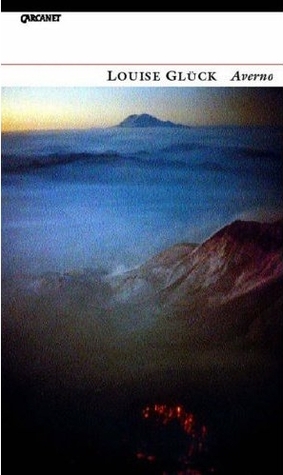
In recent years, the Italian settings of Averno (2006) and A Village Life have seemed to warm Gluck’s empathy, developing a more dramatic quality to her work in portraits less obviously autobiographical. This new collection perhaps reverts, but still she engages and moves her readers and there do seem to be eventual gains along this apparently bleak road. These lie in the poems’ openness, the way they seem capable of encompassing such varieties of experience, of saying ‘yes’. Of Oppen, she wrote that his work had the power to seem “simultaneously, whole and not final, the power to generate, not annul, energy”. As in sitting before a Samuel Beckett drama, the paradox is we are not drained of energy by the apparently fruitless search for meaning, but are thrown back onto the road all the more attuned to the clues, to the activity demanded of us. In his last days, Gluck’s artist has his nephew sing Jacques Brel’s ‘The Old Folks’ (“The little cat is dead and no more do they sing“) as well as Rodgers and Hammerstein’s ‘The Hills are Alive’. The insight is that “we do not, in the main, need to choose between them” (‘The White Series’).

To end at the beginning, Faithful and Virtuous Night opens with ‘Parable’ in which, “as St. Francis teaches”, a group of people divest themselves of worldly goods, better to focus on their goals, better to move unencumbered towards them. But the direction of travel is unclear, as is their purpose. Much debate ensues; time passes. In the background, perhaps we hear Brel’s “old silver clock” ticking. The group grows old in debate and their ageing (some believe) is their true purpose, while others believe the passage of time is the truth they hoped to be revealed. Both seem satisfied and perhaps we need not choose between them, only admire Gluck’s precise evocation of the mystery.