Review of ‘The Pity’ – Part 2: new war poems commissioned by the Poetry Society

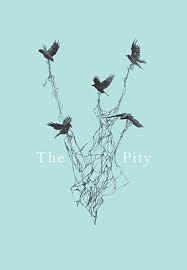
On National Poetry Day (October 2014) four contemporary poets (chosen to represent “different poetics and perspectives”) performed new work about the legacy of the First World War. Two months later the Poetry Society published The Pity as a limited edition anthology. Given free to Society members (in the last couple of weeks it has come through my letterbox with the new issue of Poetry Review), it is also available to purchase online.

In my previous blog, I discussed the contributions of Steve Ely and John Glenday (click here to read this). Here I complete the collection with comments on the work of Denise Riley, Zaffar Kunial and Warsan Shire. Overall, I think The Pity is remarkable – a gathering of voices, each wrestling with a nigh impossible commission. The four “sustained” responses to the topic (John Glenday’s was a separate, shorter brief) all splintered into fragments under the pressure of it. Ely and Shire are the boldest in widening the orbit of the commission and interestingly are also (for me) the most successful, largely by co-opting the resultant technical schisms into what they wanted to say, both of them drawing on more contemporary material, closer to their own concerns and backgrounds.
imgres

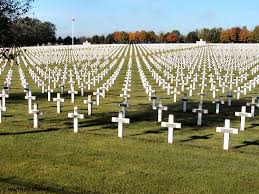
Denise Riley’s ‘A gramophone on the subject’ recalls Sassoon’s balancing act of anger and compassion. The two elements are held in tension partly because of Riley’s contrasting dual focus: the bodies of the dead and the possible consolations of spiritualism. More firmly focused on the 1914-18 conflict than the other sequences in The Pity and written in what Riley calls “a kind of ‘music-hall’ jingle or doggerel”, sections like ‘The postwar exhumation squad’s verse’ have a Brechtian feel. The soldiers detailed to pursue this ghastly task (often long after fighting was over) unearth bodies, “bits that [get] dropped in cloth bags”. Even the grisly bits are so devastated and decomposed as to be “almost unknowable”. The voice is one of the squad (or a compilation of their voices) and compassion is evoked through a father who pursues them, convinced that “a charred scrap of shirt” is his son’s body, only to be told (hear the stabbing effect of the harsh rhyme) “the thing was just dirt”.

Riley’s notes are as long as the poem sequence and it is the loss of the bodies – disfigurement past recognition or simply untraceably taken to pieces – that pre-occupies her. There is a sardonic, black humour in the verses. Dog-tags feature several times as (being made of “vulcanized fibre”) they are often the only remaining evidence of a life; a name without a body. The more precise the chosen voice in each of Riley’s 9 sections, the more successful the poem.
url

One records the voice of an ironic “heavenly choir” of the dead, bitterly objecting to Edwin Lutyens’ observation that the dead in their mass cemeteries had been ‘Tucked in where they fell’. Anger is conveyed (in what is really a found poem) by adopting the voice of a Vogue fashion correspondent in 1916: “To find a dinner gown which will be becoming, correct, and yet not depressing to its beholders is always a problem for the woman in mourning”. The lack of understanding of what the men on the Front were enduring is one of the commonest elements of literature in the period.

DeniseRiley-SquareWeb

Later, Riley drops the jaunty, sardonic versifying to record (again from contemporary sources) the common resort to spiritualism in the spirit voice of a Private Dowding: “enrolled among those who are attempting to pierce the curtain that separates your world from where we live”. More touching is the spirit’s reported loneliness which is echoed in the best poem, the last, which takes on the voice of a bereaved wife. Here the satirical form is also dropped as she speaks in unrhymed, hesitant couplets, switching from first to second person in the concluding lines as she resolves to carry on, her final monosyllables eloquently conveying both the difficulty and her determination:

I look doggedly after a missing figure.

What to do now is clear and wordless.

You will bear what can not be born.

‘The Shape Remembrance Takes’, Zaffar Kunial’s 5 poem contribution to The Pity, is the least coherent. Judith Palmer’s introduction to the book quotes Kunial on what must be a common problem with such commissions: months of scribbling gave rise to “lots of ideas but no poems”. Something of this is reflected in the liturgical refrain of ‘Poppy’ which frustratedly cries repeatedly, “No, this is not enough”. The ostensible point is the difficulty of finding what Seamus Heaney calls “images and symbols adequate to” the horrors of the situation. Kunial’s voice here is deliberately prose-y, across several lines, each a longish breath-ful, spinning different ways to allude to the familiar image of the poppy:

Remember? Who’s there in the first script, on a Mesopotamian

tablet: Hul and Gil – ‘joy flower’ – a cuneiform

cocktail, our earliest remedy . . .
images

In this way we visit natural history, China, Persephone, Lethe, Coleridge, Shakespeare and (most effectively for me) more personal associations with morphine being administered “through my mother’s veins, while she could still hear me”. But it’s hard to lose the sense of the miscellaneous/googly quality of some of these verses, reflected in the shifting (I’d say, uncertain) tone: “The deaths we live with. Enough said. Remember? / This is you. Wake up. You’re summoned. // No, this is not enough.

ZaffarKunial-SquareWeb

Lists can be the resort of the uninspired (readers of poetry will work pretty hard to do the linking for themselves) and, despite the epigraph of Archimedes’ declaration about moving the world, the historically various battles listed in ‘The Night of the World Cup Final in ‘14’ failed to achieve much leverage for this reader. A walk around Grasmere (where Kunial has been Writer in Residence) is vivid and pleasant enough; the shapes of the fells, puddles, a wishing well all suggests “it’s all about holding, around here”. But the bar room vagueness of what follows (“So here’s to those souls / who went the other way” – what? Unheld? Dropped? Dropped?) also fails to be enough.

There is some interesting (and from what I know of his work, more characteristic) play in ‘Just the Ticket’ with ideas of home, identity and language but it was apparently standing before the cenotaph in Whitehall that sparked Kunial’s sequence off and this is reflected fairly literally in ‘Letter for the Unknown Soldiers’. The blockish 50-line single stanza, perhaps an emblem of the Cenotaph itself, takes a rather slow and discursive line (“I see . . . So here I am . . . I’d guess . . .). Perhaps this is a reflection of remembrance parades, here composed of the multitudinous dead, stretching from Durham to London, “from Lahore to Delhi”. Eventually, the stone memorial comes to be seen as an “I” or a “1”, linked with the “two quick minutes” of the 11/11 day of remembrance. While this is promising (and again draws vigour from Kunial’s concerns with identity) it’s a bit inappropriately fanciful as it stands and, in various ways, it seems right the sequence ends with the narrator stranded by passing cars on a traffic island in Whitehall:

I want to cross [. . .]

[. . . ] but I’m stuck at the minute,

stranded beside this thing that stands for you –

this I – that I’ve been stood here speaking to.

Warsan Shire’s baldly titled ‘War Poem’ appears in 17 parts and has almost no direct link to the First World War. For Shire ‘war’ is less a historically delineated event, more a state of mind, more still, a condition of certain societies (including our own). Parts 1 and 9 express this through borrowing a technique from the American poet A. Van Jordan. In his book M-A-C-N-O-L-I-A (Norton, 2004) he explores individual words, including prepositions, to develop his account of the life of MacNolia Cox, the first black finalist in the National Spelling Bee Competition in 1936. (See him read about the word ‘from’: here). Shire defines the preposition ‘in’ in two ways: war is something in which we live, being “enclosed or surrounded” by it and that it is also a span of time in which events occur. The former, less conventional interpretation is the root from which her poems in The Pity proliferate. Though born in the UK, her parents are from Somalia, so for them war is an on-going state, the hope of its cessation a reason to keep “a suitcase packed just in case”. But a sense of being exiled from our own ‘country’ is a common feeling in the continuing ‘war against terror’ so that “one war [gives] birth to another . . . a snake swallowing its own head”. Rather than the explicit warfare of trenches and barbed wire, this kind of war “sleeps between me and my partner in bed”, it haunts, it stinks, its “under my nails”. Horrific headlines wake us at night, the lover’s body offering some hope of “another version of the world”. Shockingly, ten year old sisters know this sort of war.

Warsan Shire

Some of the 17 segments of the poem lack development perhaps, but parts 7 and 8 are stunning. The first of these records a Quinceanara (a fifteenth birthday celebration), initially in what seems realistic detail as “prepubescent girls” gather in “princess dresses”, a TV babbling in the corner. But through cinematic style jump cuts in the narrative, violence surreally invades the party, “men with gas masks / walk in”, leaving the surviving teenage girls “to pick up their teeth from the sticky dance floor”. Section 8, is a more comic variation on the theme with a girl singer, an “immigrant girl Icarus”, stunning the UK with her performance on The X-Factor, though even the glitz and glamour (even Simon Cowell) cannot disguise the “faint smoke of war” billowing about the girl’s watching family.

Shire’s sequence widens its focus after a reprise of the prepositional definitions. War now (“What is the name of this war?”) is manifest in police brutality in the USA, in returning universal “ghosts / of the / dead boys” who have been killed. She even manages to write of the beheading of James Foley in August 2014 in a rightly plain account of the video released by ISIS, but strips it of any media glibness, any risk of YouTube numbness, by the decision to repeat and accumulate lines agonizingly (a far more effective use of repetition than Alice Oswald’s in Memorial (Faber, 2011)). It’s Lucille Clifton’s work that Shire uses to model her conclusion, asking you/us to join her in celebration of “a kind of life”. As non-white women, both writers have been compelled to “make it up right / here in this immigration line”. This is a Pyrrhic victory perhaps, but no less one for all that, since “every day someone or something has tried to kill me and has failed”.

Dan O’Brien’s ‘War Reporter’ and new poems

I sometimes think poets are of two kinds: those drawn to dramatic subjects which explicitly dramatise the writer’s concerns and those drawn to more everyday topics which come to reflect the writer’s concerns in the course of the poem. I think of Hardy and Edward Thomas in the latter camp, alongside Heaney’s reference to Katherine Mansfield in North (1975): “I will tell / How the laundry basket squeaked”. In the former camp, for sure, stands the American writer, Dan O’Brien, who is everywhere at the moment.

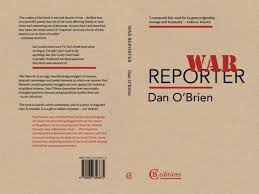
O’Brien sees himself as “a playwright who moonlights as a poet” and he has just won the Troubadour International Poetry prize and been shortlisted for the Evening Standard theatre awards (for his play The Body of an American). He also has poems included in the recent Magma issue discussed in my last blog (https://martyncrucefix.com/2014/12/01/the-launch-of-magma-60-at-lrb-bookshop/). O’Brien’s first book of poems, War Reporter, was published by Charles Boyle’s excellent CB Editions just a year ago and I reviewed it for Poetry London. The book went on to be shortlisted for the Forward First Collection Prize and to win the Fenton Aldeburgh First Collection prize (http://www.thepoetrytrust.org/news/fenton-aldeburgh-first-collection-prize-2013-winner-announced/)

imgres

In discussion at Aldeburgh, O’Brien said War Reporter had been described as “docu-poetry” and that “sounds fair.” The war reporter in the book’s title is Canadian journalist, Paul Watson, and for seven years O’Brien has been in communication with him, “obsessively” recording and working on email conversations, as well as Watson’s recordings from conflict zones around the world. The two poems in Magma are part of new work in progress. ‘The War Reporter Paul Watson Has the Time’ is a good example of the complex webs of guilt and complicity that O’Brien poems weave at their best. The narrator has helped an “interpreter” escape from Kandahar and vengeance is taken against the interpreter’s extended family through an IED: “A bump in the road and / the usual denouement”. The poems never flinch from explicitness about physical harm (“his father, leg like broken / bricks in a bag”) or psychological damage (“a pistol for protection, against all / sense and provocation, only to suck it in his mouth and – blackout”). ‘The War Reporter Paul Watson Knows’ returns in part to the moral quandaries surrounding Watson’s 1994 Pulitzer prize-winning photograph of Staff Sgt. William Cleveland’s body being dragged from the wreck of a Black Hawk and through the streets of Mogadishu. It also alludes to Watson’s more recent eyewitness accounts from the conflict in Syria: “The West engaged / in self-soothing debates while mercenaries / penetrate the borders, tilting the board / in Assad’s favour”.

The Troubadour winning poem likewise derives from the Syrian conflict. Co-judging with Seren’s Amy Wack, Neil Astley said O’Brien submitted three poems, any one of which could have won first prize: “All three were so compelling that I found myself measuring all the other poems I read against them . . . I had no hesitation in putting forward one of them for first prize.” The eventual winner was ‘The War Reporter Paul Watson and the Barrel Bombs’: “basically pieces-of-shit / IEDs of TNT, nitrogen / -rich fertilizer, diesel, anything / likely to kindle after exploding”. This is a more brutal, less multi-dimensional poem than some of O’Brien’s but it possesses an undeniable power to shock: “A foot in a sock / sticks out of the mountain. They tickle her / to see if they should dig”.

O’Brien has just published a second collection of more personal poems with CB Editions: http://www.cbeditions.com/obrien2.html

And here is my review of War Reporter from last year:

Dan O’Brien’s book is big, brave, important and challenging even in its imperfections. It is an act of ventriloquism, hitching a desperate and often horrifying ride on the work and experiences of Canadian war reporter, Paul Watson. Watson took the 1994 Pulitzer prize-winning photograph of Staff Sgt. William Cleveland’s body being dragged from the wreck of a Black Hawk through the streets of Mogadishu. Without doubt, his work tapped something important for America; as well as Watson’s original book, Where War Lives, and these poems, there is also a play and an opera in preparation.

imgres

The poems abound in speaking voices, dominated by Watson himself, but including the “Poet”. Each piece comes at the reader as a slab of blank, largely decasyllabic verse. Voices bleed into one another, partly under the pressure of war zone experiences but also because of an explicit similitude between author and reporter: “You’re like the writer / I’ve always wished I were [. . . ] your constant / returning to an underworld we can’t / look at” (‘The War Reporter Paul Watson Describes the Ghost’). Both men admit to the allure of war and death. Watson’s voice, telling of his Mogadishu photo, confesses “When / you take a picture the camera covers / your face, you shut the rest of the world out” (‘The War Reporter Paul Watson Hears the Voice’). The quieter, more reflective stretches of the sequence explore this idea and allude to Camus’ claim to have solved the mystery of where war lives; the answer is in each of us, in our loneliness and humiliation. Watson’s book pursues this and O’Brien does the same here, taking the idea to justify excursions into both men’s personal and family backgrounds. I’m not sure how effective this is (OK, both are drawn to war’s horror, but neither are warriors) and these episodes do sap the quite astonishing power of the more direct reportage.

The book has Watson recalling scenes from Somalia, Rwanda, the Balkans, Iraq, Afghanistan and Pakistan and it is art’s ability to contemplate such horrors that makes the book an important one. Tony Harrison (who always refers to himself as the man who reads the metre) insists that his formal artistry is vital to bring the poet through the fire he is intent on penetrating. O’Brien chooses to speak of man’s brutality by telling it slant, through another’s voice. Watson witnesses the stoning of a married rapist, but the initial possessive modifier ensures we cannot push the scene into the distance: “our audience cheers an elderly man / lifting a perfect cinder block above / his head, then smashing it down where a gash / jack knifes the rapist’s neck” (‘The War Reporter Paul Watson Attends a Stoning’). War lives in all of us and the collection is a hard read partly because of our reluctance to face this. The rigid consistency of form perhaps also adds some monotony, but I’d agree with Jay Parini, that O’Brien’s success is in finding words “sufficient” for our time, a form of speech adequate to the evil that persists.

Helen Mort’s ‘Division Street’ wins Aldeburgh First Collection Prize

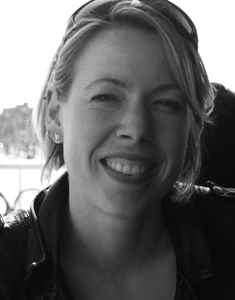
The winner of the Fenton Aldeburgh First Collection Prize 2014 – one of the most long-established poetry awards in the UK – was announced at the opening of the 26th Aldeburgh Poetry Festival on Friday 7th November. The judges were Imtiaz Dharker, Robert Seatter (Chair) and Anthony Wilson. Here, Anthony Wilson assembles the competitors on his own blog: http://anthonywilsonpoetry.com/2014/11/08/the-fenton-aldeburgh-first-collection-prize-2014/

The prize went to Helen Mort, Division Street (Chatto, 2013): http://www.thepoetrytrust.org/news/fenton-aldeburgh-first-collection-prize-2014-ndash-winner-announced/

And here’s the review I did of the book a few months back for Poetry London:

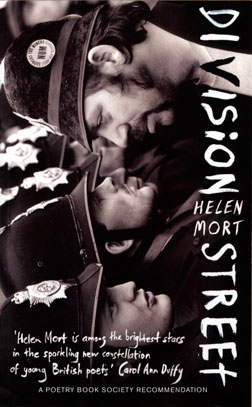
Mort’s first collection has been much anticipated (no-one else has been five-times winner of the Foyle Young Poets Award!) and Chatto have snapped her up but given her a rather ugly cover with its chalk-board script and rotated image of police confronting striking miners in 1984. Michael Symmons Roberts identifies the bedrock of the book as “the north of England” and the semiology of Division Street means the reader anticipates something more politically engaged than the poems deliver: this is not Heaney’s North, a bit more North of Boston. The north is often setting if not subject, but it is a place almost too recognisable where a girl learns “the name / for artificial hills, the bridge / where a man was felled by bricks / in the strike” (‘Twenty-Two Words for Snow’). She might learn to dance, but sniggers at the teacher’s pretentious “parr-durr-shat” (‘Miss Heath’). A man grows old “in the same bungalow for thirty years / and dreams of digging his way out” (‘Fur’). A stage comedian gets a more lively balladic treatment which suggests a more resilient culture amongst the “empty works” and “braziers / that vanished thirty years ago” but the juke box still dates from 1971(‘Stainless Steven’).

division_street_cover

The risk is regional cliché here and I’m not sure this is really Mort’s true subject. The miners’ strike is dealt with via a re-enactment of the battle of Orgreave by conceptual artist, Jeremy Deller, in 2001. Mort’s desire to write about it is important but the sequence of poems is more an exploration of good old class guilt as the narrator leaves the “Calow WMC” to study in Cambridge, a place where she “cannot learn the tune”. The resonating image is of a different “picket line/ . . . crossed” into a “gilded College gate, / a better supermarket” (‘Scab’). This is why Mort’s epigraph is from Stevenson’s doppelganger novel about the “profound duplicity” of life, but both writers are less concerned with political divisions than personal. Much of Division Street is given over to explorations of the self’s development. The finely-tuned sequence, ‘North of Everywhere’, treats location as psychological landscape where the heart can be let “go on ahead of me”, where “silences become the better part of us”. Such questing is transmuted to a mother gazing at a group of deer, “on pound-coin-coloured hooves”. They are something she denies seeing, though the daughter also finds them, “closer / than before [. . .] their eyes, like hers” (‘Deer’). There is a recurring sense that “doors to other worlds exist” (‘Lowedges’). However much a narrator likens herself to her dogs, she is different:

one night I’ll set off past the meadow, down

behind the beck, beyond the blunt profile of Silver Howe

and nobody will call me back.

‘The Dogs’

Mort’s love of landscape is profound and, like Wordsworth, her hills and skies remain a locus, as well as image of, the process of self-exploration. She boldly plays on her own name in ‘The French for Death’, fantasising of a “girl / who takes the worst route home, pauses // at the mouths of alleyways, or kisses / strangers”. But this transgressive trouble-maker is not so prominent elsewhere where a more compromised, tentative identity emerges. ‘The Girl Next Door’ becomes a haunting double who seems to co-opt the narrator’s weakening identity. ‘The Year of the Ostrich’ wittily suggests a new astrological sign for those of us with “unlikely grace, / who hide our heads, or bear the weight / of wings that will not lift us”. Mort is always good at animals and while jogging she sees a fox, supple, slinking, sly, always about to vanish: “And what she sees she cannot tell, / but what she knows of distances, / and doesn’t say, I know as well” (‘Fox Miles’).

We find and define ourselves against others and Mort does this through romantic love, mostly its loss. “I turned to ask you something and you’d gone” (‘Fagan’s’) is a recurring sentiment. The title poem itself refers to the place where “You brought me [. . .] to break it off”, though in this case it is the other whose “head-down walk” we see, passing pubs in whose windows can be seen “nothing but your own reflection”. Pessimistically, ‘End’ suggests that “Death is // the shape / beneath romance” but the hauntings a writer sustains through such poems as these, though they do not revive the love, at least reinvigorate the lover and persuade that such deaths may only be “le petit mort”.

mort_helen