Where’s My Master Gone – Don Paterson v Li Po

Don Paterson’s 1997 book, God’s Gift to Women (Faber) includes a poem sporting the title ‘On Going to Meet a Zen Master in the Kyushu Mountains and Not Finding Him’. The reader’s eye hops off the perch of this lengthy title only to flutter down, looking in vain for a foothold, for a line, even a word – it’s a completely blank page. In a collection that includes a poem called ‘Postmodern’ and another on ‘The Alexandrian Library’, the joke is obvious enough. Any search for ‘masterly’ advice in the Kyushu Mountains or closer to home in a post-modern, relativist world in which language hides as much as it might reveal, must draw a blank. I remember seeing the poem – probably heard Paterson ‘read’ it too – the long title building expectation, a too-long pause, the announcement of the next poem (cue laughter) – and something bothered me. I think now I know what it was.
imgres

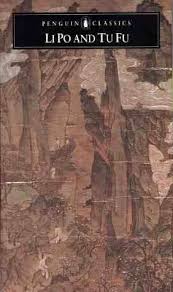
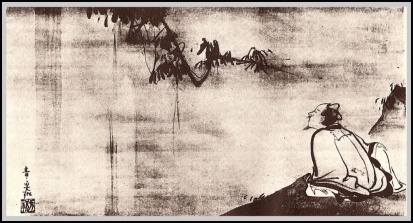
I wondered if Paterson had been reading the Penguin Classics selection of Li Po and Tu Fu (tr. Arthur Cooper, 1973). The Li Po selection opens with the poem ‘On Visiting a Taoist Master in the Tai-T’ien Mountains and Not Finding Him’. Cooper’s note tells us that ‘Visiting a Hermit and Not Finding Him’ is actually a very common theme in Chinese poetry. Such a poem (we are told) is not just an excuse for a “nature poem” but relates to the frequent “spirit-journeys” that Li Po was fond of writing. Here is Cooper’s translation:


Where the dogs bark

by roaring waters,

whose spray darkens

the petals’ colours,

deep in the woods

deer at times are seen;


the valley noon:

one can hear no bell,

but wild bamboos

cut across bright clouds,

flying cascades

hang from jasper peaks;


no one here knows

which way you have gone:

two, now three pines

I have leant against!
3-li-po

I had come across this poem while compiling my first book, Beneath Tremendous Rain (Enitharmon, 1990). I liked it for reasons I didn’t then understand and, in a very simple form of translation, I wrote an up-dated version:


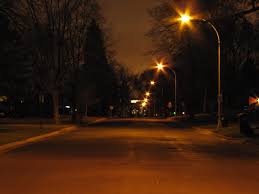
Looking for an Old Man


Where red dogs bark

on the sodium ring-road

and traffic noise

blackens adjacent houses,

I’ve come to seek you.


In each garden I pass,

pale heads of bindweed.

The night is undistinguished.

The savour of coalsmoke

flattens across the kerb.


No-one here knows

which way you have gone:

two, now three lampposts

I’ve leant against.
images

Li Po is the more Daoist of the two poets presented as a complementary pair in this Penguin book. Now, with a bit more understanding of this tradition, I’m sure that 26 years ago I was responding to something at the heart of the poem. The fact that the Daoist master cannot be found by the searching student is precisely the point since the Daoist teacher teaches “in the absence of words” (Chapter 43, ‘Best Teaching’) as I translated it in my version of the Daodejing (Enitharmon, 2016).

Interestingly, Li Po’s poem expresses this not with a blank page but (as Cooper says) through further encounters with “nature” (petals, woods, deer, valley, bamboo, clouds) or, in my version, the natural and urban world (ring-road, traffic, houses, garden, bindweed, coalsmoke, kerb). Whether we designate this a ‘spiritual’ journey or not, the point remains that the student’s search for knowledge in the form of a direct download from some master must be denied. The student’s anxious search for guidance is reflected in the number of pines/lampposts he leans against as well as the geographical over-specificity of the titles of such poems. The student’s dependency and naïve optimism is the satirical butt of the poem as he is directed back to the source of all knowledge (the world surrounding him) even as he wanders in search of his master. So Paterson’s 1997 version achieves three things: it misrepresents the spirit of the original, it’s more dramatic (comic), it’s more superficial.
imgres

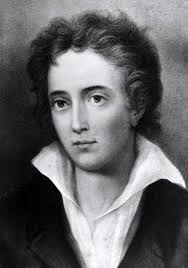
When I first read Li Po’s poem I was coming off the back of doctoral work on the Romantics, especially Shelley whose ‘A Defence of Poetry’ (1821) argues that the “poetry in [our] systems of thought is concealed by the accumulation of facts and calculating processes [. . .] we want the creative faculty to imagine that which we know”. This is succinctly put in Keats’ idea of Negative Capability, defined as a passive openness to the fullest range of human experience (“uncertainties, Mysteries, doubts”) without any imposition of preconceived notions, ideas or language: “without any irritable reaching after fact & reason”. The student in Li Po’s poem seeks just such certainties and facts and is gently deflected back into the world of observation where (I take it) he is encouraged to pursue a more full-blooded, full-bodied, open-minded encounter with the 10,000 things which (in Daoism) constitute the One, ‘what is’.

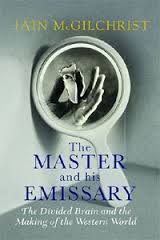
The two attitudes to knowledge here are really two ‘ways of being’ as Iain McGilchrist’s fascinating book, The Master and his Emissary (Yale, 2009) phrases it. McGilchrist argues that right and left human brain hemispheres deliver quite different kinds of attention to the world. The left perceives the world as “static, separable, bounded, but essentially fragmented [. . .] grouped into classes”. Shelley described this in 1821 and linked it to the processes of Reason and this is the attitude to knowledge and education that the anxious student of Li Po’s poem possesses. In contrast, what Shelley calls Poetry or the Imagination is what McGilchrist associates with the right brain. It tends to perceive “the live, complex, embodied, world of individual, always unique beings, forever in flux, a net of interdependencies, forming and reforming wholes, a world with which we are deeply connected”.
imgres

Without doubt, this is also the viewpoint of the Daoist master whose teaching evokes the uncarved block, the One, and who teaches best without words. Ordinary language usage is dependent on conceptual thought which is left-brain work – ordering, categorising, re-presenting the minute particulars of the world as they are perceived by the right brain. I imagine that Li Po’s master-teacher and sage is deliberately hiding somewhere beyond the bamboo canes – and this is part of the student’s lesson.

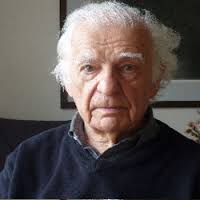
So Don Paterson’s blank page bothers me because – as McGilchrist expresses it – it represents a rather glib, post-modern position, a scepticism about language which is in danger of throwing out the interconnected real world along with the suspect tokens and counters of left-brain language: “To say that language holds truth concealed is not to say that language simply serves to conceal truth [. . .] or much worse, that there is no such thing as truth” (McGilchrist, p. 6). I’m also reminded of Yves Bonnefoy, engaging in his own battle with the early stirrings of French post-modernism. He writes: “This world here exists, of that I am certain [. . .] It is simply with us. In what can be felt and sensed”. In The Tombs of Ravenna (1953), he names this underlying truth, not as existence, but as “presence”. The right brain knows this; the left brain sets about fragmenting it, making use of it, disappearing it.
images
Yves Bonnefoy

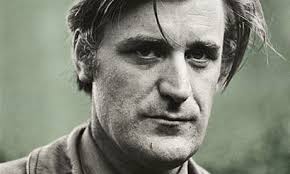
They Will Have Their Rights: Ted Hughes’ ‘Her Husband’

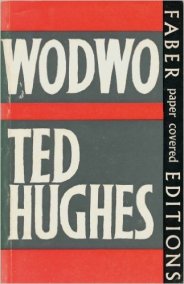
My AS level students are in the last throes of revising for exams coming in May. One question will be on a selection of Ted Hughes poems and what follows is an essay in the style required of them by the exam board (a single poem analysis of the Practical Criticism kind). ‘Her Husband’ first appeared in 1961 and then in Hughes’ 1967 collection Wodwo which mostly contained poems written before Sylvia’s Plath’s suicide in 1963 but also a few others (such as ‘The Howling of Wolves’) written after it. Hughes’ next major publication was Crow in 1970. Leonard Scigaj has noted how many of the Wodwo poems contain “recurring feuds and destructiveness” and ‘Her Husband’ is a domesticated, Lawrentian version of this.

images

Her Husband

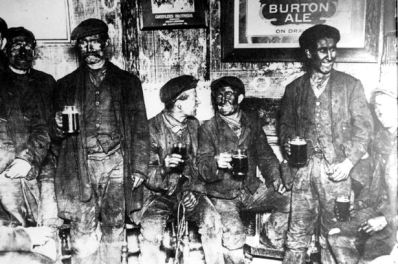
Comes home dull with coal-dust deliberately
To grime the sink and foul towels and let her
Learn with scrubbing brush and scrubbing board
The stubborn character of money.

And let her learn through what kind of dust
He has earned his thirst and the right to quench it
And what sweat he has exchanged for his money
And the blood-weight of money. He’ll humble her

With new light on her obligations.
The fried, woody, chips, kept warm two hours in the oven,
Are only part of her answer.
Hearing the rest, he slams them to the fire back

And is away round the house-end singing
‘Come back to Sorrento’ in a voice
Of resounding corrugated iron.
Her back has bunched into a hump as an insult.

For they will have their rights.
Their jurors are to be assembled
From the little crumbs of soot. Their brief
Goes straight up to heaven and nothing more is heard of it.


Introduction

Ted Hughes is more renowned for his portraits of animals and natural landscape than people. Especially early on, he is more interested in, as he expressed it, capturing animal and natural life in language as he does so brilliantly in poems like ‘The Jaguar’, ‘Wind’ and ‘Thrushes’. However, it’s not true to say Hughes does not write about human life and some would argue that a poem like ‘Hawk Roosting’ though on the face of it about a creature is really about human behaviour. In ‘Her Husband’ Hughes is clearly focussed on the human in a marriage which is full of bitterness and resentment.

images

‘Her Husband’ is written in the third person, giving a distanced but vivid portrait of a marriage through the events of one evening. The title of the poem forms part of the opening sentence so the poem’s opening line, starting with “Comes home”, already gives the impression of the husband as an almost impersonal force, unnamed perhaps because already all too familiar to his wife. The thumping alliteration of the opening line (dull – dust – deliberately), reinforces the man’s brute entry into the house. As a working miner he spreads “coal-dust” about the house but Hughes emphasises his inconsiderate nature with the adverb “deliberately” and the forceful, unpleasant verbs associated with his arrival: “grime” and “foul”. This opening quatrain flows quickly, being unpunctuated from start to finish, evoking an arrival which is sudden, sweeping, unstoppable. The ugly internal rhyme of “foul towels” also contributes to the impression of his disruptive arrival and Hughes conveys the husband’s resentful attitude with the idea that he intends to teach his wife about the “stubborn character of money”. This personification of money as a person difficult to deal with, to persuade, cleverly conveys the husband’s own difficulties with the exhausting character of his day’s work. But he intends to impress this resentment on his wife who he wants to work (repetitively) with “scrubbing brush and scrubbing board”. This is not a relationship in which we see any love, compromise or mutual respect, though we have yet to be shown much of the wife’s perspective.

coal

In fact the second quatrain continues in much the same vein with a repetition of the phrase “let her learn”. All this repetition conveys the husband’s determined intentions. Lines 4-8 also introduce a vocabulary of a more moralistic kind. The narrative voice echoes what must be the husband’s thoughts about the way he has “earned” the “right” to go drinking in the pub before he returns home. He regards the earning of his wage as a physical and personal “exchange” of his physical “sweat” for cash and the hyphenated phrase describing money as possessing “blood-weight” particularly conveys the sense of his personal sacrifice as a working man, how he feels the day’s work metaphorically costs him “blood” (as a miner this might be sometimes literal too). I think Hughes goes some way here to encouraging sympathy from the reader for the husband’s situation but the quick return to his aggressive, even vicious, attitude to his wife in the heavily alliterated and emphatic phrase “He’ll humble her” (line 8) definitely lessens any sympathy I may be feeling.

474360547

The simple metaphor of casting “new light” on his wife’s role is used in line 9. There is a sort of tired familiarity throughout this poem (on both husband and wife’s sides) and I suspect this sort of encounter is not the first of its kind so the idea of him casting/teaching “new” light probably really reflects his sense that however much he tries to do this she does not “learn” to behave as he expects by more obediently taking note of what he sees as her “obligations”. I doubt whether he himself would have used many of the moral terms that the third person narrative voice employs in these lines, so the distancing voice Hughes has chosen to use enables these more abstract points to be made. It’s only at line 10 that we get a sense of the wife’s “answer” to her husband’s demands. As has been implied already, her reply to his demands is not at all submissive. We are told “part of her answer” is the disgusting-sounding meal with its “fried, woody chips” though it’s partly unpleasant because it has had to be kept warm in the oven “for two hours” (the fact that he’s so late home increases our sympathy for his wife). But her fight back is sustained it seems; the other “part” of her answer to his demanding and bullying attitudes must be spoken to him or probably shouted. Interestingly, Hughes gives us none of this directly as it is only implied in the brief phrase “Hearing the rest” in line 12.

The husband’s corresponding response to his wife’s uncooperative (surely complaining) reply is immediate and violent. The husband’s vigorous determination causes Hughes to run-on sentences at the end of both stanza 2 and 3. Here, the violent verb “slams” shows how he disposes of her cooked meal in the fire and sweeps out of the house and “away round the house-end” all in one flowing, swift, uninterrupted sentence. The husband’s singing voice is described as “resounding corrugated iron” in a typical Hughesian metaphor (linking the organic with the metallic or industrial). Also the song he chooses to sing is full of irony and deliberately insulting as it is a romantic song of lost love. Line 16 gives us a brief last glimpse of the wife’s response, her body language suggesting her own stubborn resentment, “bunched into a hump”. Hughes adds a simile to make her antagonism even more clear: “as an insult”.

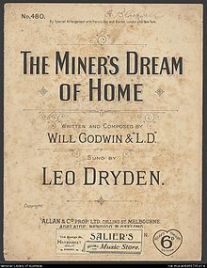
1890_A_miners_dream_of_home

The final quatrain now departs from the specific actions of the married couple and returns to the more moralistic and even legalistic language that I noted earlier in the poem. Here the narrator’s distance from the domestic argument is clear again. This poem was first published in Wodwo (Faber, 1967) and, as a relatively early Hughes poem, it is unusual in its focus on individual people though this distancing effect suggests he may be observing their behaviour in the same way as he does a jaguar in a cage or the power of the wind. Line 17 is the shortest sentence in the whole poem and declares, in firm monosyllables, that both sides in this conflict “will have their rights”. This makes it clear there is no room or desire for compromise. The final three lines introduce the language of the law court (a divorce court perhaps?) though the jury are “to be assembled / From the little crumbs of soot”. This soot reminds us of the coal-dust he brings into the house in line 1, but also of the burnt dinner thrown into the fire-back in line 12. These tiny black specks suggest to me that such a jury will never come to any clear conclusion in this dispute. They suggest the hopelessness of the couple’s situation. This rather depressing ending to the portrait of a marriage is confirmed in the final line and a half as we are told that the legal “brief” (a technical term for one side’s case in a law court) follows the smoke and soot up the chimney. This suggests that the arguments on both sides metaphorically go up in smoke. Hughes concludes in the plainest language: “nothing more is heard of it”. The way in which the events of the dismal evening vanish up the chimney suggest the likelihood that something similar may happen again tomorrow and the day after.

Conclusion

So Hughes’ portrait of a marriage is very bleak indeed. The narrative voice describes events at a distance and though there are occasions when the reader does feel sympathy for the people involved, the language of the poem itself is not at all emotional. The poem’s voice sees events from both husband and wife’s perspectives though it’s interesting that we are never given any actual dialogue in this domestic row. Hughes’ irregularly-lined and unrhymed quatrains suit the poem’s plain description in a mostly colloquial tone: this is not a poem or situation where any lyricism or poetically-charged language would really be appropriate.

5113sBWRWFL._SX321_BO1,204,203,200_


The Month of the Drowned Dog: Ted Hughes’ ‘November’

Though November has just transformed itself into December here, still Ted Hughes’ sodden, rain-soaked poem from Lupercal (1960) comes to mind as I watch the TV footage of floods in the North-West of England. I’ve never thought enough attention has been given to the role of the narrator in this poem. It’s one of the selected poems studied on the Cambridge International Examinations’ A-level. Students are asked to discuss one specific poem in detail or two poems from a more thematic perspective. What follows is a loose version of the first type of question (apologies for some loss of formatting in the poem itself). NB. For another close discussion of an early Ted Hughes poem – ‘Meeting’ – click here.

The month of the drowned dog. After long rain the land
Was sodden as the bed of an ancient lake,
Treed with iron and bird less. In the sunk lane
The ditch – a seep silent all summer –

Made brown foam with a big voice: that, and my boots
On the lane’s scrubbed stones, in the gulleyed leaves
Against the hill’s hanging silence;

Hughes opens the poem with a bewildering mix of images of motion and stasis. Flooding must account for the “drowned dog” (more literal than figurative or colloquial here) and the absence of a verb emphasizes the stillness of death, the burden of the month, the real entrance way to winter. The land is so sodden as to have suffered inversion to become “the bed of an ancient lake”. It’s an alien landscape – trees (as so often in Hughes) are now composed of industrial “iron” and inevitably “birdless”. Yet in contrast to such stillness, the ditch water (which in summer is a soothing sibilant “seep silent”) is now possessed of a “big voice” composed of brown foam and beside it, the narrator’s boots scrape along the lane. These two sounds are all that can be arrayed against “the hill’s hanging silence” and the contrasts of movement and stillness, noise and silence compose the greater world of this poem.

Mist silvering the droplets on the bare thorns

Slower than the change of daylight.
In a let of the ditch a tramp was bundled asleep;
Face tucked down into beard, drawn in
Under his hair like a hedgehog’s. I took him for dead,

But his stillness separated from the death
From the rotting grass and the ground. The wind chilled,
And a fresh comfort tightened through him,
Each hand stuffed deeper into the other sleeve.

His ankles, bound with sacking and hairy band,
Rubbed each other, resettling.

It’s this greater world that the narrator fears and the tramp entrusts himself to. To the narrator, the tramp sleeping in a let of the ditch, is comparable to an animal, a “hedgehog”. In the narrator’s world view, this is no compliment and indeed in the next phrase (line 12), he considers the tramp “dead”. To give the narrator credit he perceives his mistake and next sees the tramp’s vitality, though (in a reversal of our preconceptions) it is his “stillness” rather than animation that “separate[s him] from the death” all around. The animation of the “wind” evokes a corresponding movement in the tramp: “a fresh comfort tightened through him, / Each hand stuffed deeper into the other sleeve”. There is paradox here too in that the tramp’s movements are intended both to shield him from the elements yet also settle him more comfortably among them.

The wind hardened;
A puff shook a glittering from the thorns,
And again the rains’ dragging grey columns

Smudged the farms. In a moment
The fields were jumping and smoking; the thorns
Quivered, riddled with the glassy verticals.

Lines 18 – 23 seem to represent a moment in which the narrator looks away from the tramp. What he sees is a world he might once have been familiar with dissolving before his very eyes. This is partly a result of optical effects brought on by atmospheric conditions, but Hughes’s language systematically destabilizes the solid and still (the farms, the fields, the thorns) and solidifies the diffuse and shapeless (the wind, the rains). Such a renovation of perception is comparable to the stunned narrator at the end of Hughes’ story ‘The Rain Horse’ (from Wodwo, 1967) who, after the terrifying encounter with the horse, sits “staring at the ground, as if some important part had been cut out of his brain”. The poem’s narrator reports in line 24 that he “stayed on under the welding cold” and the colloquialism of the first two words here implies that any sane person might have retired to shelter; whatever transformative process Hughes is representing in the encounter between narrator and tramp is already under way. The narrator seems to surprise himself by staying as if he were watching the actions of another.

I stayed on under the welding cold

Watching the tramp’s face glisten and the drops on his coat
Flash and darken. I thought what strong trust
Slept in him- as the trickling furrows slept,
And the thorn-roots in their grip on darkness;

And the buried stones taking the weight of winter;
The hill where the hare crouched with clenched teeth.

In fact he stays to continue to watch the tramp becoming part of the landscape: “I thought what strong trust / Slept in him”. All the critics you’ll read agree this is the key idea; but as Keith Sagar asks: in what exactly does “the tramp trust?” The image of sleep links this trust also to the fields’ “furrows”, to “thorn-roots”, to “buried stones” and to the hill itself where the hare is “crouched with clenched teeth”. Is this merely a trust in a viable future? A sort of wishful thinking? A consolation? Perhaps it is if the furrows imply next year’s crop, the roots suggest the new year’s growth, the stones will be unearthed to build new walls, the hare will survive to unclench in the Spring. There is something Romantically attractive about this reading and we might remember Wordsworth’s encounter with the Leech Gatherer who also seems part of the landscape (“as a huge stone”). Wordsworth is equally uncertain of the man’s status: “not all alive nor dead, / Nor all asleep”. As their conversation continues, the Leech Gatherer’s voice becomes indistinguishable from “a stream” and in some low level psychic derangement Wordsworth imagines the Gatherer as “Like one whom I had met with in a dream; / Or like a man from some far region sent, / To give me human strength, by apt admonishment”.

Rain plastered the land till it was shining
Like hammered lead, and I ran, and in the rushing wood

Shuttered by a black oak leaned.
The keeper’s gibbet had owls and hawks
By the neck, weasels, a gang of cats, crows:
Some stiff, weightless, twirled like dry bark bits

In the drilling rain. Some still had their shape,
Had their pride with it; hung, chins on chests,
Patient to outwait these worst days that beat
Their crowns bare and dripped from their feet.

But Hughes’ tramp is far less consoling, far more frightening. In the concluding stanzas, the narrator runs away – on the face of it to shelter from the rain though earlier this had not troubled him. He runs into a wood in something of a panic as the breathless, long-delayed verb here suggests: “in the rushing wood // Shuttered by a black oak leaned”. It’s what the narrator encounters in the wood that provides the final piece of the jigsaw for this poem. He confronts death in the shape of a gamekeeper’s gibbet and it is really death in which the tramp trusts, as much as he trusts himself to life. This is the point of the poem’s many transformational oppositions, of stasis and movement, solid and diffuse, sleep and waking, dead and alive. As the “flash and darken” of raindrops on his coat suggest, the tramp’s instinct is to entrust himself to both life and death without making any clear, rational distinction between the two.

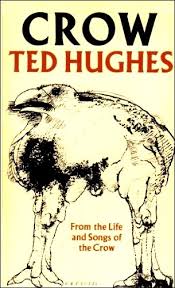
I think the narrator has preserved this distinction and perhaps does so even at the end. Of the bodies on the gibbet, some are fresh, others are like “dry bark bits” being twirled in the rainfall. The narrator seems inclined to focus on those retaining their living “shape”, those who he says retain “their pride”, those who seem (like Wordsworth’s Gatherer) to teach patience, and endurance against “these worst days”. But the incontrovertible fact is they are all dead and death is lesson 101 in Hughes’ work as can be seen in Crow’s ‘Examination at the Womb-Door’ (Crow, 1970). It is the denial of death’s reality that leads to delusion and a false consciousness of our own position in the world. The narrator of ‘November’ still hankers after the human scale of virtues such as patience and Wordsworthian endurance. It is the tramp – ironically rather forgotten by the end of the poem, lying foetal in the let of the ditch, still huddled against the month’s elements – who entrusts himself to the risks of exposure and death, but in doing so may hear (what the sheltered narrator will never hear) the reply that Crow gives to the final question he faces:

But who is stronger than death?

                                         Me, evidently.

Pass, Crow.

imgres

Bertolt Brecht’s ‘Of Poor B.B.’

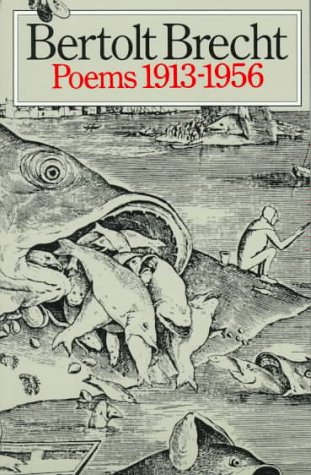
I have taken too little heed of BB, the poet. The chances are that you have too. This would certainly have been the case in 1976 when John Willett and Ralph Mannheim published Brecht’s Poems 1913-1956 (Eyre Methuen) with its stellar cast of translators. The Introduction to that selection pointed out that, until well after his death in 1956, “Brecht the poet remained like an unsuspected time-bomb ticking” under world literature. It’s our desperate bad luck that most of us have only ever been encouraged to approach Brecht through his dramatic theories, then his plays, “only coming to the poems as a by-product of his theatre work”.

94584

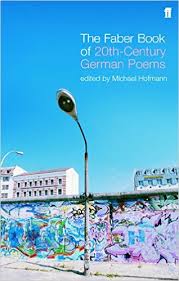
Things may have changed more quickly on mainland Europe, but only 10 years ago Michael Hofmann could still argue that the “prevailing British view of [Brecht was] as an arid theorist of drama [. . .] and  the author of a few baffling but conniving plays” (Introduction to The Faber Book of 20th Century German Poems). In fact, Hofmann thinks of Brecht as the writer who took “poetry into the twentieth century”, its single most crucial figure. Against the claims of Eliot, Valery or Lorca this may seem a bold statement but Hofmann is thinking of poetry as “a living counter-force in socio-political reality [. . .] poetry of dissent and fear and protest and rebuke and pleasure”, an art that is “heartening and inspiring”. There is some risk of this drifting back towards BB the purveyor of proletarian political messages, but Hofmann’s contrast of Brecht with “his great counter-pole” in German poetry, Gottfried Benn, a poet of more familiar “private griefs and musics, of monologue, of fascination”, makes Brecht’s distinctive contribution clearer.

imgres

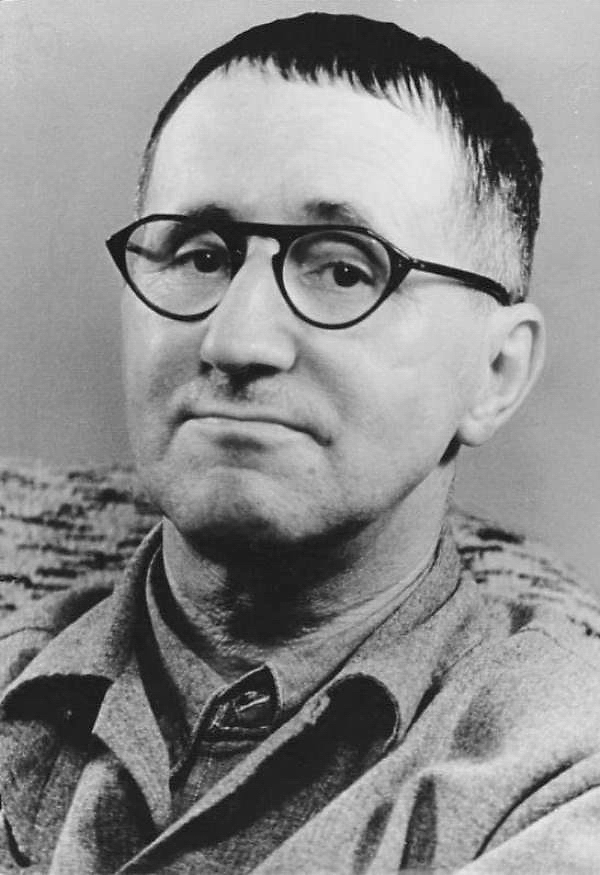
In beginning to explore Brecht’s poetry I’ve been looking at poems from 1925-1928 and, like plenty before me, I’ve become intrigued by ‘Of Poor B.B.’ (German original and Michael Hamburger’s translation here; Hofman’s translation read here). Apparently the poem derives from lines jotted down on a speeding express train at 9.30pm in April 1922, when Brecht was travelling home to Augsburg after spending a difficult first winter in Berlin. The impact of the Great War is still visible here but Brecht is also very interested in exploring the impact of big city life. ‘A Reader for Those who Live in Cities’ was the title of a projected group of poems from around 1926.

Bertolt-Brecht

From the notes in Poems 1913-1956 it’s possible to reconstruct Brecht’s early draft which, compared to the final published version, demarcates town and countryside more simplictically: “I, Bertolt Brecht, came out of the black forests.” Paradoxically, the use of his own initials in the title and the bold use of his full name in the opening line, actually distances the poem from the straightforwardly autobiographical. BB is a representative figure and his move from countryside to town (is this the Industrial Revolution?) was wholly passive, beyond his control, as he moved while still in his pregnant mother’s body. In fact Brecht’s mother had died before he began visiting Munich and Berlin and the poem claims that the “coldness” of the forests remains inside BB and will do so till his “dying day”. Quatrains 3, 4 and half of 5 of this ballad-like ABCB poem-draft also characterize the cold, unrestful, uncomfortable woods, even to the extent that the pine trees “piss” with rain and the birds are “vermin”.

The early draft’s modernist anti-pastoral seems to be confirmed by the opening of the second quatrain: “In the asphalt city I’m at home” and quatrain 5 follows the noise of the bird-vermin in the trees with the seemingly-content city-dwelling BB: “At that hour in the city I drain my glass”. But there is clearly trouble in the urban paradise. Quatrain 2 portrays BB at ease (with a dig at religion in describing newspapers, tobacco and brandy as ‘sacraments’) yet there is something unsettling in the three adjectives that follow: BB is mistrustful, lazy content. Having drained his glass and stubbed his cigar he “worriedly” goes to sleep. In quatrain 6 of the draft the reasons for this worry are clarified (one of the changes in the final version is to remove some of these more logical connections) as BB plays a guitar to an uncomprehending audience and has “difficulty understanding” himself as the city dwellers seem “different animals”. Quatrain 7 wonders whether this is because he has been “carried off to paper and women” (which I take to mean the ‘pleasures’ of the city) from the black forests which still thrive “in me” along with the “roar of pines”. So the early draft suggests BB’s displacement to the city has not achieved an escape from the darkness and coldness of the black forests of his birth and he seems therefore ill-equipped to live truly contentedly in the modern city.

hofmann2
Michael Hofmann

Brecht’s revisions of the poem between 1924 and 1925 make it both more modern and more mysterious. Hofmann has described the result as “strange and pitiless”. The most clear change is in the final version’s quatrain 3 where BB makes efforts to fit into city life (being friendly, polite, wearing a hat), finding other inhabitants “animals with a quite peculiar smell” (I’m now quoting Michael Hamburger’s rhymed translation). But then BB admits “does it matter? I am too”. The draft’s more ‘easy’ theme of the outsider is being dismissed. Two new stanzas follow in which BB seems ever-more at home in the city, with both its women and men. With the former he is “untroubled”, boastfully suggesting he is “someone on whom you can’t rely”. With the men he heartily hails them, feet up on a table as they say “things will get better for us” but he knows not to “ask when”. BB is now wholly complicit in the urban insincerities, the lies and pretence that make life bearable.

MichaelHamburger
Michael Hamburger

So the changes show neither city nor the black forest offers any real contentment or fulfillment and it’s this profound sense of alienation that Hofmann links to the Modernist pessimism of an Eliot: “nature and culture, friendship and love, are all travestied and diminished”. This is why BB still falls asleep “worriedly”. In the new stanzas (7, 8 and 9) this pessimism becomes positively apocalyptic as the poem becomes about a cultural moment, a whole culture. Quatrain 7 uses the first person plural significantly; we are “an easy generation” (Hamburger) or “a whimsical tribe” (Hofmann) living in great cities that we hubristically believe are “indestructible” (Brecht refers to Manhattan here, a place he had yet to visit in 1924). In reality, of our cities only the “wind” will survive and we are (in our hearts and as we fall asleep perhaps) dimly aware that “we’re only tenants, provisional ones / And after us there will come: nothing worth talking about”.

21_bb-yeni

Had the poem ended here the comparison with Eliot’s 1922 wasteland pessimism would be more apt but, in the apocalyptic “earthquakes to come”, BB hopes to keep his Virginia cigar alight and whether we read this as a perky priapic image, a gesture of New World hope, or insouciant resilience to prevailing socio-political conditions, it’s here that we find something heartening and inspiring, even if the tone is mostly pyrrhic. The concluding balladic repetition (“I, Bertolt Brecht, carried off to the asphalt cities”) now reads like a more determined declaration of identity, a will to life, to a better world. This is despite the whole poem’s extraordinarily thoroughgoing portrait of alienation and cultural decadence. There’s life in poor BB yet.

181-NKSwingle_Pucho-Cigars1-726x484

Ted Hughes’ ‘Swifts’

Our swifts returned two days ago – the 10th of May – now they are now installed, screaming around the terrace row, occupying the air over this little patch of north London. No better tribute to their speed, power, heroic journeying and the pleasure given by their return than Ted Hughes’ poem from Season Songs (Faber, 1976):

Ted-Hughes-001

Swifts

Fifteenth of May. Cherry blossom. The swifts
Materialize at the tip of a long scream
Of needle. ‘Look! They’re back! Look!’ And they’re gone
On a steep

Controlled scream of skid
Round the house-end and away under the cherries. Gone.
Suddenly flickering in sky summit, three or four together,
Gnat-whisp frail, and hover-searching, and listening

For air-chills – are they too early? With a bowing
Power-thrust to left, then to right, then a flicker they
Tilt into a slide, a tremble for balance,
Then a lashing down disappearance

Behind elms.
They’ve made it again,
Which means the globe’s still working, the Creation’s
Still waking refreshed, our summer’s
Still all to come —
And here they are, here they are again
Erupting across yard stones
Shrapnel-scatter terror. Frog-gapers,
Speedway goggles, international mobsters —

A bolas of three or four wire screams
Jockeying across each other
On their switchback wheel of death.
They swat past, hard-fletched

Veer on the hard air, toss up over the roof,
And are gone again. Their mole-dark labouring,
Their lunatic limber scramming frenzy
And their whirling blades

Sparkle out into blue —
Not ours any more.
Rats ransacked their nests so now they shun us.
Round luckier houses now
They crowd their evening dirt-track meetings,

Racing their discords, screaming as if speed-burned,
Head-height, clipping the doorway
With their leaden velocity and their butterfly lightness,
Their too much power, their arrow-thwack into the eaves.

Every year a first-fling, nearly flying
Misfit flopped in our yard,
Groggily somersaulting to get airborne.
He bat-crawled on his tiny useless feet, tangling his flails

Like a broken toy, and shrieking thinly
Till I tossed him up — then suddenly he flowed away under
His bowed shoulders of enormous swimming power,
Slid away along levels wobbling

On the fine wire they have reduced life to,
And crashed among the raspberries.
Then followed fiery hospital hours
In a kitchen. The moustached goblin savage

Nested in a scarf. The bright blank
Blind, like an angel, to my meat-crumbs and flies.
Then eyelids resting. Wasted clingers curled.
The inevitable balsa death.
Finally burial
For the husk
Of my little Apollo —

The charred scream
Folded in its huge power.

Re-packaging ‘percussive’ Ted Hughes

Anthologies are the reluctant poetry readers’ hedging bet. There’s a good chance that something good will turn up and prove a winner. They sell well – they are the infrequent poetry buyer’s punt for a gift that will please at least in parts. So Alice Oswald’s compilation of Ted Hughes’ animal poems into a Bestiary will certainly put more cash into the Faber vault. But few complaints – anything to get more people reading any poetry cannot be bad.

Ted-Hughes-001

Oswald discusses her approach to the selection in The Guardian: 

http://www.theguardian.com/books/2014/aug/29/ted-hughes-alice-oswald-animal-poetry-bestiary

She picks up Hughes’ own early image of his poems as creatures with a “vivid life” of their own. He condemns poems which fail to possess this coherent vitality as likely to walk with a pronounced limp – a wonderful way, I’ve found, of imaging that elusive ‘rightness’ of a poem for students and workshoppers. Interestingly though, there is a shimmering, vacillatory quality to others things Oswald writes and this comes directly from Hughes himself. His animals are very much themselves yet they are expressive of human qualities too. Oswald quotes from Moortown Diary; Hughes on the poet “getting close to what is going on, and staying close, and of excluding everything else that might be pressing to interfere with the watching eye”. Held in tension with this are other Hughes’ statements such as this, in a letter, warning of the dangers of mere observation: “When a man becomes a mirror, he just ceases to be interesting to men.”

Oswald goes on to suggest that it is the “percussion” of Hughes’ language that instills such vivid life into his poems, quoting from ‘Skylarks’:

The lark begins to go up
Like a warning
As if the globe were uneasy –

Barrel-chested for heights,
Like an Indian of the high Andes,

A whippet head, barbed like

a hunting arrow,

But leaden
With muscle
For the struggle
Against
Earth’s centre.

And leaden
For ballast
In the rocketing storms of the breath.

Leaden
Like a bullet
To supplant
Life from its centre.

imgres

If it is a percussive effect that is critical here it is more Mozart than Stomp. Oswald has precious little space to develop her argument, but what I find in such a passage is Hughes’ distinctive manipulation of scale and perspective, not unrelated to his paradoxical comments above. Microcosm and macrocosm are continually leant against each other here, or – it being a more metamorphic, high-pressured process – they are spun about each other till it’s hard to pick one from the other. The tiny body of the lark is a warning to the globe; its braced, needle-thin ribs conjure images of Andean mountains; its crested, whippet head seems to speed lethally through remote forests. The three stanzas focusing on the “leaden” nature of the bird – less weight it seems to me, more loaded with quiddity, self-ness – provoke the reader to focus closely on its body, only again for our attention to be spun outwards to “Earth’s centre . . . rocketing storms”, vulnerable life beating at its “centre”.

In part, what Hughes achieves is a sense of interconnectedness – which he would have intended in both spiritual and environmental terms. What the reader experiences is a sudden inflation or deflation of scale and perspective, a magical effect, an effect created through language, an effect achieved so skillfully and instantaneously that one might well have some sense of a percussive, explosive or implosive quality. I don’t hear or feel a noise as such – my sense of the world pulses, is stretched or compressed in the most exciting fashion. An effect with a moral dimension to it as well – a serious, ludic experience, in which we see and re-see our own place in the world.