RIP Michael Longley

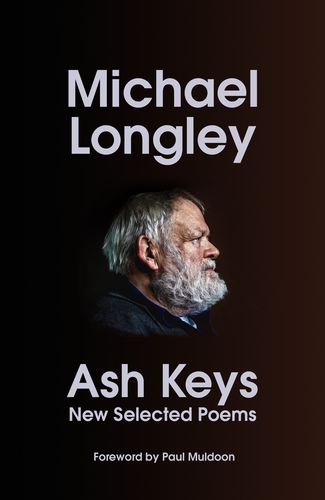
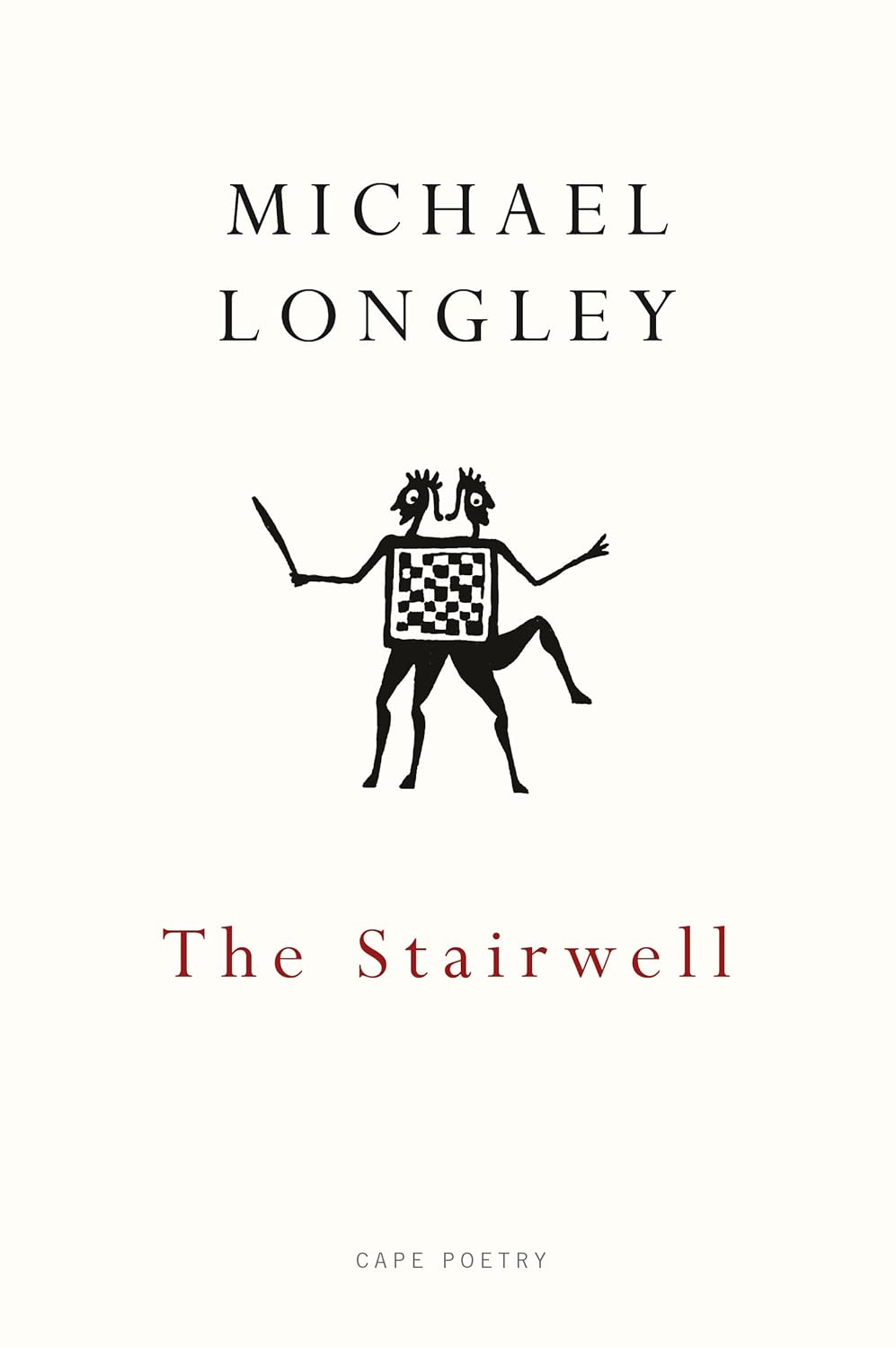
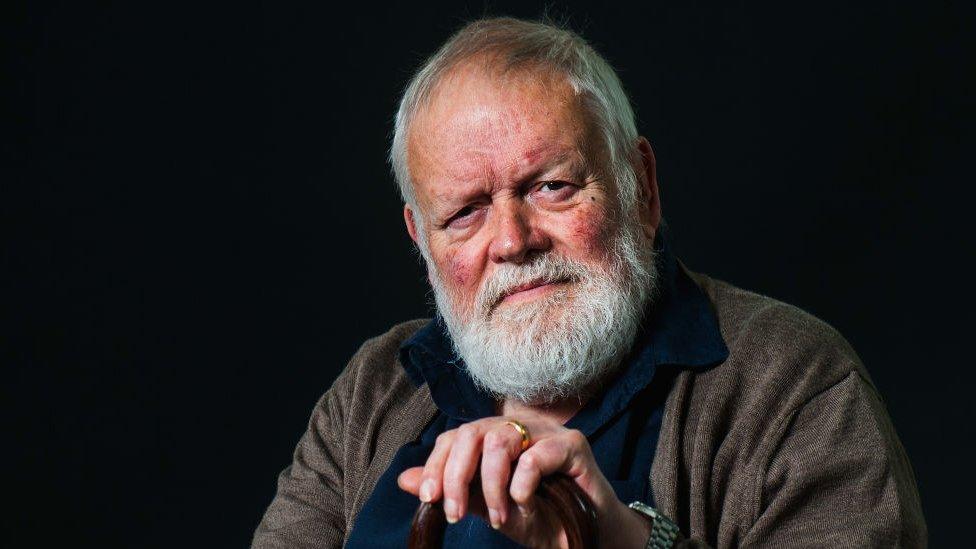
Social media – at least the bit of it that arrives on my screens – is alive this morning with many expressions of sadness at the announcement of the death of Michael Longley. I heard him read just a few months ago to launch his most recent new selected poems, Ash Keys, at the LRB Bookshop in London. He insisted then on trying to stand to read his poems, though his breathlessness and physical wobbling often made him have to take his seat again; but the humour and mischievous twinkle were as powerful as ever. Over the years, I have to admit it took me a while to really come to appreciate his work; I think I did not really ‘get’ the force of his brevity, his precision. If you have not seen it yet, do watch the brilliant, moving, inspiring BBC programme about him, his life and work here. I’m posting below my review of his 2014 collection, The Stairwell (the review originally published in Poetry London) and I hope it manages to say something useful to both new and older readers of this wonderful poet. Here he is reading ‘Remembering Carrigskeewaun’ on The Poetry Archive.
Keeper, custodian, traditionalist whose work is stringent, formalist, always elegant: critical judgments on Michael Longley’s work fence him round too closely, running the risk of misleading, even discouraging, new readers. It’s true, as a member of Philip Hobsbaum’s Group in Belfast in the 1960s, Longley’s poems were criticized for their elegance of form, rhetorical grace and verbal eloquence, though he found something of a kindred spirit in Derek Mahon. Longley wrote poems that were “polished, metrical and rhymed; oblique rather than head-on; imagistic and symbolic rather than rawly factual; rhetorical rather than documentary” (The Honest Ulsterman, November, 1976). But Seamus Heaney’s different aesthetic was Hobsbaum’s star turn and quickly became a national, then international preference. Attitudes solidified around Longley although (perhaps in the cause of self-definition) this was not something he resisted, casting himself and Mahon in the 1973 poem ‘Letters’ as “poetic conservatives”.

‘Epithalamium’, the poem that since 1969 has opened Longley’s selections and collecteds reinforces the caricature and in ‘Emily Dickinson’ he sees the need to dress “with care for the act of poetry”. But Longley’s long standing admiration of Edward Thomas was not for nothing and he shared a desire to dismiss Swinburnian “musical jargon that [. . . ] is not and never could be speech” so that in The Echo Gate (1979) he is experimenting, on the one hand with the plainly Frostian ‘Mayo Monologues’, and on the other with short, imagistic pieces in which the authorial voice seems to have taken a vow of non-intervention. ‘Thaw’ reads, in its entirety:

Snow curls into the coalhouse, flecks the coal.

We burn the snow as well in bad weather

As though to spring-clean that darkening hole.

The thaw’s a blackbird with one white feather.

This is a mode that Longley has continued to explore in accordance with another (surprisingly) early statement of poetic intent. The poet’s duty is to “celebrate life in all its aspects, to commemorate normal human activities. Art is itself a normal human activity. The more normal it appears in the eyes of the artist and his audience, the more potent a force it becomes” (Longley, ed. Causeway: The Arts in Ulster, 1971).
Subsequent collections have become concerned to list, to name, as it were ‘merely’ to record experience for its own sake, often in vivid short poems which run the risk of seeming inconsequence, though Longley has never lost his unerring eye and ear for the poetic line. Nor has he ever seriously questioned the adequacy of language (within conventional bounds) to represent experience. It’s in these ways that his work is conservative but his poems’ intention to encompass and witness is far more radical. To witness – whether it is the song of a wren near Longley’s beloved Carrigskeewaun, a Belfast bombing, or the camp at Terezin – is to acknowledge that we are bound together by what happens. From Gorse Fires (1991) to The Weather in Japan (2000) Longley comes to sound like Eliot’s Tereisias who, as the pages turn, has “seen and foresuffered all”. The beauty of nature, the horrors of mankind, birth and death, the present and the distant past are all absorbed into his steady gaze, a steady voice, intent on an anatomy of connection.

One such connection is the way Longley has been re-visiting the Iliad and Odyssey for years now, producing vivid, contemporary accounts of key scenes. Priam’s visit to Achilles tent in Book 24 of the Iliad famously became Longley’s poem ‘Ceasefire’, appearing in The Irish Times in 1994 when the IRA were considering a ceasefire themselves. The poem forges links and connections between enemies and across millennia. As ‘All of these people’ puts it, “the opposite of war / Is not so much peace as civilization” and civilization needs to be founded on a right relationship with even the smallest of things. Among many poems that articulate an ars poetica, ‘The Waterfall’ envisages the best place to read his own collected works as “this half-hearted waterfall / That allows each pebbly basin its separate say”. It is such civilized allowance, rather than the much-vaunted preservation of a tradition, that is the mark of Longley’s aesthetic, moral and political outlook.

His new collection, The Stairwell, is much obsessed with death though its inevitable reality has already been embraced by the poet’s allowance. An Exploded View (1973) already contained ‘Three Posthumous Pieces’ and twenty years later, ‘Detour’ mapped out his own funeral procession. Here, Longley has been “thinking about the music for my funeral” (‘The Stairwell’) and much of the book has the feeling of an ageing figure readying to depart. Longley himself refers to his “unassuming nunc dimittis” (‘Birth-Bed’) and the only ceremonial he anticipates is to be provided by robins, wrens, blackbirds: “I’ll leave the window open for my soul-birds” (‘Deathbed’). The counterweight to civilized allowance, even in the approach of death, is modesty and humility. If gifts are to be handed on to the future then they ought to include a little poem about a wren: “Its cotton-wool soul, / Wire skeleton [. . . ] / Its tumultuous / Aria in C” (‘Another Wren’).
Such unassuming gifts to future generations are balanced, in the civilized society Longley seeks out, by the commemoration of the past. This is something his poems continue to do with his re-imagining of his father’s experiences in the Great War and this new collection contains more of these poems; his father at ‘High Wood’ among “unburied dead”, befriending the future Hollywood star, Ronald Colman, or taking an ironic “breather before Passchendaele” (‘Second Lieutenant Tooke’). Whether looking forwards or backwards, the true gift lies in the specific, not the generalized. ‘Insomnia’ recalls Helen Thomas calming and consoling the mad Ivor Gurney, by guiding his “lonely finger down the lanes” of her husband’s map of Gloucestershire. Longley looks for this too. Here is the whole of ‘Wild Raspberries’:

Following the ponies’ hoof-prints

And your own muddy track, I find

Sweet pink nipples, wild raspberries,

A surprise among the brambles.

Having translated a poem by Mikhail Lermontov, Longley goes on to wonder what his “understated” neighbours around Carrigskeewaun would make of such “grandiloquence” (‘After Mikhail Lermontov’). It’s in the avoidance of a hyper-inflated language and tone that Longley’s re-makings of Homer are so good. The new book contains a fair sampling of these too, many of them in the second half which forms an extended elegy, commemorating Longley’s twin brother, Peter. The Homeric paralleling works less well in this context, though the unrhymed double sonnet, ‘The Apparition’, in which the ghost of Patroclus pleads to be buried by Achilles, addressing him as his “dear brother” is powerful. But I’m reminded of Heaney’s Station Island (1984) in which he revised and regretted his earlier use of “the lovely blinds of the Purgatorio” in writing a poem about the murder of Colum McCartney in Field Work (1979). Longley’s Homeric material casts such a strong shadow and the vital life of Peter is insufficiently conveyed, except in a few recollections of their shared childhood, tree-climbing, bows and arrows, boxing, visiting the zoo. Nevertheless, Longley’s determination to commemorate his twin, with whom he shared “our gloomy womb-tangle” (‘The Feet’), re-confirms human closeness, allowance, the giving of space to others, to nature, is what has driven this poet’s work for more than forty years. 
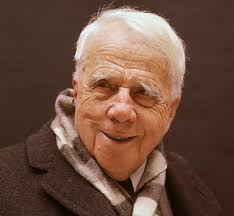
Explaining Robert Frost’s ‘Education by Poetry’

An earlier post in which I talked my way through Frost’s essay ‘The Figure a Poem Makes’  has proved to be one of my most visited pieces. As both teacher and poet, I wanted to explore Frost’s often teasing pronouncements and here I want to do the same with his longer essay, ‘Education by Poetry’. This was originally a talk delivered at Amherst College. It was subsequently revised for publication in the Amherst Graduates’ Quarterly (1931). Frost also separately printed an extract from the conclusion of the essay under the title ‘The Four Beliefs’. Frost’s full text can be accessed here.   In the essay, Frost argues that nothing (other than mathematics)is known in itself – our knowledge is only via relations. So we must live by crediting metaphors of self, love, art, nation and deity, among others. Yet all these break down at some point and it this awareness that education ought to provide us with. There is a clear connection to Frost’s idea of a poem as a “clarification of life [. . .] a momentary stay against confusion” (‘’The Figure a Poem Makes’).


download

Paragraphs 1-7

Frost does not do rebarbative. Even when ultimately – as here – he has complex and profound issues to discuss, he invites us in and we follow trustingly. Here, he lulls us with the idea that he will “urge nothing”, will merely consider and describe. Only once he has finished will we grasp that his sometimes infuriating reluctance to commit lies at the core of his thinking.

His subject is how poetry is treated in American education. One approach is to bar it which, he admits with full-on irony, “takes the onus off the poetry of having to be used to teach children anything”.

Only slightly less ridiculous is the method of other institutions which permit a few examples of traditional poetry but “bar all that is poetical in it by treating it as something other than poetry”. What Frost means by “poetical” emerges later but here he mocks the way that poems are treated as no different to other conventional knowledge-based texts (“science”) or are examined merely for their linguistic and technical illustrations (“syntax, language”).

In a passage that all English teachers will recognise, Frost ironically concedes that education treats poetry in this way in large part because we have to submit marks for assessment. The brute simplicity of a marking regime has its attractions, but it inevitably narrows our focus until we mark for little else but “for accuracy, for correctness”. Still keeping what constitutes the “poetical” up his sleeve, Frost tempts us on by suggesting that such accuracy is “the least part of my marking. The hard part is the part beyond that, the part where the adventure begins”. The adventure is the real nature of a poetic text.

The Big Idea

Paragraphs 8-9

Having considered the abolition and the denaturing of poetry as ways of dealing with its “nuisance” value in education, Frost considers a third way of neutralising it. Mockingly once more, he describes those who accept poetry as a separate discourse but assign it to a “nowhere”, exile it to the “flowery”, to a place diametrically opposed to the “rigorous and righteous”. Poetry here becomes mere entertainment with no truth value, no concern for, or capacity for, knowledge. Poetry occupies only that part of the curriculum that “scatter[s] brains over taste and opinion” but this is hard to assess. Teachers may resort to “a general indefinite mark of X” in such courses and if a marking regime cannot be imposed then such a course can hardly be graced with the description of ‘education’. Frost’s tone is simultaneously sarcastic and passionately concerned: “How shall a man go through college without having been marked for taste and judgment? What will become of him? What will his end be? He will have to take continuation courses for college graduates. He will have to go to night schools”.

Coming closer to his real intention, Frost really does lament this lack of education in taste and opinion. Look at the rising seriousness of concern in this passage: “they have not been educated enough to find their way around in contemporary literature. They don’t know what they may safely like in the libraries and galleries. They don’t know how to judge an editorial when they see one. They don’t know how to judge a political campaign”.

This is a key moment because Frost makes it clear that for all his self-deprecatory tone, the foolery and sarcasm, he is leading us to a declaration that education does have a responsibility to prepare young people to be citizens as well as members of a skilled work force. Frost expects education to inculcate interpretative skills and too many Americans leave school/college ill-equipped to “know when they are being fooled by a metaphor, an analogy, a parable”. This is not science, nor is it merely syntax or language: “metaphor is, of course, what we are talking about”. For Frost, an understanding of how metaphor works is a key part of understanding the world (he will explain this later in the essay) and an understanding of metaphor is best learned through a study of how poetry works. Education about metaphor is education through poetry and “Education by poetry is education by metaphor”.

Paragraphs 10-11

I find the next two paragraphs hard to follow. Frost’s end point is to return to the importance of metaphor but here he detours through the idea of enthusiasm. As much as taste, enthusiasm is not something the academy can easily mark, but Frost wants it, or at least he wants enthusiasm “taken through the prism of the intellect”. This prism metaphor suggests that enthusiasm, when processed through the intellect, refracts a pure-blooded enthusiasm (Frost calls this latter “crude” and likens it to the “oh’s and ah’s” of someone admiring – without any thought? – a sunset). Such a refraction gives rise to a continuum of different levels of enthusiasm, from “something of overstatement, something of statement, and something of understatement”. The prism of the intellect is now re-named as “an idea”. I think Frost wants a not-unsurprising blend of passion and thought in his enthusiasm – neither cold assessment (marking?) nor the oh’s and ah’s of thoughtless fanaticism.

flowermoonPNG[1]

Paragraphs 12-14

Frost now returns to his main theme via a slight revision of his thought, suggesting he’s really been discussing “enthusiasm tamed by metaphor”. His next point is much clearer: “I do not think anybody ever knows the discreet use of metaphor, his own and other people’s, the discreet handling of metaphor, unless he has been properly educated in poetry”. Metaphor is the prism (spawned from intellect, something of an idea) through which our emotional responses are projected to achieve knowledge. But Frost is convinced that an awareness of this fact is not shared equally amongst us and that education through poetry will serve to increase this awareness.

Now Frost begins to talk more clearly about metaphor itself. The importance of it lies in the fact that it “begins in trivial metaphors, pretty metaphors, “grace” metaphors” but (as his essay argues) metaphor also “goes on to the profoundest thinking that we have”. Frost talks elsewhere of what Tim Kendall calls “ulteriority”, glossed here as the method of poetry of “saying one thing and meaning another”. The way Frost discusses this he is sure it is not an abstruse poetic idea but a day to day, almost instinctive human preference: “People say, “Why don’t you say what you mean?” We never do that, do we, being all of us too much poets. We like to talk in parables and in hints and in indirections—whether from diffidence or some other instinct”.

untitledFrost wants to make big claims for metaphorical thinking: “I have wanted in late years to go further and further in making metaphor the whole of thinking”. He allows the exception of “mathematical thinking” but wants all other knowledge, including “scientific thinking” to be brought within the bounds of metaphor. He suggests the Greeks’ foundational thought about the world, the “All”, was fundamentally metaphorical in nature, especially Pythagoras’ concept of the nature of things as comparable to number: “Number of what? Number of feet, pounds and seconds”. This is the basis for a scientific, empirical (measurable) view of the world and hence “has held and held” in the shape of our still-predominating scientific view of it.
Paragraphs 15-19

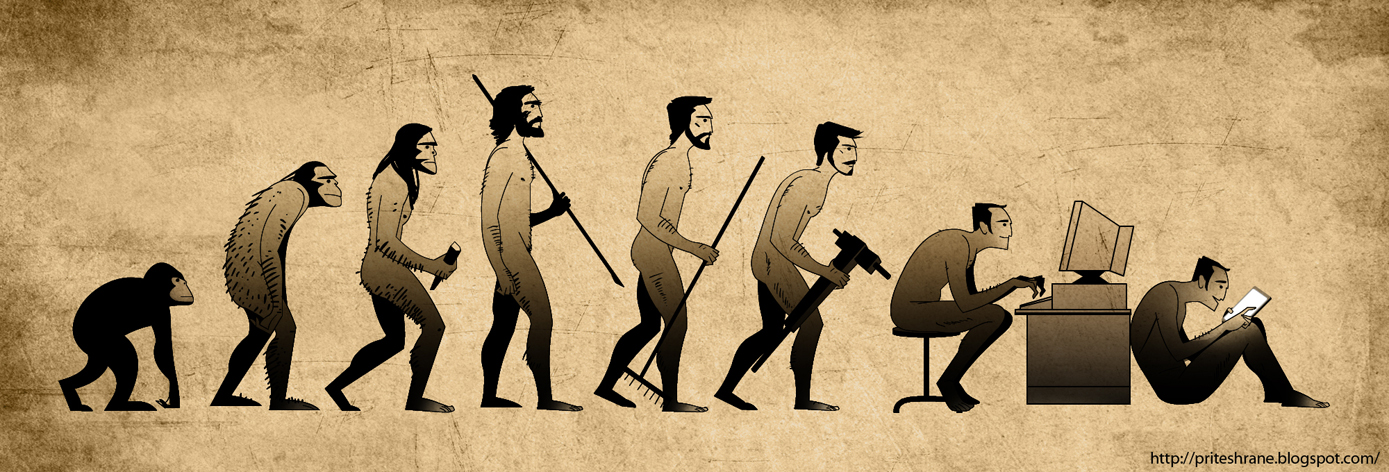
Frost refers to a visiting scientist who tried to mix spatial and temporal metaphors: “The two don’t go together”. Another such modern metaphor is that a thing is “an event”. Another is that space “is something like curved”. Another is that individual particles possess a freedom. Another is the “metaphor of evolution” or indeed that the whole universe, the whole of everything, “is like unto a growing thing”. Frost wants to alert his audience to the role of such metaphors – often unrecognised as such – in both our everyday and more refined scientific views of the world. He briefly dwells on the metaphor of evolution, accepting its brilliance (in terms of its still-continuing applicability) but insisting that even this “will break down at some point”.

evolution

Paragraph 20-23

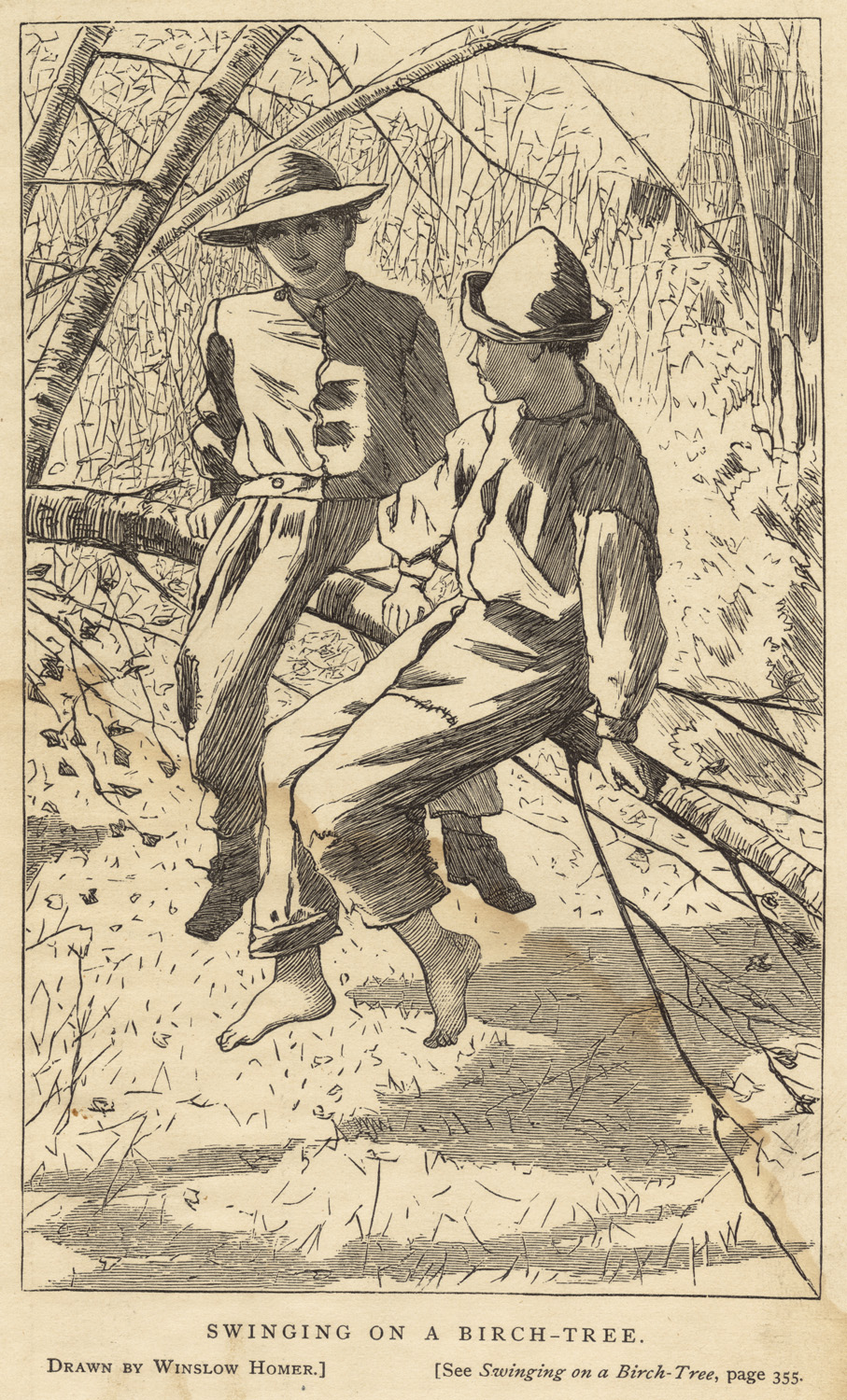
These are the key paragraphs. Frost argues that our lack of understanding of how metaphor works will leave us “not safe”. We must understand “figurative values” and so be able to assess “the metaphor in its strength and its weakness”. In an image that brings to mind his poem ‘Birches’, he explains we will not “know how far [we] may expect to ride it and when it may break down”. The point is that it will break down (the boy riding the birch always comes back to earth) and education ought to give us the experience and the equipment to recognise a “good metaphor, as far as it goes, and [we] must know how far”. As I understand it, Frost wants us to approach human knowledge more tentatively, more sceptically, recognising its provisional nature because it is based in metaphors which will at some moment break down and need to be replaced by a better, more “brilliant” metaphor. The study of poetry offers us experiences of figurative thinking and (if we think of Frost’s poems) the sense of provisionality they often inculcate.

5727567383_f719380140_oThat we have a tendency to forget this provisional nature of knowledge and understanding seems to be Frost’s next point. We take up arms (as it were) by taking up certain metaphorical ideas and making totems of them. He berates Freudianism’s focus on “mental health” as an example of how “the devil can quote Scripture, which simply means that the good words you have lying around the devil can use for his purposes as well as anybody else”. That this is dangerous (makes us not safe) is illustrated by the passage of dialogue Frost now gives between himself and somebody else. The other argues that the universe is like a machine but Frost (adopting a sort of Socratic interrogation technique) draws out the limits of the metaphor, concluding he “wanted to go just that far with that metaphor and no further. And so do we all. All metaphor breaks down somewhere. That is the beauty of it. It is touch and go with the metaphor, and until you have lived with it long enough you don’t know when it is going. You don’t know how much you can get out of it and when it will cease to yield. It is a very living thing. It is as life itself”.

Paragraphs 24-26

Frost now returns us to the school room and what it is for a student to “Think”. It is now clear that this frequent exhortation from teachers really means “just putting this and that together; it is just saying one thing in terms of another”. In a clear allusion to his poem ‘After Apple-picking’, Frost says to explain to students about the workings of metaphor is to “set their feet on the first rung of a ladder the top of which sticks through the sky”. The most significant example of such metaphorical thinking is “the philosophical attempt to say matter in terms of spirit, or spirit in terms of matter.” This – like all metaphors in the end – is an attempt that must fail but “it is the height of poetry, the height of all thinking, the height of all poetic thinking, that attempts to say matter in terms of spirit and spirit in terms of matter”. Frost clearly feels each realm is more clearly understood via metaphors of the other but (speaking in the 1930s) the main danger he foresees is a too-materialist vision of the world: “The only materialist – be he poet, teacher, scientist, politician, or statesman – is the man who gets lost in his material without a gathering metaphor to throw it into shape and order. He is the lost soul”. He is lost because blind to metaphors.

Paragraphs 27-37

Frost starts to look at metaphors through some “trivial ones” from the Odyssey – a shield and seeds of fire. These are the raw materials for an education by metaphor and recall his definition of a poem as “a momentary stay against confusion” in The Figure a Poem Makes where he arguesI would rather have trivial ones of my own to live by than the big ones of other people. But there are more significant metaphors: “the ones we live by”. Frost repeats: “[metaphor] is all there is of thinking”. He explains we do not have to write poetry to understand metaphor. Reading it serves as long as we read it “not as linguistics, not as history, not as anything but poetry”. The only form of assessment a teacher can apply to someone reading poetry is how “close” they come to it. This remains vague, to say the least, but Frost insists “everything depends on the closeness with which you come, and you ought to be marked for the closeness, for nothing else”.

Paragraphs 38-43

Evidence of such closeness to the true nature of poetry (and hence metaphor) is now termed a form of “belief”. He gives five different forms of such belief. Frost makes each sound like a sense of conviction, arising from the perception of a metaphorical connection between two things. Our giving credence to this sense of connection is also what can give rise to a fulfilling of such a connection, almost as if our belief in it gives rise to it.

His first illustration of this is in a young person’s self-belief. Is this like a young woman seeing herself as an engineer, giving that vision credit and hence pursuing it towards fulfilment? Of course, such metaphors break down and this is something more clearly acknowledged in Frost’s second example: “the belief of love”. The metaphor of a romantic relationship between two individuals must be given credence (on both sides) to be pursued but “the disillusionment that novels are full of is simply the disillusionment from disappointment in that belief. That belief can fail”.

kadın-türk-mühendis-790x445

The third form of belief is literary or art belief. Frost focuses on the creation of a work of art which should arise not from cunning or calculation but from “belief. The beauty, the something, the little charm of the thing to be.” This is more “felt than known” (again recalling The Figure a Poem Makes) and we need to see the artist sensing a connection to something other, giving it credence, and trying to fulfil the insight, working towards it, bringing it in existence (not merely recording something already known). This is also the model for Frost’s fourth belief –  the God-belief. He’s most brief on this but the implication seems to be that God is something we bring into existence through our belief. Again, we need to remember that both literary- and God-belief is liable to failure and break down.

Here, Frost’s final belief is national belief, a belief in a nation to which we give credence and hence bring about its fulfilment, bringing it into existence. The particular and personal nature of each of these beliefs is brought out when Frost reaches for the metaphor of the painter’s palette. As he says elsewhere, being forced to adopt others’ metaphors, even a whole culture’s metaphors, becomes a form of tyranny that he would resist. This is partly because all metaphors break down eventually, but also because “I want my palette, if I am a painter, I want my palette on my thumb or on my chair, all clean, pure, separate colours. Then I will do the mixing on the canvas”. Whether we are engaged in self-, love-, art-, God- or nation-creation, we must make our own.

Paragraph 44

Interestingly, Frost concludes by reviewing and re-ordering the five areas of metaphorical belief. Each has a “shyness” about it in that we are reluctant or incapable of pronouncing upon it until we have tried to pursue it: “only the outcome can tell”. This must be, in part, the source of Frost’s slipperiness, the sense we often have that his commitment is always provisional, or yet forthcoming. Even in national-belief, “it has got to be fulfilled, and we are not talking until we know more, until we have something to show”. This is understandably true of writing a poem which arises “not of cunning and craft [. . .] but of real art”. This is now glossed as “believing the thing into existence, saying as you go more than you even hoped you were going to be able to say, and coming with surprise to an end that you foreknew only with some sort of emotion”. In this conclusion, Frost holds back God-belief for its more traditional, ultimate position: “And then finally the relationship we enter into with God to believe the future in – to believe the hereafter in”.

cri_000000136377