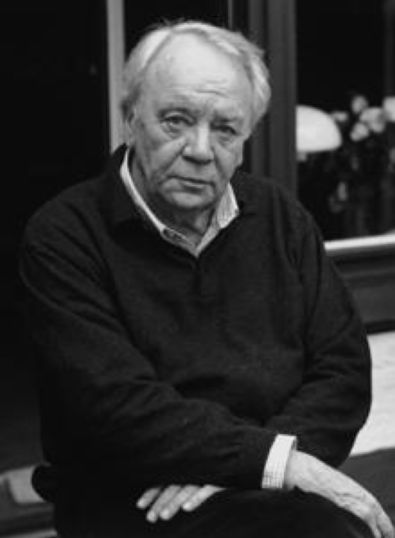
Two Poems by the late Jürgen Becker

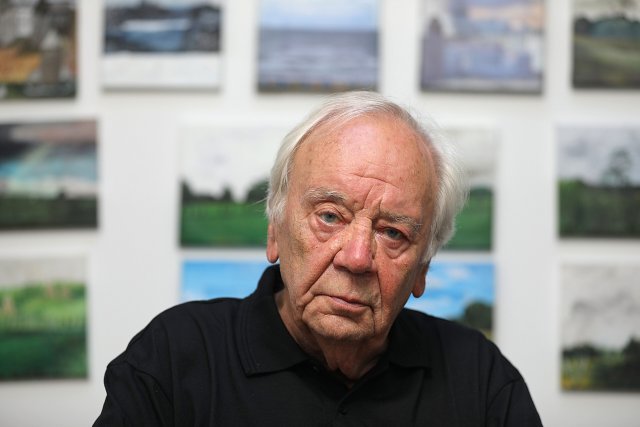
The sad news that Jürgen Becker (1932-2024) died recently at the age of 92 was particularly poignant as I have been translating his work for the past 3 years. I first read about his poetry in an essay I was translating by Lutz Seiler (published in In Case of Loss (And Other Stories, 2024)). There, Seiler characterises Becker’s work as ‘a process that integrate[s] both immediate and more distant modalities of language, his own voice as well as materials drawn from other sources such as events, photos, maps as well as interjections from neighbouring rooms, from the mail, the news, weather conditions and whatever else stray[s] within range’ (my translation). History, politics, the importance of recording ‘small things’, an extraordinarly porous kind of poetry – these were the aspects that drew me to his work (as a writer of my own poems as much as translator).

Becker’s ‘typical’ poem works at length, resembling a stream-of-consciousness, but better thought of as a kind of collage or montage. His effects are slow-burning, allusive, even elusive, and I don’t think his work is likely to top any UK chart of popular poetry any time soon. But his revered status in Germany is remarkable and I have actually had a couple of successes recently with my translations: a Highly Commended in the 2024 Stephen Spender Trust Translation Competition, judged by Taher Adel and Jennifer Wong (with the poem ‘Meanwhile in the Ore Mountains’), and one of Becker’s longer poems in translation being published (‘Travel film; re-runs’ – see below).

Becker grew up in the German region of Thuringia which, after World War II, was in the Soviet occupation zone, later the GDR. By then, his family had moved to West Germany and, after the fall of the Berlin Wall in 1990, the writer often returned to his childhood landscape. I have concentrated my translation efforts on Becker’s 1993 poems in Foxtrot in the Erfurt Stadium, published by Suhrkamp. The full translation is due to be published by Shearsman Books in 2025. The Spender Trust Competition poem is a short piece which I can quote in full. The Competition requires entrants to say a few words about the poem and the translation process. Here is a video of the Intro and Reading of the poem for the prize event, and (alongside) the text that I originally submitted:

Commentary – The Ore Mountains lie along the Czech-German border. Borders are important in this poem. Born in the East German region, brought up in West Germany, after the fall of the Wall in 1990, Becker often returned to his childhood landscape. Though relatively brief, this poem is just one sentence, woven together with the conjunction ‘wie’ (translated here both as ‘how’ and ‘the way’). The weave is dense and it’s not possible to tell whether what is observed – the children, the oil spill, the tree stump (resembling a body) – are contemporaneous or from different eras. My translation keeps these possibilities open: borders here are temporal, as well as geographical. The German word ‘Avantgarde’ has artistic as well as political implications, but my choice of ‘vanguard’ also brings out the militaristic connotations which are reinforced by the ‘spitzen, grünen Lanzen’ (‘sharp, green spears’) which are swiftly transformed into a bunch of sprouting snowdrops. These flowers of Spring are referred to as a ‘Konvention’ and I retained the English equivalent, intending to suggest both a performance (something conventional, perhaps not genuine), as well as a political gathering or agreement (like the Convention on Human Rights). The ambiguity felt relevant. The final vivid, visual images – a TV screen seen through a window, a script on the screen, a woman talking, but inaudible to the observer – sum up Becker’s concerns about the media, political and historical change, borders real and imagined, exclusion, and the need to ask questions of those in power. Issues as real today as when the poem was written.

Sitting still, watching how the afternoon below

waits for the dusk, the way snipers vanish

behind the remains of a wall and children run

after a white, armoured vehicle, the way a line

of hills, which marks a boundary, divides

the nothingness of snow from the nothingness of sky,

and along the frontier, one this side, another

along the other, fly the only two crows

to be found in this treeless landscape, the way

the iridescent pattern of an oil spill develops

with darkening edges, the way a tree stump

in the field becomes the shape of a body with

severed arms and legs, how, under the cherry,

the vanguard shows with sharp, green spears,

which later, over the next few days, assumes

the convention of snowdrops, how dark windows

are lit by screens, and on each screen appears,

at first, lettering, and then the face of

a woman who is soundlessly moving her lips.
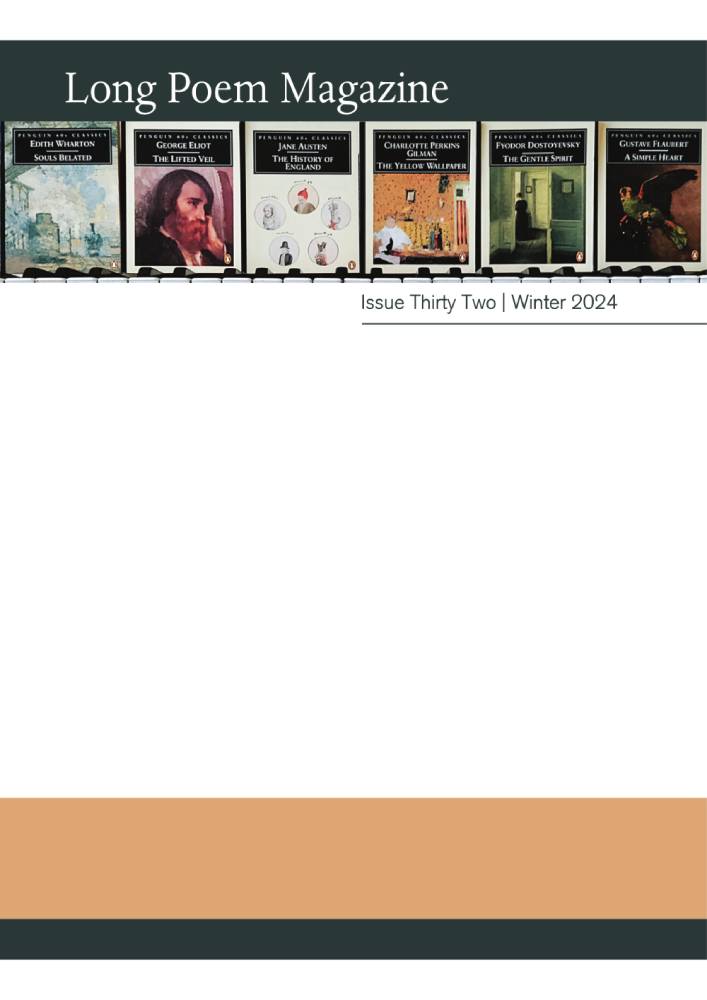
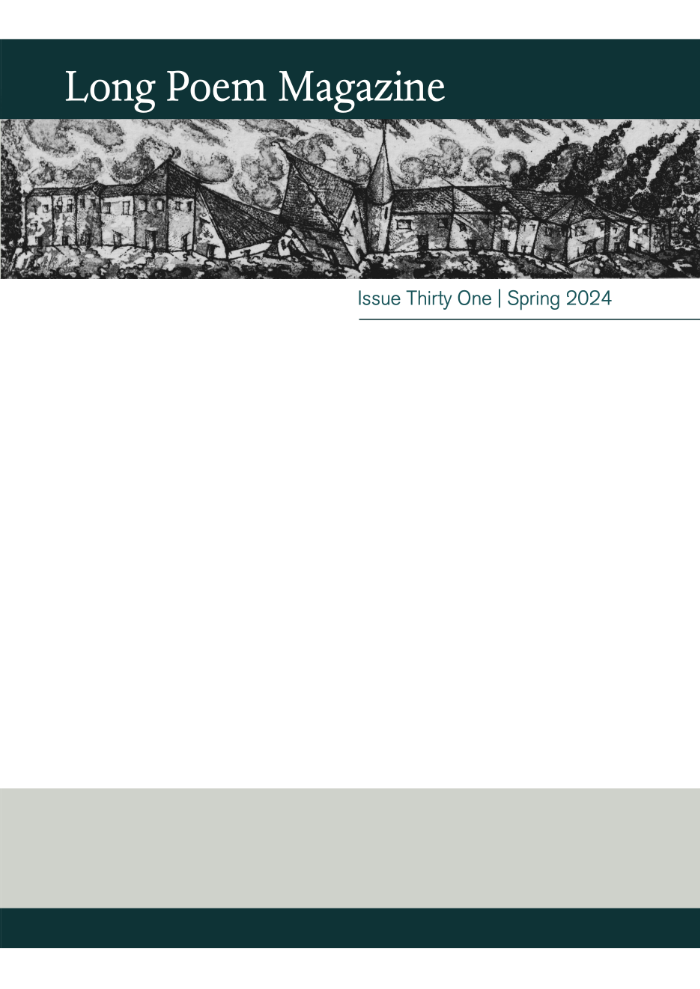
The longer poem – ‘Travel film; re-runs’ – which does indeed run to over 100 lines in full – has just appeared in The Long Poem Magazine, Issue 32, eds. Linda Black and Claire Crowther. This brilliant magazine is one of the few outlets for poems stretching beyond the ‘competition’ mark of 40/50 lines only. Poets/translators again have the opportunity to comment on the work being published. This was my Introductory paragraph:

Given his 1000 page Collected Poems (Suhrkamp, 2022), it’s remarkable that Jürgen Becker’s work has been so little translated into English.  This poem, published in his 1993 collection, Foxtrot in the Erfurt Stadium, is imbued with Becker’s sense of the changes in this particular part of Europe. The interleaving of the child’s and returning adult’s vision is what yields Becker’s characteristic poetic mode: a flickering between past and present, often without warning to the reader, a past frequently oppressed by the rise of fascism in the 1930s. The translator’s difficulties lie not in his word choices (Becker plainly describes, he states), but, to some degree, in his cultural references (here, the allusion to pimpf kids (cub, little rascal, little fart) is to members of the Hitler Youth), and, primarily, in dealing with his style of montage-composition, his commitment to ‘the apparently incidental’. Becker’s porous verse contains multitudes of perspectives, voices, inner and outer events, photos, maps, postcards, news, weather reports. In translation, it’s hard to flex, to permit these into English, and I have had to learn to trust Becker’s arrangements of them into long, semi-colon linked passages, utterly remote from conventional ‘lyric’. The opening 24 lines here elide landscape, weather, employment, domesticity, and history, then on to the natural world, compositional ideas, back to history. Becker is a great poet of the present moment and of the past. He grew up in Thuringia which, following World War II, lay in the Soviet occupation zone, later the GDR. By then, Becker’s family had moved to West Germany, and, after 1990, he often returned to these childhood landscapes. This poem was published in his 1993 collection, Foxtrot in the Erfurt Stadium. Becker worked for many years in German radio, and, in this poem, we might imagine a small production team visiting an un/familiar landscape in the East, perhaps where a childhood was spent, a place later abandoned.

Travel film; re-runs (extract)

the landscape: like corrugated cardboard, an enduring, fixed

motion, on a smoky grey day. The wind came

somewhere from below, from a region beneath

the weather chart; in the evening, we could no longer

reach our correspondents. We drove out

to the country house; we ate

Spanish green asparagus. It was a moment

from yesterday that rolled slowly past the shelf        

with its yellow calendars and diaries and pictures;

something had begun,

the sound of that reiteration. You can … and

you allow it … push the off button; outside the window,

the blackbird flutters up, simply waiting

to be mentioned. Now you notice the way the paint

has peeled from the window frame, and where

the ants are coming from, in January the only

living creatures in the house. Perseverance pays off

at some point, even if you have little alternative

but to gather piece after piece together. Paint pots

in the shed, shades of green and white, but

we are waiting for a consistent light,

on either side of the house. Is it too late now,

to leave again

        … lake shores, before they are all

accounted for, can still be appreciated, with sandy paths

reaching the purple horizon … subjunctive, without end;

a game of evasion that you can watch until you

whistle, or shout, and it’s nothing like awakening

from a dream. In the evening, we light a fire; it’s

a sudden, impromptu decision; then follows

the next draft of the letter: your sketches litter the table

… you no longer need a pass; highways,

the middle of the village … standing beside you

on the jetty; on the opposite side, the yellow ribbon

of the shoreline

      clips from the travel film just now

set going in the blink of an eye; then the meadow

is mown; there are a few old clumps of snowdrops

we leave standing. The fact is, we have missed out

on the moment of adulthood, even if, in the evening,

you say: never, not once, did the door open, from

which a little something left, and what you are now

entered in. The contrast, the changes … the fear has

been networked, so many of these shortcomings went

into production. Piano, from beyond French windows,

Shostakovich plays Shostakovich, and the life story

draws a curve out towards the northeast. Ice floes,

accumulating along the coast; in boots and furs,

walking over the frozen river, passing pimpf kids,

and old men, and a young woman who’s most likely

Polish, and you’re not going to stop staring at her

any time soon; freezing cold on the sledge back home,

your mother doesn’t live here anymore; the whole scene

darkens under the smoke of an engine pulling

A Run of Readings in October/November

Talk to whomsoever (among the poets you may know) and a common theme is just how hard it can be to get invitations to read. It really is hard going and for those of us – most of us – who have an aversion to the push and flaunt that is required – it can even feel quite painful. But do it we must. So it’s really nice when it produces a few results. This, by way of saying that I have a few appearances – brief in the main – not as headline reader – coming up at the end of this month and the opening of November. A couple of these readings are translation-related, two others are to mark the publication of extracts from some more experimental work (in original poetry) that I have been pursuing in the last couple of years. I’m particularly happy that these more ‘odd’ compositions have found such warm responses and it makes me think I ought to be looking to publish them in full. Though I have another, other book sitting ready to go… publishers??

Some more event details….

On 26th October, 2pm, at The Library, Conway Hall, London, as part of the Small Publishers Fair, Wivenhoe-based Dunlin Press will be launching four new pamphlets of writing: Kathmandu by Andrew Shaw, Bomb by Samuel Reid, From Stone to Clay to Butter by Lily Petch, and A Raven on a Writing Desk by Julie Hogg. These talented people were the winners of the Press’ 2024 competition for experimental writing. Sad to say, I’ll not actually be reading here, but some of my work is included in the accompanying anthology (those who just missed out I like to think!). My contribution is an extract from A Shout Across Dursey Sound, a sequence of poems set on the Beara Peninsula in Ireland. The anthology’s title is Objects (buy it here) and it includes work by Galia Admoni, MW Bewick ,Emma Bolland, Richard Capener, Tessa Foley, Anthony Ogbonnaya Chukwu, Richard Skinner, Isabella Streffen, and others.

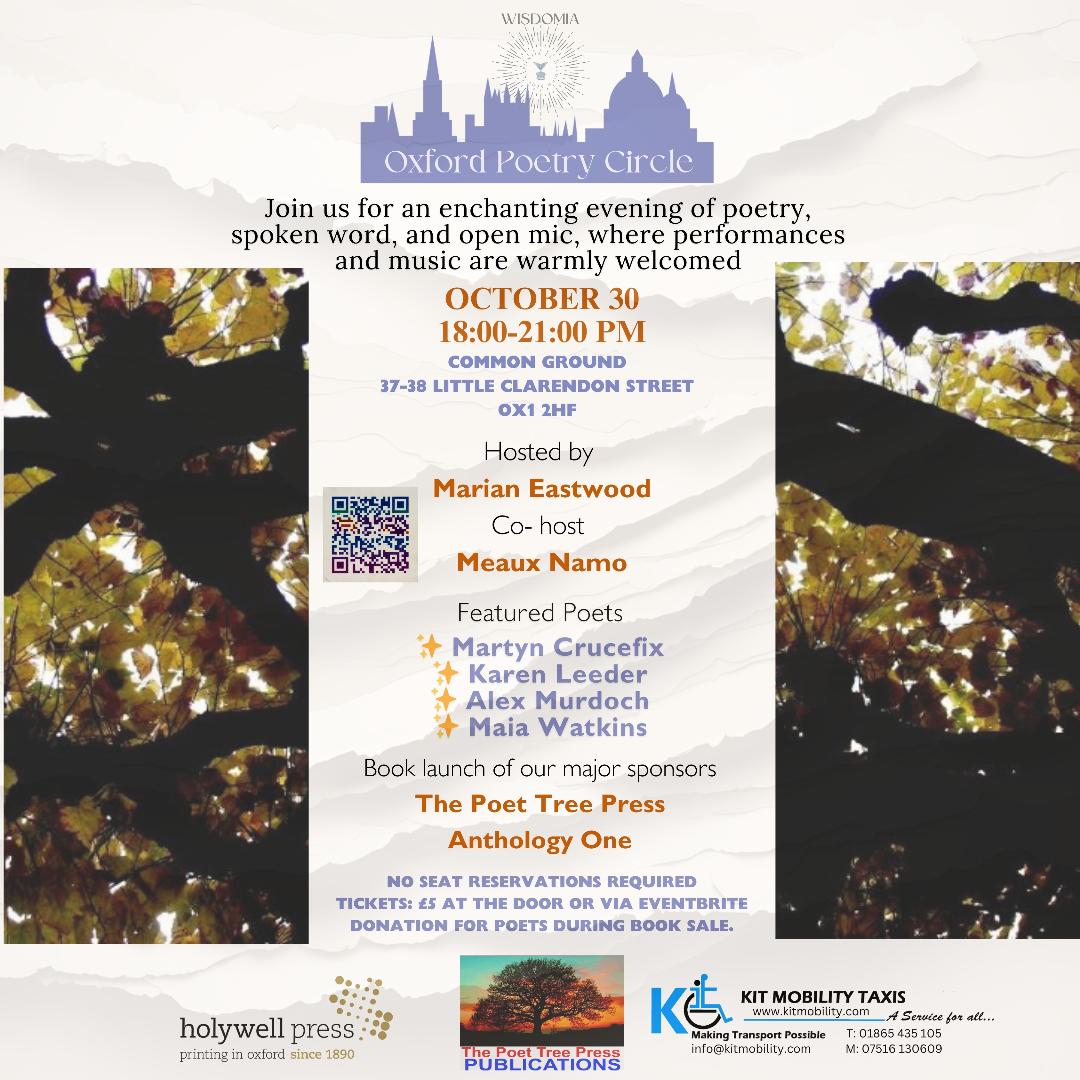
Then, on Wednesday, 30th October, 6pm-9pm, I’m off to Oxford to read for the Oxford Poetry Circle, as announced in a previous post. This is taking place at Common Ground, on Little Clarendon Street, Oxford. There, I’ll be reading work in translation only – from my recent Rilke book published by Pushkin Press (reviewed here on The Friday Poem by Victoria Moul) and from my 2019 Shearsman Books collection of poems by Peter Huchel. I’m particularly pleased to be reading on this occasion with the brilliant and super-industrious translator, academic and friend, Karen Leeder. Other readers are Alex Murdoch and Laia Watkins – and there will be readers from the floor.

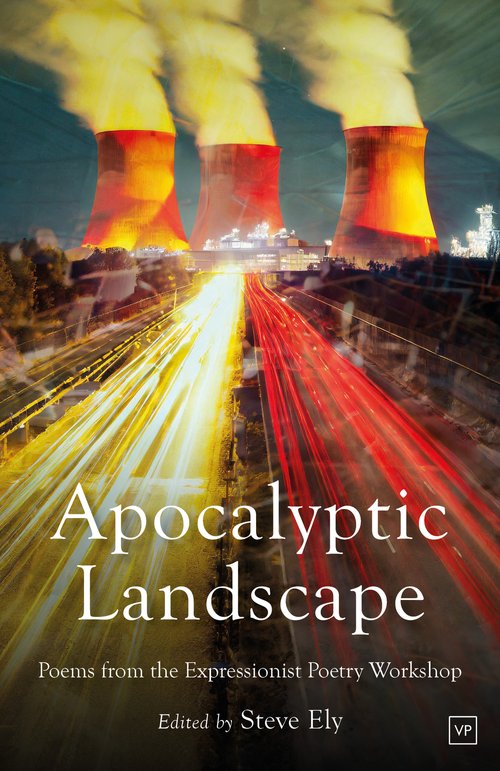
A couple of days later, the evening of Friday 1st November, I will be reading from a second experimental sequence of my own poems at the launch reading for Steve Ely’s anthology called Apocalyptic Landscape (Valley Press). My poems, a sequence called Olga Liking Sunflowers, roam through the pandemic experience, the work of David Jones, my local landscape and the delights (or otherwise) of social media. Contributors were encouraged to generate visionary responses to the crisis of the Anthropocene in the context of landscapes important to them. I will be reading alongside Steve, Jill Abram (who is organising the London launch for the book), as well as Katy Evans-Bush, JP Seabright, Anita Pati, and Caroline Maldonado. Steve Ely is also reading from his book Orasaigh, a collaboration between Steve and photographer Michael Faint, inspired by the landscape around the tidal island of Orasaigh, located on the coast of South Uist at Boisdale. This event will take place upstairs at the Devereux pub, 20 Devereux Ct, London WC2R 3JJ. Doors open 6:30, Poetry starts 7pm FREE event.

Finally, I have also been lucky enough to have a translated longer poem (by the contemporary German poet Jürgen Becker) accepted to appear in Issue 32 of The Long Poem Magazine and I will be reading ‘Travel film: re-runs’ at their launch event in the afternoon of Saturday 16th November 1.30 to 3.45, at the Barbican Library, Barbican Centre, Silk Street, London, EC2 8DS. Other readers will be: Angela Gardner, Charlie Baylis, Sue Burge, Sharon Holm, Claire Cox, Sian Thomas, Peter RobinsonKhaled HakimTimothy AdesJulian Stannard. FREE ENTRY and there will be a short interval for sales and chats. Refreshments are available downstairs from the Barbican Cafe and Bar. I hope to see you at one or another of these events. I’ll leave you with a few lines from my sequence in Steve Ely’s apocalyptic anthology:

Olga likes my post of the tall sunflowers in the square.

Through google translate, her post in Russian reads: adrenaline is my doping.

I draw for the soul.

There are hundreds of images of herself. Some with wild animals.

Surely, they’re not really wild.

In a zoo. Under lock and key.

Others touch the hem of the pornographic.

Others look like cheap advertisements for luxury cars.

The kind of posts, I wonder, that end with an offer of marriage from the viewer.

Another shows her bald headed, holding a snake, just weeks after the remission of her illness.

I want to ask her: what was the exact nature of the disease?

I want to ask her.

What mark will this make in history?

I want to ask her. When will this stop?


Found Poems from Whitman’s Civil War Prose

I’m still pursuing some of the thoughts from my last blog about the difficulties of writing about current events (https://martyncrucefix.com/2015/03/13/how-do-i-write-poems-about-current-events/). I am reminded that we are closing in on the twelfth anniversary of the first so-called ‘shock and awe’ strikes by coalition forces on Saddam Hussein’s Bagdad in 2003: 

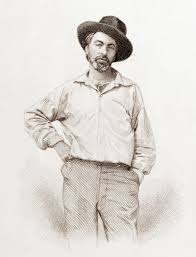
I did manage to write about the subsequent war in Iraq but on this occasion I approached it very tangentially, through the Civil War writings of Walt Whitman. The resulting poems were first published in The Long Poem Magazine (Issue 3, Winter 2009/10; sections also appeared in Acumen) with the Introduction I have posted below. There, I discuss several sections of the completed sequence though I will post up only two parts of it. For the sake of those who might be interested in how raw materials get transmuted in such a process, I have added links to the original passages from which #2 ‘The White House’ and #4 ‘I staid a long time to-night’ were derived. The full sequence was eventually published in Hurt (2010: https://martyncrucefix.com/publications/hurt/). Dan O’Brien has more recently used a not dissimilar ventriloquism in his poems about the experiences of war photographer Paul Watson. For a much more direct poetic approach to modern war (born out of direct experience as a soldier in Iraq) see the poetry of Brian Turner.

On 21st March 2003 the “big and little thunderers in chorus began to roar” over Baghdad. During Easter of that year I visited the American Museum, just outside Bath, and while my children scoured the grounds in an Easter egg hunt and my aging parents wandered around an exhibition of American rag rugs, I drifted into the bookshop and picked up a collection of Walt Whitman’s Civil War poetry and prose.

It was childhood innocence and the rag rugs’ recycling of material that were in my mind as I read the words Whitman had written in 1862 in Falmouth, Virginia: “Began my visits among the Camp Hospitals in the Army of the Potomac. Spent a good part of the day in a large brick mansion, on the banks of the Rappahannock.”

With the force of one of those visions that artists are thought to be prone to, it struck me that such a wide-eyed witnessing from an earlier conflict might be a way to write successfully about the then current conflict. Or to be more precise – since what I have just written fails to convey the powerful emotional impact of what I read – I was myself moved by reading Whitman’s observations but my emotion was not retrospective at all but immediate, topical, all about Iraq.

url

The more I read of Whitman’s prose the more genuine ties with the contemporary war I sensed. Whitman writes in his letters and journals almost as a by-stander, visiting the wounded and dying in hospitals, only occasionally being drawn to wider political observations and his focus on the individual cost of warfare exactly matched my own feelings. I began to imagine a sequence of poems framed by letters to a mother, containing the search for a brother and other references to close family members: “Han’s and George’s and Andrew’s. . . Jeff’s and his little Manahatta’s too”. The sequence came together only very slowly, partly because of my own uncertainties about its status as a partially ‘found’ poem but it eventually separated itself from its original sources and it was only later that I saw what was mine, what Whitman’s.

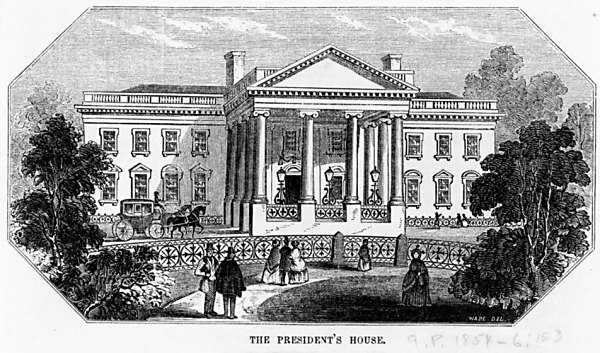
So the second piece, describing the White House, relies heavily on notes Whitman made in February 1862, but in the light of the deceit and war mongering of the early 21st century such descriptions are redolent with a bitter irony.

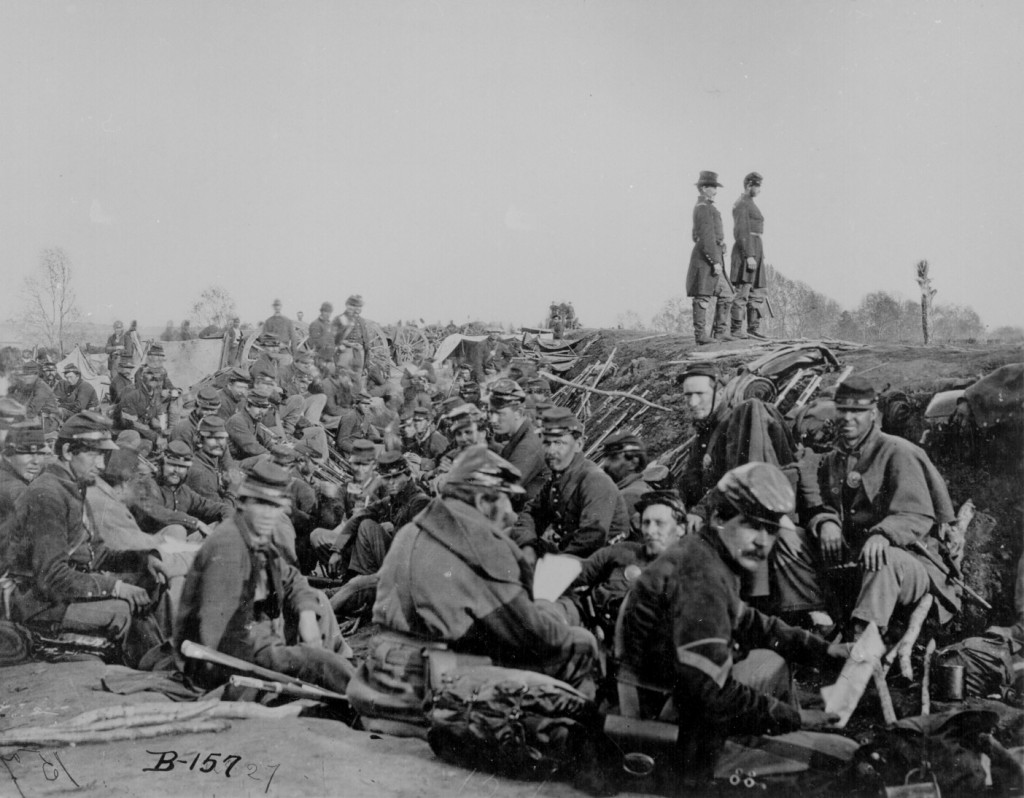
‘I dream’d a stockade’ is a more ‘composed’ poem, using Whitman’s familiar listing techniques, which intends to turn the suffering of the Civil War at an angle to reflect the inner conflicts that the Iraq mission quickly created in US society itself. With the inevitable reports of civilian casualties, I had little to add to Whitman’s accounts of comforting the wounded from the opposing sides of the Civil conflict to ensure a powerful contemporary resonance.

CIVIL115-1024x798
Soldiers in the trenches before battle, Petersburg, Va., 1865.

‘The President’ is drawn from Whitman’s many observations of Lincoln. He first set eyes on him in 1861 and, as with the White House material, while I was putting the sequence together, the passage of time had already imbued his original admiration with the bitterest of ironies. Of course, after the poems were completed, by January 2009 and the inauguration of Obama, time had ironically turned once more and some have since read this part of the sequence as ‘about’ the new US President.

With ‘To the Mother of one fallen’, the narrator is back at the bedside of an individual dying man whose ravings and sense of undeserved blame, of a corruption in the/his “system”, is intended to reflect warfare’s inevitable brutalisation of even the best of individuals, the results of which even now continue to be uncovered years after the world conjured its first surprised shock at events in Abu Ghraib. (click to see Whitman’s original letter of May 1865: Here )


More than it comes to

seven poems from the American War

ii. The White House

Tonight, I walk out to take a look at the President’s House.

Tonight, the white portico, the brilliant gas-light shining,

The palace-like pediment, the tall round columns, spotless as snow.

Tonight, a tender and soft moonlight flooding the pale marble,

A light that gives rise to peculiar & faint & languishing shades,

That are not shadows, for no such thing as shadow resides at this address.

On this night, a soft transparent haze under the thin moon-lace,

Where it falls amongst the bright and plentiful clusters of gas-lights,

That have been set at intervals around the façade & the columns.

Tonight, I see everything white, a marbly pure white and dazzling,

And even more so, the softest white of the White House of future poems,

And of dramas and dreams here, under the high, the copious moon.

Tonight, the pure and gorgeous front in trees under the night-lights,

The leafless silence and the trunks and myriad angles of branches.

Tonight, I see a White House of the land, a White House of the night,

And of beauty and of silence and sentries at the tall gate,

Sentries pacing in their blue overcoats, stopping me not at all,

But eyeing with their sharp sentries’ eyes whichever way I go.

For Whitman on The White House: Click Here

white-house-north-face-c1853

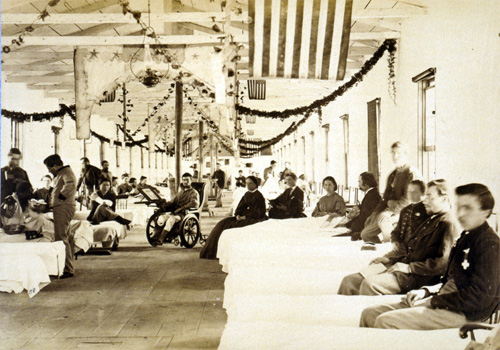
iv.  I staid a long time to-night

I staid a long time to-night at his difficult bed-side.

It was a young Baltimorean, grown to the age of nineteen.

He had seen so much and yet had slept such a very little,

His right leg amputated an hour since, he was feeble,

So he slept hardly at all, the morphine costing more than it comes to.

And this is what I must do, I sit still while he holds my hand,

And he puts it to his face most affectionately.

And this young, handsome, tanned Baltimorean spoke to me:

“My dear friend, I am certain you do not know who I am,

Although your sitting here so quietly and so patiently,

It means much, yet you must understand who it is you help,

Since what I stand for & fight for I know you believe to be wrong”.

I staid a long time at the bed-side of the young Baltimorean.

I staid certainly because death had mark’d him and he was quite alone.

I might say I loved him, sometimes kiss’d him and he did me.

And of his age was his brother, a brave and religious man,

His brother and officer of rank, a man I sat beside in a close, adjoining ward.

And I staid because in the same battle they were wounded alike,

The one strong Unionist, the other Secesh, and each fought well,

Each for their respective sides, brave & obedient & mark’d for the end.

Now they lay close, following the separation of many years,

Of their strongly held beliefs, the separations these had imposed on them,

And both fought well and each died in his particular cause.

whitman_05_lg
Ward in Armory Square Hospital, during Civil War, Washington, D.C.

For Whitman on the two brothers: Click Here