Greedy alpha-creatures: the poetry of Ulrike Almut Sandig

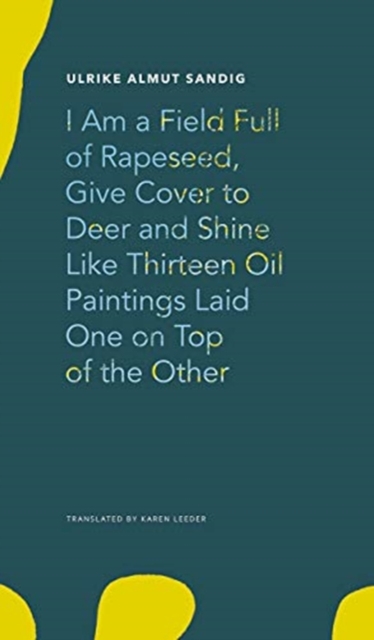
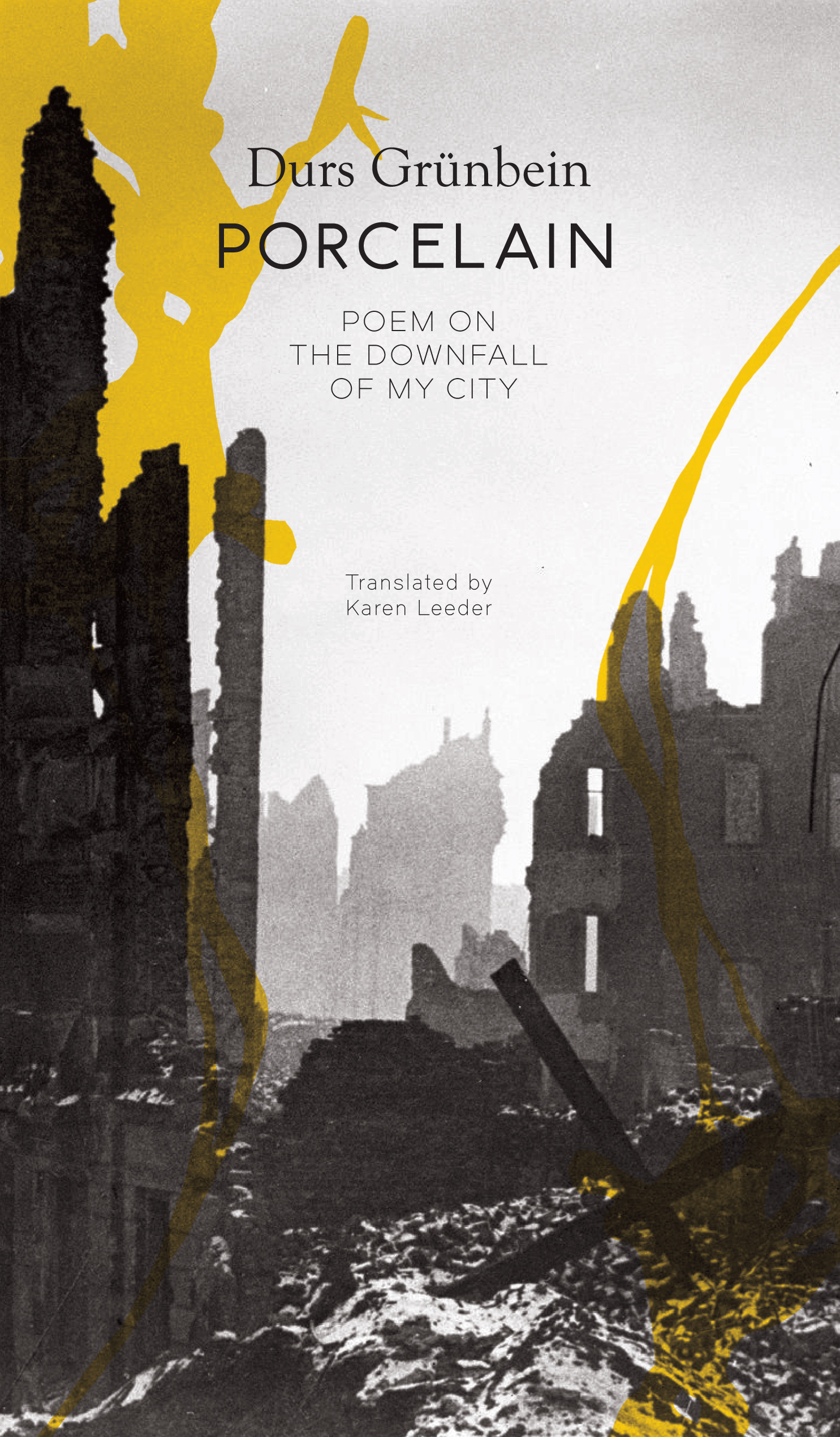
I’m shocked to realise that it is a full year since I posted my review of the stunning long poem, Porcelain, by the contemporary German poet, Durs Grünbein, in Karen Leeder’s equally impressive translation (Seagull Books, 2020). That review was originally commissioned for, and published in, Patricia McCarthy’s penultimate issue of Agenda (those who follow such things will know that Patricia has handed over the reins of the magazine to John Burnside who takes over with the resources of St Andrews behind him). In its original incarnation, the review was paired with my comments on another contemporary German poet’s work (again in Karen Leeder’s translation): this was Ulrike Almut Sandig’s 2016 collection, I Am a Field Full of Rapeseed, Give Cover to Deer and Shine Like Thirteen Oil Paintings Laid One on Top of the Other (Seagull, 2020). I am now posting my Sandig review as well, in part because I will be appearing with both Karen and Ulrike at the Ledbury Poetry Festival in a few days time. We will be talking about Rainer Maria Rilke’s great sequence, Duino Elegies (1923) as part of Peter Florence’s Dead Poets Society series. If you are in or around Ledbury on the morning of Saturday July 7th, do come along. Here’s the review . . .
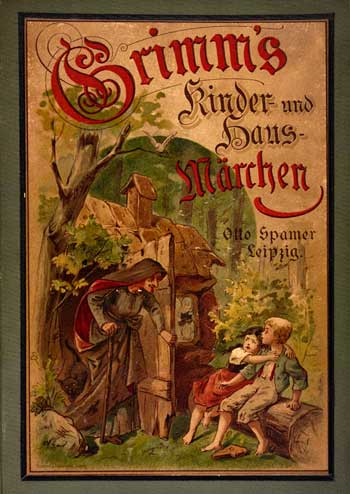
The eponymous figure from Grünbein’s sequence’s 11th poem,‘Hans im Glück’, draws on one of the stories in The Children’s and Household Tales of the Brothers Grimm (1812). In the original, Hans has anything of value taken from him, bit by bit, yet he remains optimistic, refusing to acknowledge reality. Within the context of Porcelain, Grunbein treats this is as an additional image of the myth of the city of Dresden as undeserving victim. Interestingly, the same figure appears in Ulrike Almut Sandig’s collection, but her presentation of Hans is more poignant, less ironic, as even the boy’s language is stripped from him and he tries to write a letter to a loved one: “what are you up to? // + esp: where r u? / ru ru // ru”. In the context of I Am a Field Full of Rapeseed… , the boy might be thought of as a refugee, forcibly having his culture and language stripped from him, though one of the strengths of the poem is that it also works as an updated fairy tale, a little myth of loss and diminished presence with more universal application. Such re-purposing of several of Grimm’s tales is one of the most striking things about this collection. Sandig announces in another poem, “we find ourselves deep in the future of fairy tale” (‘the sweet porridge’) and she, like Angela Carter before her, redeploys the fairy tale’s surreal narratives, bold characterisation, its humour and violence, its symbolism and moral intensity for her own purposes.

The other striking aspect of Sandig’s writing here is her bold linguistic and formal choices. There is an absence of punctuation, capitalisation, of poem titles (bolded phrases mid-poem often serve as titles), of conventional forms, of a clear lyric ‘I’, of plainly pursued narratives. This results in radically shifting ground for the reader which can be both bewildering and exciting. Several poems indicate these choices are firmly rooted in issues of epistemology and ideas concerning personal identity. So, the opening poem, ‘from the wings’, ambitiously sets out a complete life from ‘screaming’ beginning to its ‘silent’ conclusion. The interim is portrayed as all fluidity, ‘a stream that flows into others / while others again flow into it’. As much as there is any discrete self to be identified, ‘I am made wholly of language’, and the individual is a creature ‘that must speak / to understand itself’. The self is also one of many ‘fragile / greedy alpha-creatures’ and understands itself to be, ultimately, ‘a fluid tuning fork I am my own / song’. In the same vein, the book closes with ‘where I am now’, which sets the self metaphorically in some remote Arctic research station, a self that is at the same time a woman swimming in a municipal pool, moving freestyle through the water, ‘parting the water before me’, in an image of self-creation and open-ended exploration that, to some, will recall Eliot’s ‘Little Gidding’: “We shall not cease from exploration”.
This is, as it were, the metaphysical background to Sandig’s vision and it gives rise to poems like ‘I am the shadow for you to hide beneath’ in which the narrative voice celebrates just such fluidity of identity in an address to “friends”/readers that has the quality of Whitman’s “I contain multitudes” (Song of Myself, #51), though with a good deal more anxiety: “every morning I get up and don’t have a clue: / is it me, Almut? Ulrike?” This is also the poem containing the book’s full title, “I am a field full of rapeseed, give cover to deer / and shine like thirteen oil paintings laid one on top / of the other” and the poem goes on, in the name of radical fluidity, the I as landscape, huntress, a text that begins to unravel just as it reaches an end, a soldier, a girl, a woman. Elsewhere, ‘to be wood in a table’, as the title suggests, continues the theme: “not to be old and not to be young, but old / enough to be several things at once”. This includes the Rilkean desire for “simple things like ‘tree’” as well as the freedom of having no name, “no longer to say: ‘I am’”.
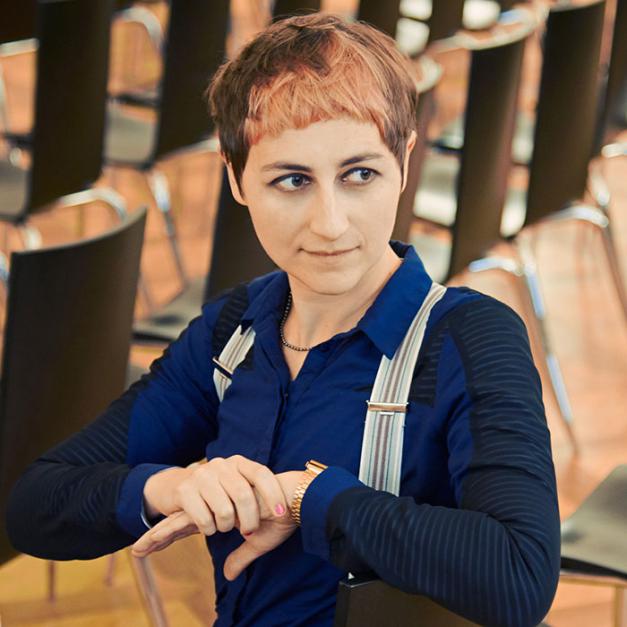
Ulrike Almut Sandig

Such poems are both celebratory in tone, but also alertly defensive. The reason is that there are forces abroad, ways of seeing and their associated politics that offer counter narratives. So, the expected calm of ‘lullaby for all those’ is really a call to arms, or at least a call to resist. It is “for all / those who put up a fight, when somebody / says: lights out, no more talking”. In a superb passage, once again Leeder’s translation of the German is brilliant, the forces of “DARKNESS” begin to emerge by implication:

we’re waiting for two

or three of those good, humming dreams

four peace treaties, five apples in deep sleep

we are waiting for six cathedrals and for

those seven fat cows, eight quiet hours

full of sleep, we’re waiting for nine friends

gone missing. we’re counting our fingers.

x

we’re still resisting. we won’t go to sleep.

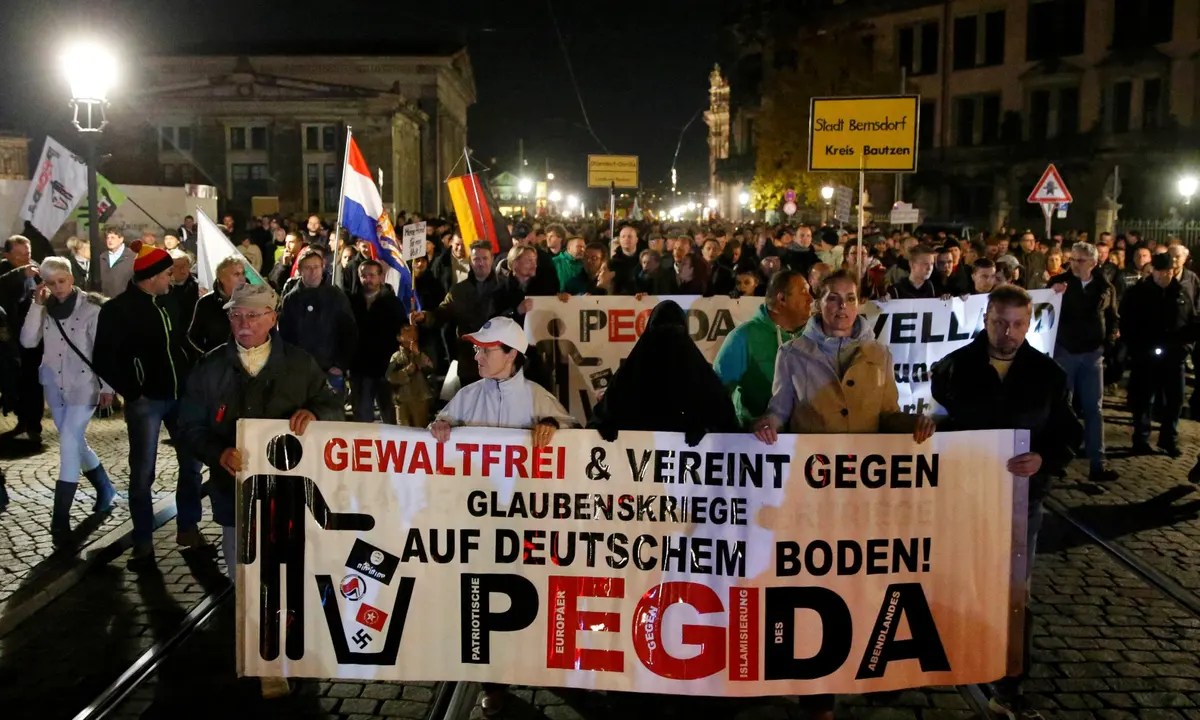
What is being resisted are the forces of repression, of fixity not fluidity, narrowness not breadth, fundamentalist conviction not open-endedness. Sandig places a poem in the centre of the book which draws heavily on statements made by Pegida, Germany’s populist, right wing, anti-immigration party. The text is full of rallying calls expressing a faith in clarity, mastery, resolution and purification: ‘from now on / nothing will stand in our way, no language / we cannot master, we will strike out mistakes / and shake each other’s freshly washed hands”. One of the Grimm’s sourced poems, a sister speaking to her brother, presents a narrative of the boy’s development into a threatening “hunter”. Such a poem looks both ways towards the violence of neo-Nazis, but also towards the violent radicalisation of young jihadists.
Sandig’s poems dealing more obviously with issues of state power, war, migration and displacement (especially hot topics in Germany, a country in the Schengen area of Europe and seen by some as an ideal destination – see the poem ‘tale of the land of milk and honey’) are particularly impressive. The ‘ballad of the abolition of night’ draws on details of systematic torture prosecuted by the USA, “a state lagging somewhat behind / on the historical timeline of our kind”. ‘instructions for flying’ revises statements made in leaflets distributed at the Idomeni refugee camp in 2016. The same camp, close to the borders of Greece, is the focus of another poem which expresses the poet’s “moral dismay”. The disquiet is partly at her own nation’s equivocations about the refugee crisis (what if there’s not a single / jot of good Deutsch to be found in this / Land of mine”) but also personally, at finding rhymes but ultimately doing “sweet FA”.

With Grunbein, Sandig is expressing the moral complexity in the face of man’s inhumanity to man as much as any simplistic moral dismay. This is, in part, the subject of some of the Grimm poems (interestingly, in German, the word ‘grimm’ means ‘anger, ire’). ‘Grimm’ itself opens optimistically, messages being scribbled onto raw eggs, but increasing urgency leads to extra pressure and the eggs break. Still, like Hans in luck, the narrator seems “unfazed in / the crumbling ruins” though the final image is only of eggs smashed, “a well-nigh limitless / supply of fragments and rage most grim”. But Sandig is an optimist, I think. Though couched in conditionals, ‘news from the German language, 2026AD’ works hard to portray a future of more settled diversity (Iraqi dates, Turkish honey, Syrian poetry). The opposing prospect is relegated to a parenthesis – if quite a long one. But hope has the final word: “if it works, we, that’s all of you and me, / will sing a lullaby, rhyme in unison [. . .] but more than that, we will be”.
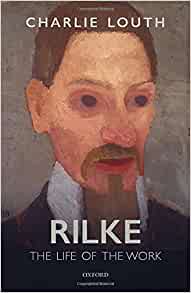
Charlie Louth’s Rilke + new Rilke translations

As I mentioned in my last blog post, much of my time through lockdown and in the last few months has been taken up with translation. One of these projects is as daunting as it is exciting. Pushkin Press have commissioned me to complete a new selection and translation of the work of Rainer Maria Rilke to appear in 2023. Some of you will be aware of my earlier published versions of the Duino Elegies and the Sonnets to Orpheus (both available from Enitharmon Press). The new project will contain selections from those sequences and a good selection of earlier poems, including from the New Poems. As well as trying out a few of my new translations in this post (and the following one), the body of it is an uncut version of my recent review of Charlie Louth’s excellent book on Rilke, Rilke: the Life of the Work (OUP, 2020). A shorter version of this review appeared in the latest Agenda magazine, ‘Altered Distances’ (Vol 54, Nos. 1/2). Many thanks to the editor, Patricia McCarthy for asking me to write it.

Part I

Rilke has long suffered from two types of criticism. Among his enthusiasts, some declare his work close to sacred and therefore hardly open to ‘normal’ practices of critical analysis, at risk of spoiling the ‘bloom’ of mystery they find there. Others, of a more negative inclination, accuse him of an aloof aestheticism, a likely fatal distance from ‘real’ life. One such was Thomas Mann who can be found, Charlie Louth notes, “(rather richly) calling him an ‘arch aesthete’”. Both viewpoints risk downplaying the skilled crafting of Rilke’s work (he thought long and hard about poems as artefacts, things consciously and intricately made) but also risk mistaking the particular power of his poetry. Rilke: the Life of the Work is comprehensive, erudite, always clear and – most importantly – keeps returning us to the poetry to which Louth enthusiastically responds: “When we read Rilke, the poems do not feel aloof, and they do not feel merely aesthetic in their claims. They press upon us and make us examine ourselves, and they help us experience our life in the world with greater clarity and depth”. Most readers will recognise this as an allusion to the ‘Archaic Torso of Apollo’ (from New Poems) which concludes “You must change your life”. Louth again: “It is unusual for Rilke to be so direct, but as I see it a similar spirit animates most if not all of his poems”.

This book aims to bridge the gulf between enthusiastic, non-specialist readers of poetry (Louth translates his foreign language quotations himself) and the German lang/lit academic and student. The balance between engaged readability and academic thoroughness is very well judged. I particularly value Louth’s close readings of ‘the work’, viewed as objectively as possible (Louth declares early on that he has no “overarching thesis”). There are other readily available biographical and critical works, but the strength of Rilke: the Life of the Work is that, with its discussion of the formal choices, wording and syntax of so many poems, it is a comprehensive attempt at ‘Reading Rilke’. The structure of the book’s 600 pages is primarily chronological, from the poet’s earliest publication, Lives and Songs (1894) through to Vergers (1926). Louth only departs from this chronological survey twice. Early on, he looks at several poems that open Rilke’s published books, then, in Chapter 6, he discusses the four poems Rilke wrote as requiems.

Lou Andreas Salome

So Louth’s Rilke is a craftsman and moralist who urges us to live better. The kind of closed system of a purely aesthetic art was the poet’s abhorrence. In a lecture he gave early in his career, Rilke is already sure that “‘art is only a path, not a destination’. In a letter to Lou Andreas-Salomé in 1903 he confirms: ‘I do not want to tear art and life apart; I know that in the end they are one and the same’. As so often, Louth articulates his subject’s attitude with great clarity: “for Rilke, there can be no question of shutting oneself away from life, of retreating into the work, and the desk, if it is to be the place of necessary writing, must be a ‘vitale Mitte’, a site right in the middle of life and exposed to all its risks and promises. To write is not to withdraw but precisely to engage”.

Rilke’s poetry pays particular attention to the processes of change associated with being human. Poems record such moments of change but also act, in the process of being read and openly experienced, as opportunities where change in an individual might take place. For those with faith in literature, Louth articulates the exciting prospect: “to read at all is to pause, is to take your time in times when an anxious haste pervades much of what we do. In some sense it is to live better whether poetry makes anything happen or not”. Writing to Thankmar von Münchhausen in 1915, Rilke asks, “What is our job if not, purely and freely, to provide occasions for change?” Louth finds these ideas in ‘Eingang’ / ‘Entrance’, one of the poems Rilke placed at the start of The Book of Images (1902/06). The furniture of this poem – the self, a house, a tree – is a grouping that recurs throughout Rilke’s work and what interests him is the suggestion that, as we leave the familiarity of our house, “the house of our habits, we enter the imaginary space of another building [. . .] coming from life into the poem, and passing through the poem into life”. Here is my new translation of this poem:

Whoever you are: in the evening, step out

of your living room, from all that’s familiar;

in the distance, the last thing, your house:

no matter who you are.

And although your eyes have grown so weary

you can barely lift them from the worn threshold,

slowly, with them, you still raise a black tree

and set it before the sky: lean and alone.

And you have made a world. And it is immense,

like a word, in silence, it continues to grow.

And as your will grasps its significance,

so your eyes, tenderly, let it go . . .

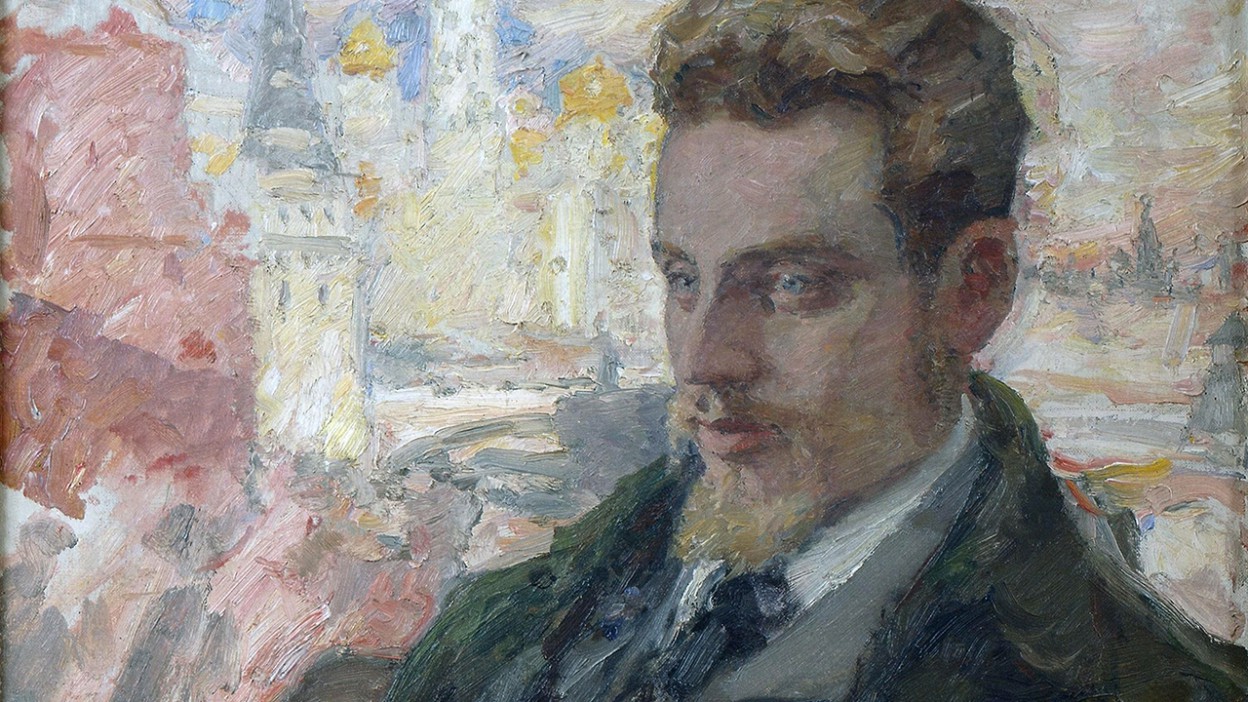
Portrait of Rainer Maria Rilke, 1928, by Leonid Pasternak

For Rilke’s own life and work, the key meeting was with Lou Andreas-Salomé in May 1897. Lou changed his handwriting and his name (from René to Rainer), but it was the confidence and groundedness in the world that she brought to his life that pushed his art “closer to the details of lived experience”. Rilke himself wrote: “The world lost its cloudiness [. . .] I learnt a simplicity, learnt slowly and laboriously how simple everything is, and I gained the maturity to talk of simple things”. Lou’s influence can be seen in the lecture he gave in Prague in 1898, where he distances himself from Symbolism and aestheticism (the dominant strands of ‘modern poetry’ at the turn of the century) to argue that the artist must not be “shut out of the great channel of life”, but must evoke the constant dialogue between the individual and things, “the strange coincidences between inner and outer out of which experience is made”. As Louth says, this is an early statement of the theme which will occupy his whole life.

Here is a brief poem – actually naming Lou and indicating her influence in persuading Rilke of the sacredness of the ordinary. It went unpublished for years, but was part of Rilke’s sequence called To Celebrate You (Dir zur Feier):

The rain runs its chilly fingers

down our windows, unseeing;                             

we lean back in deep armchairs

and listen, as if the quiet hours

dripped from a weary mill all evening.

x

And then Lou speaks. Our souls incline

one to another. Even cut flowers

at the window nod their topmost bloom

and we are completely at home,

here in this tranquil, white house.

For Rilke, the successful poem is a space in which the mysteries of things and personal confession are both explored, or revealed, simultaneously. Louth argues that, from the outset, Rilke’s view of this was always positive: “there is no unnerving consciousness of the self ’s arbitrary dependence on chance encounters with the outside world”, but equally, there is “no doubt about the existence of an underlying unity to which the poet has access”. What he feared was ‘the interpreted world’ (‘der gedeuteten Welt’), a world view shorn of all mystery, a perspective that perhaps most of us inhabit, a view in which language has become dominantly instrumental, “narrowing our vision so that life appears cut and dried without any possibility of the unknown and the unknowable”. Louth explains what readers of Rilke value in his work: “poetic language, as he understands it, is precisely a way of talking that avoids directness and allows the mutability of experience and the mystery of the world to be expressed. It releases rather than limits possibility”. Beyond this stands what Rilke might have meant by the term ‘God’. ‘He’ is “an experience of totality, life felt as a whole, in which self and other are not distinct or momentarily lose their distinctness”.

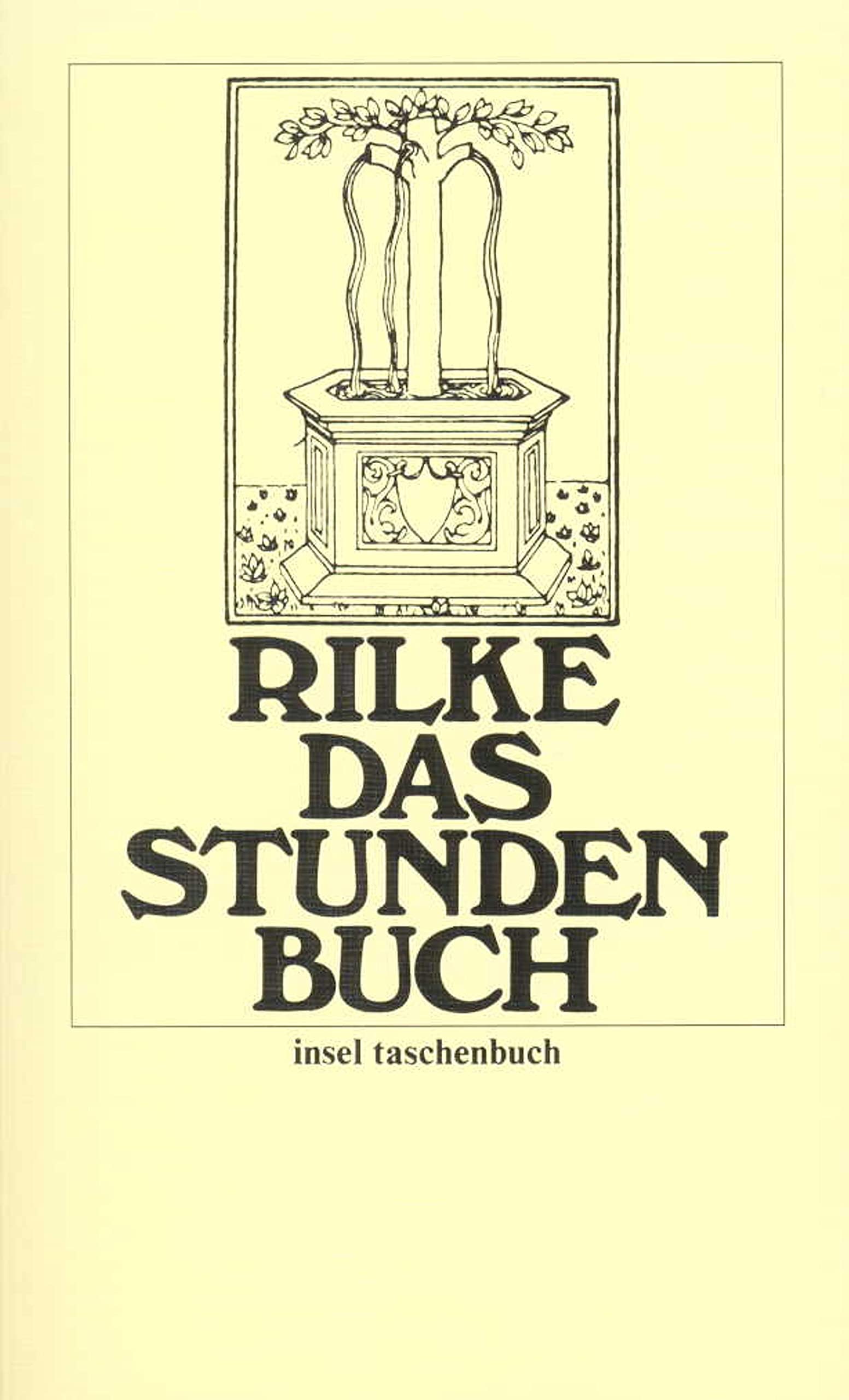
Here is my new translation of an early poem from The Book of Hours (Das Stundenbuch) in which Rilke is developing these ideas:

You, the darkness from which I came,

I love you more than the flame

scoring the world’s edge

with a glimmer

upon some sphere,

beyond which no-one has more knowledge.

x

Yet the darkness binds everything into itself:

all forms, flames, creatures, myself,

it seizes on them,

all powers, everything human . . .

x

And it may be: there is an immense might

stirring nearby –

x

I believe in the night.

It is in part because the enemy of mystery is language (too casually used) that poetry (constructed from language more carefully used) has an advantage over other art forms like painting. There’s an irony here, of course, because Rilke learned so much from other workers in the fine arts. Most know about the debt he owed to Rodin and Cezanne, but Louth argues Rilke’s journey towards the poetics of the New Poems began in the period he resided in the artists’ community in Germany at Worpswede. A lot of his thinking there concerned images of man and landscape. For the majority of the time, humans and nature live “side-by-side with hardly any knowledge of one another” and it is in the ‘as if’ of the work of art that they can be brought closer, into a more conscious relation. But because a poem works through time, such a correspondence is acknowledged as “something one traverses and gains knowledge of but cannot hold onto”.

Part 2 of this review coming next week…..