Jeremy Reed’s ‘Collusive Strangers: new selected poems’ (1979-2016) reviewed

An edited (shorter) version of this review first appeared in Poetry Salzberg Review in June 2025. Many thanks to the editor, Wolfgang Görtschacher, for commissioning the writing of it.
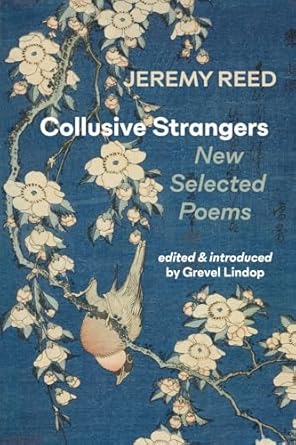
As the editor, Grevel Lindop, says in his Introduction to Collusive Strangers: New Selected Poems (Shearsman Books, 2024), the literary world has not taken enough notice of the remarkable oeuvre of Jeremy Reed. Many of his recent collections have appeared without much, if any, critical notice, so it’s to be hoped that this substantial new selection, from 1979 -2016, will bring this misfit-poet’s work back to more general attention. The problem is that the protean Reed fits no pigeonhole, plus the fact that he’s been astonishingly prolific. Intensity of perception and a phenomenal dynamism of language and creativity are his hallmarks, and he matches the best in nature poetry (Clare and Hughes), the decadent, urban flaneur (Baudelaire), then writes as Symbolist and Surrealist (Gascoyne), pursues sci-fi, focuses on pop and fashion, next becomes a portraitist and moving elegist. Even given these 300 pages, Reed – a sometime Peter Pan now into his 70’s – continues to be elusive. Compared to the prolific poet/novelist John Burnside, the difference is clear: we all knew what the brilliant, much-missed John was up to. With Reed, we are endlessly being caught by surprise.

Even Reed’s earliest work arrived fully formed. In the late 1970s and early 1980s, the urban, neurasthenic wanderer appears in ‘Claustrophobia (Kings Cross)’, the narrator’s need being ‘so strong it might involve the police’. In contrast, ‘Dwight’s Brother’ is an early stanzaic, sci-fi piece, a character from the future obsessed with Manson’s and Nixon’s careers, and ‘the monomania that burns planets’. And the magnificent ‘John Clare’s Journal’ ventriloquises the nature poet’s concerns for the natural world of Helpston, his stumbling literary repute, and fear for the future of his children, ‘laid / out as corpses’. Reed’s ambition is clear from the start, and in a poem like ‘Visit to George Barker’ he evidently empathises with the older poet’s withdrawal and seclusion, his writing contemporaries being harshly judged for a lack of ambition as ‘poets whose very aim is minimal / gesture, earning [Barker’s] dismissal’.
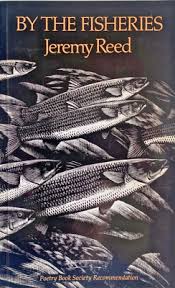
My own first acquaintance with Reed’s writing was in the two volumes from Cape in 1984/5, By the Fisheries and Nero, when James Lasdun edited him. These particularly highlighted the Nature poems, for example ‘Conger’ which outdid Ted Hughes: ‘They’ll shave a finger off with precision, / clean as a horse bite, or close round a hand / and leave it as taut gristle strung on bone.’ In a quieter poem, the narrator is fishing in a harbour, near a ‘desalination plant’, the tautly strung reactions of a shoal of mullet seemingly reflected in the fisherman’s own alertness and nerves (‘By the Fisheries’). ‘Spider Fire’ plays brilliantly with perspectives as every sort of tiny beast and insect flees a wildfire, while the narrator, at a distance, observes ‘a black hoop / ironed into the shire’. Though the first-person pronoun recurs in many poems, Reed is usually not much interested in self-revelation. One wonders, if he was/had been, he might be more widely appreciated, because it’s not that he can’t do it. ‘Visiting Hours’, for example, is enough to make a grown wo/man weep as the narrator visits his father in hospital, economical with the truth that this is ‘terminal’, the child compelled to play the father, the father, ‘like a diver gone on down // to find an exit that was always there, / but never used’. In characteristic ABCB quatrains, ‘Changes’ perhaps records the poet’s re-visiting Jersey and a brother, or boyhood friend, who stayed behind as a farmer, both recognising ‘our youth survives, the present is a gap’. And Lindop includes two remarkable poems from the Nineties collection, in which we seem to get close to Reed’s own autobiographical difficulties, when personal survival seems ‘to be the question’ (‘Samaritans’), and, in ‘Prayer’, Reed addresses a divinity of an uncertain variety, pleading for illumination, for help, a hearing, a pointing of a way out, from guilt, dread, self-injury, poverty, ‘the unappeasable, involuntary / inheritance of lucklessness’.
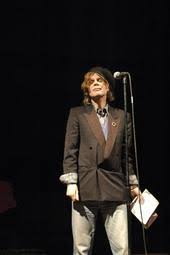
But Reed deals with topics, rather than ‘issues’, and his work is descriptive in character, never preachy or judgemental, so he seldom offers us his ‘views’. The work is driven by his ‘curiosity’, which both ‘holds us to life and feeds us to the flame’ (‘Moth-Trapper’). His praise of the artist, in ‘Cezanne’, is revealing of his fascination for the ‘ordinary’ and for the shared knowledge that ‘the beautiful / is inherent in all that lives, / and once externalised in its true form, / remains as that’. Over and over again, Reed captures – hence externalises – the true form of things in the colourful, vigorous, unblinking poems selected here. And as the millennium approached, Reed extended his range even further towards ‘all that lives’. There are uncharacteristic political poems (Tony Blair is a particular target), but Reed also writes of the experience of AIDS, and with a Baudelairean dwelling on sexuality, in poems like ‘Transsexual’ and ‘Brothels’, and is drawn closer to popular culture, its fashions, music, and iconic figures. But many of the poems on Madonna, Billie Holiday, Elvis and The Rolling Stones drift to looser forms of summary and the decade from 1993 to the early 2000s contains less brilliant work, though 2006’s Orange Sunshine with its evocations of 1960s London marks a return to form.
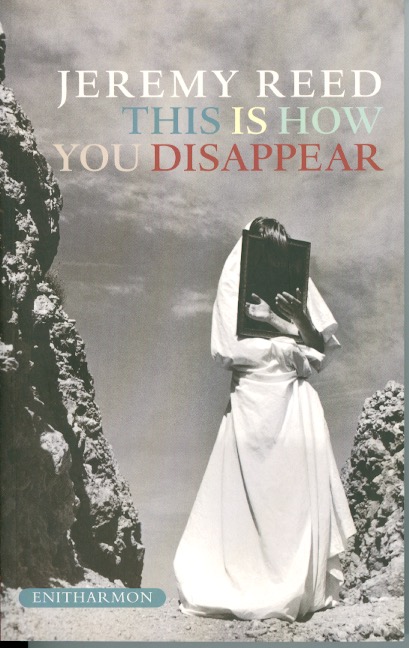
Reed as elegist, as in This Is How You Disappear (Enitharmon Press, 2007), was perhaps unexpected, but poems like ‘Paula Stratton’ and ‘John Berger’ (not the art critic) must rate amongst the finest in that genre produced in the last 100 years. The honesty, attention to detail, the empathy extended to his subjects (Stratton was a drug addict; Berger a difficult Jersey friend and Nazi-collaborator), and the apparent ease and beauty of the writing, mean these poems ought to have been anthologised everywhere. The elegiac note is hardly surprising as Reed moves through his seventh decade and poems about socks, potted plants, tea, honey, and cupcakes seem to mark shifts in focus though Reed remains true to his repeated maxim that ‘everything I see [is] poetry’ (‘London Flowers’). The poems retain the vigour and speed that he admires in Plath’s work: ‘her fast ball imagery / on speed-trajectories [. . .] her plugged-in dare-all energies’ (‘Re-reading Sylvia Plath’). As he puts it in an extract from ‘White Bear       and Francis Bacon’, Reed has remained true to his early ambitions ‘to kick poetry into near sci-fi / [. . .] like dirty-bombing the dictionary into my face’ and there are thrills to be had by any reader on every one of these 300 pages in which Reed makes so many contemporary poets look sluggish, mired in virtue signalling, lumbering in form, and monotone compared to his vivid technicolours.

Here is the whole of ‘Elegy for a Polka Dot Shirt’ from Orange Sunshine (2006):

Unreconstructed 60s
ostentation snowed on blue
labelled Jacques Fath, tailored fit,
fished from Retro on a simmmery
cloud hung-over August day,
bought for pop connotations –
high collar with flouncy points,
cotton married to the skin.
Medium size:
              38 cm:
structured for a defined waist
sexless to the vanity
of ownership.
Affordable at £15,
the item begged me to retrieve
its showy staginess.
             Outside, airless haze,
W11 backpacking crowds
random like footage spilled
into a documentary.

Later I tore a fragile seam
tracking towards left underarm,
the fissure sounding like hot oil
pronouncing itself in a pan.
The tear backtracked through history
to the anonymous wearer,
who bought sensation, sold it on
into a chain, the onion skin
thinning from use;
              the scar re-sewn,
but evident, a little glitch
caught in the fabric like a blues
lament,
the singer head-bowed on a stool,
cooking up trouble, while the club
tug at his vulnerability
and modulate applause from hot to cool.

Greedy alpha-creatures: the poetry of Ulrike Almut Sandig

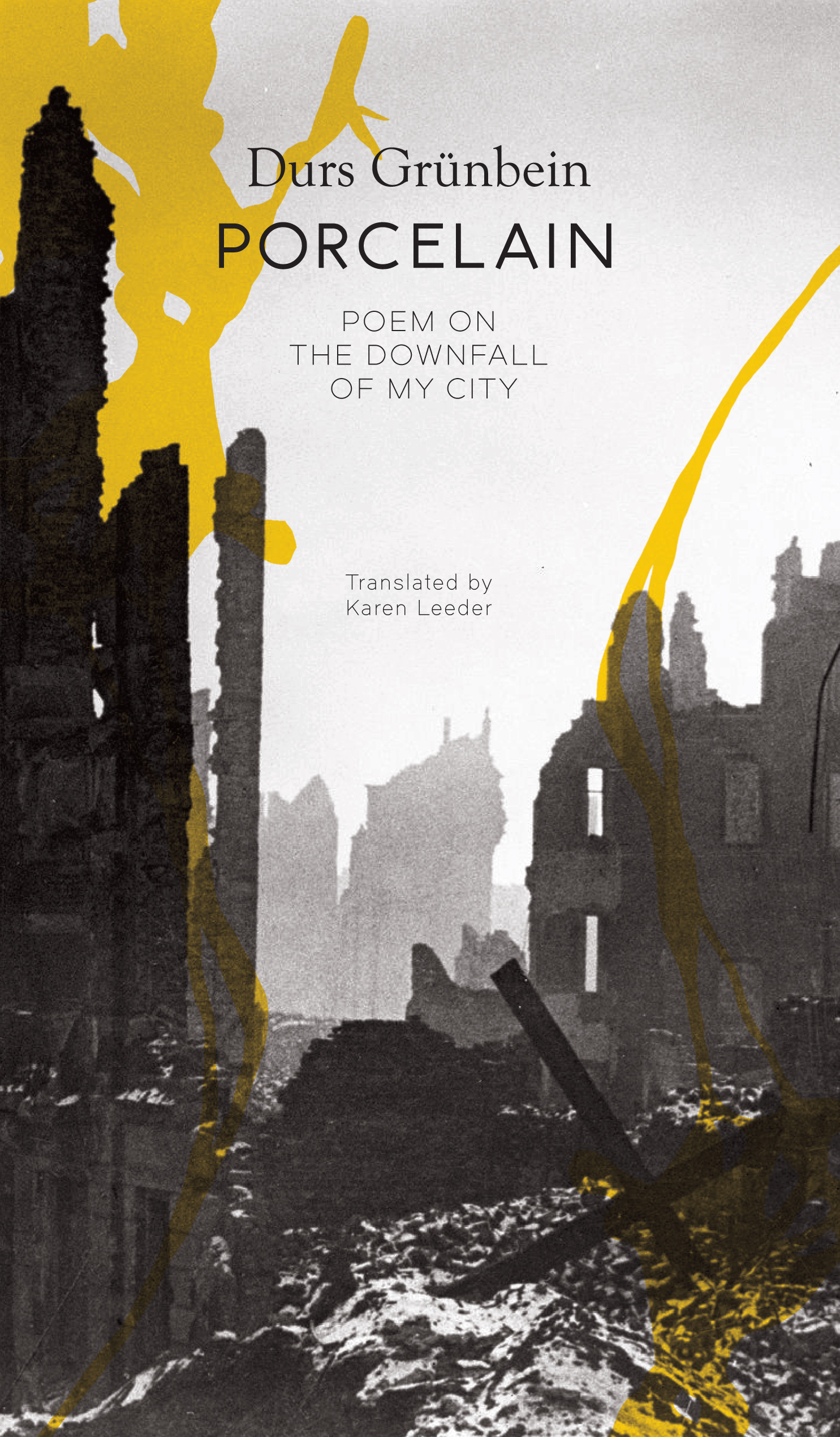
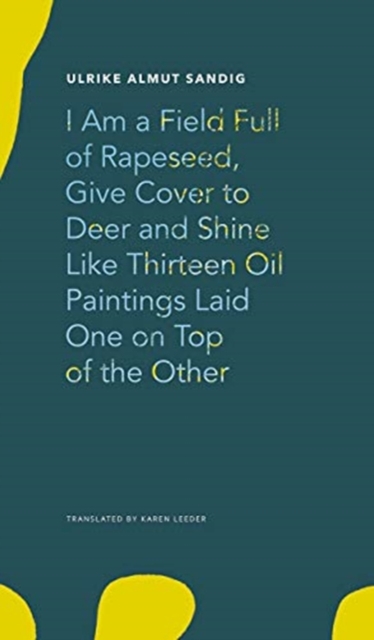
I’m shocked to realise that it is a full year since I posted my review of the stunning long poem, Porcelain, by the contemporary German poet, Durs Grünbein, in Karen Leeder’s equally impressive translation (Seagull Books, 2020). That review was originally commissioned for, and published in, Patricia McCarthy’s penultimate issue of Agenda (those who follow such things will know that Patricia has handed over the reins of the magazine to John Burnside who takes over with the resources of St Andrews behind him). In its original incarnation, the review was paired with my comments on another contemporary German poet’s work (again in Karen Leeder’s translation): this was Ulrike Almut Sandig’s 2016 collection, I Am a Field Full of Rapeseed, Give Cover to Deer and Shine Like Thirteen Oil Paintings Laid One on Top of the Other (Seagull, 2020). I am now posting my Sandig review as well, in part because I will be appearing with both Karen and Ulrike at the Ledbury Poetry Festival in a few days time. We will be talking about Rainer Maria Rilke’s great sequence, Duino Elegies (1923) as part of Peter Florence’s Dead Poets Society series. If you are in or around Ledbury on the morning of Saturday July 7th, do come along. Here’s the review . . .

The eponymous figure from Grünbein’s sequence’s 11th poem,‘Hans im Glück’, draws on one of the stories in The Children’s and Household Tales of the Brothers Grimm (1812). In the original, Hans has anything of value taken from him, bit by bit, yet he remains optimistic, refusing to acknowledge reality. Within the context of Porcelain, Grunbein treats this is as an additional image of the myth of the city of Dresden as undeserving victim. Interestingly, the same figure appears in Ulrike Almut Sandig’s collection, but her presentation of Hans is more poignant, less ironic, as even the boy’s language is stripped from him and he tries to write a letter to a loved one: “what are you up to? // + esp: where r u? / ru ru // ru”. In the context of I Am a Field Full of Rapeseed… , the boy might be thought of as a refugee, forcibly having his culture and language stripped from him, though one of the strengths of the poem is that it also works as an updated fairy tale, a little myth of loss and diminished presence with more universal application. Such re-purposing of several of Grimm’s tales is one of the most striking things about this collection. Sandig announces in another poem, “we find ourselves deep in the future of fairy tale” (‘the sweet porridge’) and she, like Angela Carter before her, redeploys the fairy tale’s surreal narratives, bold characterisation, its humour and violence, its symbolism and moral intensity for her own purposes.

The other striking aspect of Sandig’s writing here is her bold linguistic and formal choices. There is an absence of punctuation, capitalisation, of poem titles (bolded phrases mid-poem often serve as titles), of conventional forms, of a clear lyric ‘I’, of plainly pursued narratives. This results in radically shifting ground for the reader which can be both bewildering and exciting. Several poems indicate these choices are firmly rooted in issues of epistemology and ideas concerning personal identity. So, the opening poem, ‘from the wings’, ambitiously sets out a complete life from ‘screaming’ beginning to its ‘silent’ conclusion. The interim is portrayed as all fluidity, ‘a stream that flows into others / while others again flow into it’. As much as there is any discrete self to be identified, ‘I am made wholly of language’, and the individual is a creature ‘that must speak / to understand itself’. The self is also one of many ‘fragile / greedy alpha-creatures’ and understands itself to be, ultimately, ‘a fluid tuning fork I am my own / song’. In the same vein, the book closes with ‘where I am now’, which sets the self metaphorically in some remote Arctic research station, a self that is at the same time a woman swimming in a municipal pool, moving freestyle through the water, ‘parting the water before me’, in an image of self-creation and open-ended exploration that, to some, will recall Eliot’s ‘Little Gidding’: “We shall not cease from exploration”.

This is, as it were, the metaphysical background to Sandig’s vision and it gives rise to poems like ‘I am the shadow for you to hide beneath’ in which the narrative voice celebrates just such fluidity of identity in an address to “friends”/readers that has the quality of Whitman’s “I contain multitudes” (Song of Myself, #51), though with a good deal more anxiety: “every morning I get up and don’t have a clue: / is it me, Almut? Ulrike?” This is also the poem containing the book’s full title, “I am a field full of rapeseed, give cover to deer / and shine like thirteen oil paintings laid one on top / of the other” and the poem goes on, in the name of radical fluidity, the I as landscape, huntress, a text that begins to unravel just as it reaches an end, a soldier, a girl, a woman. Elsewhere, ‘to be wood in a table’, as the title suggests, continues the theme: “not to be old and not to be young, but old / enough to be several things at once”. This includes the Rilkean desire for “simple things like ‘tree’” as well as the freedom of having no name, “no longer to say: ‘I am’”.

Ulrike Almut Sandig

Such poems are both celebratory in tone, but also alertly defensive. The reason is that there are forces abroad, ways of seeing and their associated politics that offer counter narratives. So, the expected calm of ‘lullaby for all those’ is really a call to arms, or at least a call to resist. It is “for all / those who put up a fight, when somebody / says: lights out, no more talking”. In a superb passage, once again Leeder’s translation of the German is brilliant, the forces of “DARKNESS” begin to emerge by implication:

we’re waiting for two

or three of those good, humming dreams

four peace treaties, five apples in deep sleep

we are waiting for six cathedrals and for

those seven fat cows, eight quiet hours

full of sleep, we’re waiting for nine friends

gone missing. we’re counting our fingers.

x

we’re still resisting. we won’t go to sleep.

What is being resisted are the forces of repression, of fixity not fluidity, narrowness not breadth, fundamentalist conviction not open-endedness. Sandig places a poem in the centre of the book which draws heavily on statements made by Pegida, Germany’s populist, right wing, anti-immigration party. The text is full of rallying calls expressing a faith in clarity, mastery, resolution and purification: ‘from now on / nothing will stand in our way, no language / we cannot master, we will strike out mistakes / and shake each other’s freshly washed hands”. One of the Grimm’s sourced poems, a sister speaking to her brother, presents a narrative of the boy’s development into a threatening “hunter”. Such a poem looks both ways towards the violence of neo-Nazis, but also towards the violent radicalisation of young jihadists.

Sandig’s poems dealing more obviously with issues of state power, war, migration and displacement (especially hot topics in Germany, a country in the Schengen area of Europe and seen by some as an ideal destination – see the poem ‘tale of the land of milk and honey’) are particularly impressive. The ‘ballad of the abolition of night’ draws on details of systematic torture prosecuted by the USA, “a state lagging somewhat behind / on the historical timeline of our kind”. ‘instructions for flying’ revises statements made in leaflets distributed at the Idomeni refugee camp in 2016. The same camp, close to the borders of Greece, is the focus of another poem which expresses the poet’s “moral dismay”. The disquiet is partly at her own nation’s equivocations about the refugee crisis (what if there’s not a single / jot of good Deutsch to be found in this / Land of mine”) but also personally, at finding rhymes but ultimately doing “sweet FA”.

With Grunbein, Sandig is expressing the moral complexity in the face of man’s inhumanity to man as much as any simplistic moral dismay. This is, in part, the subject of some of the Grimm poems (interestingly, in German, the word ‘grimm’ means ‘anger, ire’). ‘Grimm’ itself opens optimistically, messages being scribbled onto raw eggs, but increasing urgency leads to extra pressure and the eggs break. Still, like Hans in luck, the narrator seems “unfazed in / the crumbling ruins” though the final image is only of eggs smashed, “a well-nigh limitless / supply of fragments and rage most grim”. But Sandig is an optimist, I think. Though couched in conditionals, ‘news from the German language, 2026AD’ works hard to portray a future of more settled diversity (Iraqi dates, Turkish honey, Syrian poetry). The opposing prospect is relegated to a parenthesis – if quite a long one. But hope has the final word: “if it works, we, that’s all of you and me, / will sing a lullaby, rhyme in unison [. . .] but more than that, we will be”.

Review: Tamar Yoseloff’s New and Selected Poems (2015)

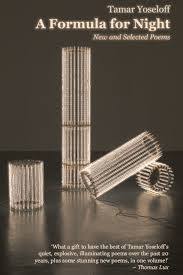
Last week, I went to the London launch of Tamar Yoseloff’s new and selected poems, A Formula for Night, published by Seren. I have reviewed a couple of her earlier collections and she asked me to contribute a blurb to The City with Horns (Salt, 2011). We’ve known each other for many years and it has been interesting to see her work develop. What follows is a review of the new book, collaged together from new and old thoughts.

imgres

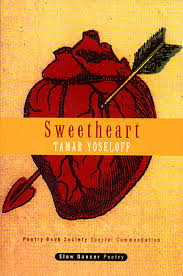
Tamar Yoseloff’s first book, Sweetheart, was published by Slow Dancer Press in 1998. The new Seren collection is dedicated to Lauretta Yoseloff, the poet’s mother, and right from the outset, in ‘Selfridges’ for example, she is a powerfully evoked figure. Here, she leads her young daughter around the up-market department store, brisk and efficient. As often later, the daughter’s priorities lie elsewhere, she drifts away, gets lost, ends standing mesmerized by the butcher’s counter: “lambs’ kidneys, calves’ livers, / sweetbreads, hearts”. The moment becomes a blood-stained Wordsworthian spot of time as even years later the child recalls the meat, “indelicate, hearty, more real laid out there /  than anything that beat inside me”. The mother’s preference for delicacy and propriety and her daughter’s haunting sense of inadequacy and a fascination with death are articulated for the first, but by no means the last, time.

imgres

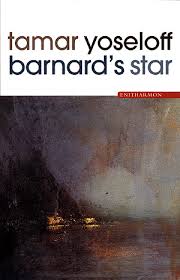
A second collection, Barnard’s Star (Enitharmon, 2004) contained many successful pieces presided over by the Robert Lowell of Life Studies. This went beyond the drawing on personal material (often from the poet’s American childhood), to the seemingly casual forms of the poems, the telling details, the tentative observer, the reined-in emotional tone, the particulars implying a wider social malaise. In ‘The Atlantic at Asbury Park’, the narrator re-visits a childhood scene now dilapidated (like Lowell’s Boston aquarium). Being told that “Annie and I would sit cross legged / in the bandstand, making plans” is as near as we are allowed to the emotional crux of the poem. Youth, ambition, friendship – Yoseloff’s vision is a mostly melancholic one as now only “the ocean is the same, / black for miles, white caps, grey sky”.

In the poem ‘Partobar’ (sadly not included in the new selection), the narrator rides the horse of that name, watched by an unsympathetic instructor and “the other girls . . . their blonde ponytails / neat down their backs, their jackets perfect”. The social as well as personal battle-lines are effectively drawn up and the poem proceeds in utterly convincing, tangible detail: “I hit the ground, / dirt and blood in my mouth, my head like a bell clap / inside the hard hat”. The sense of ignominy is powerfully real – and frighteningly permanent. Even as an adult, she watches “braver girls trot around the field, / chins up, asses out”. She sees them at parties, with men who “whinny” their approval, while the narrator remains, re-living her failure, still daunted by the explicitly male horse, “my breasts like acorns beneath my vest”.

imgres

A series of poems about her mother conjures a ghostly, curiously unphysical maternal image through the enumeration of clothes and other possessions. In ‘The Delaware and Raritan Canal’ she strides once more ahead of her daughter along the canal. There is no conventional closeness or emotional warmth; the reader gets the impression of a demanding, fierce maternal personality. The final stanza makes the daughter’s admiration clear: “But when she hits her stride, she could walk / all the way to the sea, arms sailing / forward, her course certain”. Yet even here the demands of the heart, of the human seem deflected as she sweeps past “the houses of ten thousand people”.

images

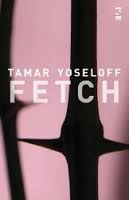
In Tamar Yoseloff’s first book with Salt, Fetch, a fetch was defined as a stratagem by which a thing is indirectly brought to pass and (the more obscure meaning of the word) a wraith or double. Using direct and punchy quatrains, in ‘Fetch’ poems scattered throughout the book (but collected together in the new selection), the narrator casts herself as a stay-at-home girl while sending her double out “into the cold dark night”. The fetch cruises bars and is ordered to trail an unidentified man and later sleeps with him. This stratagem seems to allow for the playing out of the narrator’s illicit desires, though the double runs out of control and develops her own independence, leaving the narrator lonely, then resentful, finally murderous. These racy, blunt narratives are thrilling and the exploration of female freedom, restraint and taboo makes for vivid, exciting reading.

Salt’s blurb emphasised the dark, edgy, sexy qualities of Yoseloff’s work and other pieces such as ‘Silk’ and ‘Tiger’ and ‘The Dentist’ reinforce this impression, though the latter is as much a study in masculine menace as eroticism:

He is trying not to breathe, and I am trying

not to swallow, as my saliva rises around his

finger, a foreign body. He inserts his mirror

to examine my every crevice . . .

She also continues to experiment in Fetch with a more allusive, imagistic style at its most effective in the sequence ‘The Firing’. Inspired by Julian Stair’s funerary pieces, it opens breathily once again:

I am a vessel, open

to your body. If only you could

move through me, enter

the spleen, the coiled intestine . . .

The sequence moves seamlessly and a little shockingly from passionate flesh to flesh and bone as it arrives at the collapse of a hill-top cemetery: “the graves / fall in on themselves, / marble crumbles to dust. // loved ones tumble / into each others arms, their bones / knit and form a whole”.

imgres

This apocalyptic darkness reflects an essential part of Yoseloff’s gift. She places an impressive series of poems at the beginning of Fetch that reveals preoccupations with time, loss, the inability to hold the moment. Experience is always leaking, objects losing their definition (‘Black Water’); monastic illumination only points up the fact that words fail to hold “that moment” (‘Illumination’). If we look behind us, there is shadow, “that / darkness of ourselves born / of days when the sun was blinding” (‘Shadow’). The culmination of these themes is the sequence ‘Marks’. Pushing the imagistic fragmentation close to its limits, the narrative echoes aspects of John Burnside’s work of the early 1990s. Here is the whole of part 3:

A finger blades a line

straight            from throat to womb

peel back my skin        reveal

the workhouse            of heart and lung

blood

slogging           through my veins

my discontented bones

It is this tension between the sassy and the sepulchral that is so interesting in the book. Poets create out of the matrix of their own nature and both elements are integral to Yoseloff’s vision. The choice of the concluding poem of this collection suggests she is clear-eyed on such matters: ‘The Sea at Aberystwyth’ is magnificent. The narrative voice embraces both the impersonal, heart-breaking cry “Oh rain, wash them clean” as well as humour about Norwegian tourists soaked by Welsh rain. The book closes with an unfrequented Indian restaurant as an image of metaphysical bleakness:

What we want

lies broken on the shore, what we can’t have

stays black on the horizon;

the moon of the zebra crossing

flashing for no one.

imgres

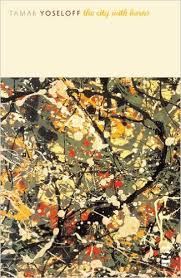
The City with Horns continued to break new ground with poems that flow and rush and fizz in ways reminiscent of Jackson Pollock’s paintings and his declaration that the good artist must paint what he or she is. From the turmoil of Pollock’s life, Yoseloff powerfully re-creates a vision in which everything knots together, a way of seeing that is intoxicated by embracing “the gift of the street, / the glare of chaos”. But the horns of this next collection are profoundly ambivalent. If the central sequence (responding to Pollock’s life and work) overflows with plenty, then the outer sections of the triptych speak of emptiness and pain in a poetic voice more familiar, curbed and astringent. Here, Yoseloff continues to explore territory she has made her own in earlier collections: snap-shots and “little fables” of up-rooted individuals whose tokens, found objects and souvenirs struggle towards articulacy just as the concrete in her cityscape possesses “no lyric dimensions” (‘Concrete’).

The more recent poems in A Formula for Night continue to offer few consolations. But the pay back for Yoseloff’s reader lies in the works chastening honesty, its ability to evoke a sensibility that feels never less than modern and – a notable achievement paradoxically – not immediately recognisable as the work of a woman. ‘Lace’ and ‘Swimmer of Lethe’ continue the preoccupation with death, treated now so directly that the haunting of Plath’s work is even more evident. ‘Construction’ paints a cityscape in which “the wrecking ball / opens another new vista” and is undeceived in counting the “[m]inutes to trash”. ‘Ruin’ invents a new poetic form in which a text is gradually shot to pieces as phrases, even letters, are gradually edited out, enacting the very process of ruination. Yoseloff perhaps finds her heraldic device in the rampaging habits of the ‘Knotweed’ with its “line of destruction // that moles its way beneath foundations”. Again echoing Plath’s tone of address to her mushrooms, Yoseloff admires the plant’s “calling: the felling / of our failing structures”.

images

There are final poems here too about the mother figure. Her death in ‘Clear Water’ is movingly contrasted to another hospital visitor reading Seamus Heaney’s poem ‘Anahorish’ aloud in the ward. But even now, facing last things, the attentions of mother and daughter are at variance. The daughter knows and responds to the poetry; the mother sleeps through the whole incident and dies the following day. True to her vision, the poet notes Heaney’s death a few months later; she expresses an on-going concern about the other patient, “if he made it”; but the poem ends with nothing more said about the author’s mother. In ‘Skull’ the mother’s dead body is regarded as “a hollow case, all the life pulled out”. If this is shocking, it also represents a heroic devotion to telling the truth as it is experienced. A Formula for Night is a major collection and career summary and really ought to be both on your wish list and on prize shortlists in the coming 12 months.