This review of Durs Grünbein’s stunning long poem, Porcelain, tr. Karen Leeder (Seagull Books, 2020) first appeared in a recent issue of Agenda. Leeder’s clever, formal, utterly sympathetic translation has since rightly been awarded the 2021 Schlegel-Tieck Translation Prize by the Society of Authors.
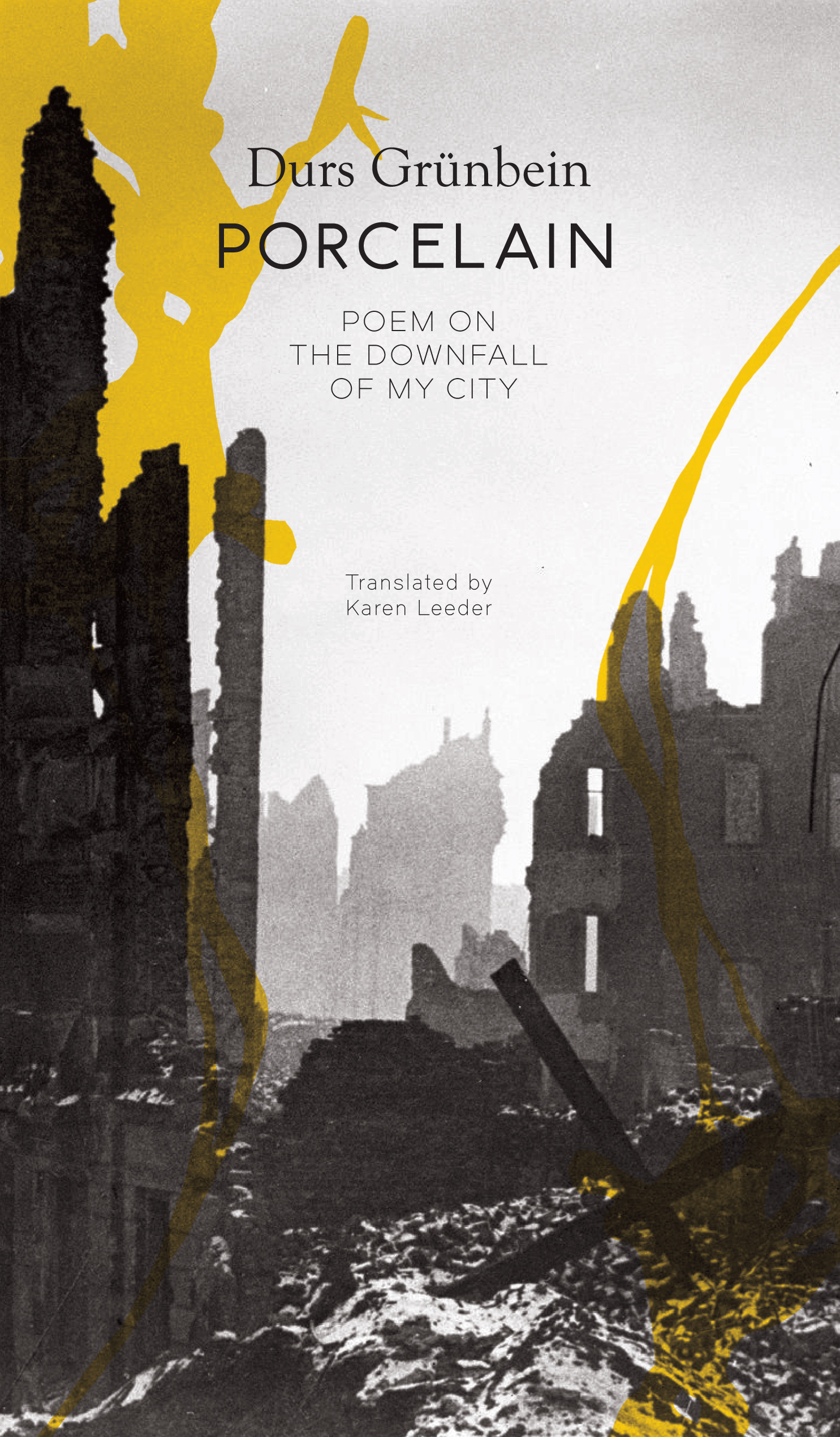
For a writer who has published over 30 books of poetry and prose in his native Germany, we have had too little of Durs Grünbein in English. Michael Hofmann‘s Ashes for Breakfast (Faber, 2005) introduced some of the earlier work and described Grünbein as possessed of melancholia, amplitude, a love of Brodsky, a love of the Classics, plus wide-ranging interests in medicine, neuroscience, contemporary art and metaphysics. John Ashbery praised Grünbein, identifying his subject as “this life, so useless, so rich” and the challenge to any translator is precisely this breadth and ambition. Happily, Karen Leeder is proving to be a really fine conduit for Grünbein’s work and here she triumphantly tackles his 2005 sequence of poems about the firebombing of his hometown, Dresden, by American and British planes in February 1945.
Porcelain is a sequence of 49 poems, 10 lines each, rhymed and grounded in Classical metre and given an air of Classical elegy by its subtitle, ‘Poem on the Downfall of My City’ (‘Poem vom Untergang meiner Stadt’). But if resolution, consolation or summing-up might be expected, this is, definitively, not what we get. The title, of course, refers to the Meissen pottery which, from the eighteenth century on, brought Dresden its great wealth and fame. But it is also a pun on the poet to whom the sequence is dedicated: Paul Celan. In Celan’s poem ‘Your eyes embraced’ there is an effort to swallow the ashes of genocide but they return to the throat as ‘Ash- / hiccups’, an image repeated in Grünbein’s opening poem: “It comes back like hiccups: elegy”. The sequence does indeed hiccup in the sense of its jerky shifts of tone, its multi-faceted images of Grunbein himself and in its close to choking articulation of the horrors of the Dresden bombing.

A self-conscious awkwardness or self-questioning is clear from the start: “Why complain, Johnny-come-lately? Dresden was long gone / when your little light first appeared”. Grünbein was born seventeen years after the bombing and accepts he cannot ‘witness’ the event in any simple way. But personal details do surface in the sequence such as in poem 8 where the young boy grows familiar with the still evident urban destruction: “proud and mute . . . the ravaged city”. He senses something of “that glory passed away” but can hardly know “the things [his] mother saw, / scarcely five years old” (poem 10). Later poems remember moments when his mother’s doll was in danger of the flames (“Flames as high as houses sucked the air along the streets”), but was rescued, unscathed, “or that is what they say” (poems 40/41). Leeder explains in her Introduction that Grünbein has been criticised in part for a sentimentality and this is perhaps such a moment. But the indication that this is reportage (family reportage at that) gives permission for sentiment and Grünbein is fully conscious of (and in control of) the massive swings in tone through the whole sequence. Poem 48 is one that might also lay itself open to charges of sentiment, focussing on a pair of lovers (Martha and Heinrich) seemingly caught up in the devastation: “Kids, the pair of you, first kisses in the thick of war, / until you met that night you’d grown up in uniform”. But Grünbein works repeatedly through allusiveness and intertextuality, so this Romeo and Juliet trope is hardened and complicated when we hear that, not only was the German air defence’s grid reference for Dresden code-named ‘Martha-Heinrich 8’, but also that both names recall characters in Goethe’s Faust.
In poem 38, Grünbein seems equally aware that some of his images of Dresden after the bombing might be open to the same criticism of a hyper-emotional tone. “Five long weeks upon the Altmarkt square, the horses / scratched the straw and watched the griddled corpses / burn. Mawkish? Ach, give over, late-born soul”. As this example shows, the sequence does confront the horrors unleashed on the city as in poem 22: “Are those people popping like chestnuts between / the gutted trams?” But looked at more carefully, even this grisly observation is nominally from the perspective of a stone angel on the cathedral roof. It is this continual innovation and manipulation of perspective that is important to the poems’ purpose and how we should read them. One important perspective Grünbein explores is the victim-narrative that predominated in thinking about the event in post-war East Germany and more recently. One aspect of this is the placing of the Dresden bombing in the historical context of German bombing of Warsaw in 1944 and the German’s systematic persecution of the Jews. Dresden’s fate did not rise ex nihilo. This latter myth, Grünbein embodies in the eroticisation of the bombing – the city as defenceless virgin – as in poem 45’s image of the city and the Elbe: “River like a sash of silver draped round her hips / enticing in the moonlight”.

From such examples, it’s easy to see why Grünbein’s own position on the bombing has been vociferously discussed and questioned. But he warns against using the destruction of the city as any kind of exemplum: “Let Dresden be. You won’t find what you are looking for” (poem 6). The reader understands he is also advising himself here, while, at the same time, acknowledging the human drive to interpret, to search for meaning, even in the most appalling events. The sequence’s treatment of Arthur ‘Bomber’ Harris, the RAF Commander-in-Chief during the bombing of Dresden, is interestingly equivocal. Poem 4 alludes almost invisibly to Harris’ comment on the Dresden bombing, when he suggested that objections to it were based on a sentimental image of the city as full of “German bands and Dresden shepherdesses” when, in reality, it was a Nazi munitions and transportation centre. In fact, Harris was carrying out orders from Winston Churchill: “No sweat, Arthur, you only did what you had to do” (poem 13). And in poem 23, Grünbein also notes that some more recent left-wingers in Germany have chanted ‘Thank you, Harris!’ in their efforts to question and counter more simplistic, victim-narrative commemorations of the event.
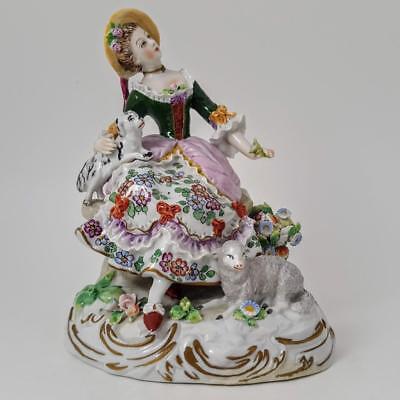
In such ways, Porcelain revels in its own pluralities while acknowledging and itself attempting to make some sense of an epitome of senseless destruction. The final line of the book plainly states the human need to avoid finality, the fall into fixity, yet accepts the compulsion to explain, to create meaning: “Changing places, times, dimensions as he goes—goes on—creating”. And behind all this stand those exquisite china objects, the ‘white gold’ that made the city rich and famous:
Falconers are there, vintners, nymphs with conch-shell horns,
frog-faced putti, figures riding seahorses and swans.
Groups of shepherdesses, lovely gardeners, beasts of lore . . .
Porcelain—most fragile thing”
The collision of Allied bombs and Dresden’s fragile porcelain lies at the heart of Grünbein’s poems. There was no contest, of course, though some pieces and many fragments remained and were perhaps repaired. Grünbein’s poems enact this process, collecting perspectives, often incongruous, even contradictory, but bringing them into relation with each other, not to make any definitive statement, but to hold up a mirror to us, to the recurrent tension between our need to create and our drive to destroy.
 David Pollard’s book is divided into three sections, one each on Parmigianino, Rembrandt and Caravaggio. Initially, Pollard presents a set of 15 self-declared “meditations” on a single work of art – Parmigianino’s ‘Self Portrait in a Convex Mirror’ (c. 1524). This is a bold move, given that John Ashbery did the same thing in 1974 and Pollard does explore ideas also found in Ashbery’s poem. Both writers are intrigued by a self-portrait painted onto a half-spherical, contoured surface to simulate a mirror such as was once used by barbers. The viewer gazes at an image of a mirror in which is reflected an image of the artist’s youthful and girlish face. It’s this sense of doubling images – an obvious questioning of what is real – that Pollard begins with. “You are a double-dealer” he declares, addressing the artist directly, though the language is quickly thickened and abstracted into a less than easy, philosophical, meditative style. It is the paradoxes that draw the poet: “you allow the doublings / inherent in your task to hide themselves / in open show, display art that / understands itself too well”. Indeed, this seems to be something of a definition of art for Pollard. “Let us be clear”, he says definitively, though the irony lies in the fact that such art asks questions about clarity precisely to destabilise it.
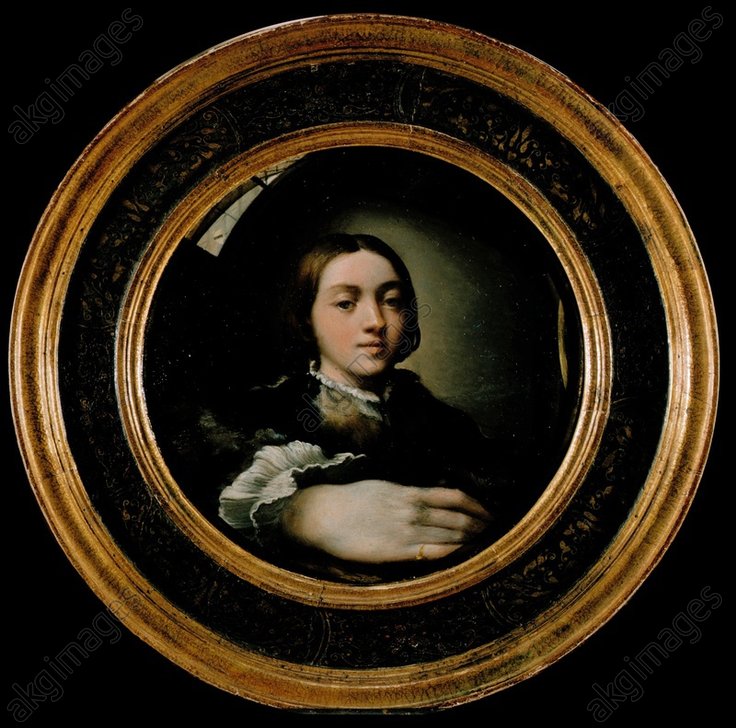 The 15 meditations are in free verse, the line endings often destabilising the sense, and they are lightly punctuated when I could have done with more conventional punctuation given the complex, involuted style. Pollard also likes to double up phrases, his second attempt often shifting ground or seeming propelled more by sound than sense. This is what the blurb calls Pollard’s “dense and febrile language” and it is fully self-conscious. In meditation 15, he observes that the artist’s paint is really “composed of almost nothing like words / that in their vanishings leave somewhat / of their meaning” – a ‘somewhat’ that falls well short of anything definitive. Of course, this again echoes Ashbery and appeals to our (post-)modern sensibility. Pollard images such a sense of loss with “a rustle of leaves among the winds / of autumn blowing in circles / back into seasons of the turning world”. He does not possess Ashbery’s originality of image, as here deploying the cliched autumnal leaves and then echoing Eliot’s “still point of the turning world”. Indeed, many poems are frequently allusive (particularly of Shakespearean phrases, Keats coming a close second) and for me this does not really work, the phrases striking as undigested shorthand for things that ought to be more freshly said.
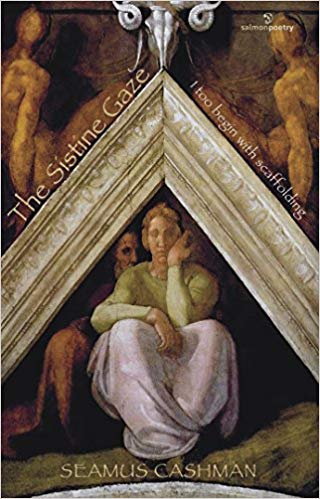 In fact, the woman is hardly given a voice and the substance of the sequence is dominated by the (male) artist’s reflections on his years-long task. He’s most often found “between this scaffold floor and ceiling”, complaining about his “craned neck”, pouring plaster, crushing pigments, enumerating at great length the qualities and shades of the paint he employs (Cashman risking an odd parody of a Dulux colour chart at times – “Variety is my clarity, / purity my colour power”). Later, we hear him complaining the plaster will not dry in the cold winter months. We even hear the artist reflecting on his own features, the famous “long white beard and beak-like nose”. These period and technical details work well, but Cashman’s Michelangelo sometimes also shades interestingly into a more future-aware voice, melding – I think – with the poet’s own voice. So he remarks: “Getting lost is not a condition men like me endure or venture on today. / All GPS and mobile interlinks enmesh our every step”. Later, a list of “everything there is” sweepingly includes “chair, man, woman; laptop or confession box”.
 Martyn Crucefix