How to Write a (Poetry) Blog

A provocative blog title perhaps but hard to resist sometimes – see point 2.18 later – but this is less generally instructional and more a prompt to self-reflection. Amazingly, it is a year this week since I started this blog. Never the same river twice, of course, but I thought it right to post a few reflections on how it’s gone so far. My intentions, changes, thoughts on and lessons learned – plus nine bits of Blog Wisdom picked up along the way.

imgres


  1. My original intentions

1.1  I always enjoy critical writing but chafe sometimes against waiting to be asked to review or the choice of review books I have been given, or word limits. My own place where I could be editor and reviewer seemed very attractive

1.2  I wanted to become familiar with the idea, techniques and impact of blogging as this seemed a form of cultural contribution that was of growing importance and I didn’t want to feel wholly left behind

1.3  I could pick out three vaguely-defined areas of blogging possibilities for myself: poetry, teaching, translation

1.4  I had been reviewing poetry books and writing about poetry writing for years in a variety of paper magazines prior to starting the blog. Part of my intention was to be able to post up some of these older pieces (where I still thought them relevant and worthwhile) so that they would be searchable on the web, hopefully preserving their lifetime

1.5  I can’t remember how I came across the WordPress system – probably by chance, or perhaps via another’s blog – but it seemed so user friendly that I thought even I might manage it (I’d had a few false starts trying to create a web page)

1.6  I understood intuitively and then found it out there as Blog Wisdom that regular posting is important and I set myself the task of a weekly post.

images

1.7  I was anxious before I got started about whether I would find things to write about on a weekly basis – I sort of hoped it would acquire a momentum of its own

1.8  I never intended the blog to be very personally revealing (though this is advised in the Blog Wisdom) – this was to be a place where I might discuss the art of poetry (and teaching literature and issues of translation) with myself and in the hope of drawing a response from others

1.9  On the other hand, I’d also been writing sections of autobiographical material in recent years and I vaguely  thought I might be able to post this up in experimental posts – something I was not likely to be asked to do by the usual journals and magazines

1.10  I thought the blog would contribute to my self-promotion – after all a writer is supposed to actually sell booksimages

  1. How the year unfolded

2.1  Having begun very tentatively with WordPress, it quickly became clear that I could easily create a full website using its simple tools – not merely a blogging site

2.2  I’d not been much of a blog follower before starting my own – since then I have enjoyed following others and not merely as a means of spying on the competition (though of course it’s not a competition)

imgres

2.3  I figured out how to tag posts to make the site more searchable by Google etc (the Blog Wisdom seems to be that no more than a dozen tags should be used – beyond that they become less effective – still a bit foggy on this)

2.4  I also figured how to Tweet a link to the blog posting and link to FaceBook and other blog sharing sites (also still a work in progress)

2.5  I had problems preserving stanza breaks as the WordPress system seemed to collapse everything down to standard line break widths once posted. Thank you, Josephine Corcoran for helping out with this one.

2.6  I have really enjoyed choosing a variety of images to decorate the blogs – and captioning some of them (once I’d worked out how to make a caption)

2.7  The Blog Wisdom has it that the more active you are on others’ blogs (liking and commenting etc) the more likely you are to get traffic back. I’m sure this is true and I’m sure I don’t do it enough. This could be a full time job in itself but I’m sure it would reap benefits if I did it

images

2.8  I thought I would post some of my own poems on the blog but in fact have not done much of this at all – these days the definition of ‘publication’ often includes even a personal blog and that may not be the best place for work to appear first. On a few occasions I’ve posted up already published work

2.9  The Blog Wisdom has it that embarking on a series of related posts is a good idea assuming that you might gather up an audience on the way, create expectations etc. I’ve had a go at this a couple of times. Jury’s out on this one

2.10  Fairly early on in the year I had the idea of recording briefly my own reading (mostly poetry related texts) and set up the What Have I Mostly Been Reading page. I’m updating this roughly every month and it has proved a page that people visit quite often. There is a temptation to make my brief comments less brief

2.11  I realised that what I was doing with the blog was journalism. Pretty obvious to most but it struck me forcibly as a different sort of writing with its own rules and I rather enjoyed the frequent deadlines

2.12  I also tried reviewing live poetry events that I attended and these seem to have proved quite popular – certainly there is not much of this sort of reviewing around and it’s good to record these ephemeral occasions in some way

Poetry-182-150x150[1]

2.13  The Blog Wisdom has it that blogs develop any kind of following slowly and that is true enough. But when even a few comments and likes start coming in there is a surprisingly immediate sense of a community. WordPress provides statistical analysis of visitors and views on a blog site and these also give some sense that what you are writing is not being wholly ignored (but see dangers later . . . )

2.14  The Blog Wisdom also has it that to associate posts with specific events, times of year, cultural events, prizes, other publications etc is a good thing. I’ve tried to do this with live event reviews, prize lists, magazine publications, book publications

2.15  As the year has gone on I have sadly found less room for blogging about the teaching of literature – largely because (as it turned out) I had plenty of pressing ideas in the other two areas of poetry and translation. I regret this

2.16  As the year has gone on, I’ve been more drawn than I expected towards reviewing new collections of poetry. I’m not sure about the wisdom of this, though it has proved quite popular

2.17  I posted one week on How Do You Judge a Poem which proved very popular and it struck me (as it has struck many publishers) that offering (or seeming to offer) instruction was a way of courting more hits

2.18  I see dangers (as 2.17 suggests) in the temptation to court more hits by naming blogs provocatively, like a journalistic headline or an advertiser. Blog Wisdom suggests this is exactly what one should be doing but I don’t feel comfortable with this

2.19  I see dangers also in the temptation to be wilfully controversial as Blog Wisdom also suggests one should be. But I don’t want to write a tabloid blog

images

2.20  I see dangers in getting obsessed by checking the blog stats several times a day. It’s like checking emails or phones in the same way. As someone once said, this is like opening the front door every few minutes to check whether the postman is coming. Get on with life

2.21  I see dangers of my life being taken over by blog writing and planning what to write. Rilke warned against critical writing of any kind sapping one’s strength and time for real creativity. Was he ever tempted to write a blog?

imgres

Results Are In: How Do You Judge a Poem? (2)

One of my most visited blogs in recent months was the provocatively titled How Do You Judge a Poem?, sparked by my judging the Torriano Poetry Competition 2015. The results are now in the public sphere and on the evening of Sunday 12th April, at the Torriano Meeting House in Camden, north London, many of the winners in the Competition gathered to share their poems.

All proceeds go towards funding the future work of the Torriano Meeting House and this year as there were no plans for winning and highly placed poems to appear in print, I thought I might grace this blog with them. The authors whose poems are included below have kindly given permission for them to appear and I have also included my own brief comments – all this in continuing pursuit of the vexed question of what it is that makes a good poem.

At the beginning of the awards evening I alluded to the sad news of the recent death of Swedish poet and Nobel prize-winner, Tomas Transtromer. In reading his work again in the last week or so, I was struck by this passage from his 1970 poem ‘The Open Window’ (in Robin Fulton’s translation). I thought it relevant to the evening as it starts in a familiar world, undergoes a mysterious transformation, all the while never losing sight of the need to keep our eyes open, our senses open. This for me is what poetry can do, must do perhaps, if we insist on setting poems into a competitive environment.

I stood shaving one morning

before the open window

one storey up.

I switched the shaver on.

It began to purr.

It buzzed louder and louder.

It grew to an uproar.

It grew to a helicopter

and a voice – the pilot’s – penetrated

through the din, shrieked:

‘Keep your eyes open!

You’re seeing all this for the last time.’

We rose.

Flew over the summer.

So many things [. . . ]

OH38RjAAnwyRKrrdd5REvW4WJ_yZpR0lWRKtSzYQ1zw

The urgency of (as if) seeing things for the last time is something we want from poems, the need to be spoken. We want the ability of a poem to open itself to the world around it, not to shutter it out with preconceptions, indeed with language itself. We want poems to contain ‘so many things’. Scanning the top 25 poems in this competition, their topics are love, relationships, war, the self, the body, ageing, politics (broadly defined), nature, language itself. So many things . . .

With apologies to the poets for some loss of some stanza break formatting (I still can’t make WordPress obey me on that), here are the texts of those poems for which I have permission, followed by my comments:

Winning Poem:

One Small Act of Survival – Claire Dyer (NB. this poem should appear in couplets)

In my hand a shiny new hammer

bought to forge a carapace from commonplace things:

door handles, empty soup cans, the almost-over

hyacinth blooms in my mother’s blue vase.

The shape I’ll fashion will not be symmetrical

but I’ll spend a while writing charms on its underside

then flip it, polish its surface until I can see my face in it.

It’ll be shallow and, roughly the size of silence.

Next up, a Stanley knife to incise my chest, peel back the skin.

My blood will blossom like chrysanthemums as I slide my creation in.

So much done in 10 lines! The poet as maker, as technician, rather than inspired Romantic genius – I have always loved poems that deal with the processes of things; how to, rather than look at me doing it. I like the modesty of the title, though that is promptly undermined by the importance of the word ‘survival’. The poem starts so well with its hammer and precise verb ‘forge’, though this is also immediately, clearly metaphorical, a gathering of raw materials, adding a little magic, till the object (as in all poems) is also a reflection of the self that made it. The brutality of the final lines has – by what has preceded them – come to be balanced between self-harm and self-repair. Blood as flowers is Sylvia Plath to some degree but this re-birth has more, is more, and is more convincingly, of the future tense than Plath’s ‘difficult borning[s]’ ever were.


*

Second Place Poem:

The Ghost Orchid* – Dilys Wood 

I hear him claim, “A flower for all seasons –

only she needs no sun, no seasons . . . “, as if

this grey-haired plant hunter is thrusting

into the woven thickness of the forest

like a man into a woman. I ask

how rare this orchid is, has he seen it,

what kind of plant is it? “A plant

for the heart”, he says, “Of old woodland like this.

She’s very rare, in fact – has no green parts,

doesn’t photosynthesise, doesn’t exist

but the hundredth time you look in the same place

she’s there”. He’s fixated but quite normal,

stopping for a break in my patch of shade.

Common plants are there, low-growing Wood Sorrel,

Wind Flowers he calls ‘Wood Anemone’

with petals that blush like adolescence.

Her ashes (that’s my thin girl’s ashes)

are indistinct among small white flowers,

ferns, wood-ash from log-burnings on this spot;

but he sees how, with the box still in my hand,

I stare into the thicker trees for glimpses

of my strange one and how I’ve not spread out

but spilled her heap of absence on the ground.

We exchange photos for a minute. “It’s weird

enough?”, giving me his colour snap

of the ‘Ghost’ lit by a camera-flash,

and so albino, transparent, spectral,

I catch my breath. It’s so like my daughter,

or what we saw inside, her ‘lit-up’ self.

Running his fingers under Wood Sorrel leaves

to show delicate, bent flowers, he says,

“Life-cycles are so utterly diverse –

see a miracle in all lives, if you like”.

*The Ghost Orchid, Epipogium Aphyllum, is Britain’s rarest flower with findings reported in 1986 and 2010. It has been described, ‘In a torch beam . . . they appear translucent white . . . almost like a photographic negative’.

Dialogue is difficult to use convincingly in a poem but this poet dives straight in without context or scene setting, though as we are baffled we are also intrigued. The “grey-haired plant hunter” is a near relation of Coleridge’s Ancient Mariner initially, though on this occasion he seems to need a little prompt or two to get going. Instead of a victim of experience though, he turns out to be a seeker – for the rare, the beautiful, the elusive, valuable precisely because so seldom of this world. The compassionate heart of the poem is only introduced (bravely) half way through with the more than strange coincidence of what the narrator is up to. The exchange they pursue is very moving, a quiet (can I say) English version of those often more hysterical scenes of mothers holding out photographs of the disappeared. The throw away ending is a stroke of genius, throwing this extraordinarily intimate moment back to the reader.

pzFA62XC3Ne6kPqJvOmD-0NjmAx4zx5Myw3CqgZYukY


*

Third Place Poem:

The Haircut – Catherine Edmunds 

She stands in front of the bathroom mirror, ties her hair back, presses

the fringe down flat on her forehead. It reaches over her eyes. She

picks up the scissors for the last time. First she thins the fringe, just a little.

There’s not much hair. Alopecia – stress related.

That’s what the nurse said. Here, have some pills.

Next she cuts along in a gentle curve, level

with the underside of her eyebrows.

He’s never known the colour of her eyes. They’d played that game once:

what would you sooner lose, a leg or an arm? Your hearing or your sight?

Okay, she’d said, go on – tell me the colour of my eyes. She’d shut them

tight, laughing, expecting the right answer, expecting a kiss.

The hairs drop into the sink. It will be blocked

by the time she’s finished.

She looks at her face in the mirror. There they are; her eyes,

her beautiful hazel eyes.

The fringe isn’t straight. She levels it, brushes it out.

Still isn’t straight. Snip-snip-snip.

Still. Not. Straight. snip-snip-snip-snip-snip-snip-snip-snip-snip

He’s suggested she dye it. Cover up the grey. Maybe bleach it,

go blonde, but get it done properly, he’ll pay. She’d sooner be a redhead.

She sticks the point of the scissors into her scalp, watches the blob of blood.

Stands and watches. Watches. The red blob settles, works its way

along a few hairs, glues them together. Darkens. She preferred the brighter red.

She slips the scissors under the skin. Snip. Snip-snip.

Raw and pink underneath.  Snip. Snip.

And then she slashes at the hair, all the hair, and cuts and cuts until

it’s reduced to tufts across her head, and then she hacks at her scalp

to get rid of the tufts, hacks and hacks.

Pink. Oozy.

Her eyes are crying. She doesn’t want to see

her eyes crying. She holds the scissors firmly with both hands.


I agonised over this one because I doubted, at times, the intentionality of the effects. Yet even if the monstrously powerful impact was fortuitous – does that matter? The words do their work. I was agnostic because of the looseness, the long lines, the repetitions, the plainness, the directness. But aren’t these elements precisely what makes the poem so gut-wrenchingly unforgettable? Well – I stopped agonising and I went with the opening – so familiar as a moment of self-reflection, though not the condition briefly, dismissively alluded to. The relationship information is quick, convincing, just a facet of this person, not the whole story. How brave to be so repetitively onomatopoeic in the middle of the poem. Then it turns – sickeningly – on the word “redhead”, making it ambiguous, and so begins its horrible descent into drama. Perhaps into melodrama – but I teach teenagers and melodrama is a currency they trade in, knowing that it’s real.


*

5 Highly Commended Poems: Highly Commended of course means, that on another day, certainly perhaps with another judge, these poems might have been in the top three.

The Disappeared – Norbert Hirschhorn 

What makes us human is soil.

Landfill of bones, shredded tees, jeans;

mass graves paved over for parking.

What makes us human are portraits

– graduation, weddings –

mounted in house shrines and on fliers, Have You Seen?


Names inscribed around memorial pools

or incised on granite. Names waiting,

waiting for that slide of DNA, any piece of flesh –

for the haunted to be put to rest.

What makes us human is soil.

To stare into a hole in the ground,

fill with the deceased, throw earth down,

place a stone. Bread. Salt.

For Fouad Mohammed Fouad


A triumph of tone this one – from the intriguing, imperturbable, magisterial judgement of the opening, end-stopped line through to the stalling, breathlessly punctuated, fragmenting, grief-stricken ending. Between those lines the poem plays with the tension between its hard, objective tone, concerned with evidence, details, the empirical gathering of science and its efforts to articulate what it is that makes us what we are.


*

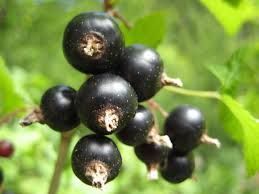
When I Heard Your Chemo Hadn’t Worked – Carole Bromley 

I had the urge to pick blackcurrants,

why it had to be blackcurrants and not blueberries,

raspberries or strawberries I don’t know. We never eat

blackcurrants, I guess because they must be cooked

with added sugar and if you boil the pan dry they stick

like crazy and even if the compote works it stains

and the stains never come out however many times

you put the clothes through the hot wash.

It rained on me so hard I had to park my bike

under a tree and try to shelter though the rain

meant business and hit my back over and over

like my mother that time I flicked water

down the stairs at my brother and didn’t know

she’d spent all day painting the landing and hall.

When I got there the notice said Far Field

and I walked miles and there were only blackberries

and I’d set my heart on blackcurrants.

Then I spotted the bushes and there was no-one

else and even though it started to rain again and my shoes

were getting stained purple, I didn’t care, just crouched

down and milked the fat black drops into the bowl.

A poem that triumphantly recovers from its own title – because the poem itself avoids any reference to the situation about which the title has to inform the reader. What we are left with is a direct, if self-mystifying, narrative. This is a search, a little quest, haunted by the indelible, the irrevocable, by stains. It’s a trial narrative, a coming through, a survival, but the grail here is extraordinarily equivocal; listen to the verb applied in the final line to the gathering of this ominous crop.
ZzrkO_fXONFIvJUF3EtgSeStCDYccEEdnPdvKn29mtg


*

My Humble Body – Kate Foley 

Just as a cloud becomes more

or less as it frays,

my humble body

is slowly learning to speak.

Not hint, not whinge

but say direct to my face

‘I am your face.’

‘Oh?’ I answer from somewhere

up here.

Yes! Not the memory

of your face, its trace

in old mirrors

but the now of it.’

And my body, no longer so humble,

like an old donkey with a spring

in its heels says ‘Listen!

Rough bits, wrinkles, furrows

where half-buried truths lie,

twinges, and you up there, we

can’t wait forever. It’s

now or never

to get together!’

‘Cliche!’ I smile,

scoring a point

but my body raises

its suddenly wise

hand and places

a gentle finger on my lips.


I’ve always disliked those poems which record a dialogue between the soul and the body, but this one convinced me (though I don’t know if ‘soul’ is the right word). The directness with which the humble body begins to speak is reflected throughout the poem in its clean, economical, lean lines. The progressive ironising – indeed, mickey-taking – of the soul/self’s arrogance is an object lesson in gradualist narrative development


*

At the War Museum – Tony Lucas 

Here is the shadow that was always at

our backs, though we were shielded. We knew

the stories – or the ones they chose to tell

to us, to tell themselves. Also the silences,

events that no one dared to mention.

These faces look familiar – recall the ones

who brought us up, who filled our world, but here

in uniform, removed to strange locations,

and performing tasks we never saw

them do. This is the world made strange, furnished

with obsolete contraptions that delivered

death, the well-known places mostly wrecked –

a quiet church you visited last year,

calm as Wren left it, is shown broken, open

to the sky, with shattered monuments;

a library’s hush, all raucous debris, plaster dust –

and if that happened to the books, what of

the people shelved in tidy residential

streets, gap-toothed with rubble, bathrooms

bared, paper hung ripped from private walls?

They had their modes of coping with it all –

swagger and slang, ‘business as usual’, wink

of an eye – that got them through. Styles

at first quaint to us, and now a foreign language.

Pictures, writings that seemed so peripheral

at the embattled time, now offer

our most intimate approach to this

alternate world. While, always, looming

back behind, what they themselves half knew,

an elder dark – of shells and mud, of gas

and blasted stumps, torn flesh and broken minds,

that forged, and warped, the world in which we grew.


This struck me as the most ‘well made’ poem in the top rankings. Though not using end rhyme, the quatrains are carefully controlled, making good use of the de-stabilising of enjambement. There is a formality in tone too, from the title onwards. A distance perhaps but that enables the narrative voice to reflect, to judge and in the end to compassionate with the elder generation who suffered the horrors of war.


*

Theft – Josh Ekroy 

Awaiting permission for this text


The opening lines of this poem have an epigrammatic quality to them which the subsequent lines proceed to follow to their logical conclusion (though perhaps with a bit of black magic thrown in). This is like Blake in the mood of ‘The Marriage of Heaven and Hell’ and this poem gives us more modern Proverbs of Hell, reversing our preconceptions to both comic and politically serious effects.


*

10 Commended Poems:

Body Evidence – Alexandra Davis

Kentucky Fried Chicken in Georgia – Valerie Darville

The Man Whose Car was Stolen… – Christopher North

Ordinary Love – Noel Williams

Vulcano – Julie Mellor

Dear Revisionist – Martin Malone

A Sedge of Herons – Noel Williams

Teign – Roland Malony

As the days play on – Maria Stasiak

Quickly – Sue MacIntyre
Found Poems from Whitman’s Civil War Prose

I’m still pursuing some of the thoughts from my last blog about the difficulties of writing about current events (https://martyncrucefix.com/2015/03/13/how-do-i-write-poems-about-current-events/). I am reminded that we are closing in on the twelfth anniversary of the first so-called ‘shock and awe’ strikes by coalition forces on Saddam Hussein’s Bagdad in 2003: 

I did manage to write about the subsequent war in Iraq but on this occasion I approached it very tangentially, through the Civil War writings of Walt Whitman. The resulting poems were first published in The Long Poem Magazine (Issue 3, Winter 2009/10; sections also appeared in Acumen) with the Introduction I have posted below. There, I discuss several sections of the completed sequence though I will post up only two parts of it. For the sake of those who might be interested in how raw materials get transmuted in such a process, I have added links to the original passages from which #2 ‘The White House’ and #4 ‘I staid a long time to-night’ were derived. The full sequence was eventually published in Hurt (2010: https://martyncrucefix.com/publications/hurt/). Dan O’Brien has more recently used a not dissimilar ventriloquism in his poems about the experiences of war photographer Paul Watson. For a much more direct poetic approach to modern war (born out of direct experience as a soldier in Iraq) see the poetry of Brian Turner.

On 21st March 2003 the “big and little thunderers in chorus began to roar” over Baghdad. During Easter of that year I visited the American Museum, just outside Bath, and while my children scoured the grounds in an Easter egg hunt and my aging parents wandered around an exhibition of American rag rugs, I drifted into the bookshop and picked up a collection of Walt Whitman’s Civil War poetry and prose.

It was childhood innocence and the rag rugs’ recycling of material that were in my mind as I read the words Whitman had written in 1862 in Falmouth, Virginia: “Began my visits among the Camp Hospitals in the Army of the Potomac. Spent a good part of the day in a large brick mansion, on the banks of the Rappahannock.”

With the force of one of those visions that artists are thought to be prone to, it struck me that such a wide-eyed witnessing from an earlier conflict might be a way to write successfully about the then current conflict. Or to be more precise – since what I have just written fails to convey the powerful emotional impact of what I read – I was myself moved by reading Whitman’s observations but my emotion was not retrospective at all but immediate, topical, all about Iraq.

url

The more I read of Whitman’s prose the more genuine ties with the contemporary war I sensed. Whitman writes in his letters and journals almost as a by-stander, visiting the wounded and dying in hospitals, only occasionally being drawn to wider political observations and his focus on the individual cost of warfare exactly matched my own feelings. I began to imagine a sequence of poems framed by letters to a mother, containing the search for a brother and other references to close family members: “Han’s and George’s and Andrew’s. . . Jeff’s and his little Manahatta’s too”. The sequence came together only very slowly, partly because of my own uncertainties about its status as a partially ‘found’ poem but it eventually separated itself from its original sources and it was only later that I saw what was mine, what Whitman’s.

So the second piece, describing the White House, relies heavily on notes Whitman made in February 1862, but in the light of the deceit and war mongering of the early 21st century such descriptions are redolent with a bitter irony.

‘I dream’d a stockade’ is a more ‘composed’ poem, using Whitman’s familiar listing techniques, which intends to turn the suffering of the Civil War at an angle to reflect the inner conflicts that the Iraq mission quickly created in US society itself. With the inevitable reports of civilian casualties, I had little to add to Whitman’s accounts of comforting the wounded from the opposing sides of the Civil conflict to ensure a powerful contemporary resonance.

CIVIL115-1024x798
Soldiers in the trenches before battle, Petersburg, Va., 1865.

‘The President’ is drawn from Whitman’s many observations of Lincoln. He first set eyes on him in 1861 and, as with the White House material, while I was putting the sequence together, the passage of time had already imbued his original admiration with the bitterest of ironies. Of course, after the poems were completed, by January 2009 and the inauguration of Obama, time had ironically turned once more and some have since read this part of the sequence as ‘about’ the new US President.

With ‘To the Mother of one fallen’, the narrator is back at the bedside of an individual dying man whose ravings and sense of undeserved blame, of a corruption in the/his “system”, is intended to reflect warfare’s inevitable brutalisation of even the best of individuals, the results of which even now continue to be uncovered years after the world conjured its first surprised shock at events in Abu Ghraib. (click to see Whitman’s original letter of May 1865: Here )


More than it comes to

seven poems from the American War

ii. The White House

Tonight, I walk out to take a look at the President’s House.

Tonight, the white portico, the brilliant gas-light shining,

The palace-like pediment, the tall round columns, spotless as snow.

Tonight, a tender and soft moonlight flooding the pale marble,

A light that gives rise to peculiar & faint & languishing shades,

That are not shadows, for no such thing as shadow resides at this address.

On this night, a soft transparent haze under the thin moon-lace,

Where it falls amongst the bright and plentiful clusters of gas-lights,

That have been set at intervals around the façade & the columns.

Tonight, I see everything white, a marbly pure white and dazzling,

And even more so, the softest white of the White House of future poems,

And of dramas and dreams here, under the high, the copious moon.

Tonight, the pure and gorgeous front in trees under the night-lights,

The leafless silence and the trunks and myriad angles of branches.

Tonight, I see a White House of the land, a White House of the night,

And of beauty and of silence and sentries at the tall gate,

Sentries pacing in their blue overcoats, stopping me not at all,

But eyeing with their sharp sentries’ eyes whichever way I go.

For Whitman on The White House: Click Here

white-house-north-face-c1853

iv.  I staid a long time to-night

I staid a long time to-night at his difficult bed-side.

It was a young Baltimorean, grown to the age of nineteen.

He had seen so much and yet had slept such a very little,

His right leg amputated an hour since, he was feeble,

So he slept hardly at all, the morphine costing more than it comes to.

And this is what I must do, I sit still while he holds my hand,

And he puts it to his face most affectionately.

And this young, handsome, tanned Baltimorean spoke to me:

“My dear friend, I am certain you do not know who I am,

Although your sitting here so quietly and so patiently,

It means much, yet you must understand who it is you help,

Since what I stand for & fight for I know you believe to be wrong”.

I staid a long time at the bed-side of the young Baltimorean.

I staid certainly because death had mark’d him and he was quite alone.

I might say I loved him, sometimes kiss’d him and he did me.

And of his age was his brother, a brave and religious man,

His brother and officer of rank, a man I sat beside in a close, adjoining ward.

And I staid because in the same battle they were wounded alike,

The one strong Unionist, the other Secesh, and each fought well,

Each for their respective sides, brave & obedient & mark’d for the end.

Now they lay close, following the separation of many years,

Of their strongly held beliefs, the separations these had imposed on them,

And both fought well and each died in his particular cause.

whitman_05_lg
Ward in Armory Square Hospital, during Civil War, Washington, D.C.

For Whitman on the two brothers: Click Here

Old Stokes’ Garden Nursery 1970 – 2014

An interruption to blog-casting over the last couple of weeks as I’ve been away from the desk, here and there, partly in Wiltshire visiting my 90-year old parents.

I’ve long understood that one of my triggers as a writer is the simple disparity between ‘then’ and ‘now’. I have grown convinced that an individual’s mental health is partly dependent on the free flow of thoughts and feelings between personal present and past, the integration of personality, a sense of coherence, or organic change, over time. There has been a good deal of research recently on the idea of nostalgia as a healing force (hence some of these dips into autobiographical mode) and I’d like to talk more about that sometime. But for today, while staying in Wiltshire, I came face to face with a pretty powerful example of this disparity between past and present. Here it is:

20150102_125938

OK – it’s not much to look at, but this is the final route of the Hilperton Relief Road, designed to take traffic away from the village where I grew up in Wiltshire. My father has been praying for this to happen for years, convinced the thundering, articulated transports that pass the house originate solely from ‘the Continent’. It’s true they do have to manoeuvre through the village itself, but the route cuts across green fields just a stone’s throw from the little village church of St Michael and All Angels, fields where I’d mooch about as a kid with friends from the self-build estate of Marshmead.

images

So a personal wound to my memory – but also an ecological blow to the rural area. Within a few years – though the local authority currently denies this – the meadows surrounding this new road will be filled in with houses and the ghastly sprawl of Trowbridge town will engulf another village. More lucrative land for developers is the prime motivation for building the road after all these years. More personally, on the bulldozed soil in the first photograph once stood a few ramshackle buildings, little more than large garden sheds and fogged, filthy-windowed greenhouses. This was the site of Stokes’ Garden Nursery where I worked a few hours a week at the start of the 1970s.

Stokes’ Nursery is on the left at the far end of Horse Road as you head into town. I cycle along there one Sunday and find Old Stokes out in the open, moving up and down the sunlit rows of chrysanthemums, lifting the still-tight flower heads to examine them, pinching off a browned leaf here and there. It appeals to me – the money and the work.

The following Sunday, on my first morning, he musters a smile of sorts in greeting. He is bent with age, rather hump-backed and moves with a limp. His head is small and round, a few wisps of grey hair, and he purses his lips so that in speaking there is a faint lisp. But he doesn’t often speak and I like that.

I begin reliably turning up and taking his cash, at first just Sundays then Saturday mornings as well. I find myself beginning to identify with him in little ways. His wife is invisible. Their detached house is set off to one side of the grounds where he has several glass houses and outdoor growing areas. The house always appears deserted, with the curtains closed for the most part. Nothing moves or changes. No-one sees her. Old Stokes never talks about her. I never ask. She suffers from agoraphobia, or so my Mum tells me.

20150102_125952

One morning, he leads me through the rickety door of the main glasshouse into its humid, stuffy other world, reeking of compost, plant rot, fertilizer, cell division. “Pricking out”, he murmurs and I wonder if I have heard him right. At an earthy metal bench, backed with a window so filthy nothing can be seen but a fuzz of sunlight, we stand side by side and he shows me what to do. The seedlings are new-grown in their first trays and each has to be gently teased out of the loose soil and away from its clinging companions. Then each spindly seedling, green leafed, pale-stemmed, white-rooted, is tucked into a new hole (drilled by the ‘dibber’) in a newly prepared tray. Pricking out is boring and brainless. It’s not something I am unhappy doing, bearing in mind I am getting paid a few shillings – after February 1971, thirty or forty pence – to do so.

But I prefer watering; lugging the python-like, yellow hoses up and down the glass house aisles, pulling the trigger on the hose attachment and spraying water everywhere, dampening the already humid atmosphere. Soon I am promoted to patrolling the rows of vigorous chrysanthemums, lifting the heavy weights of the flower heads, picking out ear-wigs where I find them, dispatching them with a curt rolling of my thumb and finger. Crouching down between the rows, I disappear completely from the view of anybody passing along Horse Road. Crouched there, I am in a manageable jungle, happy to be alone, often bringing my family’s old blue transistor radio with me, listening to Noel Edmonds (from October 1971), his Sunday morning slot from 10-12. His kind of drippy folk-rock is (I’m afraid) what I like to listen to and David Gate’s songs like ‘Diary’ and ‘Baby I’m-a want you’. McCartney’s first solo album is being played. Cat Stevens has released ‘Tea for the Tillerman’ the year before and ‘Teazer and the Firecat’ in the autumn.

imgres

Twenty years later, in my first book from Enitharmon Press, Beneath Tremendous Rain, I published a triptych of poems about Old Stokes, his wife and the boy working for them. Here are the two best ones:

The Nurseryman

See how my wife hasn’t bothered to open

the curtains. It’s three o’clock. She must be bad.

She thinks I don’t know what it costs her

to steal a glance at me outside, to brave

these fifty feet of open space, her weak legs

trembling with terror, sick in her belly,

knotting ever closer round her poor heart . . .

I’ll cut some chrysanthemums to please her.

My flowers always please her.

Years ago she’d tell me how it felt.

She’d say a bulb will sometimes come up blind

no matter how carefully you’ve set it down.

It’s the way of plants. There’s no cure at all.

But it’s not only her. Still poor as Adam,

there’s just one thing I have that’s in demand

and it’s not right that a man who’s spent life

tending soil into flower should gain nothing

but a touch for dressing death in glad rags

with some careful blooms on a wire frame . . .

I’ve found a natural talent for wreathes.

My one extravagance:  that I can charge

higher prices than most and though Christmas

is a boon (when my great medals hang on

many bolted doors), yet it’s the year-round trade

in bereavement that keeps this place afloat.

I’d plans once. A shop, new green-houses, a son.

Now I’m forced to take on a series of young lads

who help me out. They’re all more or less sullen.

This one’s so quiet, although he chats to girls

across the hedge, as they all have done –

all playing the working-man, hands dirtied,

with the jangle of my money in their pockets.

This one trails his radio around all day long

as if he can’t stand the sound of himself.

Doesn’t work hard. See where he goes now,

slipping down beside the sheds. No radio today.

Well, he’s happy enough on one-fifty an hour . . .

I must cut some chrysanthemums to please her.

The Wife

I sit beside my beautiful maidenhair fern.

It likes my darkness, is dank, spreads slowly.

I count my books, silent on their long shelves.

I’m dying of pure old age, not experience.

I was not always so understanding – accusations

and resentment shouted him into the garden.

We have not given each other all we’d hoped.

I name children, true pleasure, company . . .

I’ve felt such horror at what lies beyond

the window, where even clothes on the line,

blown by an uncontrollable wind, cardigans

undone and swept open, slacks kicked wide

are too much to bear. He has devoted himself

too much to the fertility of row upon row

of plants and had less and less for me.

But we’re past the allotment of blame.

For years, he’d bring chrysanthemums

to me and watch like a child while I shook

earwigs in the sink, flushed them out of sight.

An absurd ritual I long for, absurdly,

since it ended these past four or five years

before the hedge was removed to make beds

of carnation. And we’ve no boys now –

as if a supply-line had suddenly gone dry.

Don’t parents have children nowadays?

They all blur into one – that particular one

who left quickly. Why do I think of him?

He’s forgotten me. Does he have a wife?

And a child? I remember descending the stairs,

past the grave-quiet telephone, with a jug

of water in my hand. I thought I heard

one of the cats, opened a sliver of curtain.

I would do this all over again . . .

See the boy slumped against the shed

legs crooked and splayed, one hand flickering

on his belly as if dealing a deck of cards –

but with such unrestrained violence.

He saw me. Gave the look of one who has been

interrupted – annoyance, much more than

the guilt I’d expect. I dropped the curtain,

then wanted to open it again – and it’s that

which fills me now when I think of ‘life’

and then I see myself – the dry, pressed flower

I found once in a borrowed library book,

squeezed out now, frightened of the light.