I see the curious physical/psychological sensation that is ASMR is back in the news again: here’s a recent Guardian piece about it which suggests that ‘younger adults [who] are increasingly overwhelmed by in-person interaction [are] soothing themselves instead with sensory online content, according to a report on the wildly popular online content known as ASMR’. It reminded me that in the early days of this blog, I posted a little piece about my own experience of the phenomenon and – 10 years is a long time in blogging – I thought it would be worthwhile re-posting the piece. Reading it over again, I once more felt that shiver in the spine, that crawling under the scalp that is the hallmark of ASMR. And what does it have to do with poetry? Well, read on….
Something on early morning Radio Four this week sent me hurrying to the files of autobiographical notes I’ve been writing sporadically over the last few years. It was a discussion of an experience I have never heard spoken of, but felt often enough. It has a name these days: Autonomous Sensory Meridian Response. I’ll put down my memories as I recall them but also with some of the surrounding context too as that may be relevant to the phenomenon itself:
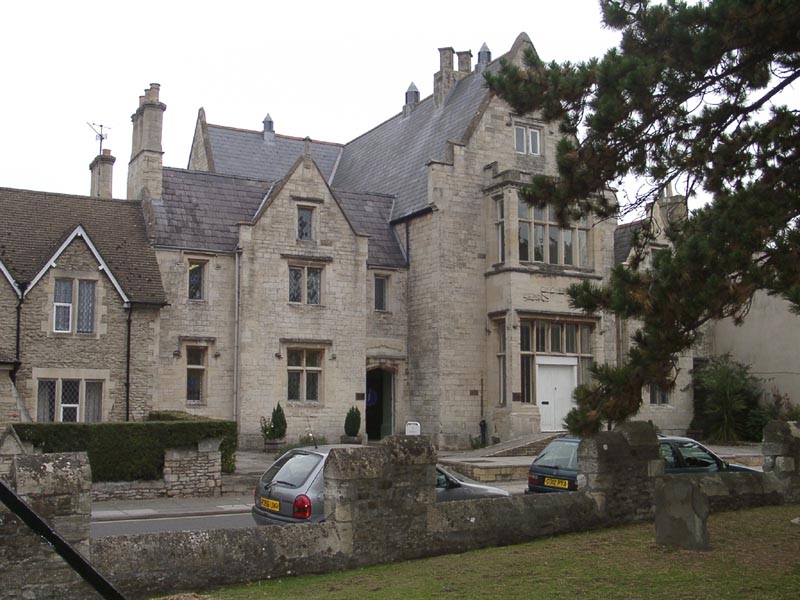
In the 1960s, in my second year at Parochial Junior School (I’m about 9 years old at this time), we crocodile out the front door and occasionally turn right along Church Street towards St James’ Parish Church, Trowbridge (George Crabbe’s last posting). On those occasions, we usually cross the road for religious services like Easter, Harvest Festival and Christmas. We wheel and snake into the churchyard and follow the tilting, worn flagstone path, passing Thomas Helliker’s casket tomb to the church porch.
But on more ordinary days we turn left along Church Street, passing Shanley’s the barbers and a low butcher’s window where our regimented pairings are disturbed by squeals and extraneous movement, by our fascination with or repulsion from the red and pink slabs and cuts of meat, the creamy fat like curds laid out on plastic white trays. Most fascinating and least attractive are the lolling ox tongues, cut at the root, purple, stilled, obscene. Later, back in the main school building, moving to other rooms downstairs aware of girls talking, manoeuvring to walk alongside me, giggles, but I have no recognition of what this means, certainly no idea that it might be exploited. In fact, I don’t recall much sense of my own position in this little closed society at all. It is as if I moved through a mist of my own creating, barely self-aware. But I imagine myself proceeding quietly, studiously mostly, probably a pleasure to teach, though reports are already lamenting how deeply I live in myself. Already teachers are reaching for the old metaphor of the shell, the frustrating creature living within.
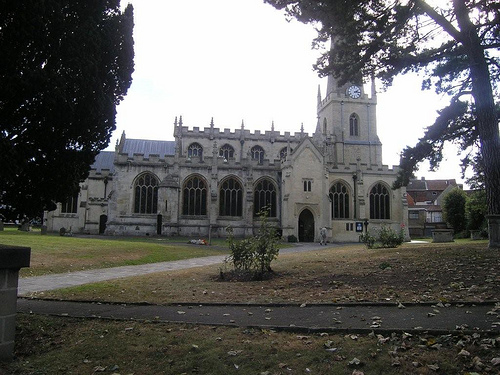
Then we turn left into Duke Street and left again through an almost hidden door that, even then, I would associate with those obscured entrances and exits in children’s stories. Through this door, we traipse down a passage into what we call Emmanuel, a kind of annex with a couple of extra classrooms. I don’t remember any separate play area. It’s in these classrooms that I remember adjusting to new spectacles from Carter and Harding after I had been diagnosed with short sight. I was straining to read the teacher’s scrawl on the blackboard. Here too I remember the first incidents (though surely these could not have been the first) of a very peculiar sensation. It’s a prickling that runs up my back and shoulders, a sort of shiver moving upwards across my neck into my scalp when a teacher (not my usual one) writes on the blackboard. It’s a ripple of pleasure out of unfamiliarity (or the familiar defamiliarised), a kind of low level erotic shiver I still occasionally feel now when the college cleaner comes into my room – moving books, touching the table and chairs, my familiar items touched by another’s hand. I’ve never heard this described before . . .
I find that Wikipedia describes ASMR as a neologism for a perceptual phenomenon characterized as a distinct, pleasurable tingling sensation in the head, scalp, back, or peripheral regions of the body in response to visual, auditory, tactile, olfactory, or cognitive stimuli. The nature and classification of the ASMR phenomenon is controversial, with strong anecdotal evidence to support the phenomenon but little or no scientific explanation or verified data. It has become a recent internet phenomenon. Online discussion groups such as the Society of Sensationalists formed in 2008 on Yahoo! and The Unnamed Feeling blog created in 2010 by Andrew MacMuiris aim to provide a community for learning more about the sensation by sharing ideas and personal experiences. Some earlier names for ASMR in these discussion groups included attention induced head orgasm, attention induced euphoria, and attention induced observant euphoria.

It’s interesting that these titles draw attention to the ‘paying of attention’ and, inevitably perhaps, my own thoughts about it revolve around poetry and its effects: the familiar defamiliarised, the frisson of the uncanny, Emily Dickinson talking about poems taking the top of your head off. ASMR seems linked to a particular quality of attention-giving which yields a rippling of pleasure, close to the erotic, but not the same as that. It is powerful yet undramatic; it is most common in quiet moments of observation. It seems to come when there are no goal-directed intentions in the attention-giving. It is also in a neutral sense ‘bestial’, an animal shiver, like hackles rising, but not out of anger. It’s surely something reaching far back into our ancient past, linking body and mind, yielding pleasure, rooted in a mode of being pre-dating language and conceptualisation. That interests me a great deal. Poetry is language deployed to circumvent the limits of language; these days I take that as a given. Yves Bonnefoy says: “poetry was not made to mean, but to restore words to their full intensity, their integral capacity to designate fundamental things in our relationships with ourselves and others, here and now, amid those chances that one should never, as Mallarmé did, dream of abolishing” (2012 PN Review interview with Chris Miller. Even if just considered as metaphor, perhaps ASMR is what poetry taps into, invokes, rehearses, re-discovers.
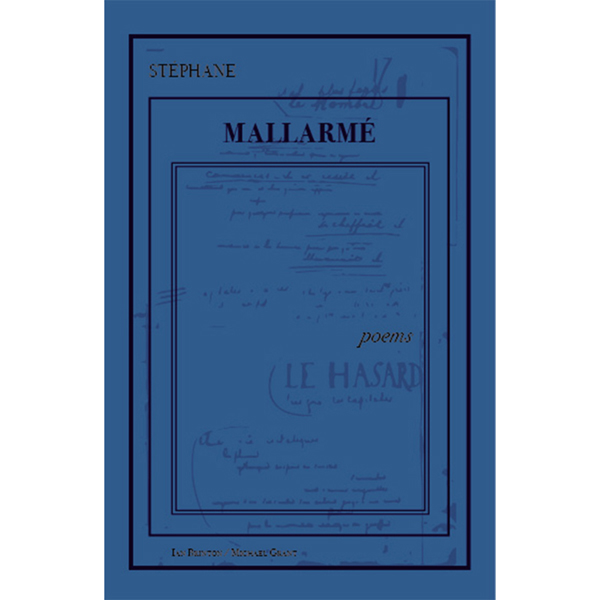 I am very grateful to Ian Brinton’s and Michael Grant’s recent translation of a selected Mallarmé (Muscaliet, 2019) for sending me back to a poet who has always proved problematic for me. My natural inclination draws me more to Louis MacNeice’s sense of the “drunkenness of things being various” (‘Snow’) – his emphasis on poetry’s engagement with “things” – and his desire to communicate pretty directly with his fellow wo/man, than with what Elizabeth McCombie bluntly calls “the exceptional difficulty” of Mallarmé’s work. I appreciate that such a dichotomy seems to shove the French poet into an ivory tower (albeit of glittering and sensuous language) while casting the Irish one as too narrowly engagé, but I’m also aware that Sartre praised Mallarmé as a “committed” writer and that, despite some evident remoteness from the ‘tribe’, the French poet’s political views were both radical and democratic.
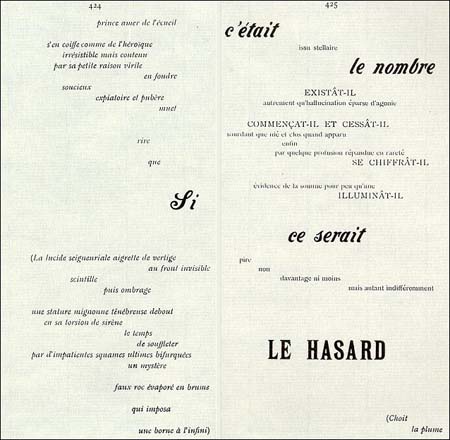
 So, if we must give up on such ‘understanding’, what was Mallarmé – writing in the 1880-90s – doing? Something recognisably very modern, it turns out. Contra Wordsworth (and MacNeice, I guess), Mallarmé and his Symbolist peers, held ordinary language in suspicious contempt as too ‘journalistic’, too wedded to a world of facts. Poetry was to be more a communication, or evocation, of emotion, of a detachment from the (merely) everyday and a recovery of the mystery of existence which rote and routine has served to bury. Such a role demanded linguistic innovation as suggested in ‘The Tomb of Edgar Poe’ in which the American writer is praised for giving “purer meaning to the words of the tribe” (tr. Brinton/Grant). Writing about Edouard Manet’s work, Mallarmé saw the need to “loose the restraint of education” which – in linguistic terms – would mean freeing language from its contingent relations to the facticity of things (and the tedium and ennui that results from our long confinement to them) and hence moving language nearer to what he called the “Idea” and the paradoxical term Nothingness (as Brinton/Grant translate “le Neant”).
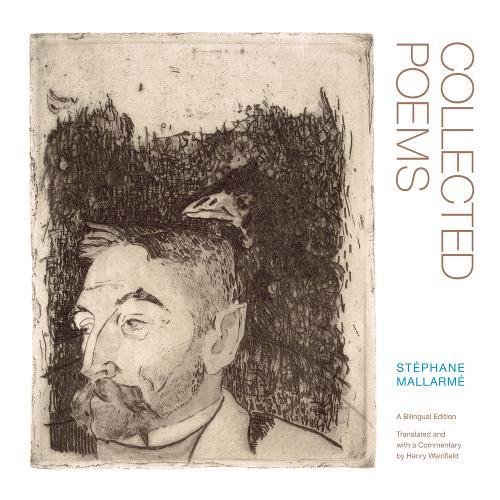 For these reasons, Mallarmé “cede[s] the initiative to words” (‘Crise de Vers’), to language’s material aspects as much as to its referential functions. Carrying over the material aspects of his French verse into English is then, to say the least, difficult. I’m inclined to agree with Weinfield (Introduction to Stephane Mallarmé Collected Poems (Uni. Of California Press, 1994) that it is “essential to work in rhyme and metre, regardless of the semantic accommodations and technical problems this entail[s]. If we take rhyme from Mallarmé, we take away the poetry”. But is that even possible? The accommodations and problems that arise are huge! Mallarmé placed the sonnet, ‘Salut’, at the start of his Poésies as a toast, salutation and mission statement. Weinfield gives the sestet as follows: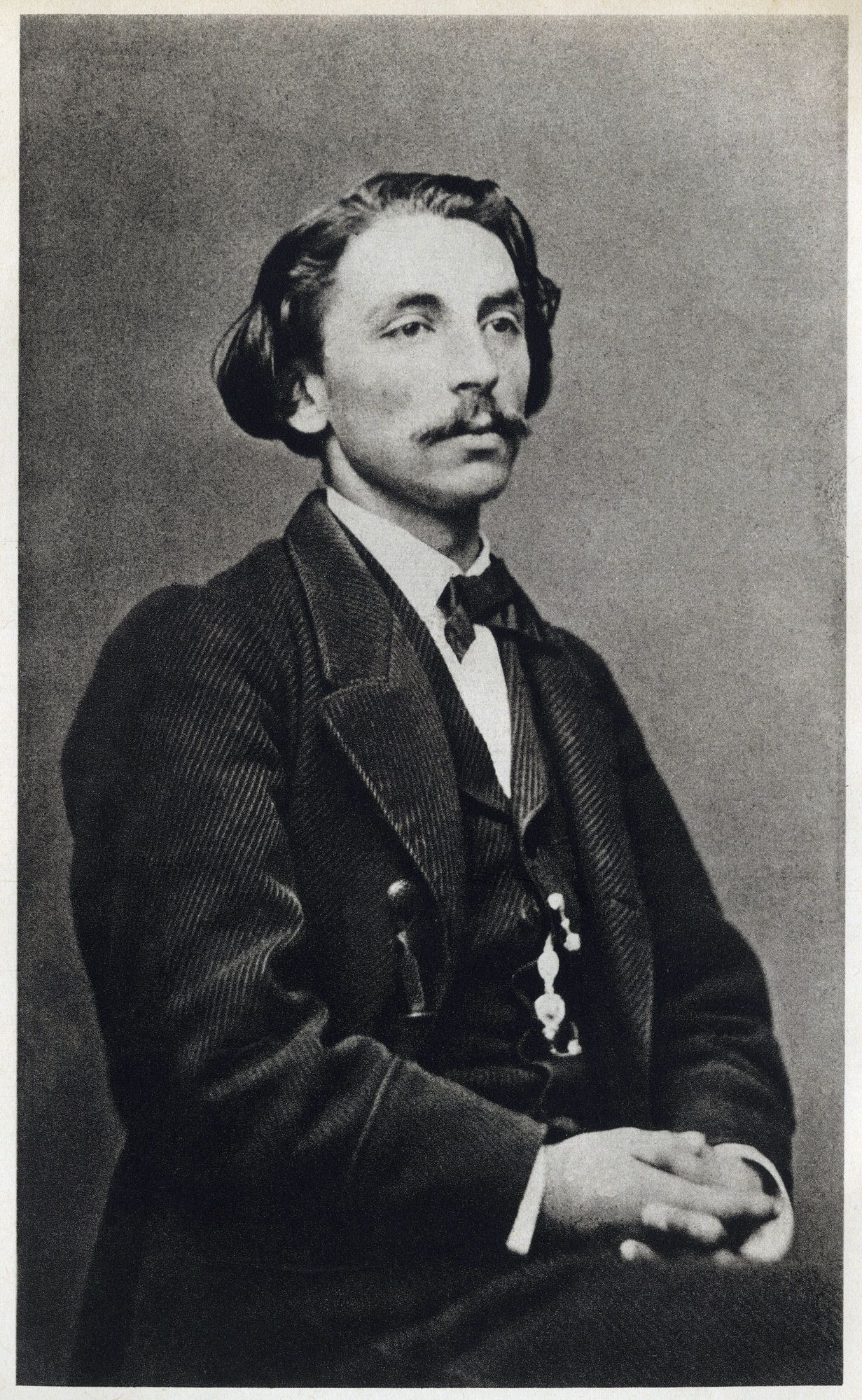
 Martyn Crucefix