George Herbert’s ‘Prayer 1’

Herbert, Brodsky, Rilke, Weil . . . Having read John Drury’s excellent biography of George Herbert, ‘Music at Midnight’, a while back, I was re-reading the poem Prayer (I). The poem is really a list of images of prayer, multiple perspectives, full of vigorous relish and un-churchy energy.

Prayer the church’s banquet, angel’s age,
God’s breath in man returning to his birth,
The soul in paraphrase, heart in pilgrimage,
The Christian plummet sounding heav’n and earth;

The whole poem is one sentence, rushing across line breaks and quatrains to herald prayer as a feast, an inversion of inspiration, a precis of our spiritual self, holy journey, a measuring or plumbing not of depth but height –

Engine against th’ Almighty, sinner’s tow’r,
Reversed thunder, Christ-side-piercing spear,
The six-days world transposing in an hour,
A kind of tune, which all things hear and fear;

The scale roughly switches to the power of prayer here – Herbert’s religion is bracing and unsentimental – militaristic images and thunder (again reversed in direction – all things come from God but prayer is our chance to respond), even a wounding of Christ. The ambiguity of ‘transposing’ (transfiguring, translating, transcending) leads Herbert to the quieter image of prayer as a cosmic music.

Softness, and peace, and joy, and love, and bliss,
Exalted manna, gladness of the best,
Heaven in ordinary, man well drest,
The milky way, the bird of Paradise,

The third line of Q3, balanced around the caesura, captures the role of prayer as go-between, conduit, glue between the height of heaven and the fallen state of man – the former leaning sympathetically down towards the ordinary, the latter aspiring to our best. The four phrases of the concluding couplet are marked by speed, a testing of the elasticity of the reader’s imagination (the ‘land of spices’ perhaps the least successful of the poem’s images), and the extraordinary understatement of the two last words.

Church-bells beyond the stars heard, the soul’s blood,
The land of spices; something understood.

What the poem has done is prepare the ground for what ought to strike as inadequate vagueness, but what here reads as fullness, a plenitude which encompasses all that has gone before and gestures towards more, far more, the entire creation. ‘Understood’ has also been broken free of its moorings to suggest far more than an intellectual grasp – perhaps a literal under-standing or underpinning of our place in creation. Brodsky says poetry accelerates our minds; here, the reader does not need to share Herbert’s religious views to experience the graceful jemmying open of our mind by the poem. Prayer in a secular age is Rilke’s praising; it is as Simone Weil thought, “absolutely unmixed attention”, a rich mindfulness.
The art of the line break

I do like Glyn Maxwell’s thoughts on this in his 2013 book, On Poetry (Oberon Books, 2012). I’m roughly quoting:

Poets work with two materials, one’s black and one’s white. Call them sound and silence, life and death, hot and cold, love and loss . .  don’t make the mistake of thinking the white sheet is nothing. It’s nothing for your novelist etc . . . for those folks it’s a tabula rasa, a giving surface. For a poet it’s half of everything. If you don’t know how to use it you are writing prose. If you write poems that you might call free and [Maxwell] might call unpatterned then skillful, intelligent use of the whiteness is all you’ve got. Put more practically, line-break is all you’ve got, and if you don’t master line break – the border between poetry and prose – then you don’t know there is a border. . .  a prose poem is prose done by a poet. . .

I like the physical sensation he creates here of the two spaces a poet works with – that almost dizzying cliff-edge of the line breaking, the powerful effect that must have, that it does have. And I’ve, personally, long puzzled over the prose poem, wondering ‘why?’. Some of my best friends write prose poems – look out Linda Black’s published by Shearsman – but they remain a closed book to me – ha ha. Why would you not exploit the white space Maxwell talks of? Surely not just because the art of the line break is a hard one to master? Oh – the discussions in workshops I’ve had! Briefly – something to do with breath, to do with reading the lines aloud, to do with the line having some weight before you snap it off. The rest – intuition.

A Hatfield Mass – proof

Have just sent off the final proofs for the second of my chapbooks/pamphlets to appear this summer. This one is from Worple press and has its roots works by Henry Moore, originally displayed in the grounds of Hatfield House in 2011 has this lovely cover . . .

Hatfield_Mass_cover (3)

Worple were keen for me to include a brief Note about the poems that begins like this . .

Rimbaud suggests our openness to life, the unearned pleasures of the child, begin to close off around the age of seven. The rigidity of the maturing self, the closing in of solipsism is something from which these poems look to be rescued or relieved.

 Salvation lies in the movement towards flexure with or accommodation of the world about us, the subjective becoming interconnected, melded with the objective world . . . 

New pamphlet

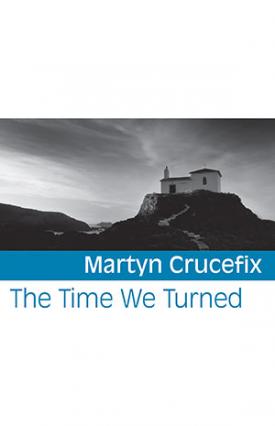
New Pamphlet from Shearsman Books

O Farso

To begin with not clear what the lighthouse does
with its absence of glass lens and bulb
at least to the naked eye—
just a spindly array of instruments up top

above the disappointingly stubby column
on a cliff-top with its padlocked metal doorway
but no sooner has the walking begun
than its subtle powers become obvious

your every step determined by its position
the heather the stony paths the steep incline
each locked in communication with it

and where all might have flowed before you
in a salted windswept wide plenitude
the lighthouse utters its singular word