Translating Georg Heym’s ‘Berlin II’

Michael Hofmann’s Faber Book of Twentieth Century German Poems includes four pieces by Georg Heym – not bad for someone who died at the age of 24 (in 1912 – an accidental drowning in the frozen Havel River, probably while trying to save a friend). Heym is generally regarded as an early Expressionist writer (of poems and short prose/novellas), though his early poems are very much under the influence of Hölderlin, then much of the surviving work suggests the powerful influence of Baudelaire (in both form and content), though in his final months there seems to have been a return to the looser forms of Hölderlin. His best-known poems combine a gothic, morbid imagination, often with extremes of Expressionistic distortion, with a counterbalancing devotion to regular forms. The sonnet ‘Berlin II’, when it appeared in Der Demokrat, in November 1910, led to the publication of Heym’s only collection published during his lifetime: Der ewig Tag (The Eternal Day).

Antony Hasler’s translations, published by Libris in 2004 (Hofmann also includes translations by Babette Deutsch and Avrahm Yarmolinsky, and Christopher Middleton), are the best to be had at the moment and I’d definitely recommend searching them out (Libris has since folded). I’ve been in a bit of a translation lull for a few months so thought I’d try a few of Heym’s poems myself. The challenge is to make something readable in English, while not toning down the dark brutality, yet also staying close to his classical chosen forms.

In ‘Berlin II’, Heym’s Petrarchan rhyme scheme is ABBA CDDC EFE GHG. The opening quatrain is fairly straightforward. A literal transcription might be: ‘Betarred barrels rolled from the thresholds / of dark warehouses onto the high barges/boats). / The tugboats moved in. The smoke’s mane / hung sooty above the oily waters’.

Hasler has:

From the dim warehouse thresholds barrels caulked

with tar went rolling down to the tall lighters.

The tugboats started. On the oily waters

a mane of soot was trailing from the smoke.

The ‘lighters’ / ‘waters’ rhyme is a stroke of genius (a lighter is a river boat) but the opening line and the fourth seemed to me less successful. I kept the opening line simple and turned ‘waters’ into a possessive and I rather saw the (lion’s) mane more visually linked to the billowing of the smoke which is ‘soot-filled’ (I also tried ‘sooty’, even ‘smutty’). This is what I ended up with:

The tarred barrels rolled from open doorways

of dark warehouses onto the tall lighters.

The tugboats closed in. Across the waters’

oily surface hung the smoke’s soot-filled mane.

I went for the tugboats ‘closing in’ – not merely approaching, but something more threatening – as it seemed in keeping with the ominous atmosphere which develops as the poem goes on (the drumming in line 11).

The second quatrain might be given as: ‘Two steamers came with musical bands. / Their funnels cut/clipped the arch of the bridge. / Smoke, soot, stink lay on the dirty waves / of the tanneries with their brown skins’.

Hasler has:

Two pleasure-steamers came with music playing.

They dipped their funnels at the bridge’s curve.

Smoke, soot, stench lay on the dirty waves

by tanneries where the brown hides were drying.

I couldn’t quite see the funnels being dipped under the bridges (though I believe some boats do this) and I feel the bridge’s ‘curve’ (for roof or arch?) not quite right. So I went with the sense of the funnels actually scraping the roof of the bridges (as if these pleasure steamers did not really fit the generally grim, sordid scene). I was very happy to arrive at the bridge/stench half-rhyme for the middle couplet because the sounds there conveyed more of the Heymian ugliness of the scene. Like Hasler, I felt the need to explain a little what the pelts/skins/hides were doing hanging up at the tanneries. Here’s my second quatrain:

With music playing, two steamers passed by:

their funnels clipped the roof of the bridge.

On the filthy waves, smoke, smut, and stench

at the tanneries, where brown pelts hung to dry.

Lines 9-11 probably caused me the greatest difficulty, not so much in getting the word order and form right, but in simply grasping what was being said in relation to the bridges, the barge, and the narrator’s position. Literally they might read: ‘In/at/all the bridges, beneath us the barge / Carried through, the signals sounded / As if in drums, growing in the silence’.

As I see it, the speaker is being carried on a barge, through and under bridges, and there are signals/sirens sounding that bring to his mind an ominous drumming. So Hasler has:

Every time the barge that bore us travelled

beneath a bridge, the signal’s sudden parley

swelled out of stillness like a deep drum’s rattle.

The ‘barge that bore us’ has echoes of TS Eliot (perhaps not irrelevant in context, and I felt I couldn’t better it in the end) but I’m not sure Hasler makes sense (to me) of the signals and the ‘parley’ metaphor he introduces here is not there in the original. The ‘deep drum’ also seems to be picking up on the ‘ominousness’ of the scene but (for me) a bit heavy-handedly. In the end, I went for:

Through all the bridges, the barge that bore us

made its way, signals resounding as if

a drum’s beat grew louder in the stillness.

In the final 3 lines I made the biggest alteration, the biggest interference with the original poem. Literally, the lines might read: ‘We let go and drifted in the canal / Alongside the gardens slowly. In the idyll / We saw the giant chimneys’ night beacons’. Hasler loses the ‘letting go’ idea, but otherwise keeps the order of these lines well:

We entered the canal, and drifting journeyed

slowly alongside gardens. In the idyll

we saw the night-flares of the giant chimneys.

‘In the idyll’ is perhaps puzzling, though it’s pretty clear there is a bitter irony at work – this is no idyllic scene, and Heym’s other Berlin poems confirm this, the city is a monstrous megalopolis. But there has been a slight shift of scene with the boat moving along a canal now, between gardens. Perhaps this (more bourgeois?) setting might be thought of as more idyllic? But even so, the massive smoking and flaring chimneys of industrial Berlin can still be seen. I confess that I shifted the ‘idyll’ to the final lines to get the final rhyme with ‘canal’. But I have left it – translators, like poets, have the power of veto, whether we exercise it or not. And I have persuaded myself that the savagery of the irony comes out better if the final phrase of the poem contains it. So I went with:

We cut loose, went drifting along the canal,

gradually, between gardens, glimpses of

the vast chimneys’ night-flares in the idyll.
So – to sum up (though translations are always really a work in progress) – here is Heym’s original German followed by my own version of the poem:

Berlin II

Beteerte Fässer rollten von den Schwellen

Der dunklen Speicher auf die hohen Kähne.

Die Schlepper zogen an. Des Rauches Mähne

Hing rußig nieder auf die öligen Wellen.

Zwei Dampfer kamen mit Musikkapellen.

Den Schornstein kappten sie am Brückenbogen.

Rauch, Ruẞ, Gestank lag auf den schmutzigen Wogen

Der Gerbereien mit den braunen Fellen.

In allen Brücken, drunter uns die Zille

Hindurchgebracht, ertönten die Signale

Gleichwie in Trommeln wachsend in der Stille.

Wir ließen los und trieben im Kanale

An Gärten langsam hin. In dem Idylle

Sahn wir der Riesenschlote Nachtfanale.

Berlin II (tr. Martyn Crucefix)

of dark warehouses onto the tall lighters.

The tugboats closed in. Across the waters’

oily surface hung the smoke’s soot-filled mane.

With music playing, two steamers passed by:

their funnels clipped the roof of the bridge.

On the filthy waves, smoke, smut, and stench

at the tanneries, where brown pelts hung to dry.

Through all the bridges, the barge that bore us

made its way, signals resounding as if

a drum’s beat grew louder in the stillness.

We cut loose, went drifting along the canal,

gradually, between gardens, glimpses of

the vast chimneys’ night-flares in the idyll.
Too Short an Arc: Robert Frost’s ‘A Soldier’

I recently posted a discussion about Robert Frost’s brief essay ‘The Figure a Poem Makes’. In this post I’m looking at one of the poems I’ll be teaching next year from the Cambridge International Exam Board’s list of set texts. See page 47 of the Specification. Essays are supposed to offer a close analysis of one (or two poems) while also exploring a student’s wider understanding of what the poet is doing in terms of methods and concerns (techniques and themes).

download

Robert Frost’s seldom discussed sonnet, ‘A Soldier’, was first published in West-Running Brook (1928). The choice of the indefinite article in the title contrasts immediately with a war poem like Rupert Brooke’s ‘The Soldier’ in which some effort is made to capture an individual voice, a specific occasion for grief. In Frost’s poem, the soldier’s death is rather an opportunity for the poet’s characteristic reflections on life’s limits and freedoms, on boundaries, on the relationship between our place on earth and our aspiration to something else.

He is that fallen lance that lies as hurled,

That lies unlifted now, come dew, come rust,

But still lies pointed as it plowed the dust.

If we who sight along it round the world,

See nothing worthy to have been its mark,

It is because like men we look too near,

Forgetting that as fitted to the sphere,

Our missiles always make too short an arc.

They fall, they rip the grass, they intersect

The curve of earth, and striking, break their own;

They make us cringe for metal-point on stone.

But this we know, the obstacle that checked

And tripped the body, shot the spirit on

Further than target ever showed or shone.

download

On the page, Frost does not divide the structural elements of this broadly Petrarchan sonnet, but it is useful to think of them for the sake of analysis and I refer to quatrains, octet, sestet and volta where relevant. Here’s me reading the poem with the text differently chunked into units of sense.

Line 1 immediately treats the dead soldier to a metaphorical (more strictly metonymic) transformation – he becomes his own weapon. But the kind of dehumanisation suggested by the ‘man=lance’ image does not lead to more obvious themes about loss of individuality in war time. Also why Frost chooses such an archaic weapon as a lance is not clear – perhaps he was thinking of a painting, perhaps he wanted to distance the death from more contemporary images of war (the poem first appeared 14 years after the end of WW1), perhaps he felt it would give him more freedom to explore the symbolism of the death without personal, (distracting?) human entanglements. The opening 3 lines of quatrain 1 (Q1) are as follows:

He is that fallen lance that lies as hurled,

That lies unlifted now, come dew, come rust,

But still lies pointed as it plowed the dust.

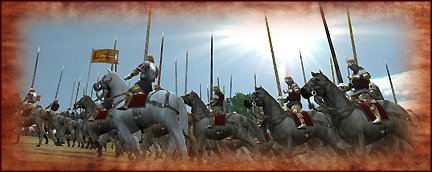
broken_lance_cav

The repetition of the verb “lies” is striking and emphasises the soldier’s passivity in death and the subsequent stillness of the lance. The adjective “fallen” confirms this idea. The end of line 1 seems to mean something like ‘the lance lies just as/in the way it was hurled’. So the throw was a failure, an ineffective effort, as also suggested in line 3 where we are told it has merely “plowed the dust”. The lance’s metaphorical ploughing of the earth further suggests an ineffective, unfertile, unproductive act. Line 2 reinforces these images of passivity, inaction, ineffectuality, as the lance “lies unlifted” over a length of time (duration suggested by the hesitations of the heavier punctuation in line 2) likely to give rise to both “dew” and “rust”. So this is not an image of death and failure in the heat of the battle; it may indeed be long after. Frost seems more than happy to draw the reader’s mind away from what might be the actual condition of the flesh and blood soldier himself by this stage. His dewy, rusty lance, plugged point first into the earth, stands in for him. This is not a poem of personal grief or lament for a warrior’s lost life. That it ought to have a bit more concern for that theme (to be a bit less exploitative) is one of the reasons why we may find reading the poem an uneasy experience.

Line 4 introduces the plural pronoun and – crossing the unmarked boundary between Q1 and Q2 – we are off into more generalised realms of philosophical speculation.

If we who sight along it round the world,

See nothing worthy to have been its mark,

It is because like men we look too near,

Forgetting that as fitted to the sphere,

Our missiles always make too short an arc.

The image of ‘sighting’ along the lance perhaps re-instates more modern methods of warfare (rifles with sights?) but whether ancient or modern, Frost suggests, in looking for a suitable target or “mark”, we fail, we see “nothing worthy”. This is more hyperbolic than factual perhaps, given that we are sighting along the lance and apparently gazing “round the world”. It’s this latter phrase – its easy familiarity enabling Frost to smuggle it past the reader’s guard against inappropriate pretention – that initiates the poem’s elevation from battle-field incident to generalised speculative discussion about human aspiration and limitation.

download

The simile in line 6, comparing the observing “we” to “men” has been noted and criticised by H. A. Maxson (On the Sonnets of Robert Frost (1997)). He objects that the observing “we” are surely “men” (in the sense of human) and so the simile barrenly compares like with like. Maxson suggests Frost intended something like ‘isn’t it just like men’, a sort of frustrated, critical aside (self not excluded) that human beings have very limited powers of observation. Another way of reading the moment may be to emphasis the gender specificity of the reference: is this limit to our sight a specifically male problem?

Of course, it’s not mere shortness of optical sight that is the issue, but a “Forgetting that as fitted to the sphere, / Our missiles always make too short an arc”. The phrase “as fitted to the sphere” works in the same way as “round the world” did earlier. Frost is urging us to forget the battlefield where the poem began; the discussion now is about our place in the world/sphere and how we perceive it or not. Though the use of the word “missiles” does suggest a return to the militaristic, it works as a more generalised allusions to human tools, all carefully “fitted to the sphere” but because of that they/we are unable to contemplate what may lie beyond it. For this reasons our tools, missiles, thought and perceptions all fall short, they “make too short an arc”.


download
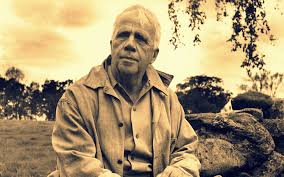
Robert Frost


The arc image reminds us of the interim statement in Frost’s ‘Birches’ that the narrator would “like to get away from the earth awhile”. In ‘A Soldier’ the desire for a similar escape is expressed more indirectly in the constriction and thudding physicality beyond the volta, at the opening of the sestet, descriptive of all lances’ fate when limited by human “sight”:

They fall, they rip the grass, they intersect

The curve of earth, and striking, break their own;

They make us cringe for metal-point on stone.

The short phrases, heavy punctuation and repeated 3rd person pronoun as well as the violence of words like “rip”, “striking” and “break” convey Frost’s sense of the tragic, destructive quality of such limited aspiration and vision. There is a double wounding implied as the lances intersect and puncture the earth itself and in doing so “break their own” (curve, I take it).

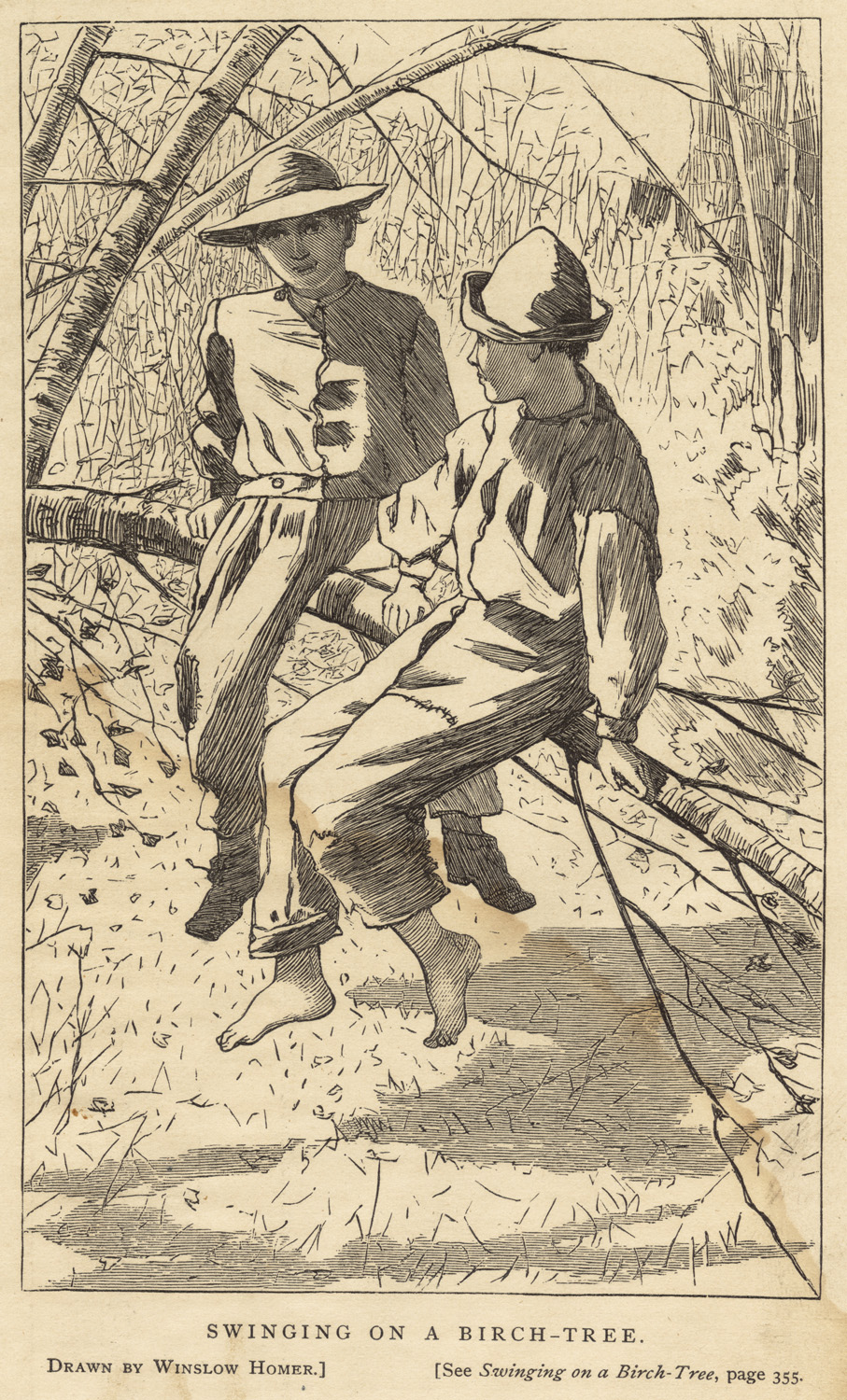
Frost’s use of the word “cringe” in line 10 is interesting. The root of the word is relevantly related to Old English cringan, crincan to ‘bend, yield or fall in battle’. Its modern meaning is to bend one’s head and body in fear or apprehension or in a servile manner or to experience an inward shiver of embarrassment or disgust. So our human failure to see or aspire beyond the earth – represented here by the lance’s metal point striking stone – becomes a defeat of sorts, an act of weakness or servility, at least of embarrassment or disgust at our own inadequacy. It is as if the birch swinger in Frost’s other poem has no other option but to remain in his despondent state, “weary of considerations”:

And life is too much like a pathless wood

Where your face burns and tickles with the cobwebs

Broken across it, and one eye is weeping

From a twig’s having lashed across it open.

5727567383_f719380140_o

It’s at this point the birch swinger expresses the wish to “get away” from earth by climbing the tree and swinging on it. But this is no simple, one-way,  transcendent wishfulness. In ‘Birches’ the narrator always intends to come back to earth and “begin over” because – in two of Frost’s most moving lines – “Earth’s the right place for love: / I don’t know where it’s likely to go better”.

‘A Soldier’ lacks the uplift (for reader) and complicating paradoxes of ‘Birches’. The sonnet dwells long and hard on our limitations, our poor aim and aimlessness, the burns, tickles and cobwebs. But the sestet ends in a declarative mode, not typical of Frost who works more usually via hints and guesses.

But this we know, the obstacle that checked

And tripped the body, shot the spirit on

Further than target ever showed or shone.

The “obstacle” here is the earth, plugging the lance, tripping the soldier himself, a pratfall in the obstinate materiality of the world. But Frost’s plainly concluding tone is now undermined by a more characteristic paradox in what has tripped the soldier’s body is precisely what also shoots his “spirit” beyond the merely everyday. The sonnet’s final line suggests the apparently unworthy “mark” of line 5 (now referred to as a “target”) has indeed been transcended towards something “Further”. Frost’s final phrase, overly pushy and hyperbolic, overly alliterative, the rhyming couplet also raising the poetic stakes a bit too high, strikes me as vacuous, its faux shimmer and shine propelled more by wishful thinking than precision of thought. Of course, what Frost intends to say – something about the generative tensions that exist between matter and spirit – may well be inexpressible but in poems like ‘Birches’, ‘Mowing’ and ‘After Apple-Picking’ he gets closer to it than he does in the confines of this sonnet.

cemetryl