As a Royal Literary Fund Fellow based at The British Library in London (though working on-line for the most part), I was asked way back in May 2020 (feels like a different world) to write and record three brief talks. One of these was on ‘Writing and Technology’ which I posted (as text and audio file) on this blog a few months ago. Another commision was to be titled ‘How I Write’ – not an easy subject on which to be clear and succinct but with a little help from WH Auden and Louise Gluck I hope I managed to say something that might be of help to all kinds of writers – poets, novelists and (the target audience of the RLF project) those writing at the varied levels of academe.You can read my blog (and hear me read the essay) here. The third and final essay was an intriguing invitation to write a ‘Letter to My Younger Self’. The recording of that piece has now been released and is available as an audio file on the RLF’s VOX site. You can read the Letter below – or listen to me read it by clicking here – or both at the same time if you’d like. Afterwards I have also posted a poem relevant to that particular biographical moment. An earlier version of this poem first appeared, a long while back, in The London Magazine.
Letter to my Younger Self
Dear Martyn,
You will have just got off the train from London Bridge. It’s 1976. The end of a day studying Medicine which you begin to hate. And now back to Eltham Park, to digs you’ve loathed since you arrived (the well-meaning landlady is no substitute for your mother). Probably you walked past that little music shop somewhere near the station, spending minutes gazing at the red sunburst acoustic guitar in the window. If it doesn’t sound too weird, I can tell you – you’ll buy it and strum on it for 10 years or more. I can also confirm your fear: you fail your first-year exams. The Medical School allows you to leave . . . But listen, that sense of failure and lostness, it will pass.

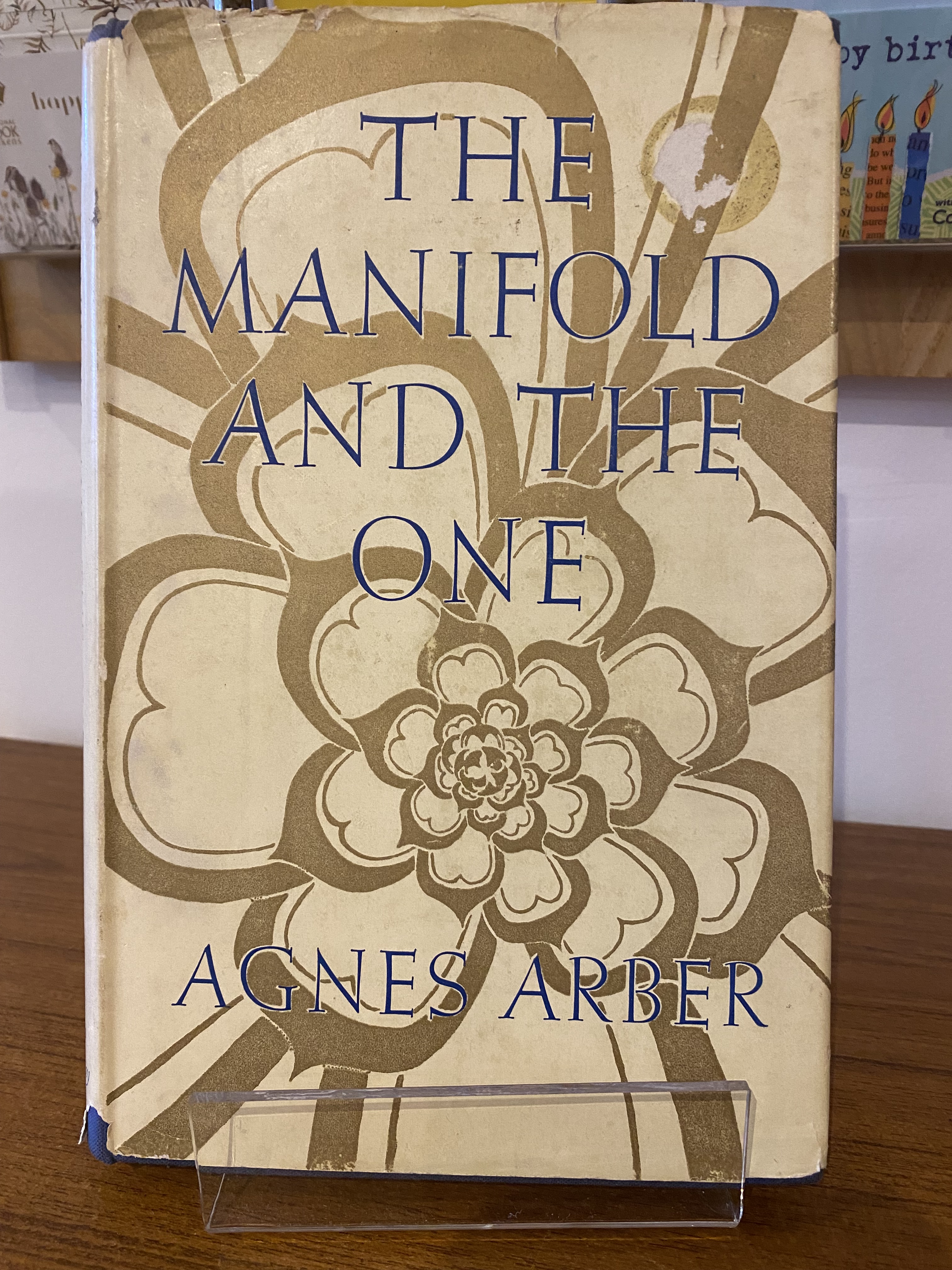
Keep on with the music, though your playing is not up to much and your singing . . . well, the less said. But writing songs will eventually lead somewhere. And the illicit books! You are supposed to be reading the monumental Gray’s Anatomy, textbooks on Pharmacology, Biochemistry, all emptying like sand out of your head. You’ve yet to go into that charity shop and pick up a book called The Manifold and the One by Agnes Arber. You’ll be attracted by the philosophical-sounding title; in your growing unhappiness at Medical School you have a sense of becoming deep. The questions you ask don’t have easy answers. You have a notion this is called philosophy. Amidst the dissections, test tubes and bunsens, you’ll find consolation in Arber’s idea that life is an imperfect struggle of “the awry and the fragmentary”.
And those mawkish song lyrics you are writing? They will become more dense, exchanging singer-songwriting clichés for clichés you clumsily pick up from reading Wordsworth (you love the countryside), Sartre’s Nausea (you know you’re depressed) and Allan Watts’ The Wisdom of Insecurity (you are unsure of who you are). Up ahead, you take a year out to study English A level at an FE College. Your newly chosen philosophy degree gradually morphs into a literature one and with a good dose of Sartrean self-creativity (life being malleable, existence rather than essence) you edit the university’s poetry magazine, write stories, write plays, even act a little (fallen amongst theatricals!).
At some point, the English Romantic writers get a grip on you, taking you to Oxford where you really do conceive of yourself as a poet, get something published, hang out with others who want the same. Then guess what – for a teenager who’d so little to say for himself in class – teaching becomes a way of continuing to study and write while making a living. It suits. It takes us out of ourselves.
Along the way, you write some poems you are proud of. You will suffer the writer’s curse, of course: the recurrent fear of not being able to turn the trick again. But I’m sending you this to say, through all the years ahead, it is words that will infinitely enrich your life. So pick up the pad you doodle on in lectures. Write a line. Write another line. I see you hunched over a dim-lit desk, but no question – yes – you are heading in my direction.
With best wishes,
Martyn
x
How to fail at anatomy
x
This one believed
he maybe had the brains
another that he had
the right demeanour
x
but the Schools denied him
till it was too late
then reprieved him
with the offer of a place
x
that by then he knew
could not be refused
(such anticipation
had struck such roots)
x
so he has no recall
of the moment of choice
before those appalling
digs in Eltham
x
where he had to stow
his dislocated skeleton
under the bed—crammed
one side of his head
x
with tendons muscles
and pharmacol
with biochem and
bright sets of nerves
x
everything spilling out
the other side
into failure—fallen
to wandering streets
x
to stealing Everyman’s
Selected Wordsworth
he was John Stuart Mill
wishing his soul
x
saved though he felt
love etiolating
the girl from home
now a girl from home
x
her kisses like shrugs
at London Bridge
saying go your own way
at least not imposed
x
not merely allowed
and if you want to live
deliberately first
you slit the shroud
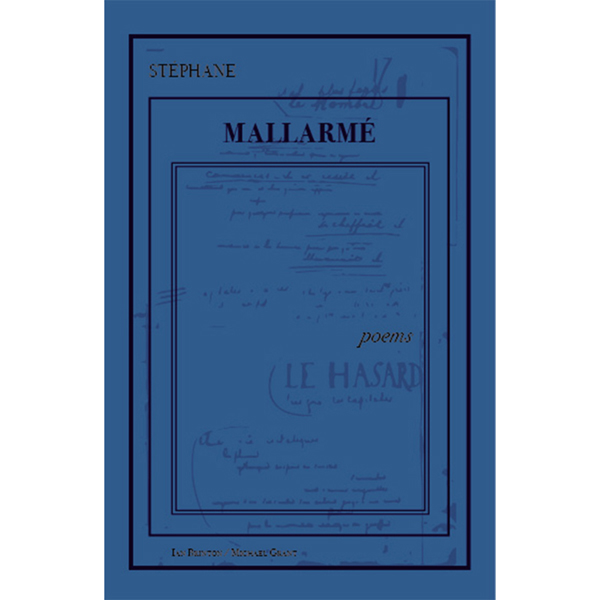 I am very grateful to Ian Brinton’s and Michael Grant’s recent translation of a selected Mallarmé (Muscaliet, 2019) for sending me back to a poet who has always proved problematic for me. My natural inclination draws me more to Louis MacNeice’s sense of the “drunkenness of things being various” (‘Snow’) – his emphasis on poetry’s engagement with “things” – and his desire to communicate pretty directly with his fellow wo/man, than with what Elizabeth McCombie bluntly calls “the exceptional difficulty” of Mallarmé’s work. I appreciate that such a dichotomy seems to shove the French poet into an ivory tower (albeit of glittering and sensuous language) while casting the Irish one as too narrowly engagé, but I’m also aware that Sartre praised Mallarmé as a “committed” writer and that, despite some evident remoteness from the ‘tribe’, the French poet’s political views were both radical and democratic.
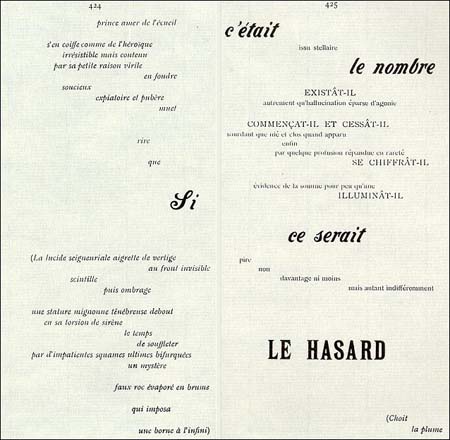
 So, if we must give up on such ‘understanding’, what was Mallarmé – writing in the 1880-90s – doing? Something recognisably very modern, it turns out. Contra Wordsworth (and MacNeice, I guess), Mallarmé and his Symbolist peers, held ordinary language in suspicious contempt as too ‘journalistic’, too wedded to a world of facts. Poetry was to be more a communication, or evocation, of emotion, of a detachment from the (merely) everyday and a recovery of the mystery of existence which rote and routine has served to bury. Such a role demanded linguistic innovation as suggested in ‘The Tomb of Edgar Poe’ in which the American writer is praised for giving “purer meaning to the words of the tribe” (tr. Brinton/Grant). Writing about Edouard Manet’s work, Mallarmé saw the need to “loose the restraint of education” which – in linguistic terms – would mean freeing language from its contingent relations to the facticity of things (and the tedium and ennui that results from our long confinement to them) and hence moving language nearer to what he called the “Idea” and the paradoxical term Nothingness (as Brinton/Grant translate “le Neant”).
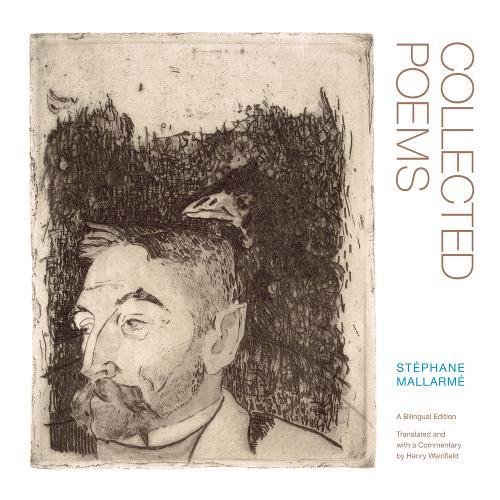 For these reasons, Mallarmé “cede[s] the initiative to words” (‘Crise de Vers’), to language’s material aspects as much as to its referential functions. Carrying over the material aspects of his French verse into English is then, to say the least, difficult. I’m inclined to agree with Weinfield (Introduction to Stephane Mallarmé Collected Poems (Uni. Of California Press, 1994) that it is “essential to work in rhyme and metre, regardless of the semantic accommodations and technical problems this entail[s]. If we take rhyme from Mallarmé, we take away the poetry”. But is that even possible? The accommodations and problems that arise are huge! Mallarmé placed the sonnet, ‘Salut’, at the start of his Poésies as a toast, salutation and mission statement. Weinfield gives the sestet as follows: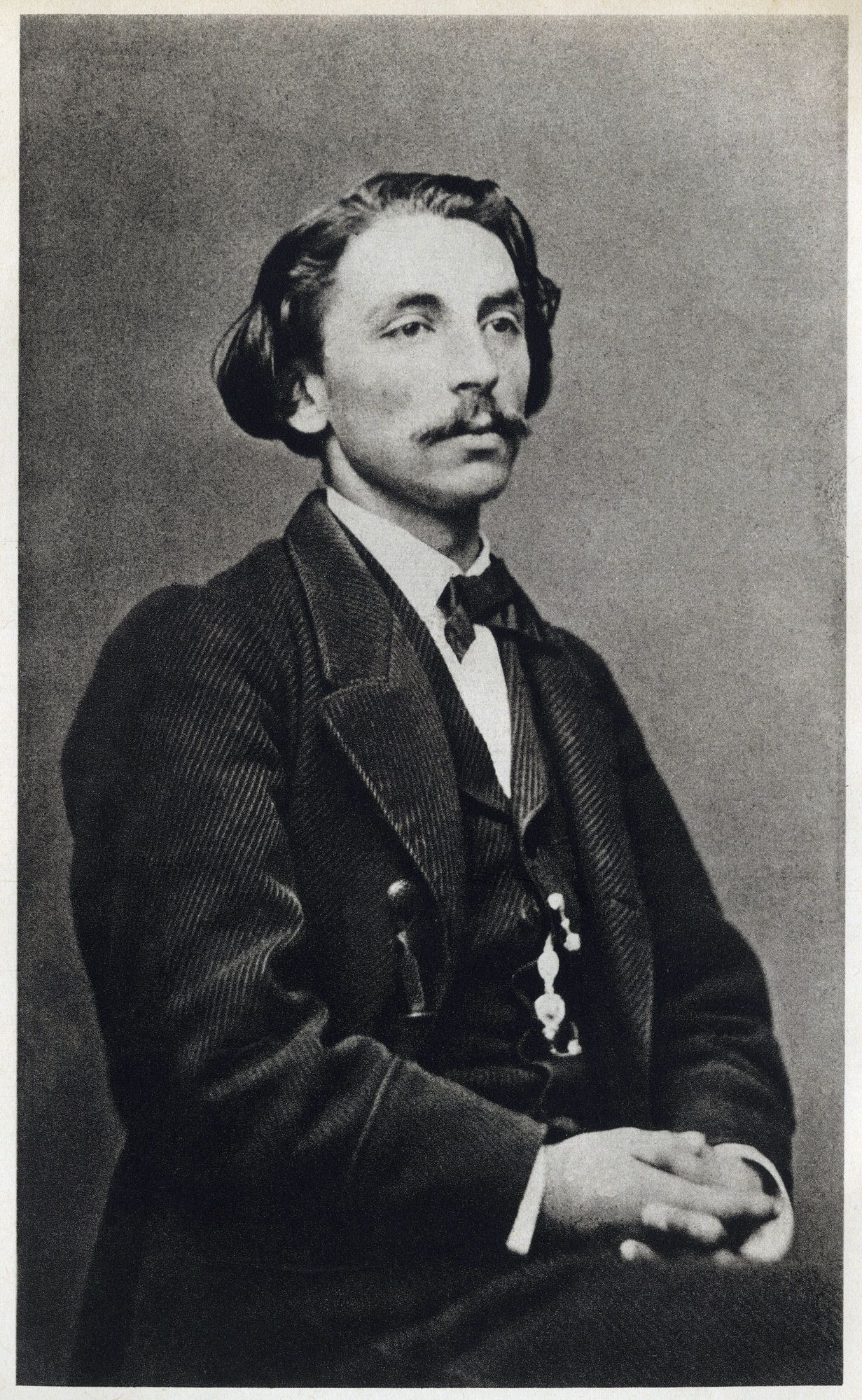
 Martyn Crucefix