‘I am not I’: the Slippery First-Person in Poems

A couple of recent experiences with my own poems being posted/published on-line and kind readers then commenting on them has made me think again about the use of the first-person singular in poems – the use of ‘I’. Perhaps ‘think again’ is the wrong phrase as I have never – or at least not since my far distant teen years – really thought of the ‘I’ appearing in my poems as identical to the biographical, historical, personal ‘me’ tapping this out on a keyboard on a sunny Tuesday morning after the Easter weekend. How many millions of times have I suggested to students: let’s not make the assumption that the ‘I’ in Sylvia Plath’s poems is necessarily Sylvia Plath. And that perhaps is not the best example to give as we’ll then get into a debate about what exactly ‘confessional’ poetry is. But the fact that there has sprung up a category of ‘confessional’ suggest that the majority of other poems are not of that type. In which case the ‘I’ is to be taken with a large pinch of salt. Poems are not diaries or even journals but finely (I mean carefully) constructed mechanisms and the ‘I’ is but one of the building blocks.

Artists regularly move trees I’m told (within their frame). A painting is not a documentary. Some way back I remember reading that Auden would switch a positive to a negative for the sake of the music he aspired to. I’ve often found myself suggesting (in workshops) that the writer might try shifting the first person to the third, even the masculine pronoun to the feminine. These are just the little lies we tell in order to express the larger truth we are aspiring to and I’d fight to preserve that freedom of language and imagination, even the questions it might raise about ‘identity’. But what about the two poems I mentioned before. What was going on there?

The first poem appeared on Bill Herbert’s fascinating Ghost Furniture Catalogue site – which if you haven’t been there – go! Responses to this poem seemed to suggest the literalness with which some readers will approach a poem as voicing a ‘personal’ experience. Perhaps I was already wary of a too literal reading even in sending it out for publication. The title (‘A bedroom paranoia’) I chose wants to warn readers: there is something fantastical or imaginary here – there is a paranoia at work (that is not really the truth). One thing I’d say about the poem was that the experience – based on a real incident – had been sitting in a notebook for several years. I’d always felt there was something interesting in it – but couldn’t get it anywhere near right. I think my own learning experience was that to succeed you have to move a few trees… The opening 5 lines are (I’ll admit) close to the truth…

Pitch-dark, the carpet brushed by the door,

  hush-ush, you’re up, a while, now you’re back,

damp from the shower, waking the radio,

  and – who knew? – a king’s birthday, his anthem

limping on while you find clothes for the day

…. but by the time I felt I was getting close to the true poem that I wanted, the Queen had died and I had to substitute her son, Charles III, for her, in order not to make the whole thing misleadingly ‘historical’. The door brushing the carpet is something to be heard every morning. The woman rising before the (loafing) poetic voice is also not uncommon in real life. It’s the second line that is crucial: ‘hush-ush, you’re up, a while, now you’re back’. I wanted to evoke my own experience of dozing to and fro, time slipping forwards without being conscious (awake) to experience it. And that experience is taken up in the next 4 lines:

  and I roll – the pomp now fading – to take

my usual plunge, all the way to the floor,

  turning to smile at you. But the shadows

are vacant where you stood moments before

The first person has dozed off again for several minutes and the woman has simply gone downstairs to begin her day. The paranoia kicks in in the final 5 lines, despite the rational mind knowing what has happened. I wanted to capture (something I did feel to a degree) the sense of ‘what if’? What if the partner had gone not merely down the stairs but off into the world, away from home, never to return? I thought ‘brute stab of abandonment’ was a decent phrase for this emotional moment.

  and – though explaining this is easy

as my drifting in and out of sleep – all day

I’ll nurse the brute stab of abandonment,

  gone – the shock – you left no word – worse,

you were sure no word was worth the leaving.

Looking back, the verb ‘nurse’ seems important. The paranoia is largely self-inflicted, even encouraged (even as the day goes on), in a kind of picking at a scab, a masochistic inclination to ‘try out’ how that ‘abandonment’ would feel. I don’t think this is an admirable trait – but one which of us would say we have never felt? It’s here that the fictionalising comes in. I don’t think I DID feel like this all day, but I’m happy to represent ‘myself’ in this way to explore the (rather male?) emotional response. One of the comments on this poem was to commiserate with me that my partner had indeed actually left me. I guess that needs to be read as a compliment: it suggests the poem conveys the ‘stab’ as pretty convincingly ‘true’.

The second poem was recently published in Poetry Scotland and I trumpeted the fact (as you do) with a Facebook post to which there were a number of likes and comments. Several clearly implied that the reader had read the poem as autobiographical. In fact, there is less here that is personal than the previous poem. It derives from notes I made back in the time of Covid. My own father in fact died before the pandemic (a fact for which I often feel grateful… then guilty). So – as the poem discusses an absent father – the truth it is exploring is my own ‘feeling’ about an absent parent (though the cause of death is different). The title was a late addition (‘How to Address the Inquiry’), chosen as the Covid Inquiry has been taking place (to very little public response. The tone of the poem is angry:

If he was still in his armchairbeside me

I guess I’d try to raise a smile—

perhaps, for want of better, with this tale

of last night’s troubled tossing in bed

one arm snagging the bedside lamp

to bring it thump onto the bridge of my nose

to leave a bleb of dried blood

in the mirror this morning proving

I fought and lost—or else I might

tease him with his beloved City

in the fight for relegation again

or perhaps I’d pull back the curtain

you see there! a few primroses!

Plenty of the detail here is personal – the wrestling with the bedside lamp actually happened (to me – though after Dad had died), he supported (rather unenthusiastically, Bristol City), he loved his garden. The next detail is pure fiction but I felt the showing of the image to a man already dead would be a powerful one:

or I’d find my phone and maybe show

the newly done memorial bench

bearing his name by a tree in the park

And I wanted to let him speak for himself, to express his own anger. To me he is one of the many voiceless dead, resulting from Covid, especially those in care homes (both my parents ended in such a place and died there), those who could not be visited by relatives and friends due to contact restrictions:

and in the quiet I’d hear ashes stir

a murmuring of lips beyond cracked

and inaudible though I know the gist

that I was let down—they’re slow to act

letting people come they let people go

running it’ll be fine! up their fucking flagpole

then backhanding fat cat chums

with a hundred and fifty thousand lives

a fire sale fobbed me off with shit deals

even dangling one last Christmas before me

only to shove it—old ashy whisperer—

foldedinto yourself a dishcloth

on the drainer—a hiccupping cough

into your pillow—a last companion—

too old to ventilate . . .

We all read the stories of deaths of this sort. None of this is ‘true’ to my own experience (or my parents) but this is where the ‘larger’ truth surfaces, and this was my own way of trying to say something about it. The poem ends very emotionally (for me) because it returns again to autobiographical details. I DO have this picture on my mantlepiece (behind me as I type this out). I’m drawing on my own sense of loss, but I hope the dovetailing with what is fictional (for me) is effective enough. People wrote indicating their compassionating sense that I had indeed lost a parent during Covid and I want to again take this as a compliment to the technical success of the poem in its final state.

        I’ve his wedding day

on my fireplace—you should come see

how young they are with what awkward pride

he stands in sunlight at the end of the war

in his mid-twenties in his air force uniform    
Here There Now Then – A Touch on the Remote

There are occasions when events from the past seem to become so fully present in the moment as we live it that it’s as if a gulf has been bridged between them. It’s a sort of redemption – though the events themselves may need no redeeming. What is salved is the permanent vanishing of the earlier through the intensity of attention accorded it by the later, perhaps especially so if our attention is manifested in language, a poem. There is an aspect here of Seamus Heaney’s idea of the redress of poetry which I ought to figure out more clearly.

images

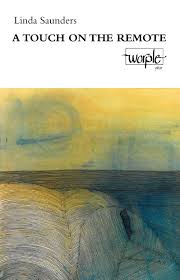
But I was left with thoughts such as these last week, having read for Dawn Gorman’s Words and Ears series of poetry readings in Bradford-on-Avon, Wiltshire. We’d set it up many months ago and I had been looking forward to it especially as this is close to my home town, Trowbridge, and my mother’s childhood and adolescence were spent in Bradford. I was also delighted to be reading with Linda Saunders who has just published a new collection with Worple Press, A Touch on the Remote. I’d had a few meetings with Linda many years ago (in the 1980s) when she would go up to Oxford to visit my old friend and mentor, Tom Rawling. There were several workshops at his house, I think, in that peculiarly intense summer sunshine of the past, full of hope and literary expectation. Like much of Rawling’s work, the opening sequence of Saunder’s new collection is composed of poems concerned with acutely observed landscape – in several cases observed with an almost visionary sense of history . . .

imgres
Linda Saunders

My mother was christened Bernice, first child of Graham and Elsie Hale in 1922. Her sister, Gwen, quickly followed. There was no immediate prospect of their leaving the White Hill house which was a one-up, one-down with attic. The two girls had to share the middle room with ‘Gran’ (as they called Elsie’s mother, Rhoda). They walked up White Hill to school at Christ Church. They skipped down to the sweet shop, to the ‘bake house’, to the centre of town. On Sundays they climbed Coppice Hill to the Methodist church and Sunday School.  In good weather, the two girls hooked their arms over the iron railings outside the house with Elsie in the doorway warning them not to stray far. They jumped up and down the high kerb stones, played whips and tops on the steep, quiet street. On wet days, they stared through the front window, across the roofs of the town below to the spire of Holy Trinity. Bernice was badly ill with scarlet fever when she was eight years old and for a long while afterwards was so weakened that she had to be helped everywhere in an old pushchair.

imgres

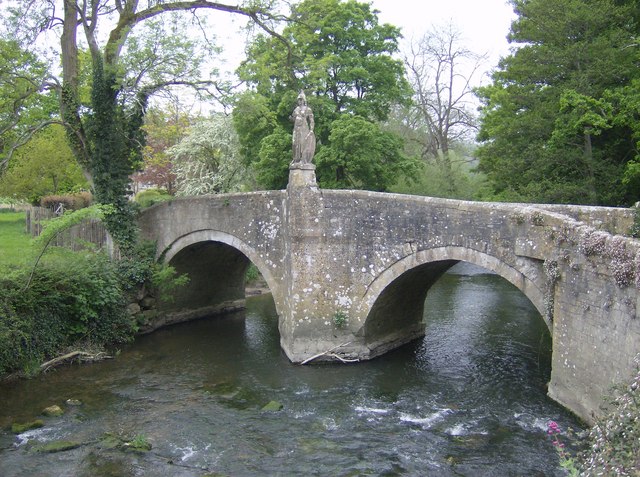
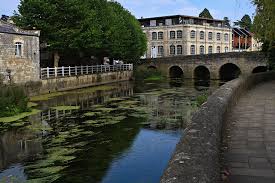
Saunders’ own strong sense of history can be seen in ‘Washing the Horses’ where the narrator watches people who “sleek soap-lather” on their horses’ wet hides. A bit later, the horses dry off on the bankside, “bays, pintos, strawberry roans, a shetland / with a foal no taller than an Eohippus. // This has been happening forever”. In ‘The Bridge at Iford’, a couple kneel as if in a ritual act, “like pilgrims” to watch the water flow under the bridge, themselves being watched by statues of “Greco-Roman deities”. Then the arrival of a newly-betrothed couple for photographs at the picturesque scene leads to thoughts of the future too – “Live happily. I think to them in passing, / ever after – the wish as ultrasonic as / the pipistrelle’s twitter”.

Britannia_at_Iford_Bridge_-_geograph.org.uk_-_438784
The Bridge at Iford Manor

The narrator’s image of the pipistrelle bat’s piercing signal could serve as one of the key images in Saunders’ work. Elsewhere she jokes about the onset of deafness: “Something I say, something she said / flies past us into the wood” (‘Hidden Valley’). It’s these forms of strained/successful communications across time and across distance (with a son living in the USA) that also provide material for a later sequence of poems: “I see him stepping over the door sill / across a crack of time” (‘Into the Blue’).

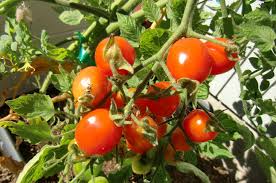
We would squeeze into the Standard 10 to visit my grandparents on Winsley Road, Bradford. It was a dark, terraced house which had an immense front garden with a pleasingly straight path from the front gate to the door in the centre of the facade. This path was lined with planted borders, the earth heaping up from the lower level of the path and there were roses and vegetables elsewhere and I am sure an allotment somewhere. At the back of the house was a tiny yard containing the outdoor toilet, a fascinatingly musty dark cramped garden shed, a sweltering little green house which seemed always full of tomato plants. There was also a raised piece of grass – you could not call it a lawn – where we tried to play football or cricket but the risk of the low walls was really too great. Instead, we often played on that long front path; Corgi cars pushed to and fro as we breathed in the acrid-sweet smell of lush cushions of blooming white alyssum.

images

Saunders’ background is in History of Art as well as literature. You can see this in ‘Reserve’ where she describes the processes of a painter preparing the ground for an object on the canvas, in this case an apple. The poet is interested in the absence, the vast potentiality before the object appears: “There are moments I sense // the inter-touch of me with everything – / this unselving reach”. During the Words and Ears evening, I read a number of poems from my Daodejing versions which also suggest that such an “unselving” might prove a happier and more fulfilling line to take in life. With our own “unselving”, the more aware we become of our surroundings, our context in both space and time.

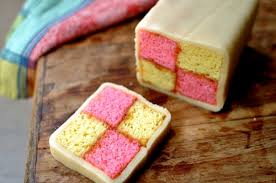
It is Saturday tea – laid out on the living room table. There is a second front room hardly ever used which, if you open the door and peer in, feels chilled, dark, a little musty and formal and a baffling waste of space. We sit round the table and eat sandwiches, perhaps crumpets, malt loaf, Victoria sponge or the pink and yellow check of Battenberg cake which I loathe because of the marzipan covering. Nan or Mum often slice the rounded ribbed milk loaf that I have never seen anywhere else, turning it on its end and slicing horizontally, perilously.

imgres

In ‘Love Portrait’, Saunders describes a window on another canvas as yet “unpainted”. She wonders “could this be the light that slips / past time”. Because the artist has yet to define it, perhaps this is also the light that communicates between times.

We wore short trousers, of course, and I still can feel the way the thick dark tablecloth with its tasselled edges brushed my thighs making me want to scratch them. Elsie’s husband, Graham, was a quiet mild man, always limping because of a shrapnel wound in the leg from the battle of the Somme. He sang in a local choir, had worked all his life at Nestle in Staverton, gardened keenly and seemed a loving husband and father though to us he was a rather remote, taciturn grandfather. Just once he exploded at us for something I have now forgotten – perhaps just making too much noise or not clearing the table of toys or drawing books quickly enough when he wanted to swing the heavy cloth across it in readiness for the meal. Given his generally gentle demeanour, his blazing, brutal anger astonished and appalled us.

walk-15

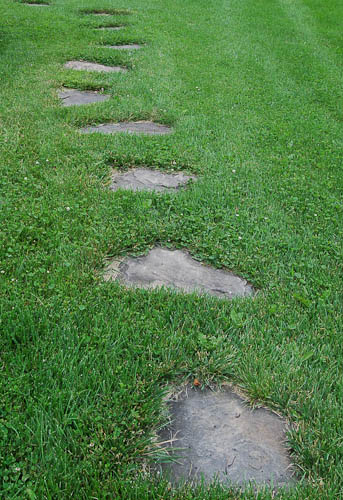
The final poem of Saunders collection is ‘Stepping Stones’. Another artist, a sculptor this time, makes “foot-shapes of stone”: “The child found them one at a time, / spotting the next from where she stood on the last / up to her thighs in seedheads and buttercups. / Where will they go? she asked the sculptor”. They lead onwards inevitably into the next moment, then the next – but to live wholly in the present, only in a language composed of present participles, is a form of dementia, a quite different and destructive form of “unselving”. Our making sense of things requires our awareness and exploration of the temporal.

Kei Miller’s ‘Cartographer’ and Friel’s ‘Translations’

Kei Miller’s third collection, The Cartographer Tries to Map a Way to Zion (Carcanet), recently carried off the Forward Prize for poetry and it struck me that it shares concerns about language, colonialism and map-making with Brian Friel’s play, Translations (1980) which has become something of a staple teaching text in recent years for several exam boards.

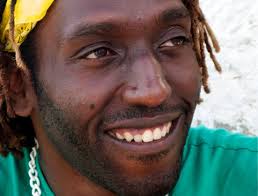
Miller’s poems explore knowledge of place. To begin with there are two opposing views. The cartographer of the title is schooled in “Babylon science” and seeks objective, timeless, abstracted knowledge of Jamaica, knowledge of worth (to his mind) because rid of all contingent distraction. The rastaman knows his island more subjectively, historically, full of local detail, more politically. For the rastaman the island is “unsettled . . . unsugared . . . unmapped”. It “fidget[s]” and slips from “your grip”, is full of what the objective gaze can “never see”. The cartographer arrives with the colonial mission to “untangle the tangled, / to unworry the concerned”, to set a nation and its people back on the right path from which they “may have wrongly turned”.

images

The 27 sections of the title sequence then proceed to track the dialectic between these two viewpoints. But the book itself is less Ordnance Survey, more a full colour, illustrated map stuffed with half-sketched houses, trail signs, characters, places. This wonderful effect is achieved by Miller’s scattering, along the trail of the dialogue, poems that explore the etymology of place names as well as others that praise various aspects of Jamaica (especially its creatures). So the outcome of the dialogue – proceeding as it does as a pretty civilized skirmish – is loaded in the rastaman’s favour. It’s true that he is said to dismiss “too easily the cartographic view”, though even here the particular poem ends with an acknowledgement that the Eurocentric Mercator projections of the world (1569) misrepresent the size of Africa and have long “gripped like girdles / to make his people smaller than they were”. Rather, it is the position of the cartographer that shifts significantly. Though initially he too “dismisses too easily the rastaman’s view”, he soon begins to “lose himself” among the “I-drens & I-formants . . . smoking a chillum”. Eventually a question rises in his mind, “between his learning / and awakening: how does one map a place / that is not quite a place? How does one draw / towards the heart?”

It’s on this basis, in his more illumined state, that the cartographer begins to try to “map a way to Zion”. Of course, he needs the rastaman to point out that Zion is less a “where” than a “what” and that it cannot be plotted towards but rather must be waited for. Nevertheless, the book’s conclusion is comedic; the whole begins and ends with a “heartbless”. The brutal facts and bloody history of colonialism are conveyed more in the place name poems, many of which record displacement, floggings, shootings, “suspicion . . . centuries deep”. The brevity of most of the poems, the switching between standard voice and forms of Jamaican patois, the details of landscape and people, all combine to make a very enjoyable read, rewarded with a convincing up-lift at the end.

Translations 4

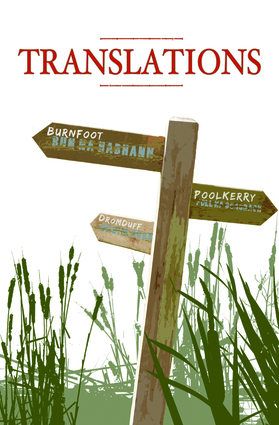
Remarkably similar territory is explored in Brian Friel’s modern classic drama Translations, about the re-mapping of Ireland by British colonial forces around 1833. But Friel writes a tragedy, recording (with historical hindsight) the almost complete stamping out of Gaelic culture and language in the 19th century. The British sappers (like Miller’s cartographer) claim they are there to benefit the Irish people, to rationalize and clarify what they perceive/assume is a backward country in need of modernization. But Friel (like Miller) portrays the native culture as sophisticated, if different, so that with the British process of improvement comes inevitable loss. The hedge-school teacher, Hugh, closes the play, failing to recall lines from Virgil and Friel is implying, with dramatic economy, with the stage lights fading, the loss of knowledge, of language, of personal and national identity. In contrast, Miller’s book ends in peaceable benediction:

In leaving

The rastaman bids you

Mannaz and respeck

Izes and protecshun

Upfullness

He bids you

Guidance and healt

Inity and Strenth

Bids you, Trod Holy

To I-ly I-ly I-ly

Mount Zion-I

Trod Holy.