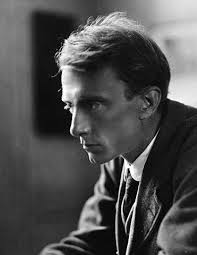
Michael Donaghy – 10 Years On

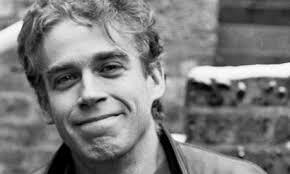
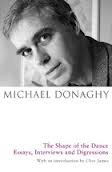
With the South Bank in London about to stage a celebration of Michael Donaghy’s work (http://www.southbankcentre.co.uk/whatson/michael-donaghy-a-celebratio-85980) and several new publications forthcoming, I remember reading with him around 1990 at that same venue. I’m sure the event was recorded but I’ve never heard it since. He was reading from Shibboleth (1988) and I must have been reading from Beneath Tremendous Rain (1990). I reviewed his posthumous book Safest (2005) for Poetry London (I think) and thought it might be appropriate to post it here unchanged. My intention was to review his work as a whole as well as commenting on the short collection that Picador had then produced.
imgres

Michael Donaghy’s death in 2004 is rightly regarded as a great loss to English poetry. With the publication of Safest – poems he had been preparing for a fourth collection – we can see his work over 30 years forming a tragically curtailed, but significant whole. I wonder if he tired of the early ‘metaphysical’ label, so easily applied to a poem like ‘Machines’ which opened his first book and remarkable in 1988 for its elegance of form and delicate wit. What is really distinctive in the first two books is his pursuit of the dramatic lyric. Donaghy is a terrific storyteller and a key part of his success is the irresistable address of his narrators. This is usually combined with astonishingly fluid transitions from colloquialism to the complexly erudite (the metaphysical bit). Drama lies in Donaghy’s precision of voice, the accessibility of character and narrative and his superb, often comic, sense of timing. His deployment of these various devices results in the other distinctive property of a Donaghy poem – the sheer distance it can travel from start to finish and the surprises on the way. Particularly for those who saw him perform, these are the elements he triumphantly combined in feast-like poems such as ‘Smith’, ‘Letter’, ‘Cadenza’, ‘Liverpool’, ‘The Hunter’s Purse’ and ‘Erratum’.

In retrospect, the traditional nature of his subjects is clear: love, art, death, time. Perhaps the absence of politics will come to be seen as a bar to real greatness, though the opening 20 pages of Shibboleth and the first two sections of Errata are very powerful evidence in his favour. Perhaps all his concerns are subsumed in his continual meditation on the temporal – how identity is composed of past events, how the past can seem more real than the present, how “the past falls open anywhere” (‘Black Ice and Rain’ from Conjure). Always restless, Donaghy’s third book seemed significantly darker in tone and contained fewer stories. What the blurb referred to as his most “vulnerable” work is a series of heart-broken love lyrics and a number of poems on his relationship with his dead father. Of the latter, ‘Caliban’s Books’ is outstanding and need give no quarter to Plath’s ‘Full Fathom Five’ in the evocation of parent/child relationships and Donaghy’s poem is full of tenderness and astringent nostalgia for the lost man and his Irish childhood.

Now Safest gives us 24 new poems – barely half a full collection – and one can only wonder at what might have been. Maddy Paxman’s note on the contents suggests these were the pieces Donaghy had approved for publication, but even so the repetition of a brief passage in two quite different poems (page 21 and 27) suggests an inevitable lack of finish. The book seems to have been shaping up more to resemble Conjure than the early work. Vintage Donaghy can be found in poems like ‘A Darkoom’, an imagined/remembered portrait of Klein, a holocaust survivor and photographer, visited in the garrulous narrator’s youth but whose memories of the man are at risk of being forgotten. The opening poem’s image of a Claude Glass (an 18th century device for creating picturesque images of landscapes that lie at the viewer’s back) is a perfect vehicle to articulate Donaghy’s retrospective habit of  “squinting to recall some fading pleasure, / or [being] blinded by some private scrim of tears” (‘Upon a Claude Glass’).
imgres

‘From the Safe House’ is another narrative tour de force, blurring the boundaries of memory and imagination, compacting time to an eternal instant in writing a letter from Reagan-era Chicago to send in the present day to a friend who has just died prematurely but imagining him a happily married father in Vera Cruz! Against all the odds this works – and is deeply moving. This is an almost baroque extension of earlier modes, but Donaghy’s bold re-writing of the original in ‘Akhmatova Variations’ looks like a new direction. As does ‘The Moko’, which reads as a hypnotic paean to some whale-like creature: “Muscles of silence are rolling miles offshore at night”. Such environmental concerns are new in Donaghy’s work and his lyricism invests these creatures with grace and nobility:

They knew the stars and steered by singing them

and when the stars were dark, by wind,

and when the winds died, by wave swell,

bird flight, swirled shoals of luminous algae,

by phosphorescence a fathom under the outrigger.

The fact that the moko turns out to be a Polynesian mythical beast of the sea only adds to the poem’s intrigue.

Donaghy’s art – as far as it was allowed to develop – owes its success to contradictory impulses. It thrives on tensions between fluid and formal, colloquial and erudite, humour and seriousness, personal and impersonal. It strikes me there was a movement over the years from the first of each of these contrasts towards the second – whether a permanent sea change or mere local turbulence we will never know. Of course, hindsight tempts us to see the darkening as prophetic but, as I have said, this was under way in his third book. Safest has its preponderance of troubled and troubling lyrics, less love-torn this time, more concerned with the dissolution of self. ‘Midriver’ is a bold language experiment in which the lyric voice is almost wholly stripped of its personal pronoun and identity seems lost in a swirl of the temporal and spatial: “so stops halfway and, neither there nor there, / but cold and rained on and intransitive”. Even more explicitly in ‘Exile’s End’ and ‘Disquietude’, it is death that lowers and Donaghy writes not with Larkin’s horror, nor Thomas’ raging, but from an intrigued distance: “No recording devices are allowed in this hall. / The lights dim . . . / for the next movement / which features no one and is silent”. (‘Disquietude’).
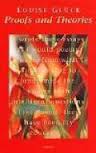

Louise Gluck’s ‘Education of the Poet’

As Keats once said, several things dove-tailed together. One of these was being asked by Poetry London to review Louise Gluck’s new collection, the PBS Recommendation, Faithful and Virtuous Night (Carcanet, 2014). The other – yesterday – was discussing with students the opening quatrain of Edward Thomas’ ‘The Sun Used to Shine’ with its marvelous evocation of the happy days he spent with Robert Frost in the Gloucestershire countryside in 1914. The opening lines employ an ABAB rhyme scheme, enjambement, judiciously placed caesuras and simple colloquial choices of verb and adverb to create its effects. As often, students asked whether what we were discussing was ‘thought about’ by the poet. My usual answer is that a writer is far more conscious of his craft that they might expect, but also that he considers options and exercises a veto. Like evolution, what fails goes to the wall; what remains becomes more and more coherent and effective. This is an idea I first saw expressed in Gluck’s essay, ‘Education of the Poet’ (originally a lecture delivered in 1989, reprinted in Proofs and Theories: Essays on Poetry (Carcanet, 1999).

imgres

Gluck’s over-riding point is that her characteristic mode of thought defines itself “in opposition”. This gives rise to her image of the poet as fundamentally in a state of helplessness much of the time, absorbing whatever is regarded as ‘oppositional’ and looking for opportunities to speak back. She makes it clear that such an idea “does not mean to distinguish writing from being alive”. What it means in practice is that the life of the poet is a life of “yearning, not [one] made serene by sensations of achievement”. The image of the writer effectively, confidently, repeatedly decanting her self, her being onto a sheet of paper is a false one. There are periods of silence, preoccupied with the desire to make art, a restlessness that may be agony. When at last “some sound, some tone” precipitates, what follows is a period of concentrated work: “so called because as long as one is working the thing itself is wrong or unfinished: a failure”. Yet when the poem, the utterance, is finished – Gluck argues – the poet is no more, reverting “simply [to] someone who wishes to be one”.

This pattern of a powerful force, a cacophony being replied to by the artistic voice  can also manifest in the way a poet engages with language. Gluck rejects the idea that poets are people who can’t get enough of individual words like ‘incarnadine’, in favour of language deployed in larger swathes to create contexts in which the “simplest vocabulary” is liberated from custom. It is custom that is thus replied to through using the gestural aspects of language – setting, timing, pacing – releasing words into novel relationships with truth. The poet generates material, improvises, plays with language and replies to what is produced through the process of veto. Like evolution, what fails goes to the wall; what remains becomes more and more coherent and effective.

imgres

So it’s no surprise that Gluck’s taste in poets favours those whose mode of poetic speech is more like a spoken confidence, a reply, a conversation: “I read to feel addressed”. Accordingly, her personal preference is not for poets – like Wallace Stevens – whose work is a more solitary musing, like “intercepted meditation”, not concerned to be listened to. I find myself in agreement with much of what Gluck says and – re-reading the essay now – I remember that she also uncovers this pattern in the teaching process. She warmly recalls being taught by Stanley Kunitz, his application to the novice writer of a steady “scrutiny”, the oppositional force “from outside, from the world, from another human being”. It’s a scrutiny and compulsion she herself continues to provide for her own students; the teacher’s presence is to stir, to provoke the reply, to kick start the process of definition.

It seems even one’s own work can be seen in this light. Considering her early collections, Gluck regards each new book as a fresh reply to what went before. This is a good answer to my students’ inquiries about how conscious an artist can be. Gluck tells us – and we should more than half believe it – that here she sought latinate suspended sentences, there how to end a poem without sealing it shut; elsewhere she looked to learn a longer breath, to make better use of the present tense; later still to write something less heroic, devoid of mythic reference. The artist is conscious, manipulative, alert. The artist waits, responds, manoeuvres. The both.

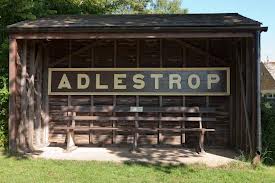
Teaching Edward Thomas’ ‘Adlestrop’

We teach the OCR exam board’s AS module F661, opting for Edward Thomas as the poet for close analysis. Oddly, the board do not include ‘Adlestrop’ in their selection of poems. So in the opening sessions, here’s a way of gentling students in to the processes of closely analysing a poem while also showing them Thomas’ most well-know piece.

imgres

Discuss with the class the idea of syllable counting in a verse line. Get them to try it by asking students to write an 8 or 10 syllable line beginning “Yes. I remember . . .”. Perhaps one of each.

For the exercise that follows (for those who want more restrictions) suggest keeping to an 8 or 10 syllable per line. Others (possibly the less able) may prefer more freedom . . .

Now . . . tell them to imagine they are travelling – some form of transport, walking, bike, train, bus. Ask around to reveal what they are imagining. Try pushing it a bit further, for more details, the car, the time of day, the scenery . . .

Now write 4 lines – a quatrain – in which you describe travelling and arrival at a particular location, at a particular time of year. They stop there. Maybe suggest they might open with “Yes. I remember . . .”. again – but not compulsory  . . .

Yes. I remember Adlestrop —
The name, because one afternoon
Of heat the express-train drew up there
Unwontedly. It was late June.

Next, write 4 lines in which you have stopped at this place – you hear a variety of noises – describe them . . .

The steam hissed. Someone cleared his throat.
No one left and no one came
On the bare platform. What I saw
Was Adlestrop — only the name

imgres

Next write 4 lines in which you give a description of what you see – first 2 lines things close by – second 2 lines things further off . . .

And willows, willow-herb, and grass,
And meadowsweet, and haycocks dry,
No whit less still and lonely fair
Than the high cloudlets in the sky.

Finally write 4 lines in which your attention continues to drift away into the distance, ever more remote from where you stopped; suggest it is wholly up to them where they stop with this one – attention may be drifting for miles, even for years . . .

And for that minute a blackbird sang
Close by, and round him, mistier,
Farther and farther, all the birds
Of Oxfordshire and Gloucestershire.

Very optional 4 lines depending on how well they are going – in which they may conclude the piece in any way they wish. Interestingly, Thomas does not make use of this option, does not conclude in any neat fashion; a point for discussion later perhaps. . .

Finally, show Thomas’ own poem. Give out copies. By this stage, students will be likely to have opinions and/or questions about the way the original piece deals with the same material they have just written about.

Homework: to type out the lines created during the lesson – taking any opportunity to alter or just tidy them up to be presented next lesson.

Next lesson – Take the poems they have typed up. Copy them and re-distribute them, one to each student (not their own poem though). Ask them to identify and annotate SIX items from the poem in front of them where they perceive the writer has made use of technical devices.

Ask each student to present and illustrate orally TWO of these devices to the rest of the class. These will range from the simple (a moment of alliteration perhaps) to the more complex (the way the writer develops over quatrain 2 and 3 a lexical field associated with illness)

The teacher might ‘mark’ the original creative piece; certainly a ‘mark’ might be derived from a student’s annotation of another student’s poem.