A bundle of 50 sticks to start a fire

I have used this form – derived from Lee Harwood – for a blog-poem before. I rather like its loose encompassment and also as a welcome change to the often ‘lit crit’ nature of my usual blogs. Just roll with it . . . it’s what I say to myself. This one is dedicated to Stephen Stuart-Smith and all at Enitharmon Press.
images


A bundle of 50 sticks to start a fire

(for Stephen)

I did not break my fast Thursday last

Rose and showered at 7am before realizing and getting back under the covers for another 20 minutes

The street strangely lit there seemed to be so much more sky

The council have cut down flowering cherries claiming they are diseased but the word is it is to prevent – in both senses – claims against them for subsidence

At the surgery I was sixth in line

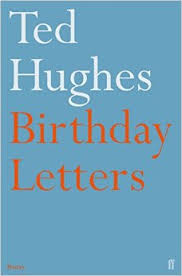
reading Blake Morrison on Ted Hughes published 5 September 1993 on yellowing newspaper pages that had tumbled out of a book I was re-shelving

As for his marriage to Plath, one day he may choose to speak about it, but for now –

I glimpse an old neighbor now divorced his wife and children have moved out we nod but very remotely

never watch when the blood is taken
images

Starbucks trade in the medical centre I watched being built years ago when I’d swim more often even then imagining myself at one of the windows waiting for news of some test or other

T. has woken by the time I return to eat but it’s me who puts away the groceries that have been delivered

handed me the bottle of wine laughing you don’t want to lose that he said my hesitation as I re-envisaged him as a romantic gift-bringer left an awkward pause I couldn’t cover

How does I have plenty of time transform itself swiftly into running late

hardly anywhere to park

Queens Wood stretches up behind these houses then bridges a road then sinks following its contours to the pond then rises again climbing to Muswell Hill and this is to be boxed into the word ‘topography’

A half empty carriage

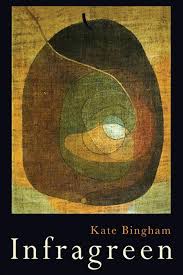
‘Ultragreen’ in which what is out there seems to come inside in a process Kate cleverly likens to photosynthesis and cleverly this gets away from me
imgres

The Whitehill Food Market I have passed that place

Walking up from the Emirates when I can’t get my mind off the strange limps and weaves of the way other people walk they are not hell but merely unfamiliar ways of moving

the fountains flow in the centre of the square

A dog wets its feet and drops a red ball into the pool and I guess its owner will be irritated by that

Brecht refused to award the prize to any of the five hundred entries. In none, he said, was there any successful attempt to communicate anything of any value

‘Nothing makes me feel more like a poet than being unable to talk’

Pub date Isobel calls it pub date

The absence of punctuation is in the spirit of the Daodejing it is the water course way one drop of water in the ocean no trace of it but don’t tell me it’s not there

A house in Selbourne

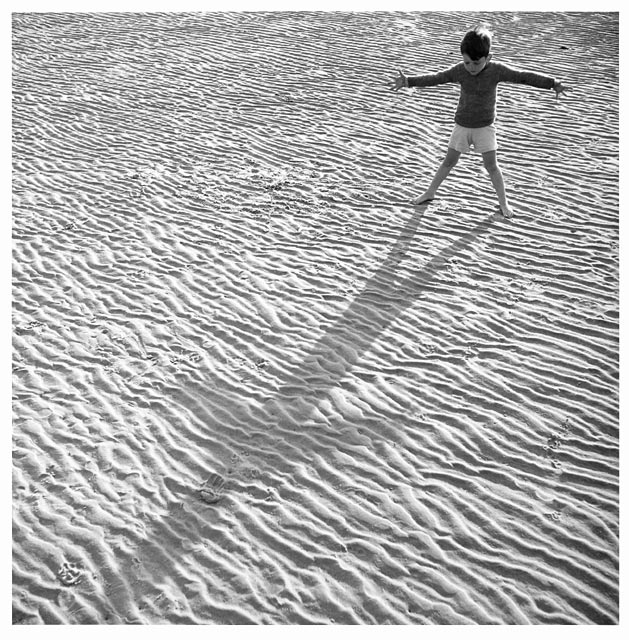
An image of a child with arms outstretched fingers widespread so much he might be a tree

Ripples of damp sand are the footprints of the shaggy oceanic beast

‘To embrace’
y30

A plain cheese and tomato brown bread roll and I am back madeleine-like to dinner-time sandwiches at Junior School during which we’d meet Mum from work and sit in Trowbridge Park why did we do that

It must have saved money

A timetable is the opposite of the way water flows and this grid dominates my life

Poems not even by rote but by the hour of the day

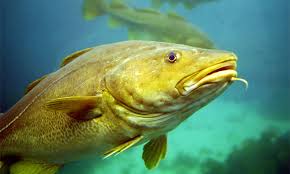
‘Pike’ so we watched YouTube clips of fish ducklings kittens being devoured it gets them started

Town kids city dwellers

as out of place as John Wyndham’s alien creatures like little pink M&Ms on four legs two of which are really arms they carry fire sticks

‘A sort of genocide’

The original Homer Simpson whose hands are uncontrollable

‘his thumb received a nasty cut. Although the wound must have hurt, the calm, slightly querulous expression he usually wore did not change’
images

Explore how far West’s presentation of Homer suggests he is a trapped man

The spider plant on the windowsill looks anaemic in its white pot against white painted window frames against thunderheads miles off

I am free at 17.10

I don’t need most of this

Occasionally there are evenings I can’t remember where I parked the car once I thought I’d left it on the garage forecourt after filling it up and I went in and got them to review the CCTV footage which told me that I had driven it away earlier that day and like some log-jam shifting slightly I had a vision of parking it on First Avenue and there it was all along

I need a framework perhaps

‘Echo Beach far away in time Echo Beach far away in time’

I like to change my clothes after a day’s work

So I asked them to bring in pictures of pike and this one brought in a picture of a cod

A Delia recipe

The evening is filled with cakes of varying heights

42

Poems, Swerve and Alan Brownjohn’s Sky Blue Trousers

Life should be full of swerve is what I have been thinking recently. It’s how I prefer my days to unfold and certainly one of the main reasons why I value poetry. In dipping and swooping from this to that, swerve serves to exercise our capacities in terms of tension, torque, balance and force. I’m talking emotionally and psychological here, of course, though last Saturday evening did find me doing swerving obeisance to the sat nav woman as I drove up to the Dugdale Centre in Enfield, north London.

imgres

It had also been a pretty swervy week in the more serious sense too. My brother and I have been emailing trying to organise a Lasting Power of Attorney in regard to our nonagenarian parents, alongside my daughter’s final events in the Sixth Form, filled with promise and talented and beautiful friends. A liking for swerve also accounts for why I have always loved that moment in The Winter’s Tale when the Old Shepherd talks of meeting both things dying and things new-born.

As it’s also the end of my teaching year, the week had also been spent revising what I think of these days (thanks for nothing Sam Riviere) as my ‘81 Laozis’: my new versions of the 81 chapters of Laozi’s Daodejing which Enitharmon will be publishing next Spring. There’s a good deal of swerve in the poems’ urging towards openness, flexibility, sense of balance:

[to be] circumspect as a man

who crosses a stream in winter

watchful and alert to danger on all sides

respectful as on a first visit

yielding like ice when the thaw sets in

blank as a piece of uncarved wood

receptive as a valley cut through hills

I think of what the Daodejing proposes as the exact opposite of the (too much blood-stained) rigidities of fundamentalism. As I said, this is why I love poetry’s ability to swerve quickly, often without transition, from one thing to another, one emotion or image to another. And so, I was off to Enfield where Alan Murray runs the meetings of Enfield poets at the unprepossessing Dugdale Centre which – as its name might suggest – contains a Lidl store, an Argos store, a multistory car park and a theatre and arts complex. The readings on Saturday took place in a municipal box within a municipal box but even that didn’t spoil the event (poetry does make something happen when it’s read and shared like this).

imgres

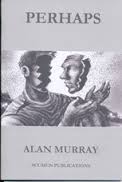
Alan (whose thoughtful book Perhaps was published by Acumen in 2013) introduced floor readers then handed over to Patricia Oxley as the three main poets were Acumen magazine related. John Greening first, whose quiet, measured delivery belies the time he has spent teaching literature to classes of schoolchildren. Dressed in chinos and pale shirt (yes, I’m doing the fashion notes too this time), I grudgingly admit (being a teacher myself) that he looked like a teacher, suggesting nothing of the real powerhouse of writing, editing, anthologising, reviewing and social-medi-ing that Greening is beneath that mild Clark Kent exterior. Born and raised in Hounslow he read ‘Heath Row’ from To the War Poets.

images

Topical, given the recent scandalous report suggesting a third runway to plague the poor citizens of west London, the poem reverses time’s arrow, unearthing what lies beneath tarmac and terminals, back to the original heath and bog, to sarsen stones and druidic rites, back further to a time when “the earth shudders, floods, howls, ignites”. His most recent book is threaded with addresses to the First World War poets and each short poem cunningly, often wittily, says something about the work of each. ‘To Edward Thomas’ notes: “You died at an observation post. / You looked and looked, and saw the detail / we do not”. Greening has also just published a major anthology, Accompanied Voices, with one of the world’s great music-publishing companies, Boydell Press. He read his own ‘Field’ from it, about poor John Field (inventor of the Nocturne) and the artistic irony that it was Chopin who superceded him, or as the poem puts it with all the brutality of the historical process, he “walked all over him”.

imgres

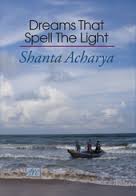
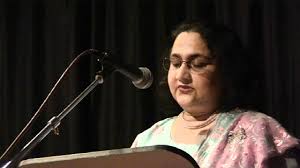
Shanta Acharya’s poems often record the phenomena of the natural world in part for themselves but also, as (her DPhil subject) Emerson suggests, because they can be read as the language of the “Universal Being”. Set in the artistic beauty of a Catholic church, the opening lines of ‘Italian Prayer’ ask: “How does one accustomed to the cold candour of stones / bend one’s knee in reverence”. Acharya’s work is, as Mimi Khalvati has said, “unafraid to take on the abstract, metaphysical, spiritual”. Dressed in an exquisite ivory-cream shalwar-kameez she also read the poem ‘Somewhere, Something’ from Dreams That Spell The Light (Arc Publications, 2010) that argues we do not travel “to explore another country / but to return home fresh, bearing gifts”. In fact, these gifts are for the self because all true experiences – thus discounting those of the ‘mere’ tourist – inevitably change us. The poem concludes, “Let’s fly free, not nailed to a mast; / see the universe with new eyes / not blinded by shadows that light casts”.

images

She also spoke of the Sanskrit phrase ‘neti neti’ (the title of an earlier collection) meaning ‘not this, not that’ as a definition of God or spiritual experience. This provoked a later discussion on the link between this idea and Laozi’s Daoist ideas, then The Cloud of Unknowing, followed by the writings of Julian of Norwich. Good swerves all. Lidl and Argos were well closed by this time of night.

imgres

My maternal grandmother would look sceptically up to a cloudy sky on occasions and make a meteorological call on the basis of whether or not there was enough blue sky to make a man’s pair of trousers. Well, those very trousers were being worn by Alan Brownjohn last Saturday evening, teamed with an unthreatening-cloud-coloured pale shirt. Brownjohn’s delivery is also very quiet, words seeming to emerge more from the side of his mouth, confirming that his tongue is often firmly in his cheek, doing deconstruction and the humour of post-modern irony before it was called such. Yet he manages to load poems with a weight of emotion too; he burns away sentiment, but still moves his readers.

Alan Brownjohn more formally attired

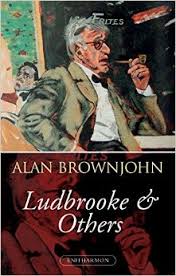
I was pleased he read several of the Ludbrooke & Others poems, 13 line sonnets for our austere age and an anti-hero-loser who nevertheless somehow gets our sympathy. Ludbrooke boasts of his “transformative” love-making in ‘His Classic Modesty’ (he persuades us it “is like the Acropolis”). In ‘His Jealousy’ he wants to persuade us (and himself, of course) that he has “deconstructed” and “junked” that emotion, only to feel the full force of it around line 12 to 13. We recognise a commonality at the same time as being allowed the space to imagine ourselves better than Ludbrooke. See the setting, re-setting, re-positioning of the powerful swerve going on there? That feeling you get after vigourous physical exercise of being stronger, more balanced, more capable? Poetry makes that happen to your heart – the figurative one.

imgres